
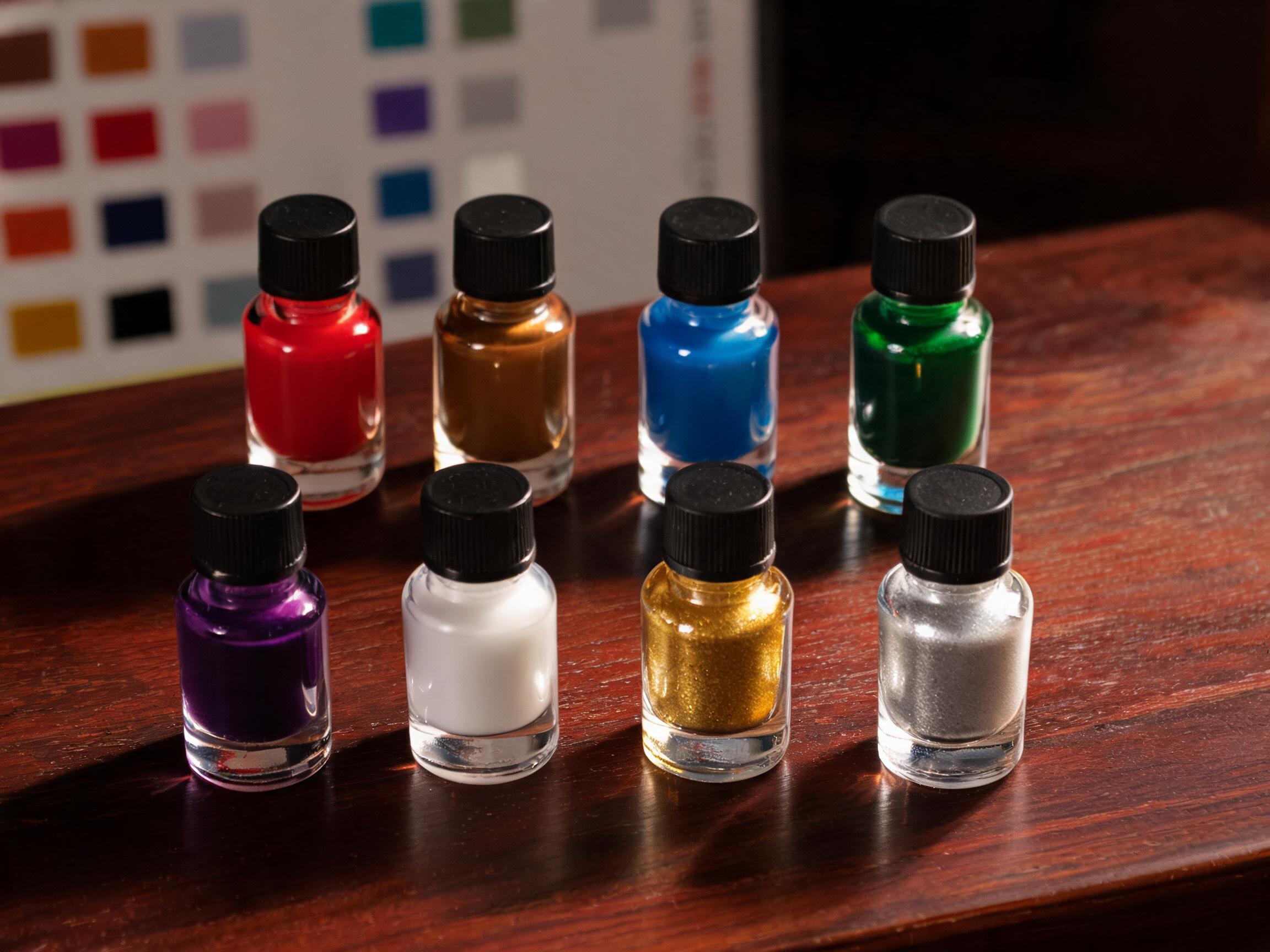
Opaque white ink is one of the fastest-moving colors in calligraphy assortments, but it is also the one most likely to disappoint customers if opacity or lightfastness falls short. This procurement guide explains how white calligraphy ink fits into retail and gift-channel assortments, what formulation details buyers should verify before placing bulk orders, and which quality documents to request with each shipment. A practical stocking checklist for distributors, art-supply retailers and private-label buyers.
White ink is the color customers reach for when they want a mark that stands out on dark paper. It is also the color most likely to come back as a complaint if opacity is thin, coverage is inconsistent between bottles, or the ink yellows sooner than the customer expects. For retailers and distributors building a calligraphy ink assortment, white deserves its own due-diligence checklist rather than a single line in a color list.
Where White Calligraphy Ink Earns Its Shelf Space
Standard calligraphy ink assortments lean heavily on black, sepia and muted earth tones. White fills a different job:
- Dark-paper work. Envelopes, place cards, chalkboard-style signage and invitations printed on deep navy, black or kraft stock.
- Mixed-media layering. Highlighting, outlining and accent marks over dried watercolor, gouache or acrylic grounds.
- Gift and stationery sets. White and metallic inks are the colors buyers notice when a set is opened; they carry perceived value in gift-boxed assortments.
Because suppliers of opaque white writing media are numerous and quality varies, the practical question for a buyer is not whether to stock white, but which white ink meets the opacity and lightfastness standard your customers will notice. That is a specification question, and it can be verified before you commit to a container load.
Opacity: The First Thing to Test
"Opaque" is not a single specification. On a dark surface, a white ink can look solid at first stroke, show the paper through at a second pass, or change appearance as it dries. Three variables drive the difference:
- Pigment loading. Higher concentrations of white pigment produce denser coverage. Ask the supplier what pigment system they use and whether the white is a mineral-based pigment or a dye-based colorant. Dye-based whites tend to look bright in the bottle and weak on dark paper.
- Binder system. The binder holds pigment to the paper. A natural binder and a mineral pigment combination is one formulation route; confirm what the supplier actually uses rather than assuming.
- Viscosity. Ink that is too thin spreads and sinks into absorbent stock. Ink that is too thick skips in fine nibs. Retail buyers should ask for the intended application range: pointed pen, broad edge, brush or dip nib.
Ask the supplier for a written statement of pigment type and binder system. Where a value is not published in the datasheet, write "confirm with the supplier" on your own checklist and resolve it before the purchase order, not after.
Lightfastness: What the Number Means for Returns
Lightfastness is the property that determines whether a finished piece still looks right months later. For retail stock, it drives repeat purchase as much as it drives complaints.
Our Colored Liquid Ink Set (SKU GMO-LIQ-005) is tested to lightfastness grade 4+ under ISO 105-B02. The eight standard colors in that set include white, gold and silver, supplied in 30 ml bottles, eight per set. For a buyer, the relevant point is that lightfastness is reported against a recognized test method, and that the same test reports can be requested with each shipment. If a supplier cannot tell you which method and which grade applies to their white, that is a gap worth resolving before bulk ordering.
Lightfastness is not the only stability factor. Ask whether the supplier has data on yellowing over time and on behavior in storage. If they do not, that is a value you should treat as unverified.
What White Ink Looks Like on the Shelf
| Stocking question | What to look for |
|---|---|
| Is the white suitable for dark paper? | Sample a two-pass test on the darkest stock in your range, not on white paper. |
| Will it work in the pens your customers already own? | Confirm recommended nib and brush types; test in the pen format you plan to pair it with. |
| Does packaging survive shipping and handling? | Check bottle closure, label adhesion and whether the set holds the bottles securely. |
| Can you sell it as a gift item? | Ask whether gift-box and private-label options are available and what artwork requirements apply. |
Bottles and Sets: The Two Buying Formats
White ink reaches customers through two formats, and the QC question differs for each.
Individual bottles
Single bottles suit replacement purchases and customers who already own a set. The buyer's focus is batch consistency: the white in one bottle should match the next. Ask whether the supplier records pigment batch and whether a retained sample is kept. If not, write "confirm with the supplier."
Sets
Sets are the better fit for gift channels and for first-time calligraphy buyers. In a set, white is often the color that earns the unboxing reaction, and it is also the color that shows packaging problems most clearly. Our Colored Liquid Ink Set ships as eight 30 ml bottles per set, with a minimum order quantity of 50 sets and a lead time of 30–45 days after sample approval. Trade terms are quoted FOB, CIF or DDP depending on destination.
A color reference chart and lightfastness test reports are provided per shipment, and custom color matching plus private-label gift box and label options are available. Those are the terms on the table for this product; for any white ink you source from another supplier, ask for the equivalent documents and do not assume they exist.
Pre-Order Verification Checklist
Run this list before confirming a bulk order. Each item should produce a document, a sample or a written answer, not a verbal assurance.
- Formulation statement. Pigment type (mineral-based or other) and binder system, in writing.
- Safety documentation. Confirm which pigment safety standard applies and whether the supplier holds documentation for it. In the case of our set, pigments meet ASTM D4236.
- Lightfastness report. Ask for the test method and grade. For our set, grade 4+ under ISO 105-B02.
- Color reference chart. Confirm that the chart provided matches the production bottles, and that it travels with the shipment.
- Physical sample. Test white on your darkest in-range stock, at the pen type your customers use, and let it dry fully before judging.
- Packaging review. Confirm closure type, bottle size, box construction and label placement; request a pre-production sample of the box if you plan private label.
- Commercial terms in writing. MOQ, lead time, Incoterm and destination-specific requirements.
- Batch traceability. Ask how pigment batches are recorded and whether retained samples are kept.
Why White Belongs in the First Order
Buyers sometimes treat white as an optional extra color and fill the first order with black, sepia and the standard earth tones. That sequencing usually reverses after the first season. White drives the dark-paper and gift-set use cases that bring new customers into calligraphy, and it is the color most often out of stock when a customer walks in looking for it.
The right approach is not to over-order white, but to verify it properly before the first bulk order and then carry it as a standing line. Once the specification is documented and the lightfastness and safety documents are on file, white becomes one of the simplest colors in the range to reorder.
Frequently Asked Questions
Is white calligraphy ink the same as white gouache?
They are different product categories with different binder systems and handling properties. Gouache is generally a water-based paint; calligraphy ink is formulated for pen and nib flow. Ask the supplier to confirm the intended application before substituting one for the other in your assortment.
How many bottles should a first order include?
This depends on your channel mix and how many sets versus single bottles you plan to sell. There is no universal ratio. Where a supplier publishes an MOQ, work backward from that figure rather than guessing; our set has a minimum of 50 sets.
Can white ink be private-labeled for our store?
Private-label gift box and label options may be available depending on the supplier. Confirm artwork format, minimum quantities and proof approval steps with the supplier before designing packaging.
What should we do if the white arrives inconsistent between bottles?
Retain the shipment's color reference chart and a sample bottle, document the variance, and raise it with the supplier against the agreed specification. This is why batch traceability and per-shipment documentation matter at the ordering stage.
Next Step
If you are evaluating white ink for a calligraphy set, start with a physical sample and a documented specification rather than a catalog image. The Colored Liquid Ink Set includes white alongside seven other colors in 30 ml bottles, with lightfastness reports and a color reference chart supplied per shipment, and private-label gift box options available. Request a sample, test the white on your darkest stock, and confirm MOQ and lead time against your season plan before placing the bulk order.