
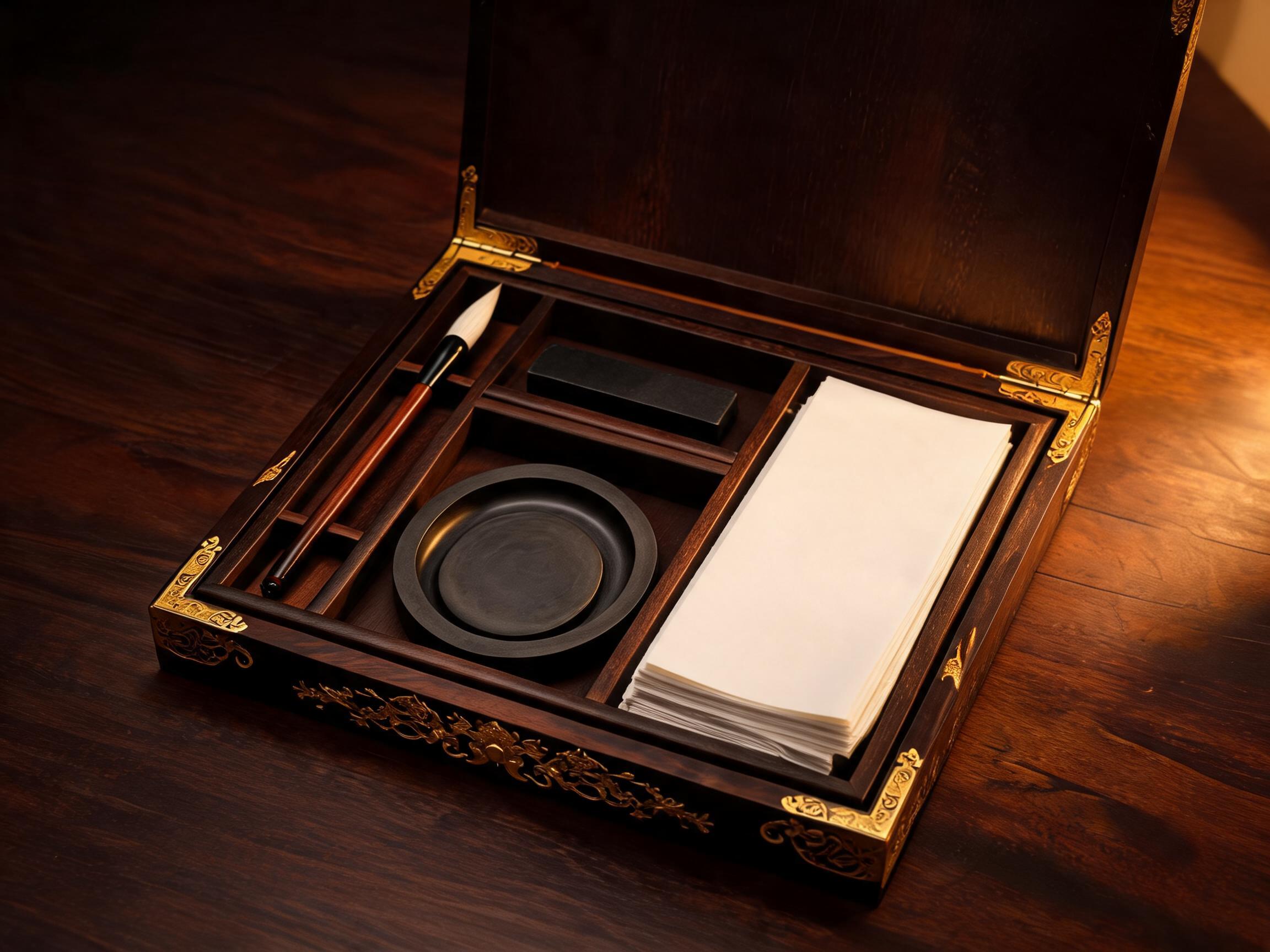
A pre-order due-diligence checklist for gift distributors and stationery importers sourcing bamboo pen holders and brush-storage items: what to inspect on material, joints, moisture, slot capacity, engraving, gift-box pairing, MOQ and sea-freight packing — plus how these items fit into desk sets and presentation packaging for cultural gifting programs.
Sourcing Checklist
Bamboo pen holders look simple in a photo and are surprisingly easy to get wrong in bulk. The variables that decide whether a shipment arrives sellable — joint construction, moisture behaviour, slot capacity, engraving quality, box pairing, packing — are mostly invisible on a sample unless you know what to put in the purchase order. This checklist is written for buyers who are about to place a first or repeat order and want the specification agreed before production, not argued about after arrival.
A note on scope: we do not list a standalone bamboo pen holder as a catalog item. Our confirmed lines are desk sets and presentation packaging — the Complete Scholar Desk Set, the School Calligraphy Desk Set and the Premium Craft Gift Box. Buyers often source holders as an accessory alongside those programmes, so the checklist below is written as a buyer's inspection framework rather than a product description.
What this checklist covers
- Bamboo material and joint construction
- Moisture, warpage and dimensional stability
- Slot capacity written into the PO
- Engraving and colour consistency
- Gift-box pairing and presentation
- MOQ and sea-freight packing
- Takeaways for first-time importers
1. Bamboo material and joint construction
Most bamboo pen holders on the market are assembled, not carved from one block. The body may be built from strips, slats or a bent panel, and the base is usually a separate piece. Where the joints sit, and how they are finished, determines whether the holder stays square through a container crossing the tropics.
Ask for the construction method in writing before a sample is approved. Useful answers cover:
- Whether the body is solid bamboo, finger-jointed strips, or a veneered core.
- Whether the base is glued, pinned, or both, and whether the joint line is visible on the outside.
- What finish is applied — oil, lacquer, wax, or unfinished — and whether the interior is finished too.
- Whether the edges are sanded and rounded, since sharp internal edges catch pen clips and brush ferrules.
Inspect a sample at the joints with a light behind it. A hairline gap that looks acceptable in dry air may open further after a humid sea voyage. Glue lines that show as dark stripes are a finishing issue, not just a cosmetic one — they read as defects to end users receiving the item as a corporate gift.
2. Moisture, warpage and dimensional stability
Bamboo moves with humidity. A holder that sits flat on a desk in the factory can develop a rocking base or a bowed side wall after weeks in a container and a further period in an air-conditioned office. This is the single most common quality complaint on assembled bamboo desk accessories, and it is almost always a moisture-content issue at the point of packing.
You do not need to specify a number yourself. What you need is a supplier who states the moisture content they target before packing, the method used to measure it, and how long the parts rest between machining and assembly. Ask these three questions directly and keep the answers with the order file. If the supplier cannot describe their drying and resting process in concrete terms, treat that as an open point rather than assuming the factory has it under control.
Practical acceptance steps:
- Check a sample for rock: place it on a flat surface and press opposite corners. Any movement is a warning sign.
- Sight down the long edges against a straight edge to catch bowing that is hard to see head-on.
- Confirm at pre-shipment inspection that units are packed dry, with no condensation inside inner bags.
- Agree in the PO what happens if units arrive warped — replacement terms, credit, or a defined tolerance.
3. Slot capacity written into the purchase order
“Pen holder” covers a wide range. A holder sized for slim ballpoints will not take calligraphy brushes, whiteboard markers, or scissors. If you are buying for a stationery programme, a corporate gift, or a cultural desk set, the slot count and the internal clear width matter more than the external dimensions printed in a catalogue.
Specify capacity by use, not just by measurement. A workable PO line reads something like: “Holds [n] standard ballpoint pens upright without clipping; accepts one calligraphy brush up to [diameter] at the ferrule.” Confirm the actual figures with your supplier against the pens and brushes your end users will use, then have the sample tested with those items before approval.
| Buyer scenario | Capacity question to settle before ordering |
|---|---|
| Corporate gift with branded pens | Does the slot accept the pen's clip and cap without forcing? How many pens per holder? |
| Calligraphy school supply | Does the holder take brushes at the ferrule, and is the base heavy enough not to tip when a brush is pulled out? |
| Cultural gift programme | Does the holder pair with the brush and ink components in the same set, and sit securely in the box insert? |
| Retail desk organisation | Are mixed contents (pens, ruler, scissors) accommodated, and does the footprint match the retail shelf plan? |
Stability under use is worth a specific test. Fill the holder with the heaviest items you expect and pull one out at an angle. If the holder lifts or rocks, the base is too light for the intended use — that is a design issue to settle before tooling, not a packing issue.
4. Engraving and colour consistency
Engraving is where bamboo pen holders most often fail a corporate buyer's approval. Bamboo is a grass with a directional grain and hard nodes; the same laser setting that produces a clean mark on one face can burn dark or blow out on another. Colour also varies naturally between strips and between production lots.
Set expectations in the PO rather than at approval:
- Agree the artwork file, engraving position, and size, with a marked-up drawing.
- Ask for an engraved production sample — not a digitally rendered proof — and approve that physical piece.
- State whether natural colour variation between units is acceptable, and to what degree. If a uniform colour is essential for a brand programme, say so up front; it affects material selection and price.
- Confirm what happens to the finish inside engraved areas, and whether a protective coat is applied after marking.
For logo programmes, request that the approved engraved sample is retained and referenced in the inspection criteria. “Match approved sample” is a stronger instruction than a verbal description of depth or darkness.
5. Gift-box pairing and presentation
If the holder is going into a gift box, the box is part of the product. A holder that fits loosely in its insert arrives rattling and scuffed; one that fits too tightly cracks the insert or cannot be removed by the recipient. Fit should be checked with the finished, packed holder — after finishing and engraving, since both affect final dimensions.
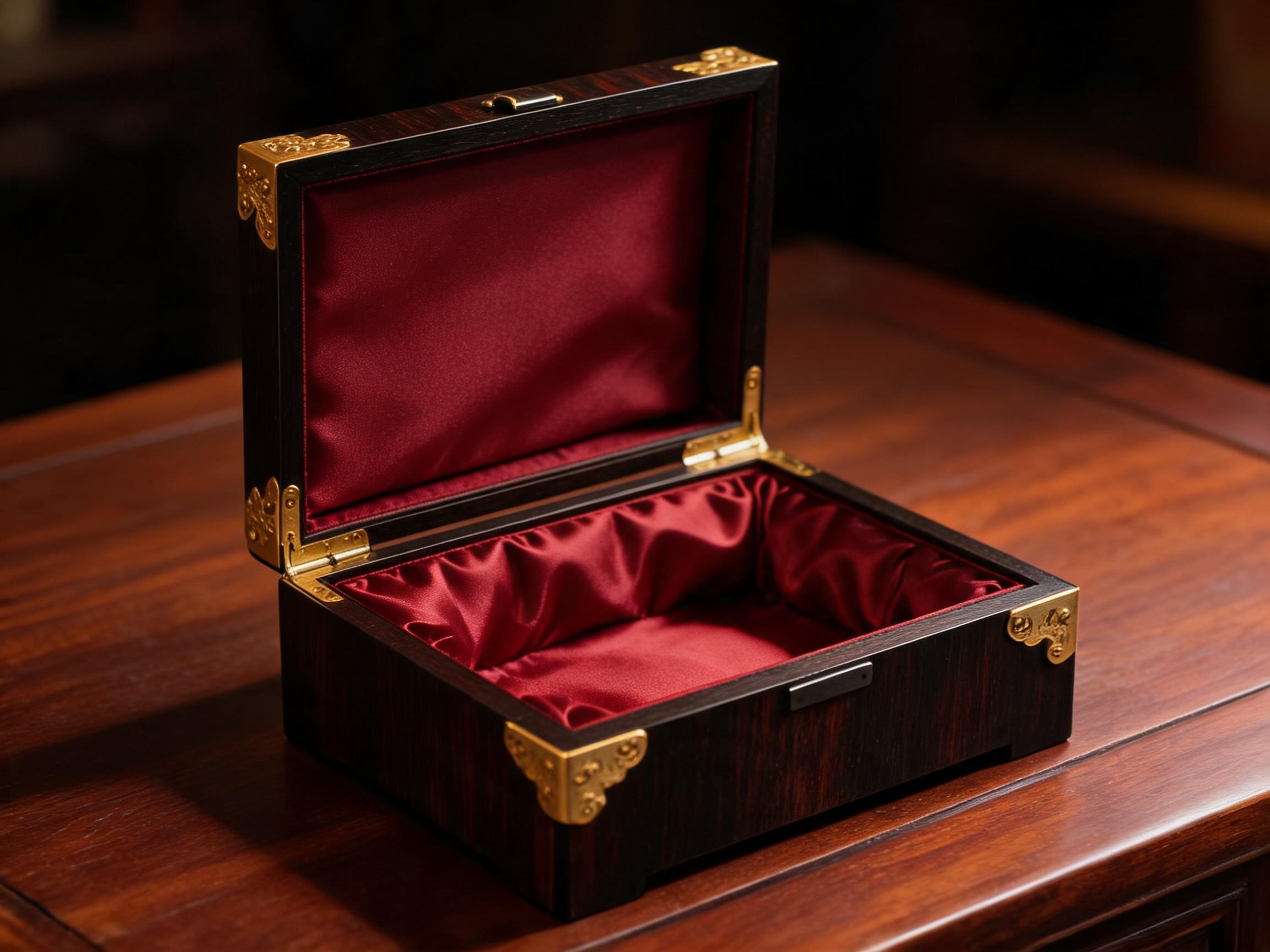
This is where buying the holder and the packaging from coordinated lines pays off. Our Premium Craft Gift Box is built in hardwood with a magnetic closure and supports custom branding, which suits VIP corporate gifting where the holder is one component of a presentation set. For programmes built around a complete cultural gift, the Complete Scholar Desk Set shows how brush, ink, inkstone and paper are presented together in a custom box — a useful reference for buyers assembling a comparable desk-gift concept around a holder.
Checklist for the box pairing:
- Insert material and cut-out dimensions confirmed against the finished holder.
- Lid clearance verified with the holder in place.
- Branding on the box (foil, print, or label) agreed alongside the holder engraving so the two read as one product.
- A packed drop test agreed with the supplier before bulk production.
6. MOQ and sea-freight packing
Bamboo holders are bulky relative to their value, so freight economics often decide the deal more than unit price. Confirm with your supplier how units are packed — individual poly bag, inner box, or bulk — and get the master carton dimensions and quantity per carton in writing. From those figures you can calculate cartons per container and cost the landed price properly.
Points to settle before confirming the order:
- MOQ for the plain item versus the engraved item. Engraving usually carries its own minimum; ask for both figures.
- Whether mixed models or mixed engravings can share a carton, and how cartons are marked for warehouse sorting.
- Inner protection: corner protectors, tissue, or moulded pulp. Bamboo edges chip in transit, and a chipped corner on a gift item is a write-off.
- Carton strength and stacking limits, given how long the container may sit at a port.
- Palletisation if your market or warehouse requires it.
If your programme includes a school or institutional channel, volume packing without individual gift boxes will save freight; if it is a corporate gifting programme, the box and insert are part of the cost and must be quoted together. Ask for a packing specification sheet with the quotation so the freight forwarder can quote accurately.
7. Takeaways for first-time importers
Pre-order checklist
- Get construction method and finish in writing, and inspect joints on a physical sample.
- Ask how moisture is controlled before packing, and keep the answer on file.
- Define slot capacity by the pens and brushes your end users will actually use — and test with them.
- Approve a physically engraved sample, not a digital proof; state colour-variation tolerance.
- Check box fit with the finished, engraved holder; agree a packed drop test.
- Confirm separate MOQs for plain and engraved versions, plus carton dimensions and quantity per carton.
- Write inspection criteria and replacement terms into the PO.
None of these points require specialist knowledge of bamboo — they require a sample, a few direct questions, and a purchase order that records the answers. The buyers who avoid disputes are the ones who agreed on warpage tolerance, slot size and engraving approval before the first carton was sealed.
If your programme combines a holder with brushes and desk accessories, the School Calligraphy Desk Set is a useful reference for how stackable storage and durable desk components are presented for institutional buyers — the same questions about capacity, packing and acceptance apply. Ask for a packing specification and material statement with any quotation, and treat anything not stated in writing as an open item to resolve before deposit.
This article is a buyer's inspection framework. It does not describe a bamboo pen holder sold by us; it explains what to verify when sourcing such items, including alongside our desk-set and gift-box lines. Specific dimensions, tolerances, MOQs and terms should be confirmed with your supplier for each order.