
Sumi-e is the East Asian ink-wash painting tradition built on brush, ink, and paper. This explainer covers what sumi-e painting is, how its tool requirements differ from Chinese calligraphy supply, and which assortments importers, temple channels, and gift programs should carry.
Sumi-e is the East Asian ink-wash painting tradition in which a single brush, a stick of ink, and absorbent paper carry the entire image. Buyers searching "what is sumi e" are usually trying to understand two things at once: what the art form actually is, and what a retail or teaching assortment needs to contain to serve it. This article answers both, then turns to the procurement questions that matter — how sumi-e tool requirements differ from Chinese calligraphy supply, and where the demand sits.
- Sumi-e is monochrome ink-wash painting; its expressive range comes from ink gradation and brush pressure, not color.
- The core toolkit is three items: brush, ink, and paper. Everything else is optional.
- Sumi-e and Chinese calligraphy share a material lineage but diverge on paper, ink tone, and brush behavior — assortments that blur the two serve neither audience well.
- Buyers should stock in matched kits, not loose components, and confirm tone consistency and batch testing before committing to volume.
What Is Sumi-e?
Sumi-e (墨絵) translates roughly as "ink picture." It is a monochrome ink-wash painting tradition shared across East Asia and most closely associated in the West with Japan. The artist works with diluted ink on absorbent paper, building the image from the gradation between pale washes and saturated black rather than from color.
Three characteristics define the form:
- Monochrome discipline. The palette is ink and water. Tonal variation comes from how much water the brush carries and how the ink is loaded.
- Brush-driven marks. A stroke is not retouched. Pressure, speed, and tip angle decide whether a line reads as a leaf, a stone, or a branch.
- Negative space. Empty paper is not background; it is part of the composition. This is why paper absorbency is a functional requirement rather than a preference.
The style rewards control of the tool, which is exactly why tool quality determines whether a beginner continues or gives up. A brush that splays, an ink that dries to a flat gray, or a paper that bleeds uncontrollably will all end the same way: the student concludes they have no aptitude, when the materials were the problem.
The Core Tools of Sumi-e Painting
Brush
The brush is the most consequential purchase in any sumi-e program. Sumi-e brushes are typically longer and more tapered than Western watercolor brushes, with a tip that comes to a fine point and springs back into shape after a stroke.
Hair type drives behavior. Wolf hair (weasel) is the common choice where a resilient, medium-firm tip is wanted — it holds a point under pressure and returns to form, which suits controlled linear work. Softer hairs carry more water for broad washes but are harder to keep pointed. Base diameter and tip length scale with the size of stroke the brush is intended to make; a brush is not a one-size tool.
For buyers, two quality signals are worth building into a sampling protocol: batch shedding behavior (does the brush lose hair during a wet test) and resilience after repeated loading (does the tip return to a point). A supplier able to run resilience and shedding testing per batch is easier to hold to a consistent standard than one shipping on appearance alone. A product such as the Premium Wolf Hair Calligraphy Brush, with resilience-graded weasel hair, a 25 cm bamboo handle, a medium-firm tip tuned for kaishu, and a 0.8–1.2 cm base diameter, illustrates the specification detail a buyer should expect on a data sheet — hair type, handle length, tip character, and base diameter range.
Ink: Sticks and Liquid
Traditional sumi-e uses an ink stick ground on a stone with water. The stick is a bound pigment block — either pine soot or oil soot combined with a natural binder — and the artist controls concentration directly by how long they grind. Liquid ink is the modern shortcut: faster, uniform, and popular for teaching and practice.
The two soot types behave differently, and this is the distinction most buyers miss:
| Attribute | Pine soot ink stick | Oil soot ink stick |
|---|---|---|
| Reference | GMO-HIS-001 | GMO-HIS-002 |
| Tone | Deep matte black, archival | Rich glossy black, archival grade |
| Weight per stick | 50–200 g | 30–150 g |
| Surface | Hand-carved, gold-filled patterns | Classic finish |
| Tone matching service | — | 12–15 days |
| MOQ | 50 pcs | 50 pcs |
| Lead time | 30–45 days | — |
| Dry storage life | 10+ years, cool and dry | — |
| Branding | OEM/ODM private label | — |
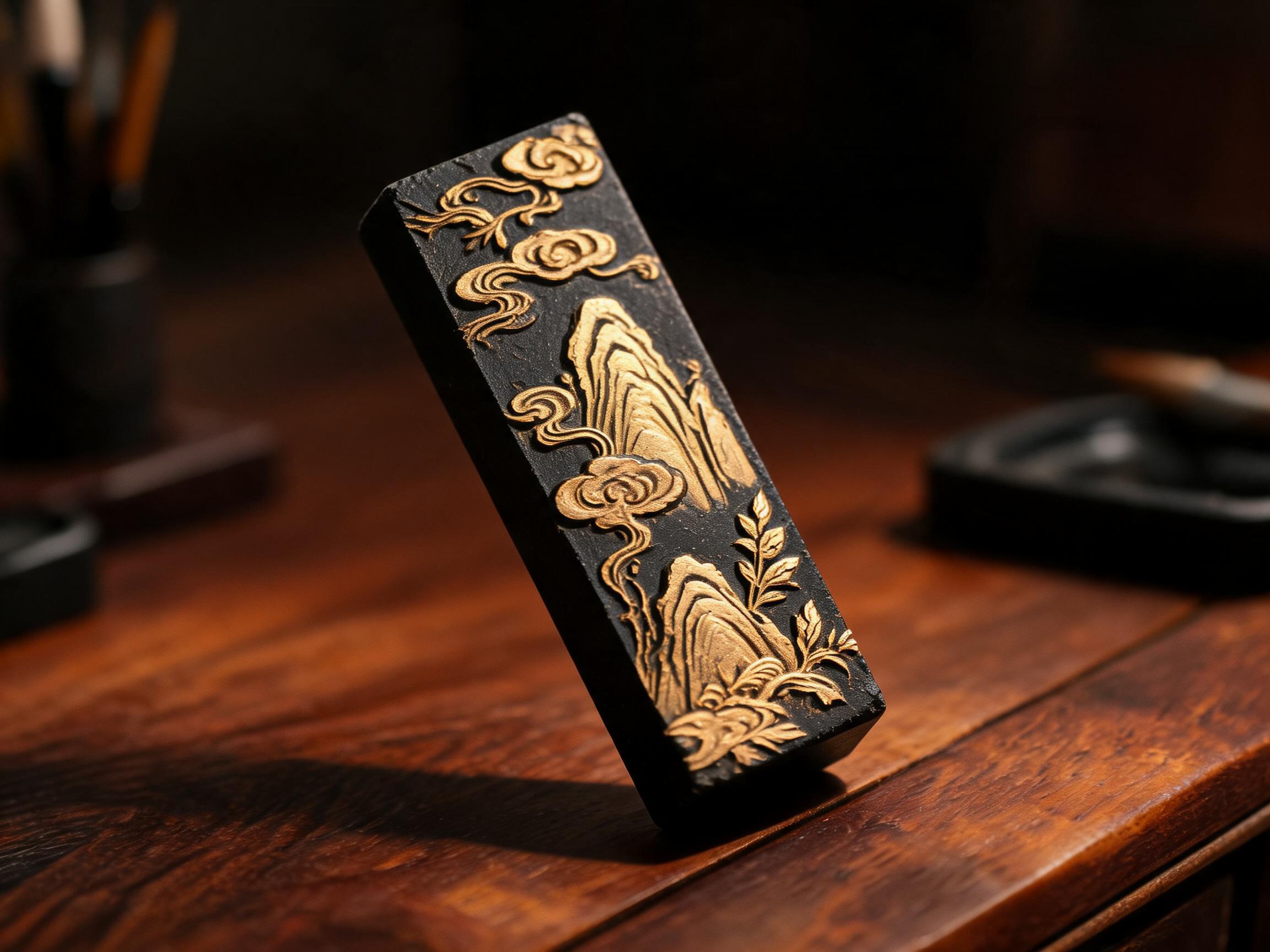
The Premium Pine Soot Hui Ink Stick is the traditional-toned choice: matte black with a hand-carved, gold-filled pattern that makes it presentable as a gift item or a display unit as well as a working material. The 50–200 g range lets buyers cover both student and serious-practice price points from one reference. Archival tone and a 10+ year dry storage life matter to gift and temple channels, where stock may sit before it moves.
The Oil Soot Hui Ink Stick Classic runs a glossier, more reflective black at 30–150 g, and offers tone matching turned around in 12–15 days — a practical option when a private-label range needs a consistent tonal standard across a reorder.
Both carry a MOQ of 50 pcs, which makes test orders on ink feasible before a buyer commits to a full seasonal buy.
Paper
Sumi-e paper must be absorbent enough to accept a wash and sized enough not to disintegrate under one. This is not a commodity choice. Paper that is too absorbent destroys tonal control; paper that is too resistant never accepts the ink at all. Most teaching programs settle on a single paper grade and keep it, because switching paper invalidates everything the student learned about ink loading.
For importers, paper is usually sourced separately from brushes and ink, which means consistency across reorders is a genuine risk — an unannounced grade change will generate returns faster than any other mismatch in the kit.
How Sumi-e Supply Differs from Chinese Calligraphy Supply
The two traditions share brushes, ink, and paper, and this shared lineage is precisely the trap. Treating them as one category produces assortments that look complete and function poorly.
| Dimension | Chinese calligraphy | Sumi-e painting |
|---|---|---|
| Primary mark | Character forms, fixed stroke order | Pictorial marks, variable pressure |
| Ink behavior | Often used near full strength | Heavy dilution, layered washes |
| Brush preference | Stiffness and a sharp point for precision | Resilience and water carry; range of tip sizes |
| Paper demand | Resistance to bleed under firm pressure | Controlled absorbency for gradation |
| Assortment logic | Character practice sets | Wash and gradation kits |
The practical consequence: a calligraphy brush sold into a painting program often reads as too stiff and too small, and a calligraphy paper sold as painting paper rarely takes a wet wash cleanly. Buyers serving both audiences should keep the SKUs visibly separate and state intended use on the label — it reduces returns and, in teaching channels, protects reorder rates.
What Buyers Should Stock, and Where Demand Sits
Across the channels that carry this category — Japan and Korea importers, temple shops, museum and gift retail, and Chinese-community retailers in Southeast Asia and the Americas — the recurring pattern is that kits move faster than components. A beginner who buys a brush alone comes back confused; a beginner who buys a matched brush-ink-paper set comes back for paper.
A workable assortment structure:
- Entry kit: one medium brush, one small ink stick or liquid ink, one practice paper pack. This is the volume driver.
- Gift SKU: hand-carved ink stick in a presentation format. The premium pine soot reference suits this directly, and OEM/ODM private label supports a retailer's own branding.
- Refill tier: paper and ink sold separately, so kit buyers can continue without repurchasing tools.
- Serious-practice tier: larger brushes, larger ink sticks, and a paper grade consistent with the entry kit so skills transfer.
Temple and gift channels have a different buying rhythm from art-supply retail. Stock may sit through a season before it moves, which makes ink storage life and packaging durability relevant procurement criteria rather than footnotes. Archival ink with a stated dry storage life and a carved, gift-ready surface reduces the risk of unsellable shelf stock.
FAQ
- Is sumi-e the same as Chinese ink-wash painting?
- They belong to the same East Asian ink-wash lineage, and the materials overlap. The distinction that matters commercially is application: brush stiffness, ink dilution, and paper absorbency requirements differ between character writing and pictorial wash work.
- Should I stock ink sticks or liquid ink?
- Both serve different buyers. Sticks suit gift, temple, and serious-practice channels and have long dry storage. Liquid ink suits teaching and high-turnover practice. Starter assortments frequently carry both.
- What MOQ applies to ink sticks?
- The two references described here each carry a MOQ of 50 pcs, which allows a test order before a full seasonal commitment. Lead time on the premium pine soot reference is 30–45 days.
- Can ink and brushes be private-labeled?
- OEM/ODM private label is available on the premium pine soot ink stick reference. Confirm labeling requirements and artwork specifications with the supplier before sampling.
Next Step
If you are building a sumi-e assortment, start with a matched kit rather than loose components, and sample against two criteria before ordering volume: whether the brush returns to a point after repeated wet loading, and whether the ink dries to the tonal standard your label promises. Confirm MOQ, lead time, and private-label terms for the specific references you intend to carry, and request specification sheets for brush hair type, tip dimensions, ink weight range, and storage conditions so the data can be checked against the physical sample.