
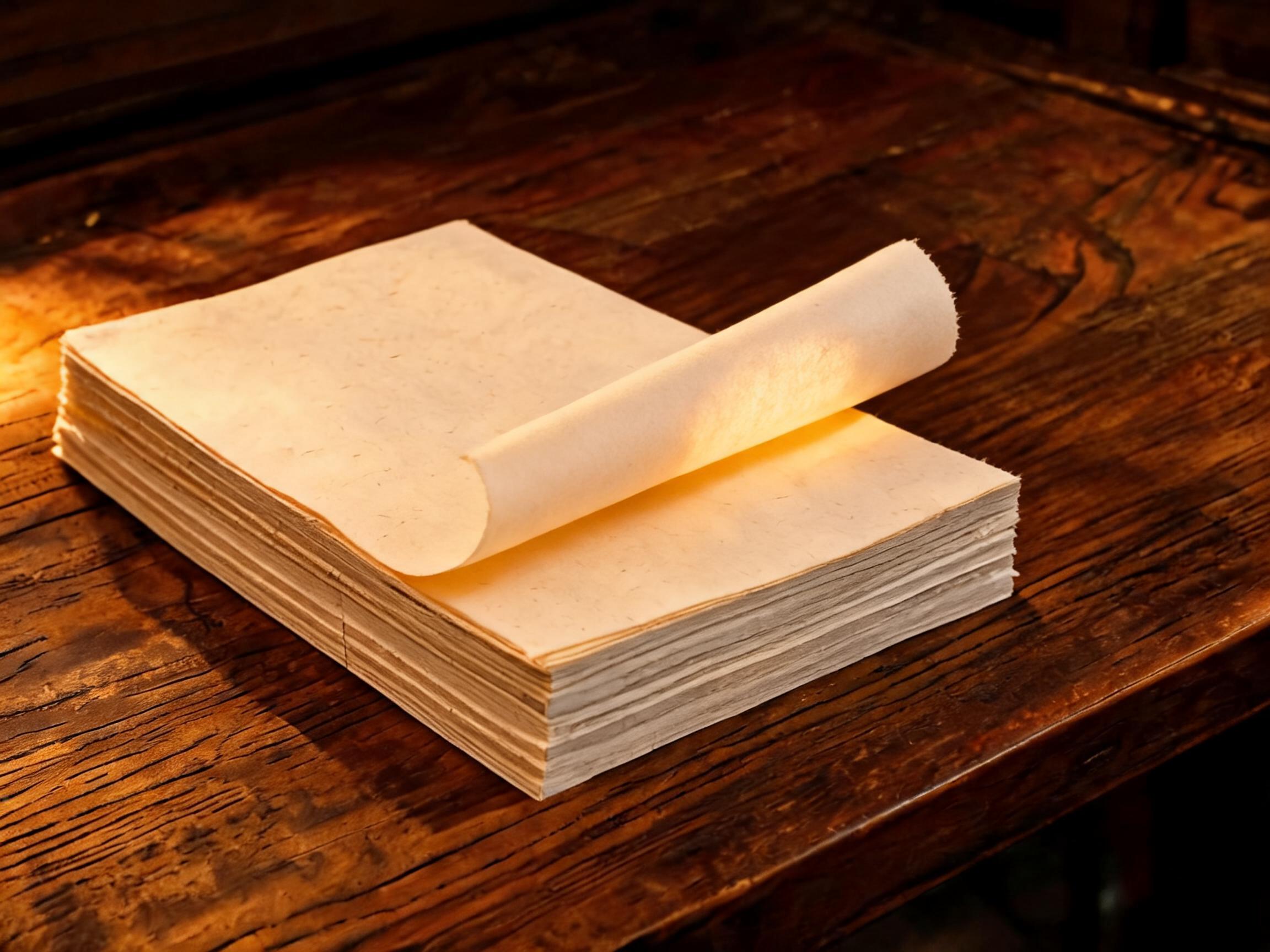
A technical explainer for B2B importers and art supply buyers on what rice paper actually means, how xuan paper is made from bark fiber, how it differs from Western craft rice paper, and how to confirm specifications when sourcing from a supplier.
Technical Explainer for B2B Buyers
Search what is rice paper and you will find two different products sharing one English name. In Western retail, "rice paper" often means a thin, crisp craft sheet used for spring rolls or decorative wrapping. In East Asian art supply, the same phrase usually points to xuan paper — a bark-fiber sheet made for brush painting and calligraphy. Importers who treat these as one product end up ordering the wrong material, the wrong grade, or the wrong format.
This explainer separates the two, describes how xuan paper is made, and gives buyers a practical way to confirm specifications before placing an order.
Key takeaways
- "Rice paper" is a loose English label. It does not mean the sheet is made from rice.
- Xuan paper is a bark-fiber paper produced for brush work, not a food or craft sheet.
- Raw (sheng) xuan and practice grades behave differently and serve different buyers.
- Rolls are sold in fixed widths and lengths with a stated MOQ, so confirm units before quoting.
What buyers actually mean by "rice paper"
The term is a translation habit, not a material specification. When an art supply buyer in Japan, Korea, Southeast Asia, the Middle East, Central-Eastern Europe, Africa, or a Chinese-diaspora market asks for rice paper, the request usually falls into one of three categories:
- Brush-painting and calligraphy paper — a bark-fiber sheet that accepts ink and water-based pigment. This is xuan paper.
- Craft or food paper — a thin, often machine-made sheet used for wrapping, decoration, or food service. It may contain rice starch or rice straw, but the name does not guarantee it.
- Practice paper — a lower-cost sheet for students and volume users who do not need exhibition-grade behavior.
Because the label is ambiguous, the fastest way to avoid a wrong order is to stop using "rice paper" alone and specify the material, the grade, and the format. The sections below use xuan paper as the reference product, since that is what most art supply buyers are actually sourcing.
Raw materials and craft of xuan paper
Xuan paper is a bark-fiber paper. The fiber source and the sheet-forming process are what separate it from wood-pulp craft paper. In production, bark fiber is processed into a pulp, formed into sheets, and dried. The result is a sheet with a visible fiber structure and a soft hand feel that behaves differently under a brush than a smooth, hard craft sheet.
Two grades matter most to buyers:
- Raw (sheng) xuan paper — unsized or minimally treated, so it absorbs ink and water readily. This is the grade painters use when they want ink to spread and bleed. Raw Xuan Paper Professional is a raw (sheng) xuan product in this category.
- Practice-grade xuan paper — made for students and high-volume practice, where cost per sheet matters more than exhibition behavior. Student Practice Xuan Paper is positioned for this use.
For buyers who need the sheet presented rather than loose, a Bound Xuan Paper Album is a bound xuan paper album — a finished format rather than a stack of loose sheets.
How xuan paper differs from Western craft rice paper
The two products are not interchangeable. The table below summarizes the differences that matter when you are writing a purchase order.
| Attribute | Xuan paper | Western craft rice paper |
|---|---|---|
| Fiber source | Bark fiber | Often wood pulp, sometimes with rice straw or starch |
| Primary use | Brush painting, calligraphy | Wrapping, decoration, food service, crafts |
| Ink behavior | Absorbs and spreads ink; raw grades bleed | Generally does not perform as a brush-painting sheet |
| Hand feel | Soft, with visible fiber structure | Crisp, thin, often smooth |
| Typical formats | Loose sheets, bound albums, rolls | Sheets, rolls, pre-cut discs |
| Buyer profile | Art supply distributors, studios, schools | Food service, packaging, craft retail |
If your customer intends to paint, craft rice paper will disappoint them. If your customer intends to wrap food, xuan paper is the wrong purchase. Confirming end use is the single most useful question you can ask before quoting.
Common uses
Xuan paper reaches buyers through several channels, and the channel usually determines the grade and format:
- Art supply retail and distribution — raw (sheng) xuan for painters, practice grade for students.
- Schools and workshops — practice grade in volume, often in loose sheets or rolls.
- Studios and professional artists — raw xuan where ink absorption and spread are the point.
- Gift and stationery trade — bound albums, which present as a finished retail item.
- Cultural and calligraphy supply — rolls cut to the buyer's working size.
How to judge quality when sourcing
Quality in xuan paper shows up in how the sheet behaves, not in a printed grade name. When evaluating a sample, focus on these points:
- Fiber uniformity — hold the sheet to light. Uneven clumping or thin spots suggest inconsistent sheet formation.
- Ink response — for raw grades, test how far a brush stroke spreads. Spread should be controllable, not patchy.
- Wet strength — a sheet that tears immediately when wet will not survive brush work.
- Consistency across the batch — compare several sheets from the same lot. Variation between sheets is a production issue, not a design feature.
- Format integrity — for rolls, check that width and length match the stated specification and that edges are clean.
Ask your supplier which grade a sample represents before you judge it. Raw and practice grades are not comparable on the same criteria.
Spec confirmation checklist
Before you confirm an order, put these points in writing with your supplier:
- Grade — raw (sheng), practice, or another grade the supplier offers.
- Format — loose sheets, bound album, or roll.
- Roll dimensions — Xuan Paper Roll is bark-fiber xuan paper available in widths of 50 cm, 70 cm, and 97 cm, and lengths of 10 m, 20 m, and 50 m.
- Minimum order quantity — the roll MOQ is 50 rolls. Confirm whether the MOQ applies per width or per order.
- Unit of sale — rolls, packs, or albums, and how many sheets per pack if sheets are involved.
- Sample terms — what the sample represents and whether it is drawn from production stock.
- Packing — how the product is protected in transit, since paper is sensitive to moisture and handling.
Specifications such as certification, lead time, and price are not stated here. Confirm them directly with your supplier for the specific grade and format you intend to order.
FAQ
- Is rice paper made from rice?
- Not necessarily. The English name is a loose label. Xuan paper is a bark-fiber paper, and Western craft rice paper may use wood pulp, rice straw, or starch. Ask for the fiber source rather than relying on the name.
- What is the difference between raw xuan and practice xuan?
- Raw (sheng) xuan is made for ink absorption and spread, which is what painters want. Practice grade is made for students and volume use, where cost per sheet is the priority. They are not substitutes for each other.
- Can I order xuan paper in rolls?
- Yes. Xuan Paper Roll is bark-fiber xuan paper in widths of 50 cm, 70 cm, and 97 cm, and lengths of 10 m, 20 m, and 50 m, with an MOQ of 50 rolls.
- What is a bound xuan paper album?
- It is a bound xuan paper album — xuan paper presented in book form rather than as loose sheets. It suits gift and stationery channels where a finished retail item is preferred.
- How do I compare two suppliers' xuan paper?
- Request samples of the same grade and format from each, then test fiber uniformity, ink response, wet strength, and batch consistency. Compare like with like; a raw grade and a practice grade will not judge on the same criteria.
Next step
If you are sourcing for an art supply or cultural goods channel, start by confirming the grade and format your customer actually needs. Raw (sheng) xuan, practice grade, bound albums, and rolls each serve a different buyer. Once those two points are fixed, the remaining specifications — dimensions, MOQ, and packing — can be confirmed against the product line you intend to order.