
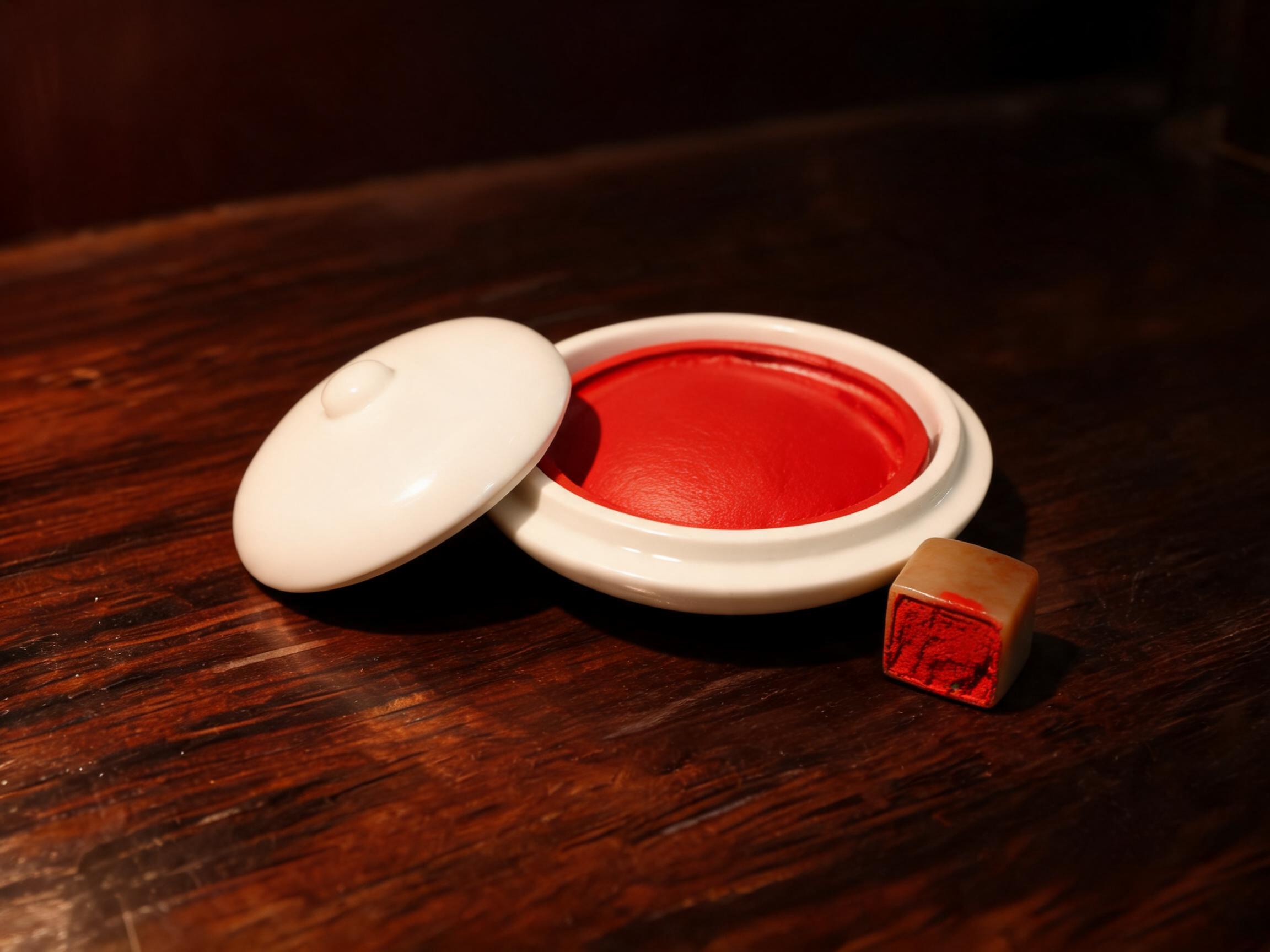
A pre-order verification checklist for importers sourcing Chinese seal paste in bulk: what to confirm about grade and batch consistency, how to choose between 30g and 50g containers, which packaging and transit factors affect drying stability, what export documentation should accompany a shipment, and how gift-set pairing changes the specification you order.
Bulk Procurement Checklist
Seal paste is one of the few stationery items where a bulk order can look correct on arrival and still fail three months later. A cheap container of paste that reaches a warehouse in good condition, sits through a humid season, and then dries out before it reaches a retail shelf turns into a return, a markdown, or a customer complaint in a gift set you assembled yourself. The colour that reads as bright vermilion under one batch of lighting can look muddy next to a previous shipment, and a gift box that pairs a fine seal stone with a paste container nobody can photograph properly will not sell either component well.
This checklist covers the points to settle before you place a bulk order for chinese seal paste: what to verify about grade and batch consistency, how to choose between 30g and 50g container formats, what packaging and transit factors to interrogate, which export documents should travel with the shipment, and how gift-set pairing changes the specification you send to the supplier. It is a verification list, not an assortment strategy.
Key checks before you commit
- Grade and batch: confirm the pigment and binder description in writing, and ask how each batch is reconciled against a reference colour.
- Container format: 30g suits retail, gift sets and individual artists; 50g suits studios and institutions.
- Stability: verify the drying-stability figure and the storage conditions it assumes.
- Documents: pigment safety documentation (ASTM D4236) plus quality certificates should ship with every order.
- Gift-set pairing: decide whether you are buying paste alone or paste inside a presentation set, because that changes MOQ, container size and customisation.
In this article
- Grade and batch-consistency checks
- Container format: 30g vs 50g
- Packaging, transit and drying stability
- Export documentation checks
- Gift-set pairing as a procurement decision
- FAQ
1. Grade and batch-consistency checks
Start with the formulation, in writing. The vermilion paste produced for this range uses a refined cinnabar pigment with a natural plant oil binder. Both of those statements matter for the buyer: the pigment determines the red and its permanence, the binder determines how the paste sits on the seal face and whether it stays workable in the container. Ask your supplier to state the pigment type and binder type in the quotation or specification sheet, not just in a brochure, so that what you receive can be checked against what you approved.
Colour consistency is the second question, and it is where bulk orders most often drift. Because natural pigments and plant oils vary, a credible supplier should describe a colour-matching step: each batch is colour-matched against a reference before it is released. Ask two specific things:
- What is the reference — a retained sample, a colour standard, or both — and how long is it kept?
- If a batch falls outside the tolerance, what happens to it?
A useful check during sampling is to compare the sample against the reference under the same lighting conditions you expect at retail, and to keep a sealed retained sample from the approved batch. When the bulk shipment arrives, that retained sample is your comparison point, and it is far more reliable than a photograph.
Grade consistency also concerns cleanliness. Impurity filtration is performed on every batch here, which is the relevant answer to a real buyer problem: grit in paste scratches seal stones and shows up as broken lines on paper. Ask whether filtration is a per-batch or periodic process, and at what stage it happens relative to filling the containers.
Finally, understand the QC that stands behind a shipment. On this range, quality control combines a pigment concentration test, impurity filtration, and AQL inspection. Those three cover different failure modes — colour strength, physical cleanliness and finished-goods defects — so it is worth asking which AQL level applies to the inspection and what the sampling plan covers.
2. Container format: 30g vs 50g
Container size is not a cosmetic choice. It decides who the product is for, how it is priced at retail, and how much paste in a single unit has to stay workable before the end user opens it. The paste is supplied in glazed porcelain containers in two formats.
| Format | Best-fit buyer use | What to verify before ordering |
|---|---|---|
| 30g glazed porcelain | Retail shelf units, gift-set inclusion, individual artists | Carton count per outer box; whether the container fits your existing gift-box cavity; label area and branding method |
| 50g glazed porcelain | Studios, institutions, workshop and classroom supply | Unit weight tolerance per container; outer-carton strength for heavier loads; whether institutional buyers expect a different lid or closure |
Format-to-use mapping reflects the supplier's stated positioning; confirm carton and packaging details on the quotation.
Two commercial parameters attach to the order rather than the unit: the minimum order quantity is 100 containers, and custom branded porcelain containers are available from 200 pieces. If you intend to sell under your own label, the 200-piece threshold is the number that governs your first production run, and it should be checked before you finalise pack sizes — a beautiful 30g gift-set unit cannot be branded at 150 pieces.
Lead time is 25–35 days after sample approval. That clock starts at approval, not at enquiry, so the sampling step is on your critical path. For buyers in South East Asia, Japan/Korea, the Middle East, Central and Eastern Europe, Africa and the Americas, add your own freight and customs clearance window on top of that figure when planning a seasonal launch.
3. Packaging, transit and drying stability
Seal paste fails in transit in two ways: mechanical damage to the porcelain, and drying or contamination of the paste itself. Glazed porcelain protects the paste well from the environment, but it does not protect itself from a poorly palletised carton. Before ordering, ask for the outer-carton specification — board grade, unit count, and whether inner dividers are used — and request that a shipment be photographed at packing stage if you are ordering for the first time.
The bigger commercial risk is drying. This paste is tested for 24+ months without drying under proper storage. That number is a conditional figure, and the condition is the part buyers should write into their own handling instructions. Ask the supplier to state, in the specification, the storage conditions the 24-month figure assumes — typically a sealed container, moderate temperature and away from direct sun — and then check whether your warehouse and your retail partners can meet them.
For hot or arid destinations, be more cautious rather than more optimistic. A sealed glazed container is a good barrier, but a retail display that leaves the lid loose for weeks is not the same test. If your channel includes long shelf-residence or open sampling, plan for smaller units (30g) that turn over faster, and instruct retailers to keep containers closed.
Finally, confirm how the porcelain is protected for your specific route. Sea freight to CEE or Africa involves multiple handling points; air freight to the Americas is faster but subject to different stacking. Give the supplier your destination and shipping mode and ask what packing change, if any, they recommend.
4. Export documentation checks
Documentation is where a technically good order becomes a customs problem. Before confirming a bulk order, establish which documents ship with the goods and which must be requested separately.
On this product range, the pigment meets ASTM D4236, and pigment safety documentation plus quality certificates ship with every order. Those two items should be named explicitly in your purchase order so that there is no ambiguity at dispatch. ASTM D4236 is an art-materials labelling standard; its relevance to you is that it supports the labelling and safety information your retail channel may ask for. It does not by itself certify every shipment, and it is not a substitute for the quality certificate — check that both are in the document pack.
- Confirm the exact document names you will receive, and ask for a sample set before the first commercial shipment.
- Check that the batch or lot identification on the certificate matches the containers in the carton.
- Ask who prepares the commercial invoice and packing list, and whether the packing list is itemised by container size, since a mixed 30g/50g order is common.
- If your market requires additional labelling in the destination language, raise it before production rather than after.
Do not assume destination-specific import requirements are covered. Customs and labelling rules differ by country; your own import broker is the right party to confirm what your market needs beyond the supplier's standard document pack.
5. Gift-set pairing as a procurement decision
If you sell into cultural gift channels, the paste is rarely sold alone, and pairing decisions change what you should order. This is a procurement decision, not a merchandising afterthought, because the components have different MOQs, different lead times and different damage profiles.
There are two routes. The first is to buy seal paste alone and assemble sets in your own market. That gives you flexibility on the stone and the box, but leaves you responsible for fit, protection and any damage in your own assembly line. The second is to buy a prepared presentation set in which the stone, paste, knife and ink pad are already specified together — for example the seal carving gift set — which removes fit risk but fixes the combination you can offer.
Three checks decide between them:
- Unit economics of the container size. A gift set normally wants the 30g format. Confirm that the 30g porcelain container dimensions suit your box cavity before you order boxes.
- Branding threshold. Custom branded porcelain starts at 200 pieces. If you plan a branded gift programme, size the paste order to that threshold and check the matching stones at the same time.
- Component consistency. If you pair paste with seal stones, as in the premium Shoushan seal stone range, make sure both components are described with the same care in your listing. A buyer in Japan or Korea will read the stone description as closely as the paste description.
If your programme is institutional rather than gifting — studios, schools, calligraphy workshops — skip the set logic and order 50g containers in plain porcelain. The paste matters; the box does not.
6. FAQ
How long can the paste be stored before it dries out?
It is tested for 24+ months without drying under proper storage. Confirm with the supplier what "proper storage" means for your climate and channel, and write those conditions into your own warehouse and retail instructions.
Can I order a mixed shipment of 30g and 50g containers?
Both formats are produced in glazed porcelain. The MOQ is 100 containers, so specify clearly whether that figure applies to each size or to the combined order, and ask for the packing list to be itemised by size.
What is the smallest order I can place with custom branding?
Custom branded porcelain containers are available from 200 pieces. Below that, order plain containers and apply your own labels in your market.
What quality documents should arrive with a bulk order?
Pigment safety documentation and quality certificates ship with every order on this range. Confirm the exact document list on your purchase order and check that batch identification matches the goods.
How does sampling work before a bulk order?
Request samples, check colour against your retained reference under your retail lighting, approve the sample, and keep a sealed retained unit. Lead time of 25–35 days runs from sample approval, so the sample round is on your critical path.
Next step: if you are comparing paste specifications for a bulk order, review the full pigment, container and documentation details on the vermilion ink paste product page, then send your container size, branding requirement and destination port for a quotation.
Vermilion ink paste has been produced at this facility since 2011, with monthly capacity of more than 10,000 containers. That capacity is reassuring for seasonal orders, but it does not replace the checks above: grade and batch reference, container format, packing for your route, documents in the carton, and a clear decision on whether you are buying paste or a set. Settle those five before you confirm quantity, and the order that arrives will be the order you specified.