
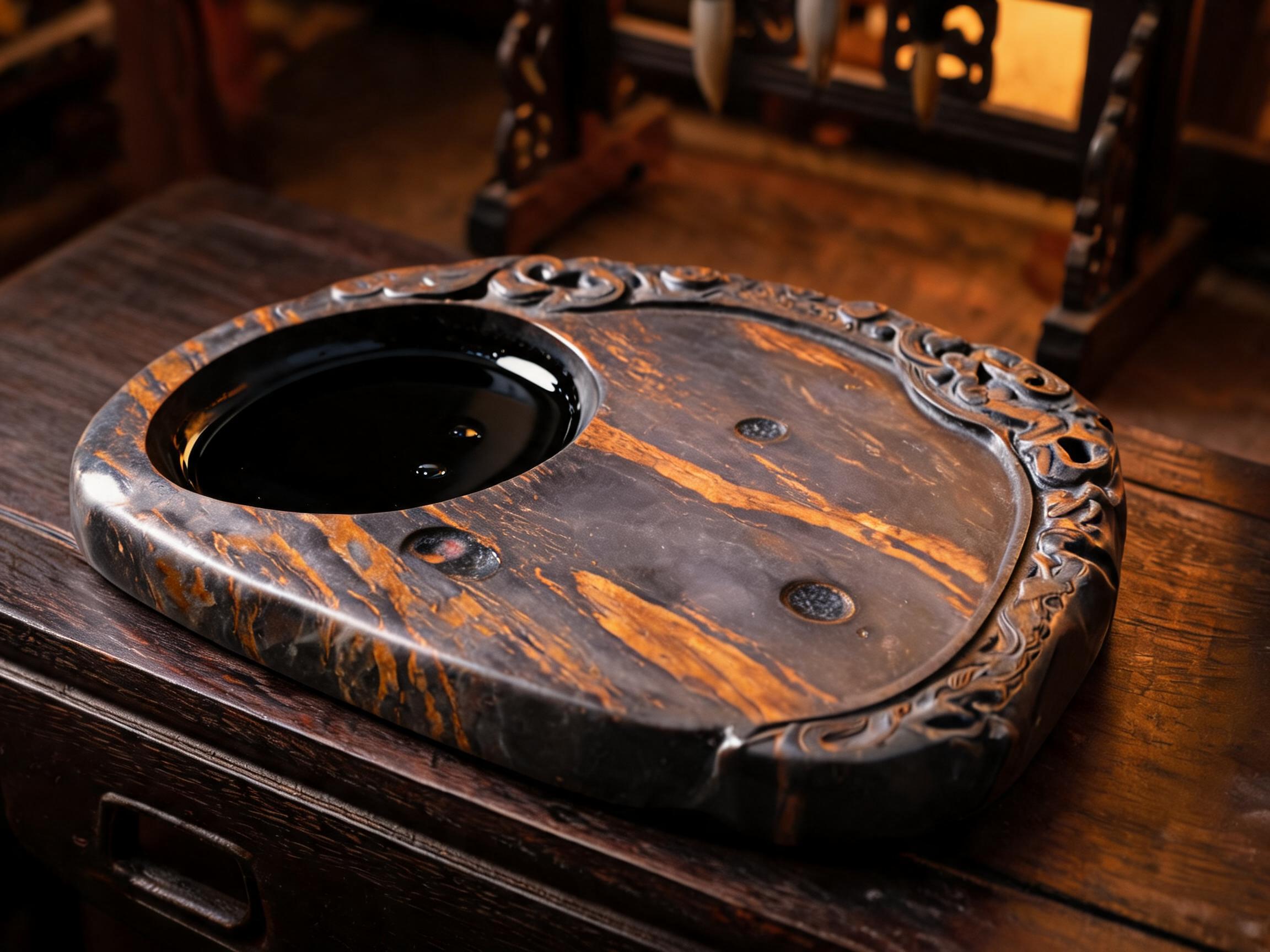
A sourcing guide for B2B importers comparing Chinese Duan and She inkstones with Japanese suzuri, covering channel fit, budget tiers, pairing with Hui ink sticks, and bulk-order verification steps.
What Japanese buyers actually search when sourcing ink stones
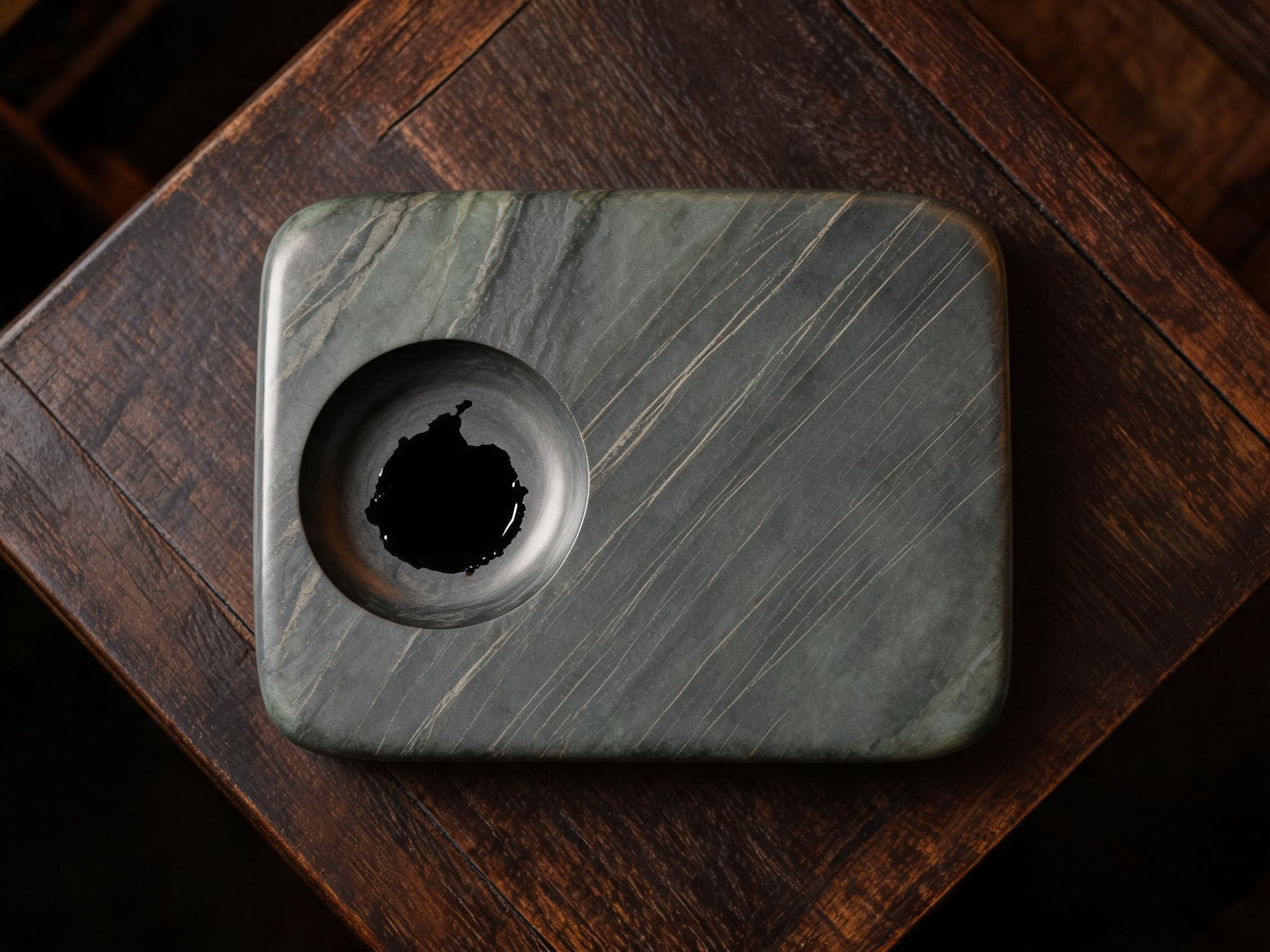
A Japanese stationery wholesaler or temple-supply dealer searching for a japanese calligraphy ink stone is usually not looking for a domestic quarry product. They are sourcing for one of three programs: calligraphy classrooms that need repeatable grinding surfaces, gift and cultural-gift lines that need presentation and provenance, or collector and institution orders that need documented stone character. In all three cases, the search term is functional — it describes the tool, not the origin.
This is where Chinese inkstones enter the conversation. Duan (Zhaoqing) and She (Wuyuan/She County) stones are the two most-traded Chinese stone families in export channels, and both are regularly paired with Japanese and Korean calligraphy programs. The practical question for a B2B importer is not “which is more Japanese” but “which stone family fits which channel, and how do I verify it before I commit to a bulk order.”
Duan vs She at a glance
Both families are sold into the same export channels, but they serve different buyer expectations. The table below maps the two stone families to real product lines and typical channel fit.
| Attribute | Duan inkstone | She inkstone |
|---|---|---|
| Origin | Zhaoqing, Guangdong | Wuyuan / She County, Anhui |
| Stone character | Hand-selected grain; premium grinding performance | Fine grain; structural integrity testing |
| Typical buyer | Studios, collectors, gift programs | Collectors, cultural institutions |
| Product line | Classic Duan Inkstone (SKU GMO-INK-001) | She Inkstone Premium (SKU GMO-INK-002) |
| Channel fit | Retail gift lines, classroom upgrade sets, collector retail | Institutional orders, museum shops, high-end cultural gifts |
For importers building a general calligraphy catalog, Duan often works as the anchor stone because it covers both studio use and gift presentation. She tends to be specified when the buyer needs to demonstrate a distinct stone identity or supply cultural institutions that expect provenance documentation. Neither family is inherently “better”; the choice depends on the program and the documentation the buyer needs.
Where suzuri differs and why JP/KR programs still source Chinese stones
Suzuri is the Japanese term for a grinding stone, and Japanese stones have their own historic quarry traditions. A Japanese buyer comparing a domestic suzuri with a Chinese Duan or She stone is comparing two supply systems, not two versions of the same product. Domestic Japanese stones carry local provenance and brand recognition; Chinese stones carry export volume, price tiers, and customization options that domestic suppliers may not offer at the same scale.
Many JP/KR calligraphy programs source Chinese stones for three practical reasons:
- Program volume: Classroom programs need consistent grinding surfaces across dozens or hundreds of units. Chinese export lines can supply matched batches with repeatable finish grading.
- Gift and cultural-gift demand: Buyers in Southeast Asia, the Middle East, Central/Eastern Europe, Africa, and the Americas’ Chinese communities often want a stone that reads as culturally authentic and comes with presentation packaging. Chinese carved and decorative lines fill this gap.
- Pairing flexibility: Chinese stones are designed to be paired with Hui ink sticks and liquid ink, so a single supplier can deliver a complete starter or gift set rather than a stone alone.
What suzuri buyers should not assume is that a Chinese stone is a substitute for a domestic Japanese stone in every context. For collector-grade Japanese quarry material, domestic channels remain the reference. For volume programs, classroom kits, gift sets, and institutional orders where documentation and packaging matter, Chinese Duan and She stones are a practical sourcing route.
Budget ladder: from practice stones to carved collector pieces
Inkstone sourcing usually follows a budget ladder rather than a single price point. The tiers below are separated by material grade, carving workmanship, whether a certificate of authenticity is included, and packaging format — not by published prices. The ladder maps product lines to buyer programs; specific dimensions, weights and prices are project-dependent and should be confirmed with the supplier.
- Entry tier — Practice Inkstone (SKU GMO-INK-003): consistent grinding surface and affordable positioning for schools and classroom programs. This is the volume tier for teaching use.
- Mid tier — Classic Duan Inkstone (SKU GMO-INK-001) and She Inkstone Premium (SKU GMO-INK-002): hand-selected grain and verified quarry sources. Suitable for retail gift lines, collector retail, and cultural institutions.
- Gift tier — Carved Decorative Inkstone (SKU GMO-INK-004): hand-carved patterns with a certificate of authenticity. Built for gift programs and cultural-gift buyers who need presentation and provenance in one package.
- Travel tier — Compact Travel Inkstone (SKU GMO-INK-005): optimized grinding surface with a protective case, for classroom travel kits and demonstration sets.
The ladder matters because a single importer may need all four tiers across different accounts. A stationery wholesaler supplying schools needs the practice tier; the same wholesaler’s gift division needs carved pieces with certificates. Sourcing from one supplier with an integrated chain from raw material selection through packaging and shipment reduces the number of vendors to qualify.
Pairing stones with Hui ink sticks for starter kits and gift sets
Ink stones are rarely sold alone in classroom and gift channels. Japanese and Korean buyers often pair Chinese stones with ink sticks for teaching and collection use, and with liquid ink for high-volume classroom practice. The pairing decision affects the kit configuration and the packaging.
For a starter kit, a practice stone paired with a Hui ink stick gives the student a complete grinding experience without the cost of a collector-grade stone. For a gift set, a Duan or She stone paired with a premium Hui ink stick — such as the Premium Pine Soot Hui Ink Stick (SKU GMO-HIS-001), hand-crafted pine soot with gold-filled patterns — creates a presentation-ready cultural gift. The ink stick’s gold-filled patterns are a visual complement to a carved or classic stone, which matters for gift and cultural-gift buyers in Southeast Asia, the Middle East, and Europe.
For classroom programs, the pairing logic is different: liquid ink is often the practical choice for volume use, while the stone remains the durable component. Buyers should decide per program whether the kit includes an ink stick, liquid ink, or both, because this affects packaging, documentation, and reorder patterns.
What to confirm before bulk ordering
Bulk orders for inkstones hinge on three verification points. These are the questions to put to any supplier before committing.
- Quarry-source verification: Ask how the supplier documents the stone’s origin. For Duan, the reference is Zhaoqing; for She, Wuyuan/She County. A supplier with an integrated chain from raw material selection should be able to trace the stone family and provide the documentation your market requires. Treat “verified quarry sources” as a claim to test: ask exactly which origin documents accompany the order, in what form, at which production stage.
- Structural checks: Confirm that the supplier runs inline QC checkpoints for material verification and finish grading. For She stones, structural integrity testing is a relevant checkpoint. Ask what happens to stones that fail grading — whether they are rejected or downgraded to a practice tier.
- Export packing documentation: Confirm the packing method and the documentation supplied with the shipment. For gift and institutional orders, ask whether certificates of authenticity are included for carved pieces, and how the packaging protects the stone in transit.
Guangdong Gumo Crafts Technology Co., Ltd. (founded 2011) produces handmade inkstones among eight categories, rooted in Duan inkstone resources with an integrated chain from raw material selection through packaging and shipment. The company provides OEM customization, gift set design, and bulk export, with inline QC checkpoints for material verification and finish grading, plus export packing documentation. These capabilities are the ones to test against your own program requirements — not to assume.
Sourcing checklist
- Define the program type: classroom volume, retail gift, institutional, or collector.
- Choose the stone family based on channel fit, not origin preference.
- Map the budget tier to the product line and confirm quantities.
- Decide the ink pairing: Hui ink stick, liquid ink, or both.
- Request quarry-source documentation and QC checkpoint details.
- Confirm export packing and certificate inclusion for gift and institutional orders.
- After your checklist is complete, request samples and spec sheets through the supplier’s product pages or inquiry channel before releasing the bulk order.
For importers comparing japanese calligraphy ink stone options, the practical answer is that Chinese Duan and She stones cover the volume, gift, and institutional channels that domestic suzuri supply does not always reach. The verification steps above are what turn a price comparison into a sourcing decision.