A practical sourcing guide for importers and cultural-gift buyers seeking ink stones for ceremonial and religious calligraphy. Learn what to look for, how to source in bulk, and why this niche differs from general inkstone buying.
For importers and cultural-gift buyers across Southeast Asia, the Middle East, and Africa, sourcing an ink stone for ceremonial and religious calligraphy is different from buying one for a stationery shop. Temples, shrines, madrasas, and cultural venues have specific expectations about how an ink stone looks, how it holds ink, and how it fits into ritual practice.
This guide is the first on our site to focus on the ink stone keyword specifically for ceremonial and religious use in these markets. We explain what to look for, how to choose between different types, and how to source them in bulk without guesswork.
Key takeaways
- Ceremonial ink stones differ from practice stones: they need a larger grinding surface, stable construction, and a finish that suits display in religious settings.
- Buyers should verify material origin (e.g., Duan stone), carving quality, and whether the stone is sealed or treated for long-term ink resistance.
- For bulk sourcing, work with a manufacturer that controls the full chain—from raw stone selection to packaging—to ensure consistent quality across large orders.
- Our range includes Classic Duan, She Premium, Practice, Compact Travel, and Carved Decorative inkstones, each suited to different ceremonial and religious needs.
Why ceremonial and religious calligraphy demands a different ink stone
In many cultures, calligraphy is not just writing—it is a meditative act, a form of prayer, or a way to honor ancestors. The ink stone is part of that ritual. A stone that is too small, too rough, or too decorative may be unsuitable for daily use in a temple or shrine.
For ceremonial use, buyers typically need:
- Stable, flat grinding surfaces—for consistent ink preparation, especially when calligraphers grind ink by hand before each session.
- Durable construction—stones that can withstand repeated use and cleaning without chipping or cracking.
- Appropriate size and weight—large enough for ceremonial brushes, but not so heavy that they are impractical to move or store.
- Finish that respects tradition—carvings or shapes that align with local cultural or religious aesthetics, without being overly ornate for daily ritual use.
How to choose an ink stone for temple, shrine, and madrasa use
When evaluating an ink stone for these settings, consider the following criteria. They apply whether you are sourcing for a single temple or a regional network of cultural venues.
Stone type and origin
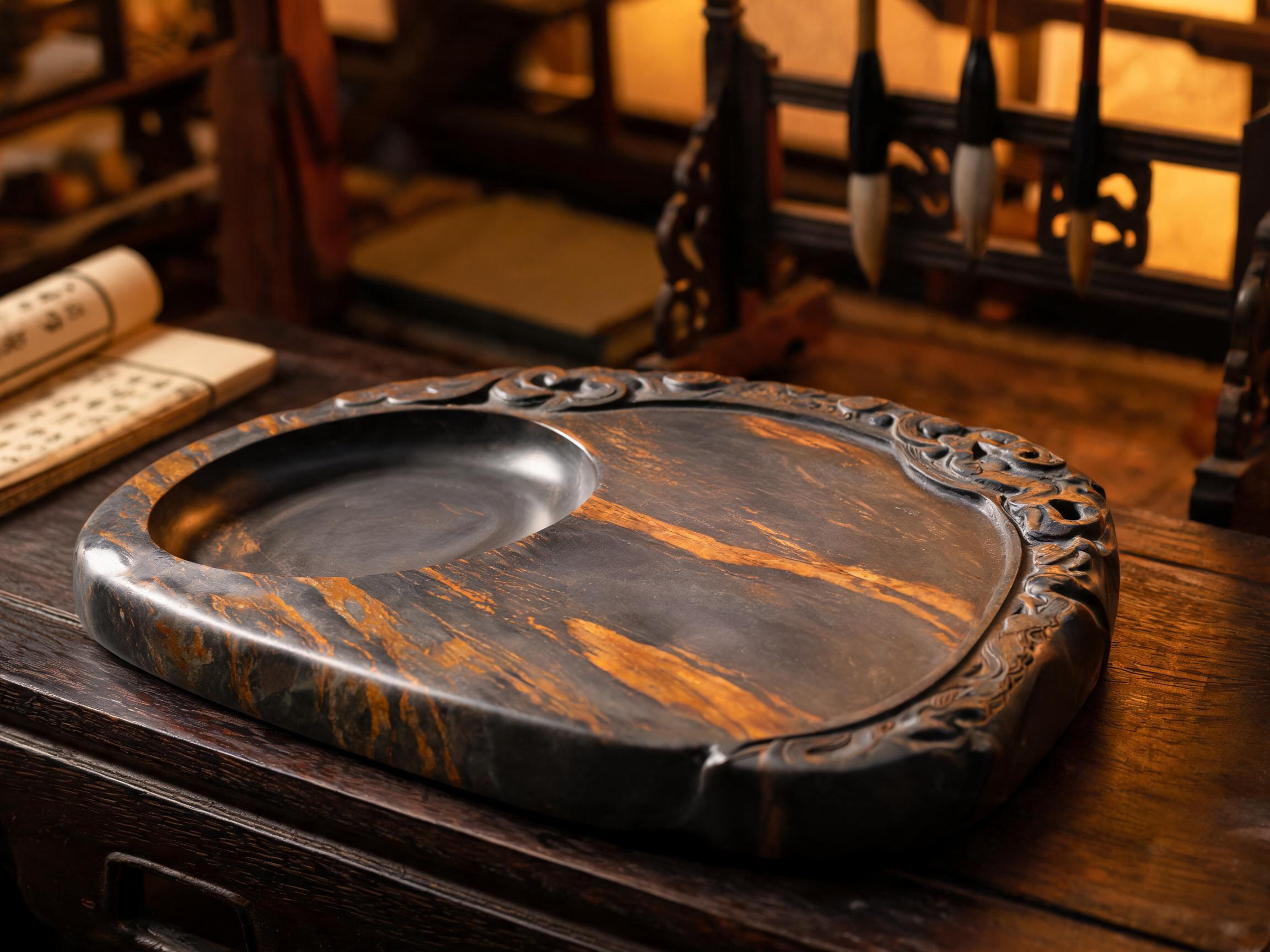
The most famous ink stones come from Duan and She quarries in China. Duan inkstones are prized for their fine texture and ability to produce smooth ink; She inkstones are known for their hardness and longevity. For ceremonial use, a genuine Duan or She stone signals quality and respect for tradition.
Our Classic Duan Inkstone is a reliable choice for buyers who want a traditional, high-quality stone. The She Inkstone Premium offers a different texture and is often preferred for its durability.
Grinding surface and shape
The grinding surface should be smooth and slightly concave to hold water and ink. For ceremonial calligraphy, a larger grinding surface is practical because ceremonial brushes are larger and require more ink. The shape matters too: round or oval stones are common, but rectangular stones are easier to store and fit on altars or desks.
Carving and decoration
Some ceremonial settings appreciate carved stones—for example, with motifs of dragons, clouds, or lotus flowers—but the carving should not interfere with the grinding area. Our Carved Decorative Inkstone balances ornamentation with function, making it suitable for display and daily use.
Sealing and treatment
Quality ink stones are often sealed with a protective coating to prevent ink from penetrating the stone. This is essential for long-term use. Ask your supplier whether the stone is sealed and what type of sealant is used. If you are sourcing for religious venues where stones may be used daily, this is a critical detail.
Bulk sourcing for importers: what to look for in a supplier
When you source inkstone wholesale quantities, you need more than a good product—you need a supplier who can deliver consistent quality across hundreds or thousands of units. Here is a checklist for evaluating a manufacturer.
- Integrated production: A manufacturer that controls the process from raw stone selection to packaging can better maintain quality and traceability. Gu Mo Craft Technology (古墨工艺品), founded in 2011, is one such integrated manufacturer, rooted in the cultural resources of Duan inkstones, with a complete industrial chain from raw material selection to packaging and shipment.
- Product range: A supplier with multiple ink stone lines can match different ceremonial needs. Our range includes the Practice Inkstone for educational settings, the Compact Travel Inkstone for portable use, and the carved and premium options mentioned above.
- Quality control: Ask how the supplier checks for cracks, surface defects, and consistency in size and weight. For ceremonial use, a flawed stone can be a bad omen in some cultures, so rigorous QC is non-negotiable.
- Packaging and shipping: Ink stones are heavy and fragile. Confirm that the supplier uses protective packaging (foam, wooden crates, etc.) suitable for sea freight. Our packaging is designed to minimize breakage during international shipping.
Comparing ink stone options for ceremonial and religious use
The table below summarizes the key differences between our ink stone types, helping you choose the right one for your market.
| Product | Best for | Key feature |
|---|---|---|
| Classic Duan Inkstone | Traditional temples, daily use | Fine texture, smooth grinding, authentic Duan stone |
| She Inkstone Premium | High-end ceremonial venues | Hard stone, durable, premium finish |
| Practice Inkstone | Madrasas, schools, beginner calligraphy | Affordable, functional, simple design |
| Compact Travel Inkstone | Portable use, visiting calligraphers | Lightweight, small footprint |
| Carved Decorative Inkstone | Display and ceremonial use | Ornate carvings, still functional |
Understanding demand in Southeast Asia, the Middle East, and Africa
These regions have distinct calligraphy traditions, but they share a common need for quality ink stones to support religious and cultural practices.
- Southeast Asia: Buddhist temples and Chinese cultural associations use ink stones for copying sutras and writing festive couplets. Demand is steady, with peaks before major festivals like Lunar New Year.
- Middle East: While Islamic calligraphy uses reed pens and ink pots, some madrasas and cultural centers incorporate ink stones for traditional Arabic calligraphy practice. There is growing interest in high-quality Chinese ink stones as a cultural exchange item.
- Africa: In countries with Chinese diaspora communities, temples and cultural venues serve as centers for calligraphy. Ink stones are also purchased as gifts for scholars and religious leaders.
For all these markets, the ink stone is not just a tool—it is a symbol of dedication to the art of writing. Choosing the right stone and sourcing it reliably can position your business as a trusted supplier.
Frequently asked questions
What is the difference between a ceremonial ink stone and a regular one?
A ceremonial ink stone is typically larger, more durable, and often more decorative, designed to be used in a religious or formal setting. Regular ink stones may be smaller and less robust, suitable for daily practice or travel.
Can I order a mix of different ink stone types in one bulk order?
Yes, we can accommodate mixed orders. Many of our buyers start with a container that includes a few types to test the market, then refine their assortment based on demand. Contact us to discuss your specific mix.
How should I care for an ink stone used in a temple or shrine?
After each use, rinse the stone with clean water and dry it with a soft cloth. Avoid using soap or detergents, as they can damage the surface. Store the stone in a dry place, away from direct sunlight. For daily use, regular cleaning prevents ink buildup.
Do you provide samples for quality assessment?
We can provide samples for serious buyers. Please reach out with your intended volume and use case, and we will recommend the most suitable stone type for your market.
Next steps for importers and cultural-gift buyers
Sourcing an ink stone for ceremonial and religious calligraphy is a specialized task, but with the right supplier, it can be straightforward. Gu Mo Craft Technology, founded in 2011, offers an integrated manufacturing process that ensures quality from raw stone to final packaging. Our product range covers traditional, premium, practice, travel, and decorative inkstones, so you can find the right fit for your market.
If you are planning to import inkstones for temples, shrines, madrasas, or cultural venues, we invite you to contact us with your requirements. We can help you select the right stone type, discuss bulk pricing, and arrange packaging and shipment that protect your investment.