
Understand the key differences between Chinese brush painting ink and calligraphy ink—concentration, glue content, and format—so you can build a balanced assortment for your art supply business.
Why Painting Ink and Calligraphy Ink Are Not Interchangeable
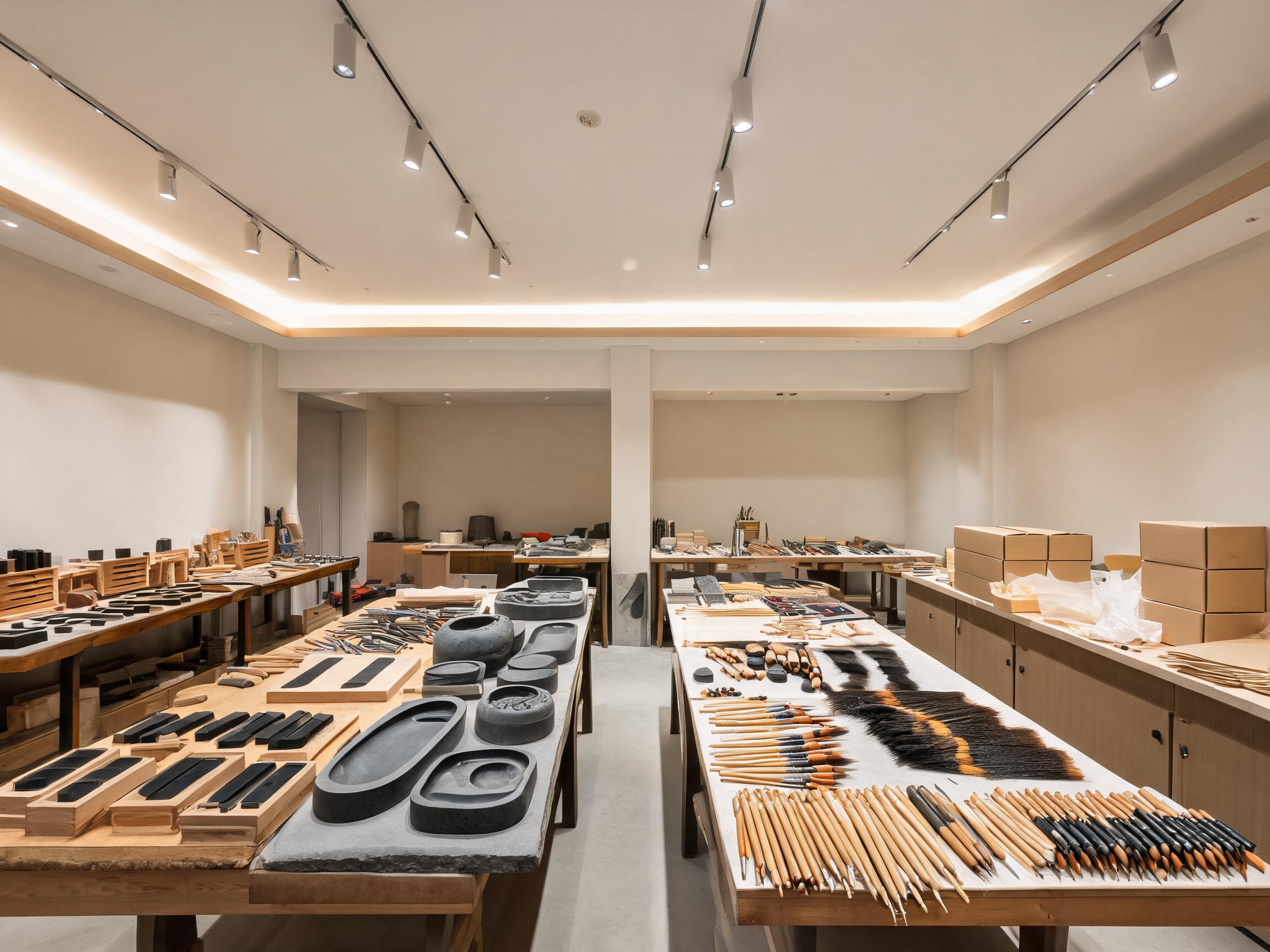
Many art supply dealers treat "Chinese brush painting ink" and "calligraphy ink" as the same product with different labels. That assumption leads to mismatched stock: painters who need slow-drying, layered washes end up with ink formulated for crisp, fast-drying calligraphy strokes, and calligraphers who need dense, permanent black end up with diluted painting ink that bleeds on xuan paper.
The two ink categories share raw materials—soot, animal glue, and water—but they diverge in concentration, glue content, and format. Understanding these differences lets you serve two distinct customer groups with the right products, rather than forcing one ink to do both jobs poorly.
Key takeaways for dealers:
- Painting ink is formulated for dilution, layering, and slow drying; calligraphy ink prioritizes density, flow, and permanent black.
- Liquid ink suits convenience-driven customers; ink sticks suit traditional practitioners and those who want control over concentration.
- A balanced assortment carries both formats in student and premium grades to cover hobbyists, professionals, and diaspora communities.
Core Differences Between Painting Ink and Calligraphy Ink
Concentration and Grinding
Calligraphy ink is typically sold ready-to-use at a higher concentration. The brush needs to hold a sharp tip and deliver consistent black strokes without interruption, so the ink must flow evenly and dry predictably on the paper. Painters, by contrast, routinely dilute ink with water to create the five shades of black—from pale mist to deep charcoal. Painting ink is therefore often formulated to remain stable when diluted, allowing washes to layer without muddying.
For dealers, this means a single "all-purpose" ink rarely satisfies both groups. A painter who buys calligraphy-grade ink may find it too dense and sticky for washes; a calligrapher who buys painting ink may find it too thin for bold, confident strokes.
Glue Content and Behavior on Paper
The binder—typically animal glue—controls how ink adheres to xuan paper and how it dries. Calligraphy ink tends to carry a glue balance that keeps strokes crisp, preventing feathering at the edges. Painting ink often uses a glue formulation that allows pigment to settle gently, supporting wet-on-wet techniques and gradual tonal transitions.
Glue content also affects re-wetting behavior. Ink sticks, which are ground on an inkstone with water, let the artist control concentration and glue dispersion every session. Liquid inks offer consistency but less control. Dealers stocking for traditional practitioners should carry ink sticks; those serving students and casual artists can rely more on bottled liquid ink.
Format: Liquid Ink vs. Ink Sticks
Liquid ink is the convenience product. It pours straight from the bottle, requires no grinding, and delivers uniform results—ideal for classrooms, daily practice, and artists who value time over ritual. Ink sticks require an inkstone, water, and grinding time, but they give the artist complete control over concentration and are preferred by many painters and calligraphers for finished work.
Your assortment should reflect that both formats have dedicated users. A painter may keep a premium ink stick for finished pieces and a bottle of liquid ink for studies. A calligraphy student may only need a student-grade liquid ink. Stocking both formats at multiple price points covers the full spectrum.
In this guide
- Core differences: concentration, glue, format
- What your customers actually need
- A dealer stocking combination that works
- Quality signals to check with suppliers
- FAQ for art supply dealers
What Your Customers Actually Need
Calligraphy Customers
Calligraphy customers—whether in Japan, Korea, or Chinese diaspora communities—buy ink for one primary purpose: writing characters with clean, controlled strokes. They need:
- Dense, opaque black that does not gray out when dry
- Smooth flow from brush to paper without skipping
- Predictable drying time that does not bleed into adjacent strokes
- Consistency across bottles, especially for students who need repeatable results
For this group, liquid ink in student and premium grades covers most needs. Traditional practitioners may also want ink sticks for ceremonial or finished work.
Painting Customers
Chinese brush painting customers work across styles—gongbi (detailed), xieyi (freehand), and landscapes. Their ink needs differ significantly:
- Stable behavior when diluted with water
- Ability to layer washes without disturbing underlying layers
- Controlled granulation and settling for texture effects
- Slow enough drying to allow blending on the paper
Painters often prefer ink sticks for finished work because they can grind to the exact concentration each session. They also use liquid ink for practice and studies, but they are more likely than calligraphers to own an inkstone.
Regional and Channel Considerations
Japan and Korea have strong calligraphy traditions with established preferences for liquid ink—Japanese sumi ink in particular is widely used in daily practice. Chinese diaspora communities often maintain traditional ink stick practices, especially for festivals and cultural events. Art channels—college bookstores, craft stores, and online specialty retailers—typically see a mix of both, with students driving liquid ink volume and serious practitioners buying sticks.
Dealers serving multiple channels should not assume one regional preference fits all. A store near a university with a strong East Asian art program will sell more liquid ink; a shop serving a diaspora community may sell more ink sticks and inkstones.
A Dealer Stocking Combination That Works
Rather than choosing between painting ink and calligraphy ink, build an assortment that covers both functions and both formats. A practical starting combination includes:
Recommended core assortment
- Student-grade liquid ink for calligraphy classes and beginners—high volume, repeat purchase
- Premium bottled calligraphy liquid ink for serious practitioners who want consistent, dense black without grinding
- Bulk calligraphy liquid ink for schools, studios, and workshops that go through ink quickly
- Concentrated matte black liquid ink for painters who work in washes and want a stable, dilutable option
- Premium pine soot ink stick for painters and calligraphers who grind their own ink for finished work
- Classic oil soot ink stick for traditional practitioners who prefer the warm, deep black of oil soot
This combination gives you coverage across price points and use cases. Student-grade liquid ink handles the volume; premium liquid ink serves the quality-driven calligrapher; concentrated matte ink serves painters; and the two ink stick lines cover the traditional segment that refuses to compromise on ritual and control.
For dealers with shelf space, add xuan paper rolls and treated xuan paper for gongbi painting as complementary items—customers who buy painting ink also need appropriate paper to see the ink's behavior.
Quality Signals to Check with Suppliers
When sourcing ink for your assortment, the supplier's manufacturing process matters as much as the final product. A supplier with in-house control over soot burning, glue mixing, and molding can offer consistent quality across batches—critical for a product where artists notice subtle differences.
Ask your supplier about:
- Soot source: pine soot gives a cool, bluish black; oil soot gives a warm, deep black. Confirm which is used in each product line.
- Glue formulation: ask how the glue ratio varies between painting and calligraphy lines, and whether liquid inks are formulated for dilution stability.
- QC at each stage: inline inspection during production—from soot burning to final packaging—reduces batch variation. Confirm the supplier's QC points.
- OEM capabilities: if you want custom ink stick patterns, specs, or packaging, confirm the supplier can handle design, manufacturing, and export documentation.
Gu Mo Craft Technology, founded in 2011, integrates design, manufacturing, QC, and export for Hui ink sticks, calligraphy liquid inks, xuan paper, brushes, inkstones, and scholar desk sets. Their process covers pine and oil soot burning, glue mixing and hammering, mold pressing, and shade drying—with inline QC at each production stage. They also offer OEM customization of ink stick patterns, specs, and packaging, plus export packing and documentation. If you are evaluating a supplier for a full ink assortment, these are the capabilities to verify rather than assume.
FAQ for Art Supply Dealers
Can one ink serve both painters and calligraphers?
In practice, no. The concentration and glue balance differ. A calligrapher needs dense, crisp ink; a painter needs ink that dilutes well and layers cleanly. Stocking both types prevents customer disappointment and returns.
Should I stock liquid ink or ink sticks?
Both. Liquid ink drives volume for students and daily practice; ink sticks serve traditional practitioners and finished-work artists. The ratio depends on your customer base, but carrying both formats at entry and premium price points is the safest strategy.
What is the difference between pine soot and oil soot ink sticks?
Pine soot produces a cooler, slightly blue-black tone and is often preferred for painting washes. Oil soot gives a warmer, deeper black and is favored for calligraphy and bold strokes. Stock both to cover the tonal preferences of your customers.
How do I choose between student-grade and premium liquid ink?
Student-grade ink is formulated for affordability and consistent basic performance—suitable for classrooms and beginners. Premium liquid ink offers higher pigment load, smoother flow, and more stable dilution, which serious calligraphers and painters notice. Carry both to serve different budgets and expectations.
What complementary products should I stock alongside ink?
Xuan paper is the natural companion—different paper absorbency changes how ink behaves. Brushes, inkstones, and scholar desk sets are also strong cross-sell items. Dealers can build a complete East Asian art supplies section rather than selling ink in isolation.
Building a Balanced Ink Assortment
The dealers who succeed in the Chinese brush painting and calligraphy market treat ink as a category with distinct sub-segments, not as one interchangeable product. By stocking both painting and calligraphy formulations, both liquid and stick formats, and both student and premium grades, you cover the full customer journey—from the first-time student to the traditional master.
Before finalizing your order, confirm the specific concentration, glue content, and dilution behavior of each product with your supplier. These properties are not standardized across the industry, and the right formulation depends on the exact use case your customers bring to the counter.