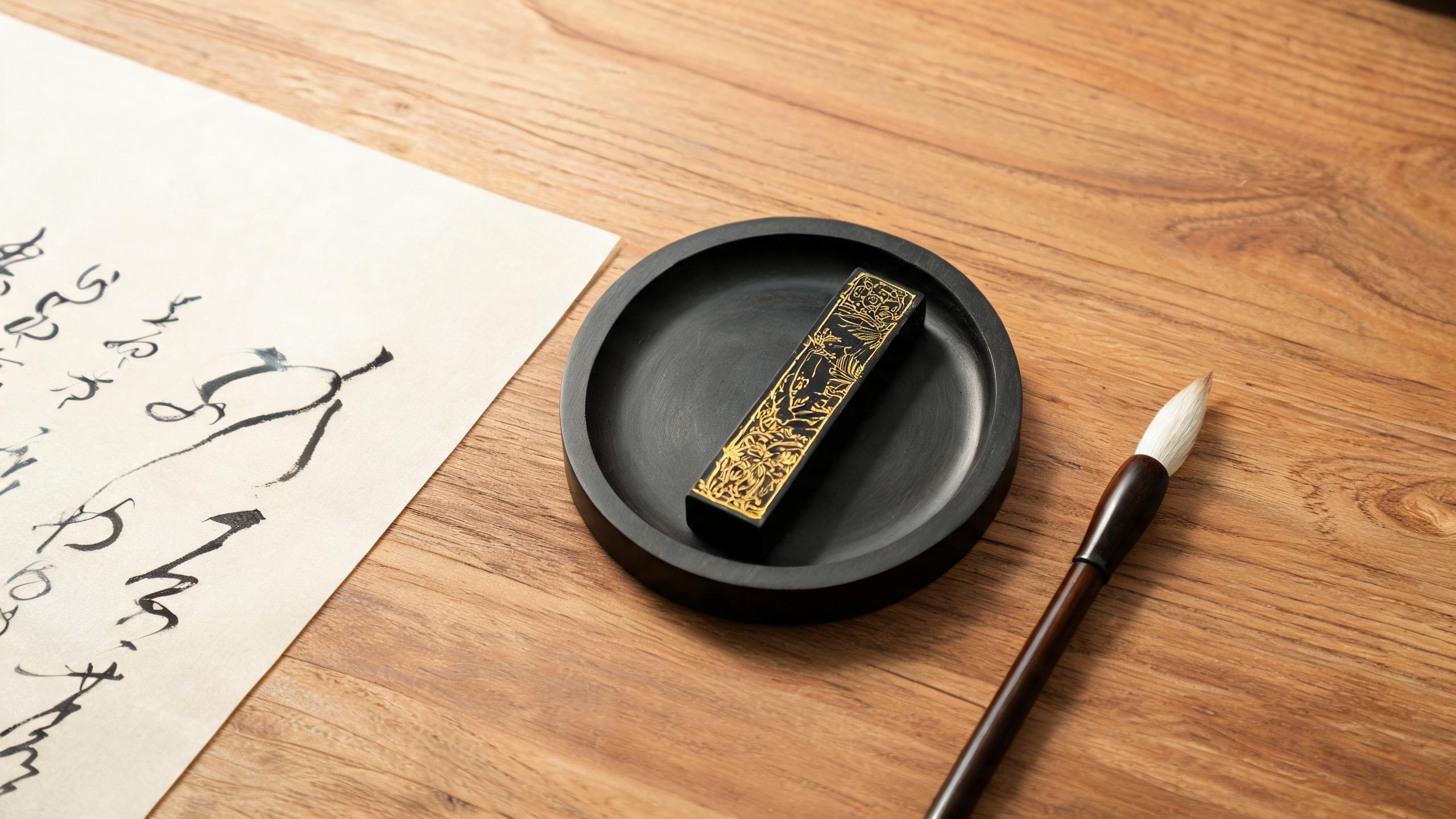
A practical guide to grinding a Chinese ink stick on an inkstone: water amount, grinding time, ink consistency, common mistakes, and proper care and storage for wholesale buyers.
Ink Stick Guide
A Chinese ink stick is straightforward to use once you know the routine: add clean water to an inkstone, grind the stick in slow circles, and stop when the ink reaches the right consistency. This guide walks through the full process — from preparing the stick to storing it — so you can get consistent, rich ink every time.
Preparing the stick
Before you start grinding, check the stick for any cracks or damage. A sound stick is solid and has a smooth, even surface. If the stick is new, some sellers apply a light coating of preservative or oil; wipe it off with a soft, dry cloth first.
You will need:
- An inkstone (a smooth, flat stone with a shallow well)
- Clean water — preferably distilled or filtered, as tap water can contain minerals that affect the ink
- A small dropper or brush to add water
- A palette or dish if you plan to dilute the ink later
Set up your workspace on a flat, stable surface. Keep a cloth nearby to wipe the stick and stone as you work.
Grinding on an inkstone: step by step
- Add a small amount of water. Pour a few drops of water into the inkstone's well. For a first pass, about a teaspoon (5 ml) is enough for a small amount of ink. You can always add more.
- Hold the stick upright. Grip the ink stick perpendicular to the stone, like you would hold a pen vertically. This gives you control and even pressure.
- Grind in slow circles. Move the stick in a circular motion, applying gentle, even pressure. Keep the stick flat against the stone — do not tilt it, or you'll wear it unevenly.
- Add water gradually. As the ink forms, add a few more drops of water to keep the mixture fluid. The ink will start as a thin gray liquid and gradually become darker and more viscous.
- Continue until the ink is smooth. Depending on the stick and the stone, this can take 1 to 3 minutes. The ink should be a deep, opaque black with a slight sheen. It should not be watery or too thick.
- Stop grinding when the ink is ready. Lift the stick and check the ink's consistency. If it's too thin, grind a little more without adding water. If it's too thick, add a drop or two of water and mix briefly.
Once the ink is ready, use it promptly. Freshly ground ink dries quickly, so work in small batches.
Water-to-ink judgment
The right water amount depends on what you're painting or writing. Here's a general guide:
| Use | Consistency | Water amount |
|---|---|---|
| Fine line calligraphy | Thin, flows easily | More water (about 1.5–2 tsp per 1 tsp of ink) |
| Standard writing and painting | Medium, smooth | Equal parts water and ink (1:1) |
| Bold strokes, shading | Thick, slow-flowing | Less water (about 0.5–1 tsp per 1 tsp of ink) |
The key is to start with a small amount of water and add more as you grind. It's easier to thin ink than to thicken it. If you add too much water, you can leave the ink on the stone for a few minutes to evaporate slightly — but this changes the ink's character, so it's better to avoid over-watering.
Common mistakes to avoid
- Using too much water. This is the most common error. Too much water makes the ink pale and thin, and you'll need to grind for a long time to reach the right darkness.
- Grinding too fast. Fast, vigorous grinding creates bubbles and uneven ink. Slow, steady circles give you a smooth, consistent result.
- Tilting the stick. If you hold the stick at an angle, the grinding surface becomes uneven, and the stick wears down faster on one side.
- Leaving the stick in water. Never leave the stick soaking in the inkstone's well. The end will soften and break down, ruining the stick.
- Using dirty or hard water. Minerals in tap water can make the ink grainy or alter its flow. Stick to distilled or filtered water.
Caring for and storing the stick
An ink stick is a durable tool if you treat it properly. After each use:
- Wipe the stick dry. Use a soft, dry cloth to remove any ink residue. Do not rinse it under water — moisture can cause the stick to crack or soften.
- Let it air dry. Place the stick on a dry surface, away from direct sunlight and heat, and let it dry completely before storing.
- Store in a cool, dry place. Keep the stick in a breathable wrapper or box, away from humidity and temperature changes. Avoid airtight plastic bags, as trapped moisture can cause mold.
- Handle with clean, dry hands. Oils and dirt from your fingers can affect the stick's surface and the ink quality.
With proper care, a good ink stick can last for years, providing consistent ink every time.
Quick FAQ
How long does it take to grind an ink stick?
Typically 1 to 3 minutes for a small amount of ink. The exact time depends on the stick's hardness, the stone's surface, and how much water you use.
Can I use any water?
Clean, distilled or filtered water is best. Tap water may contain minerals that affect the ink's flow and color.
How do I know when the ink is ready?
The ink should be a deep, opaque black with a smooth, creamy consistency. It should not be watery or have a gritty texture.
Can I reuse the ink that dries on the stone?
Once the ink dries, it's not the same. It's better to grind fresh ink for each session. Dried ink can be cleaned off the stone with water and a soft cloth.
How should I clean the inkstone?
Rinse the stone with clean water and gently wipe it with a soft cloth. Avoid using soap or abrasive cleaners, as they can damage the stone's surface.
Wholesale supply of Hui ink sticks
If you're a retailer, distributor, or reseller looking for traditional Chinese ink sticks, our site supplies Hui ink sticks in bulk for wholesale buyers. Contact us for details on pricing, minimum order quantities, and shipping options.