
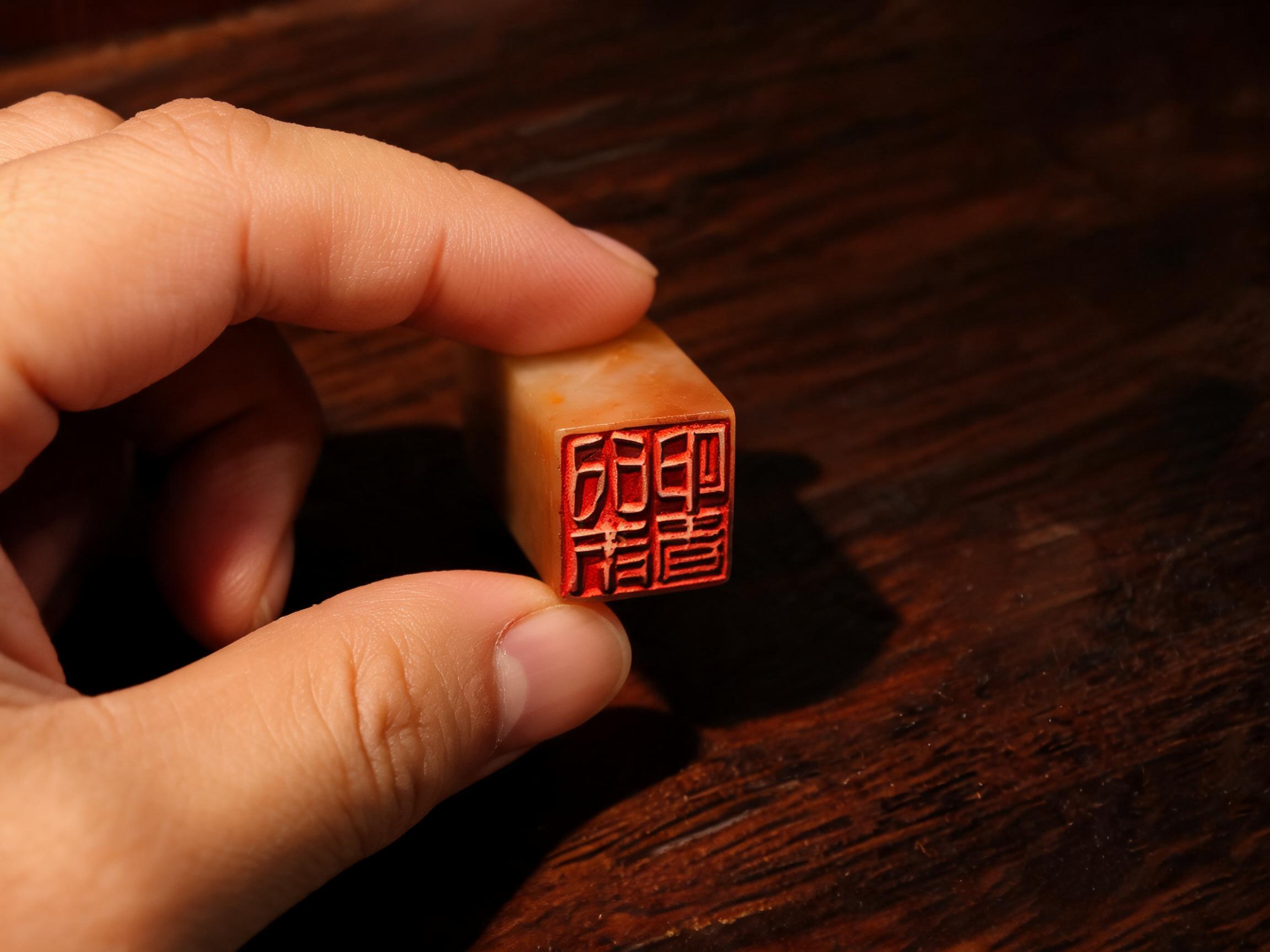
A practical guide to loading and stamping a Chinese seal for a clean, even impression — covering red seal ink paste selection, cinnabar ink paste storage, common failures, and a wholesale pairing checklist for B2B buyers.
Seal Stamping & Ink Paste
A Chinese seal stamp is only as good as the impression it leaves. Buyers who stock seal-and-paste programs, or who resell them to gift shops, temples and cultural institutions, run into the same questions: how much paste does a seal need, why do some impressions come out patchy or blurry, and which paste format holds up on a shelf and in transit. This guide covers the actual stamping technique, then turns it into a purchasing checklist for red seal ink paste and the seals it pairs with.
What's covered
How to load and stamp a seal, step by step
The mechanics are simple, but the two most common mistakes happen before the seal ever touches paper: too much paste, and uneven pressure.
- Set the paper on a soft, flat pad. A few sheets of backing paper or a thin felt pad under the document lets the seal face contact the paper evenly instead of rocking on a hard desk.
- Load the seal face with light, repeated taps. Press the face into the ink paste and tap it around the pad — do not grind or swirl it. The goal is a thin, even film across every part of the carved surface, including the recessed lines. A seal that looks wet or glossy is overloaded.
- Check the coverage before stamping. Tilt the seal toward a light source. The carved characters should appear uniformly tinted, with no dry patches on the raised face and no pooled paste in the grooves.
- Place the seal and press straight down. Lower it vertically, then apply firm, centered pressure with the palm. Hold for a moment, keeping the seal from sliding — any lateral movement produces a double, smeared edge.
- Lift straight up and let the impression rest. Do not touch or fan the paper immediately; the impression is cleanest when it is allowed to set on its own.
Paper choice matters as much as technique. Absorbent, uncoated paper — the kind used for calligraphy, certificates and traditional documents — takes red seal ink paste well. Glossy, coated or heavily sized paper resists the paste, so the same seal and the same loading will look weak on it. For gift and religious use, pair the seal with the paper type the end buyer will actually stamp on.
Choosing the paste format
For B2B programs, the format question is really about shelf stability and presentation. Our Vermilion Ink Paste is built around refined cinnabar pigment with a natural plant oil binder. It comes in 30g and 50g glazed porcelain containers, with colour matched per batch so a reorder looks the same as the first shipment. Each batch is filtered for impurities, which is what keeps fine carved lines printing clean rather than clogged.
The practical number for buyers is storage: the paste is tested for 24+ months without drying under proper storage. That is the window a retailer or temple can hold stock without the paste hardening into a puck the end buyer can't load from. The pigment meets ASTM D4236, and safety documentation ships with the order.
The porcelain container is also the retail-facing product. It presents well on a shelf and is the piece an end buyer keeps. Custom branded porcelain containers are available from 200 pieces, which suits gift and institutional programs that need their own mark on the box.
Paste and seal are one program. A soft-carved stone seal and a coarse-grained paste will print a different edge quality than a fine seal used with a well-filtered, thin paste. Buyers who source them together avoid returns caused by mismatched texture.
Common impression failures and how to fix them
| Symptom | Usual cause | Correction |
|---|---|---|
| Patchy, partly missing characters | Uneven loading; dry patches on the seal face | Reload with light, repeated taps until the whole face is tinted |
| Blurry or feathered edges | Too much paste; built-up excess in the grooves | Stamp a few trial impressions on scrap paper to shed the excess |
| Double or ghosted outline | Seal slid during the press | Press straight down and hold; avoid lateral movement |
| Weak, thin colour on the page | Too little paste; glossy or coated paper | Reload the seal, and switch to absorbent uncoated paper |
| Inconsistent results across a batch of seals | Carving depth differs between pieces | Check the impression record supplied with each seal before listing it |
Carving consistency is testable before it reaches a retail shelf. Our Custom Carved Name Seal is cut from Shoushan or Qingtian stone in sizes from 2x2x6cm to 4x4x10cm, with multi-language engraving and a carving proof within 15 days. Each seal ships with an impression test and records, so a buyer can confirm the stamp quality before committing a batch to a display or a temple order.
Wholesale stocking and pairing checklist
For retailers, temples, cultural institutions and gift distributors, the following points are worth confirming before a program is committed.
- Paste stability: confirm the tested storage window (24+ months under proper storage for the product above) against your sell-through rate, not just the order size.
- Batch colour consistency: for repeat programs, ask how colour is matched per batch so reorders don't shift tone.
- Paste-to-seal pairing: match fine-carved seals with well-filtered, thinner paste and coarser carvings with a standard paste. Buy them as a set.
- Container as packaging: the glazed porcelain container is both the storage vessel and the retail presentation. Decide on standard or custom branding before ordering.
- Volume and lead time: paste MOQ is 100 containers with 25-35 days after sample approval; custom branded containers start at 200 pieces. Seals carry MOQ 30 pieces and 35-50 days. Plan restocks around those windows.
- Documentation: confirm safety documentation travels with the paste and impression records travel with the seals.
- Application paper: if your end buyers stamp on certificates or coated stock, test the paper before placing a bulk order.
Paired correctly, the seal and its paste reinforce each other on the shelf: a well-carved stone with a consistent, clean-printing cinnabar ink paste. Sourcing them from the same program keeps the texture — and the impression quality — under your control.
FAQ
How much ink paste should a seal be loaded with?
A thin, even film. Tap repeatedly rather than grinding. If the seal face looks wet or glossy, it is overloaded and will print a blurry edge.
What paper works best for a Chinese seal stamp?
Absorbent, uncoated paper takes the paste best. Glossy or coated stock resists it and produces a weak impression with the same seal and loading.
How long does red seal ink paste last in storage?
The paste above is tested for 24+ months without drying under proper storage. Keep the porcelain lid seated when not in use.
Can the paste and seals be ordered together as a program?
Yes. Paste MOQ is 100 containers and seals MOQ is 30 pieces, so a combined gift or temple program can be built around both. Confirm the matching paste texture for your seal carving when you enquire.