
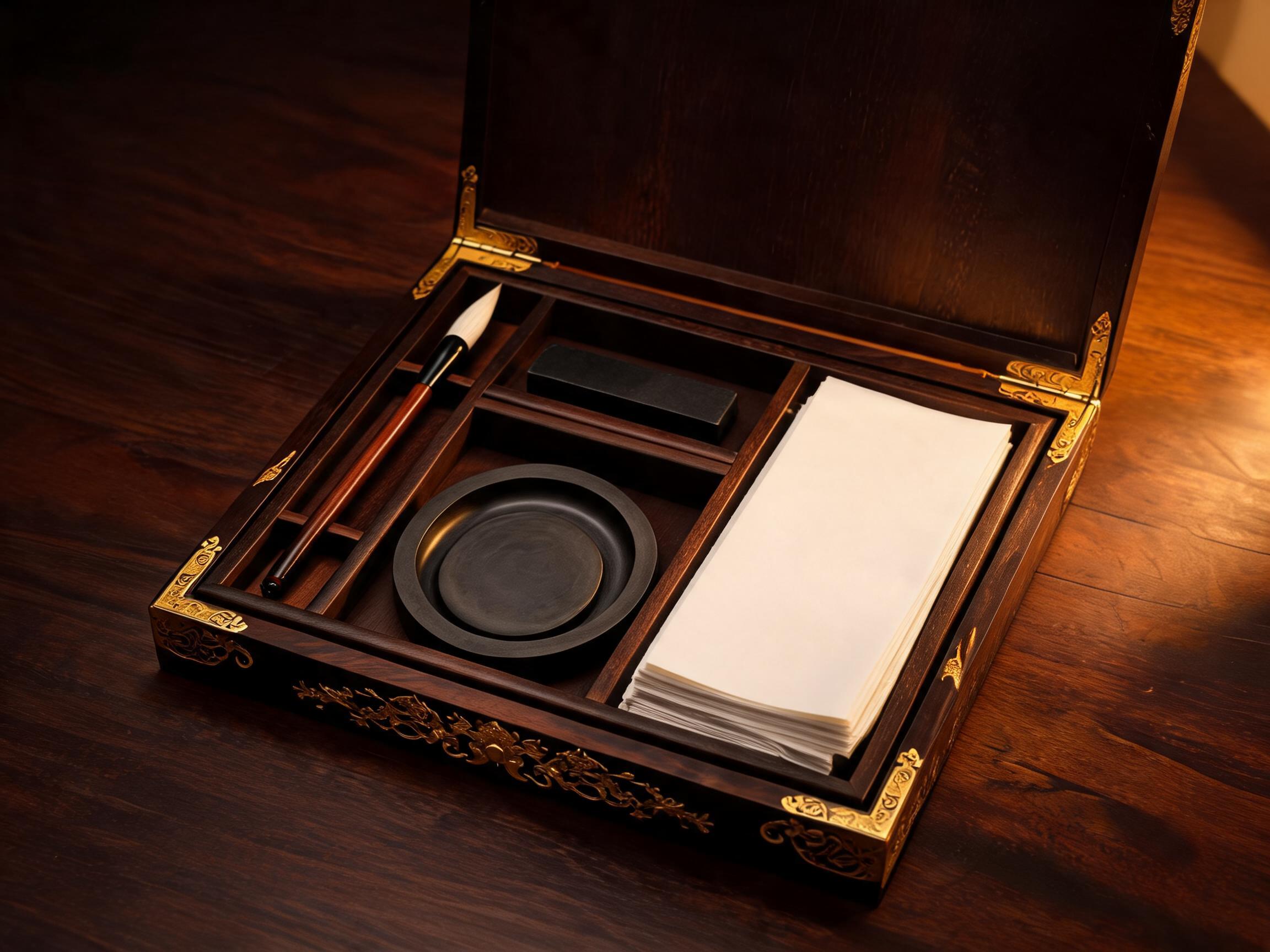
This guide explains how B2B buyers can evaluate Chinese painting supplies suppliers by looking at channel type, what MOQ levels reveal about a supplier's order structure, how to consolidate brush, ink, paper and inkstone into mixed cartons or set SKUs, and which documents to request before mass production. Examples reference Guangdong Gumo Crafts Technology Co., Ltd. product lines and export services.
Why the Channel Type Changes What You Can Verify
When buyers search for Chinese painting supplies, they usually meet three different kinds of sellers: trading companies that aggregate products from many workshops, single-category specialists that make one product well, and integrated manufacturers that control production from raw material selection through finished packaging. Each channel type can work, but each one lets you verify different things, and knowing which type you are talking to is the first real step in supplier selection.
A trading company can offer breadth, but when you ask about ink quality or paper bleed behavior, the answer passes through an intermediary. A single-category specialist can answer deep technical questions about, say, ink stick production, but cannot supply the rest of the category mix a gift program or retail range usually needs. An integrated manufacturer can, in principle, answer questions about both: how the ink is made and how the brush, paper, and inkstone are sourced, inspected, packed, and shipped together.
The practical verification question to ask any supplier is: which production stages happen in your own facility, and which are outsourced? A supplier such as Guangdong Gumo Crafts Technology Co., Ltd., founded in 2011 in Guangdong with a team of 50-200 employees, describes an integrated chain covering raw material selection, craft processing, finished product finishing, packaging, and shipment. Its core ink craft follows traditional soot refining, glue blending and pounding, mold pressing, and shade drying, with experienced craftsmen supervising each process and raw material sources such as pine soot, oil soot, and natural binders documented, with each batch tested for consistency. Whether you evaluate this supplier or another, ask for that same level of process detail in writing, because it is the kind of answer only a manufacturer close to production can give concretely.
What MOQ Tells You About a Supplier's Actual Order Structure
MOQ is often treated as a hurdle, but it is more useful as a diagnostic. It reveals how a supplier actually organizes production and inventory, and whether the supplier is set up for wholesale programs or primarily for small retail orders. For Chinese painting supplies, MOQs usually vary by product complexity and unit value.
Some reference points from the Gumo Crafts range illustrate the range buyers should expect. The Oil Soot Hui Ink Stick Classic carries an MOQ of 50 pcs, with sticks available from 30g to 150g per stick, custom label and gift box options, and batch-level QC photo reports. The Raw Xuan Paper Professional has an MOQ of 200 sheets in the standard 69cm x 138cm size, made from natural bark fiber (qingpi) with controlled ink bleed, and custom sheet sizes available. Handmade inkstones sit at a similar level: the Classic Duan Inkstone, cut from natural Duan stone sourced from a verified Zhaoqing quarry in lengths of 15cm to 25cm, carries an MOQ of 50 pcs, with hand-polished natural patterning and custom engraving available.
When you compare suppliers, ask what sits behind each MOQ: is it a minimum mold or tooling run, a carton quantity, or a production batch minimum? A higher MOQ tied to actual production economics is more defensible than an arbitrary number, and understanding the reason helps you negotiate intelligently, for example by trading packaging complexity for quantity. Also confirm whether MOQs apply per SKU or per mixed order, because that distinction directly affects how many variants you can stock at first order.
Consolidating Brush, Ink, Paper and Inkstone Into Fewer Cartons
Chinese painting supplies are a category set by tradition: brush, ink, paper, and inkstone, the Four Treasures of the Study. Buyers who source each item from a different supplier face four freight bookings, four sets of export documents, and four receiving operations. Consolidation into mixed cartons or set SKUs reduces all of that, and it is one of the strongest practical arguments for choosing a supplier with a wide in-house category mix.
There are two consolidation approaches to evaluate. The first is mixed wholesale ordering: a supplier that can ship brushes, liquid ink, xuan paper, and inkstones in one consolidated export carton plan. Gumo Crafts covers eight product lines — traditional Huizhou ink sticks, calligraphy and painting liquid ink, Four Treasures of the Study sets, handmade inkstones, writing brushes, seal carving supplies, calligraphy and painting rice paper, and decorative craft ornaments — which makes mixed orders feasible. On the brush side, the Wolf Hair Stiff Tip Brush line offers length-graded wolf hair with a resilient fine point, hand-formed tips checked for centered alignment, and a two-step ferrule binding designed for repeated washing; mixed sizes can be combined in one wholesale order, with individual caps and export-ready cartons.
The second approach is the set SKU: a single product code that bundles the components into one retail-ready package. The Complete Scholar Desk Set combines an ink stick, inkstone, brush, and Xuan paper in a magnetic-closure presentation box, with set-level QC that includes component matching, private-label branding available, an MOQ of 30 sets, and a lead time of 35 to 50 days after sample approval. For institutional programs, separate bulk liquid ink in 1L and 5L containers (minimum order 50 containers) can be sourced alongside retail SKUs. Set SKUs simplify customs paperwork and shelf presentation, but confirm how components are matched and inspected at set level, since a set is only as good as its weakest component.
What to Request Before Mass Production
Channel type and MOQ structure tell you what a supplier can organize; the approval process tells you how reliably that organization reaches your goods. Before committing to mass production, request a document set rather than a single sample. A disciplined buyer checklist for Chinese painting supplies includes:
Approval samples. Physical samples of each SKU, ideally in the exact packaging intended for export. For ink stones and brushes especially, variation between units is natural, so ask whether the sample represents a typical production unit or a selected one.
Spec sheets. Written specifications for each item: ink stick weights, paper sheet dimensions, brush size grades, stone dimensions, materials and fiber types. These documents become your reference for the shipment and for any future repeat orders.
Approval records before mass production. A structured sign-off flow, in which the buyer approves sample photos, spec sheets, and approval records before the factory proceeds. Gumo Crafts describes exactly this flow, together with inline QC checkpoints at each production stage and export-ready packing with carton marks. When comparing suppliers, ask who performs the inline checks, at which stages, and what happens when a checkpoint fails.
Batch-level QC evidence. For consumables such as ink, ask for batch-level documentation. The oil soot ink stick line, for example, comes with batch-level QC photo reports and export-ready documentation, which gives buyers something concrete to file and audit rather than a general quality assurance statement.
Putting the Criteria Together
A practical way to compare Chinese painting supplies suppliers is to score them on the questions this article raises: which production stages are in-house and verifiable; whether MOQs reflect real production economics; whether brush, ink, paper, and inkstone can ship in consolidated cartons or as set SKUs; and whether a documented approval and QC process exists before mass production. Suppliers that answer all four concretely, with documents rather than assurances, are the ones most likely to deliver a repeatable export program.
If you are building a wholesale range, an institutional program, or a private-label gift line, share your target category mix, indicative order volumes, and any packaging or branding requirements, and the Gumo Crafts export team can discuss which product lines, MOQ structures, and consolidation options fit your program, including OEM customization and gift set design for bulk export orders.