
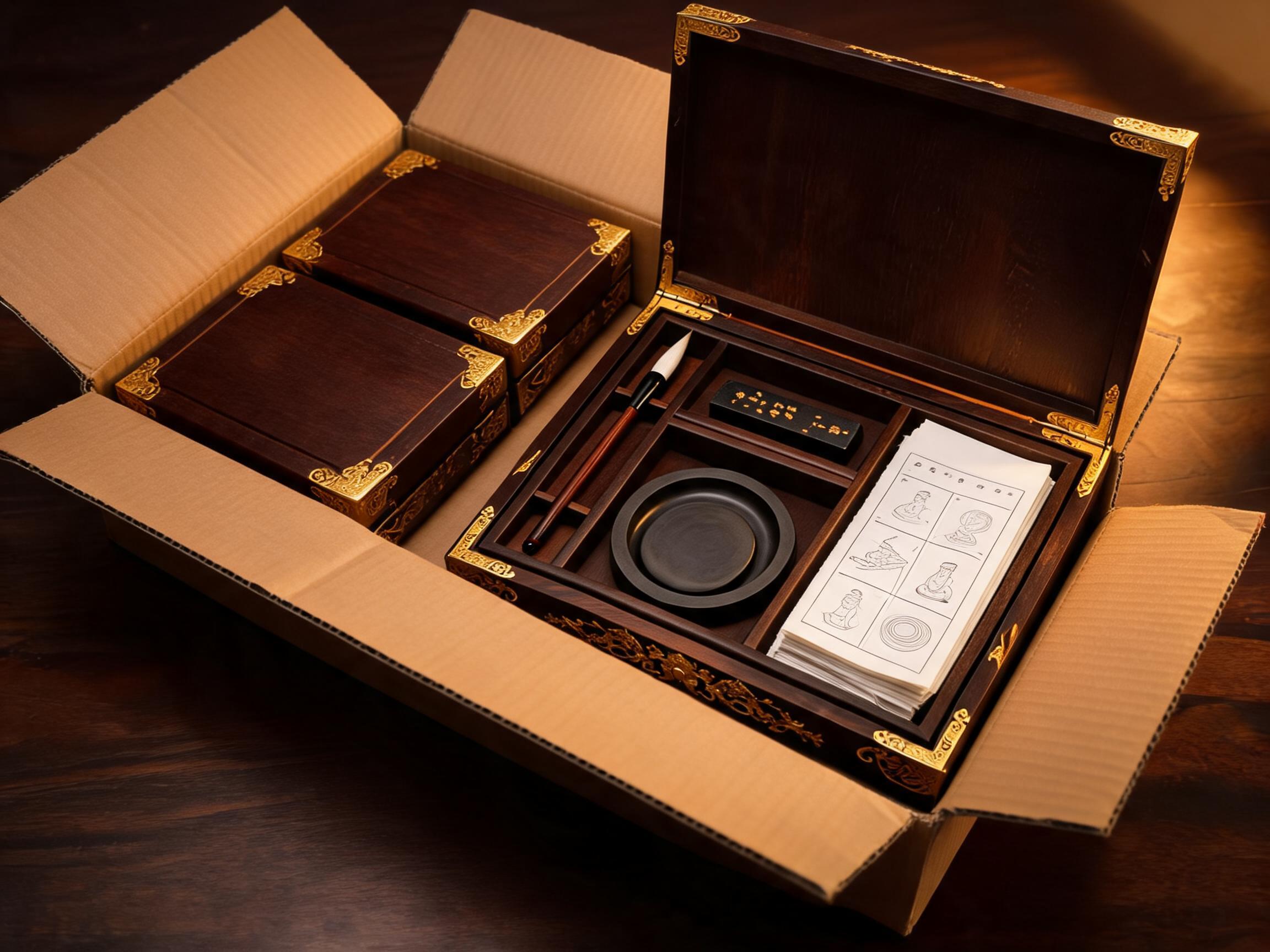
A procurement guide for language schools, cultural programs, and education distributors on configuring Chinese writing set bundles by student level. Covers what changes between beginner and continuing learner kits, individual versus shared classroom sets, pack sizing for multi-section courses, and reorder timing tied to term cycles.
School Procurement · Bundles & Reorder Planning
Language schools and cultural programs do not buy writing sets one at a time — they buy by cohort, by term, and by classroom. A single "best calligraphy set" recommendation is of little use when your real question is how many sets a first-term beginner class needs, what a second-year student has outgrown, and when to place the next order without running out mid-term.
This guide frames the answer for procurement staff, program coordinators, and education distributors: first a decision framework, then level-by-level bundle choices, then how individual kits differ from shared classroom sets, how class structure drives pack sizing, and how reorder timing follows the teaching calendar.
- Bundle config should follow student level, not a fixed kit. Beginner and continuing learners need different components.
- Individual student kits and shared classroom sets solve different problems — one is take-home practice, the other is supervised group use.
- Classroom-pack sizing should be derived from your section count and weekly session structure, not guessed from total enrollment.
- Reorder planning should be tied to your term-start calendar, with a buffer for the first two weeks when enrollment settles.
Answer Framework: Configuring by Level, Not by Catalog
Before choosing products, define three variables that determine every bundle decision:
- Student level and progression. A first-term beginner and a continuing learner have different relationships with the tools. Beginners need guidance and forgiveness in the materials; continuing learners need consistency and durability.
- Use mode. Is the set taken home by each student, used only in class, or both? This decides whether you buy individual kits or shared classroom sets.
- Course cycle. How many terms per year, how many sections per term, and when enrollment is confirmed. This drives order quantity and reorder timing.
With these three defined, you can map components to levels. The verified product range below covers the two configurations most schools need — an entry-level individual kit and a durable classroom set — plus a presentation-grade set for cultural gifting or events.
Level-by-Level Bundle Decisions
First-Term Beginners: Starter Kit as the Individual Base
For students in their first term, the bundle should reduce setup friction. The Calligraphy Starter Kit Set (SKU GMO-SDS-002) is a beginner-friendly calligraphy starter kit with quality-graded components and an illustrated usage guide, designed for educational programs and school distribution. The illustrated guide matters at this level because it lets a student repeat the basic strokes at home without a teacher present.
For a beginner cohort, the individual kit is usually the correct unit. It gives each student their own tools and printed reference, which suits the early stage where technique is still being formed. Whether this kit is issued to every enrolled student or only to those in a practice-based track is a program decision — worth confirming against your syllabus before you set quantities.
Continuing Learners: Durability and Classroom Consistency
Returning students have already passed the stage where a guided starter kit is the main support. What they need is equipment that survives daily use and stays consistent class to class. The School Calligraphy Desk Set (SKU GMO-SDS-004) is a durable calligraphy desk set with a stackable storage box, designed for calligraphy schools requiring practical, long-lasting components for daily student use.
The stackable storage box is a functional choice for schools, not a cosmetic one: it supports shelf or cabinet storage for multiple sets and simplifies distribution and collection at the start and end of each session. For continuing learners, this set is more appropriately treated as a classroom asset than a take-home item (see the next section).
Cultural Programs, Gifting, and Events
Some programs — cultural exchange weeks, corporate workshops, ceremonial events — need a set that presents well and can be offered as a gift or award. The Complete Scholar Desk Set (SKU GMO-SDS-001) is a complete scholar desk set with ink stick, inkstone, brush, and Xuan paper in a custom presentation box, designed for cultural gifting and corporate events.
This is not the set to hand out as daily classroom equipment; the presentation box and full component range suit occasions where the set is kept or displayed. Treat it as a separate budget line from your instructional bundle.
Individual Student Kit vs Shared Classroom Set
This is the distinction that most changes your cost and logistics planning. The two configurations are not interchangeable.
| Factor | Individual student kit | Shared classroom set |
|---|---|---|
| Typical use | Taken home for practice | Used in class, stored on site |
| Level fit | First-term beginners | Continuing learners, mixed groups |
| Quantity logic | One per enrolled student | One per seat or per working station |
| Wear and replacement | Student-owned; loss is an individual issue | School-owned; plan for wear and replenishment |
| Suggested product | Starter Kit Set (GMO-SDS-002) | School Calligraphy Desk Set (GMO-SDS-004) |
A common mistake is ordering shared classroom sets for a beginner program and then discovering that students cannot practise between sessions. The reverse — issuing take-home starter kits for an advanced group — often means the sets are used up faster than the budget expects. Match the configuration to the use mode first, then to the level.
Classroom-Pack Sizing Follows Class Structure
Pack sizing should be derived from how your classes actually run, not from a round number. Work through these questions in order:
- How many sections run per term? Two sections of twenty students is a different order pattern from one large group, because each section needs its own working stock.
- How many sessions per week, and how many students share a station? If students rotate through shared stations, the classroom set requirement is based on simultaneous seats, not total headcount.
- Is there a reserve pool? Schools commonly keep a small number of spare sets on site for late enrollees, breakage, or demonstration use. The size of that pool is a program decision.
- Are levels mixed in one room? If beginners and continuing learners share a session, you may need both configurations in the same classroom.
Once the per-section requirement is clear, multiply by sections and add your reserve. Where your school needs figures such as minimum order quantities, pack configurations, or per-student cost, these should be confirmed directly with the supplier against your term plan rather than assumed from a general listing.
Reorder Planning Tied to Course Cycles
Reorder timing is a planning question, not a stockroom question. Anchor it to your academic calendar:
- Before term start: Place the main order so sets are on site for orientation and the first session. For beginners, this is the largest single order of the year.
- Week 2–3 of term: Enrollment has settled. Use this window to place a top-up order for late registrations and any shortfall against the reserve pool.
- Mid-term: Review wear on school-owned classroom sets. Components under daily use will show their condition by this point, and replenishment quantities can be planned from observed use.
- End of term: Before the next term start, decide whether the following cohort's bundle needs to change — for example, if a group is progressing from beginner to continuing level and the mix of starter kits and desk sets should shift.
Schools running multiple terms per year should treat the term start as the fixed point and work backwards. Distributors serving several schools can aggregate these calendars to smooth their own order cycles.
What to Confirm with the Supplier
Several variables affect your final bundle and reorder plan and cannot be set without your own program data and the supplier's current terms. Confirm these before committing:
- Minimum order quantities and pack configurations for each SKU.
- Whether components can be substituted or added within a bundle for a specific level.
- Lead time from order to delivery, especially for term-start deadlines.
- Replacement availability for individual components of school-owned sets.
- Any level-specific assembly or labelling your program requires for distribution.
FAQ
Can the same set serve both beginners and continuing learners?
They can both use brush, ink, and paper, but the bundle logic differs. Beginners benefit from an illustrated guide and graded components; continuing learners need durability and storage for daily classroom use. Matching the set to the level keeps both instruction and budgeting cleaner.
How do we decide between starter kits and classroom sets for a mixed-level program?
Use the use mode as the deciding factor. If the tools go home, order individual starter kits per student. If they stay in class, order classroom desk sets per seat or station. A mixed-level program may need both.
When should we place a top-up order?
After enrollment stabilises — commonly the second or third week of term. This captures late registrations without committing to a larger first order than the course needs.
Configure your bundles by level, size your classroom packs from your section structure, and set reorder dates against your term calendar. For specific pack quantities and terms, request a quotation with your class plan so the configuration can be matched to your program.