
A factory-style sourcing and QC walkthrough for wholesale buyers of Chinese wood carved figures: hardwood selection, facial detail checks, size grading by channel, breakage-proof export packaging, and assortment planning for gift versus collectible programs.
Sourcing & Quality Control
Chinese wood carved figures are a compact, high-margin category for gift, collectible and home-decor programs, but the quality problems that sink an order rarely show up in a sample photo. This guide walks through the five decisions that actually determine whether a wholesale order arrives sellable: wood selection, carving and face detail, size grading by channel, export packaging, and assortment planning.
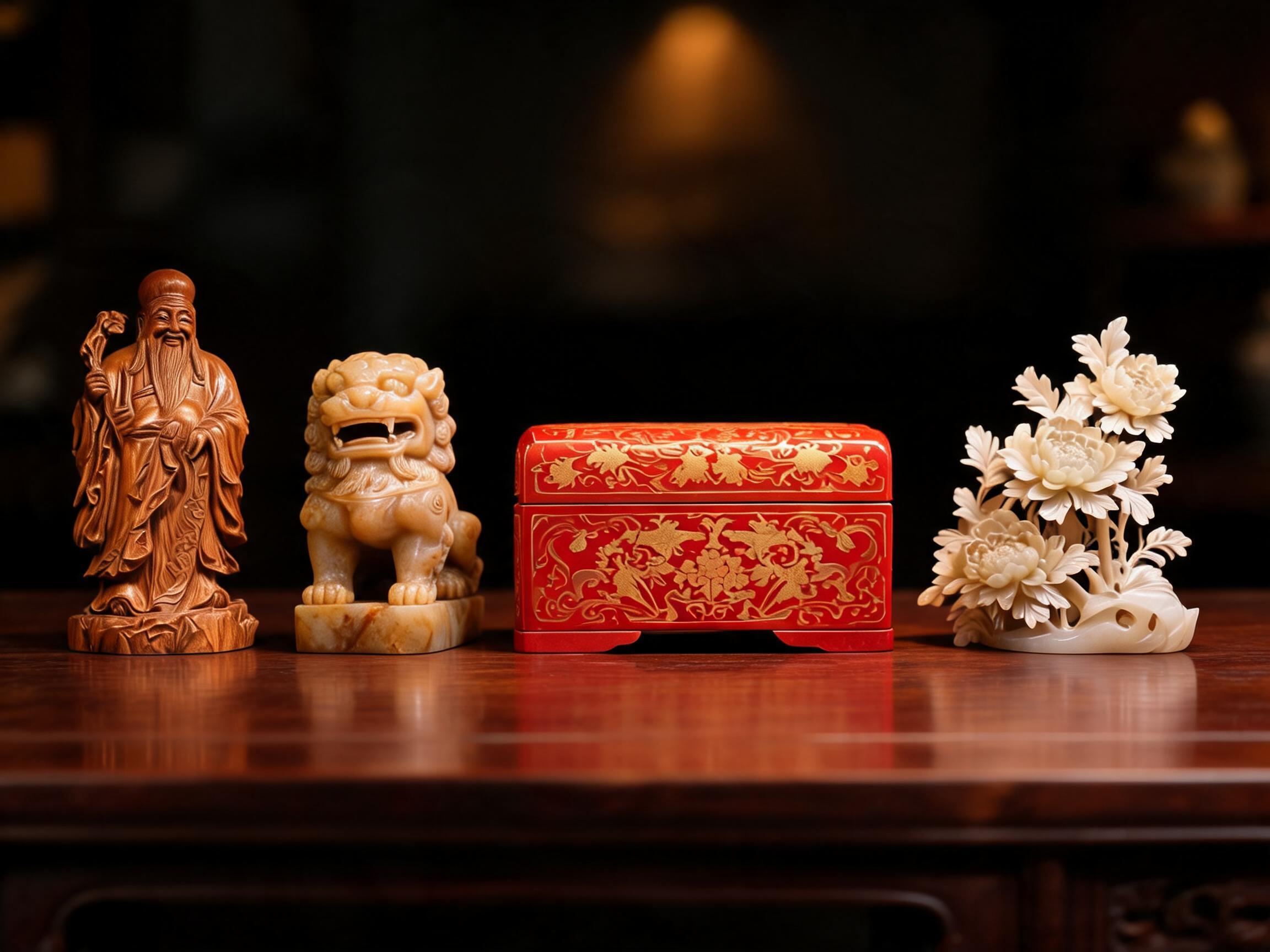
Key takeaways
- Wood species and moisture condition drive most downstream defects; check them before discussing carving detail.
- Facial expression — the "face-opening" step — is the single most visible QC point and the least forgiving in a sample review.
- The available size bands are 8–25cm for hand-carved pieces and 8–20cm for lacquer-finish pieces; assign them to channels deliberately.
- Breakage in transit is a packaging decision, not a shipping accident.
- Minimum order is 50 pieces, so assortment planning matters as much as unit quality.
1. Start with the wood, not the design
Most buyers begin a conversation with reference images. It is more useful to begin with the wood. A carved figure's dimensional stability, surface finish and long-term appearance are set by the species and by how dry the block was before carving. Two identical-looking samples can behave differently in a container if one was carved from well-seasoned stock and the other from a block that was still moving.
The relevant product here is a hardwood body with a natural oil finish — no lacquer coating sitting between the buyer and the material. That has two practical consequences. First, grain, color variation and small natural marks are visible and will read as character or as defects depending on what your channel expects. Second, the finish is applied to the carved surface rather than layered over it, so surface prep before oiling is part of the quality story.
When you specify, describe the requirement rather than a brand or a vague grade. Useful request wording: hardwood body, natural oil finish, no surface cracks, no visible mold or blue stain, no putty or filler used to hide splits, and a stated acceptable range for natural grain and tone variation. If your market needs tight color consistency across a set, say so at inquiry stage — that is an assortment and selection requirement, not something to negotiate after carving.
Questions worth asking before you approve a wood sample
- Is the finish natural oil only, or is a sealer applied on top of it?
- What tone and grain variation should I expect across a 50-piece run, and can it be narrowed by selection?
- How are small knots and natural marks treated — left visible, or filled?
- Is the piece a single carved block or assembled from parts, and where are the joints?
2. Carving detail and the face-opening check
For figure carving, detail quality splits into two separate checks: structural detail (hands, drapery, accessories, tool or base elements) and facial detail. Facial detail is what buyers and end customers judge first, and it is the hardest to fix after production. In workshop language the finishing of the facial features is often called face-opening — the step where eyes, brows, mouth and the overall expression are brought into alignment.
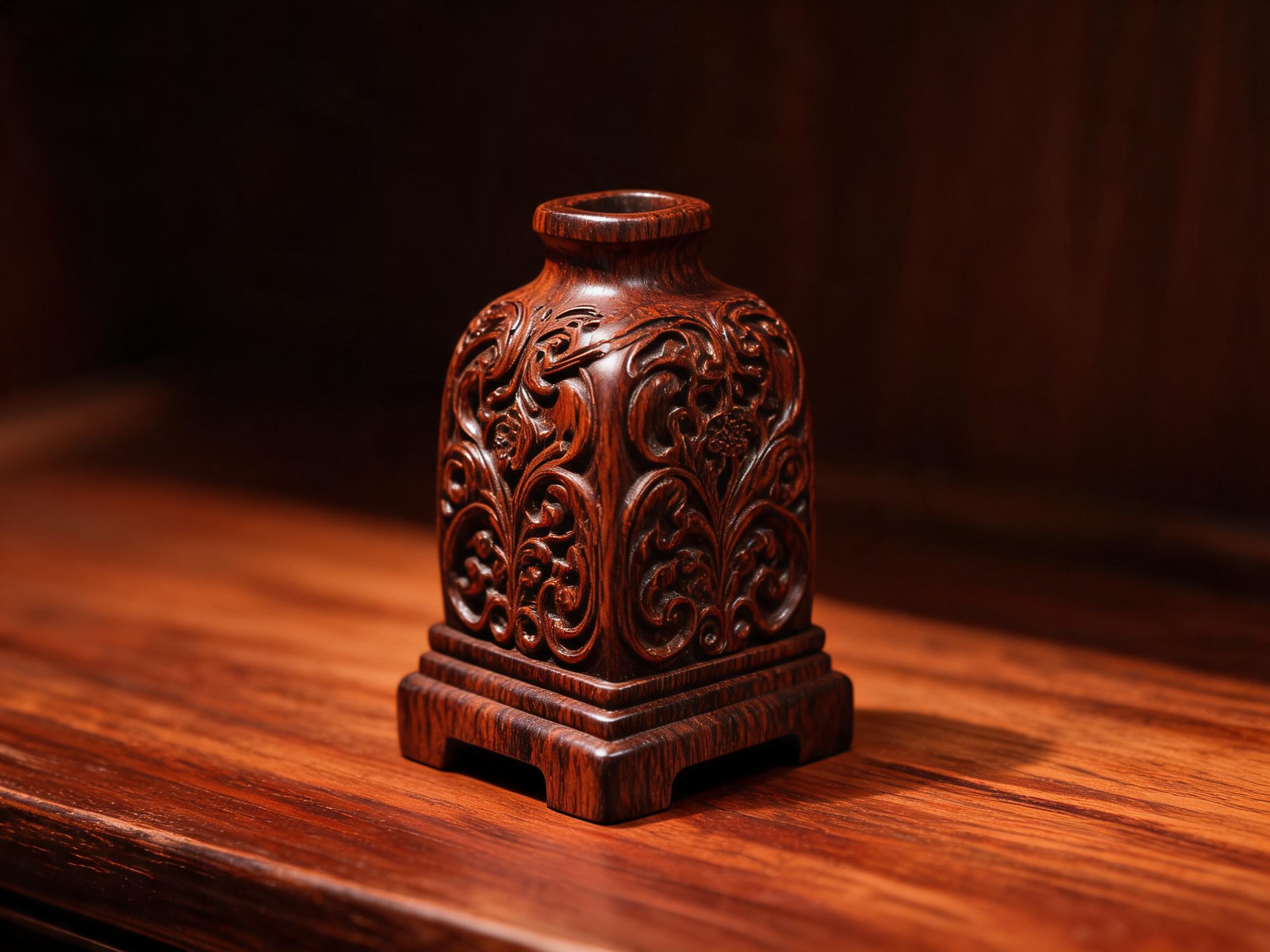
A workable pre-shipment inspection for carved figures looks like this:
| Check | What to look at | Typical failure that matters |
|---|---|---|
| Facial symmetry | Both eyes level and matched in size; mouth centered relative to the nose line; brows balanced | One side of the face carved noticeably shallower than the other |
| Expression consistency | Expression matches the approved sample, not just "a face" | Neutral or strained expression where the sample was serene or smiling |
| Feature depth | Eye, ear and mouth cuts are clean and deep enough to read from normal viewing distance | Shallow or blurred features that disappear under retail lighting |
| Hand and accessory detail | Fingers separated, held objects recognisable, no merged forms | Fingers fused into a block by over-aggressive sanding |
| Surface preparation | No sanding scratches across the face; no tool marks left under the oil | Scratches that only appear once the oil finish is applied |
| Finish coverage | Oil applied evenly, no dry patches, no pooling in carved recesses | Uneven sheen that shows as blotches in photographs |
| Structural integrity | No cracks at thin sections, base stable, no loose parts | Hairline splits that open during dry winter shipping |
Two operational notes. Inspect under the lighting your channel will use — bright showroom light reveals detail differences that flat warehouse light hides. And inspect the actual production units, not the approved sample: a sample that passed does not extend to the run. Ask that the inspection stage and its acceptance criteria be agreed in writing before production, so a failed check is a defined disagreement rather than a judgement call at the loading dock.
Where lacquer fits in
If your program calls for a glossier, more uniform look, the lacquer craft ornament uses a wood body with a multi-layer lacquer coating, in the 8–20cm band, and it supports custom brand numbering. Lacquer changes the QC focus: coating evenness, edge coverage and freedom from orange-peel or dust specks become the primary checks, and the underlying carving detail is partly read through the coating. Decide early which finish your channel wants, because coating and face detail are inspected to different criteria.
3. Size grading for different channels
The size range available for the hand-carved line is 8–25cm, and for the lacquer line 8–20cm. Treat that as a band to grade within, not a single SKU. Size determines retail price point, display role and packaging cost, so the assortment should be built around a small number of actual sizes rather than a continuous spread.
| Size band | Practical role | Channel fit |
|---|---|---|
| Small end of the range | Impulse and add-on piece, shelf or counter display, multi-unit sets | Gift and souvenir programs, add-on items, small-space retail |
| Mid range | Primary display piece; readable face detail at normal viewing distance | Home-décor and gift retail; the workhorse SKU in most assortments |
| Upper end of the range | Statement piece, single-unit presentation | Collectible and exhibition programs; venue and cultural display |
For collectible programs, keep the size structure consistent across a series so pieces display together — a series that jumps between arbitrary sizes reads as unrelated products. For gift programs, concentrate on two or three sizes and spend the complexity budget on packaging and set composition instead. Religious and venue display buyers usually need scale to be predictable across repeat orders, so fix the sizes in your specification rather than leaving them to workshop discretion.
Size also interacts with detail. Small figures leave less carving room for facial features, so the face-opening check should be applied more strictly at the small end where mistakes are compressed into a few millimetres. If a small size cannot hold the expression your reference requires, that is a design issue to resolve before ordering, not a defect to reject later.
4. Breakage-proof export packaging
Carved figures fail in transit in three ways: impact against the carton wall, contact between units in the same box, and movement of a piece inside its own insert. Reinforced foam-lined export packaging addresses these by separating the piece from the outer carton and holding it in position. The specification work is in the details.
- Per-unit protection: each figure in its own foam-lined cavity or wrap, not stacked loose with tissue between pieces.
- Insert stability: the piece should not shift when the closed retail box is shaken — test this on a sample before the run.
- Carton strength: corrugated grade appropriate to the stacked weight, with the outer carton sized so inner retail boxes cannot slide.
- Fragile points: identify the thin sections — fingers, held objects, headdresses, bases — and specify extra clearance around them.
- Retail presentation intact: the export packaging must protect the piece without arriving to the retailer as an opened or dented gift box.
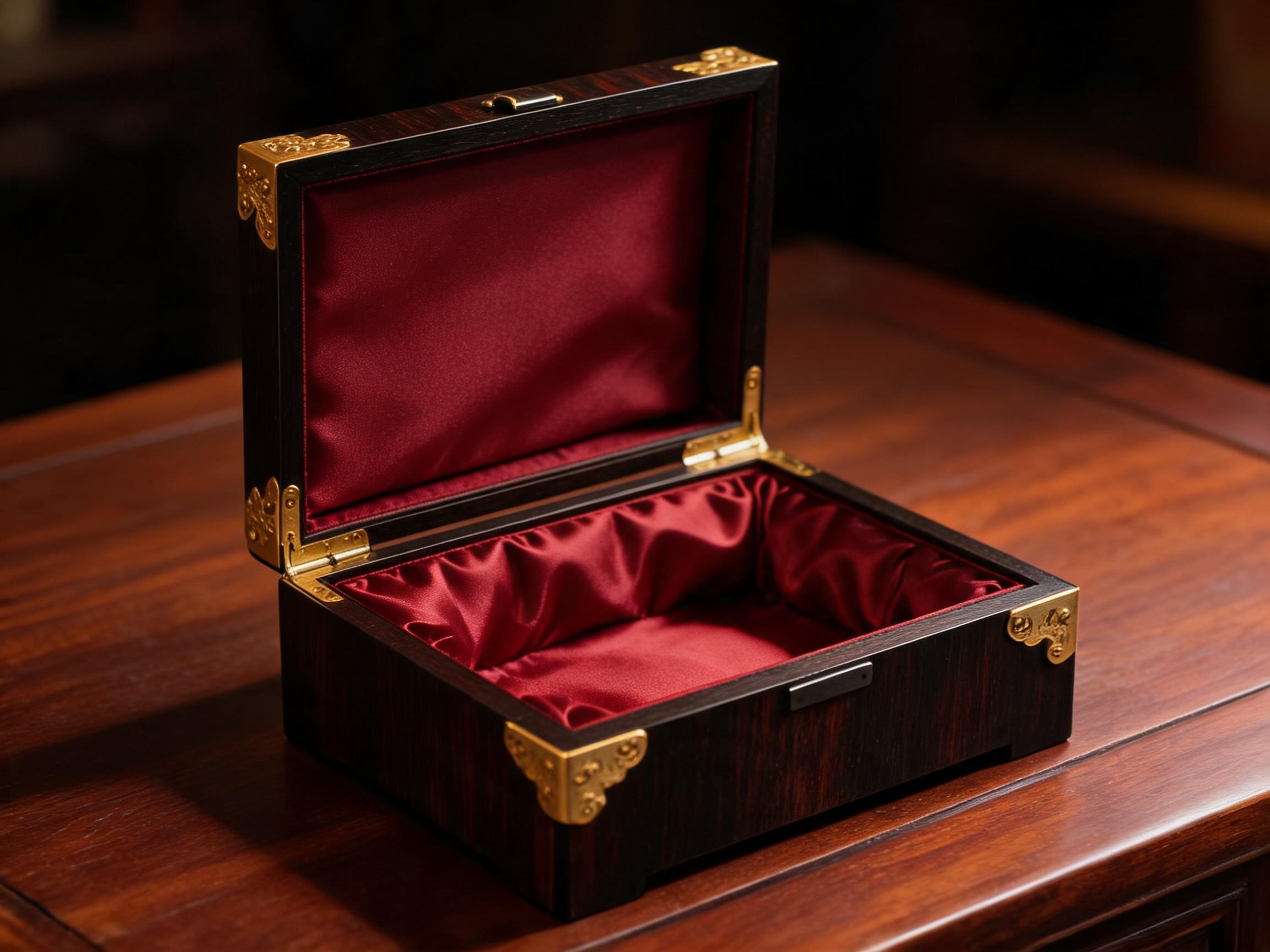
If your channel is gift-led, the retail box is part of the product. The premium craft gift box is a hardwood construction with magnetic closure and custom branding, which lets you pair a carved figure with a presentation case that carries your own identity. Plan the gift box and the export carton as one system: box dimensions determine insert geometry, and insert geometry determines how many units fit a carton. Changing the box after the packaging spec is agreed usually means re-testing the insert.
5. Channel assortment: gift versus collectible programs
The same carved figure can serve a gift program or a collectible program, but not with the same assortment logic. The difference is what the buyer is selling: a one-off purchase, or the expectation that a series continues.
| Decision | Gift program | Collectible / exhibition program |
|---|---|---|
| SKU count | Few SKUs, higher units per SKU | More SKUs in a coordinated series, lower units per SKU |
| Size structure | Two or three sizes at most | Consistent scale across the series |
| Presentation | Gift box and branding carry the value | Figure and series coherence carry the value |
| Detail tolerance | Good expression, robust build, forgiving of natural grain | Stricter face-opening standard, tighter consistency between pieces |
| Customisation | Custom branding, brand numbering on lacquer pieces | Numbering and series marking support collectability |
For seasonal and cultural event programs, a themed craft ornament collection with coordinated themed designs is a more practical starting point than assembling unrelated figures, because the designs are already built to display as a set. For a hand-carved, natural-finish figure program, the hand-carved wooden ornament gives you the hardwood body and oil finish across the 8–25cm range.
What a first order should look like
Minimum order quantity is 50 pieces, which is small enough to test a channel and large enough that a wrong specification is expensive. Use the first order to prove three things: that the approved sample's facial detail can be reproduced across the run, that your chosen sizes hold the expression your channel needs, and that the packaging arrives intact. Agree the inspection stage, the acceptance criteria for face detail and finish, the size list and the packaging specification in writing before production starts.
Gumo Craftworks has been manufacturing since 2011, with a full industry chain and OEM and export services. That means design, carving, finishing, packaging and export documentation can be handled as one production flow rather than split across suppliers — useful when the retail box, the branding and the figure all have to line up. Bring reference images, target sizes from the available bands, and your channel description to the first conversation; those three inputs are what turn a catalogue listing into a specification.