
An art-retail sourcing guide to Chinese watercolor paper: raw vs sized Xuan grades and how sizing changes wash behavior, plus sheet, roll and practice formats with listed MOQs, and the batch checks to run before a bulk order.
Art-material retailers searching catalogs for Chinese watercolor paper usually encounter one term repeated across dozens of SKUs: Xuan paper. On export catalogs the phrase covers a family of bark-fiber papers sold in two fundamentally different grades, raw and sized, plus a range of sheet, roll and practice formats. Understanding what those grades actually do with ink and pigment, and which format suits which retail channel, is the difference between stocking paper that satisfies watercolorists and paper that generates returns.
What “Chinese watercolor paper” means on an export catalog
Most paper sold under this heading is Xuan paper, a bark-fiber paper traditionally produced in China and exported worldwide for calligraphy, sumi-style painting and water-based media. Export listings split it into two grades, and the distinction matters more than brand names:
Raw (sheng) Xuan is unprocessed and absorbent. Water and pigment sink in immediately and spread, so a single brushstroke produces a soft bloom with visible edges of concentration. This behavior is prized in freehand (xieyi) brush painting and gives a distinctive organic character that Western watercolor paper does not replicate.
Sized (fanji, treated) Xuan has been treated to reduce absorbency. Ink and color sit on the surface longer and resist more evenly, allowing layered washes, controlled gradients and precise outlines. It is the standard choice for gongbi-style detail work and for watercolorists who build color in passes rather than one bloom.
Neither grade is better; they serve different techniques. A retailer stocking only one grade effectively excludes half the customer base. For a fuller comparison of grades and naming conventions, see the supplier's article on how Xuan and rice paper differ by grade.
How sizing changes watercolor and ink behavior
Sizing is the single specification that determines whether a sheet suits layered watercolor work or single-stroke expressive painting.
On raw paper, the first touch of a wet brush anchors where the fiber decides, not where the painter decides. Color blooms outward, edges feather, and reworking a passage lifts fibers and darkens the area. This suits artists who work wet and fast, and sumi-e-style ink work where a controlled bleed is the technique itself.
On sized paper, the treatment slows penetration so pigment stays where it is placed until deliberately moved. Washes can be layered after drying without bleeding into each other, and fine line work retains its edges. This suits botanical and figure detail, gongbi outlines, and Western-trained watercolorists transitioning to Chinese paper.
A useful retail display is to show the same subject painted on both grades side by side. Customers choosing by feel alone tend to buy the wrong grade; a visible demonstration sells both.
Formats and which retail channel they fit
Export catalogs list Xuan paper in several formats, each with a different cost structure and customer. The table below maps the formats Guangdong Gumo Crafts Technology Co., Ltd. lists for export against the channels they suit best. All figures are the listed specs; confirm current terms directly with the supplier.
| Product | Grade / sizing | Format and size (listed) | MOQ (listed) | Best-fit retail channel |
|---|---|---|---|---|
| Raw Xuan Paper Professional (GMO-XP-001) | Raw, unprocessed bark fiber (qingpi) | Sheets 69 × 138 cm; custom sheet sizes available | 200 sheets | Professional art stores, brush-painting studios |
| Treated Xuan Paper for Gongbi (GMO-XP-002) | Sized (fanji), bark fiber | Sheets 69 × 138 cm; custom sizing levels available | 200 sheets | Fine-art retailers serving gongbi and detail watercolorists |
| Xuan Paper Roll (GMO-XP-004) | Bark fiber Xuan | Rolls 50 / 70 / 97 cm wide, 10 / 20 / 50 m long | 50 rolls | Frame shops, wide-format work, art programs cutting custom lengths |
| Student Practice Xuan Paper (GMO-XP-003) | Bark fiber, standard processing | Practice sheets 33 × 69 cm | 1,000 sheets | School suppliers, class packs, entry-level bundles |
Full sheets (69 × 138 cm) are the standard large format for serious work and can be cut into quarters for resale, multiplying shelf units from a single SKU. Professional sheets, such as the raw-grade listing above, carry per-batch thickness consistency checks and aging documentation per the listed specs; verify what documentation you receive with your shipment.
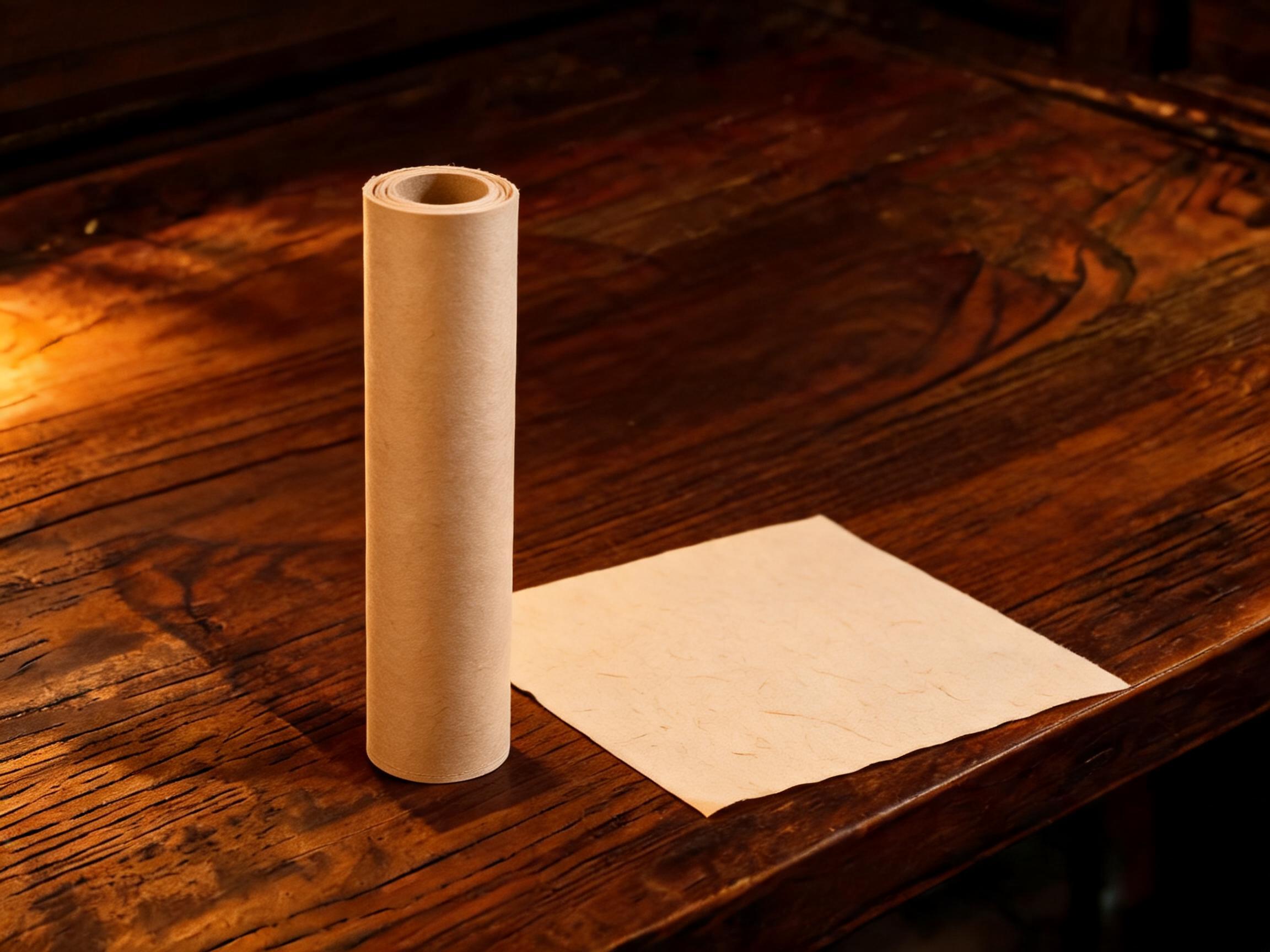
Rolls serve a different customer: shops that cut lengths to order, studios working large, and framers. The roll listing specifies controlled width consistency, clean edge cutting to prevent fraying, and quality winding to prevent creasing. Edge quality matters more on rolls than sheets because a frayed edge exposes every customer who cuts their own length.
Practice sheets (33 × 69 cm) are roughly a quarter of a full sheet, priced for volume use. At a 1,000-sheet MOQ with bulk school-distribution packaging, this format suits school suppliers and beginner kits rather than professional-grade shelves.
Verifying batch consistency before a bulk order
Paper is a batch product. Fiber length, thickness and sizing level can drift between production runs, and a watercolorist who finds the second batch behaves differently will not reorder. Before committing to volume:
1. Get the approval document set first. For OEM and bulk export orders, the supplier works from a defined pre-production set: sample photos, spec sheets and approval records before mass production begins. Insist on written spec sheets stating the grade, fiber type and dimensions, so the approval record becomes your baseline for reorders.
2. Test sizing behavior, not just appearance. Two sized sheets can look identical and behave differently. Apply a controlled water-and-pigment drop to each sample and compare spread and resistance. The treated gongbi listing states sizing uniformity is tested per sheet; ask what that test involves and what tolerance you will see documented.
3. Check thickness across the sheet and batch. Uneven thickness shows up as uneven absorption in use. The raw professional listing states thickness consistency is verified per batch; the check is only useful if you know the method and pass criteria.
4. For rolls, inspect edge and winding quality physically. Unroll a sample length: edges should be cleanly cut without fraying and the roll free of winding creases. The roll listing documents roll quality per shipment; ask to see that documentation format before ordering.
5. Record batch identifiers. Mark approval samples with their batch or production run, and ask the supplier to keep QC records tied to that run. This gives you a reference point if a later shipment behaves differently.
What to confirm with the supplier before ordering
Several specifications buyers commonly need are not stated on the public listings and should be confirmed rather than assumed:
Weight in gsm. The listed specs do not include sheet weight or density values. Watercolorists buy by weight, so request the gsm for each SKU. Do not publish a weight figure until the supplier confirms it for the batch you are buying.
Exact sizing level. “Sized” is a category, not a setting. The treated listing offers custom sizing levels, so if your customers need a specific resistance profile, describe the behavior you want and ask what sizing level matches it.
Aging and archival documentation. The raw professional listing mentions archival quality with aging documentation. If you market sheets as archival, confirm what documentation accompanies the shipment and whether it can be passed on to your customers.
Private-label and gift-set options. The supplier offers OEM customization and gift-set design across its product range, covering combinations of paper with ink sticks, brushes or liquid ink for retail kits. Ask what packaging formats are available at your order volume.
Frequently asked questions
Can I mix grades and formats in one shipment?
The listed MOQs are per product: 200 sheets for each professional sheet SKU, 50 rolls for roll format, 1,000 sheets for practice paper. Mixing SKUs in one container is a logistics question, so confirm mixed-SKU consolidation and its effect on minimums with the supplier for your specific order.
Is sized Xuan suitable for Western watercolor techniques?
Its even ink resistance and layered-wash behavior make it workable for pass-based watercolor methods, but the surface is still a bark-fiber paper, not cotton watercolor paper, and drying and lifting behavior differ. Test the specific batch with the techniques your customers use rather than rely on general statements.
Closing
For art retailers building a Chinese watercolor paper assortment, the practical starting set is one raw professional sheet, one treated sheet for detail work, one roll format for custom-length sales, and one practice sheet for volume channels. All four are listed on the supplier's catalog: the raw professional sheets, treated gongbi sheets, Xuan paper rolls and student practice paper. Request current quotes, sample sheets and the pre-production approval documents for the grades you plan to stock, and test sizing behavior on your own before committing to volume.