
A practical guide for B2B importers in Japan, Korea, and Southeast Asia comparing Chinese seal carving with Japanese hanko and Korean dojang. Covers script and format differences, ordering and MOQ guidance for custom engraved seals, and sourcing checks from a Guangdong-based manufacturer.
If you sell into gift shops, stationery channels, calligraphy suppliers, or temple and religious venues in Japan, Korea, or Southeast Asia, you have probably noticed that the word "seal" does not translate cleanly. A Japanese customer asking for a hanko is not asking for the same object a Chinese collector means by a carved seal, and a Korean dojang carries its own conventions. Ordering the wrong format wastes a sample round and delays the season. This guide explains what separates Chinese seal carving from Japanese hanko and Korean dojang, then walks through a practical custom engraving sourcing flow with MOQ and sampling guidance.
Key takeaways
- Hanko, dojang, and Chinese carved seals differ mainly in script, seal-face format, and the occasions they serve, not just in name.
- Chinese seal carving suits gift and collector channels that want personalized name seals, stone blanks, and ink paste.
- Custom Carved Name Seal orders start at MOQ 30 pieces, with a carving sample within 15 days and seal-face stamping tests before shipment.
- Specify script, size, stone, and packaging before sampling; these four variables drive most rework.
In this article
Cultural and functional differences
All three traditions use a carved stone or similar block to stamp a personal or institutional mark in red paste. Where they diverge is in what the mark is for and who uses it.
In Japan, the hanko (also called inkan) is a personal identification tool used in daily administrative life. Most adults hold a registered seal for contracts and official documents, which places a premium on legibility, precise registration of the name, and a casing that protects the face. The buying channel is often stationery and office supply, and repeat orders lean toward standard sizes and durable cases rather than decorative stone.
In Korea, the dojang serves a similar personal-identification role and is frequently paired with a small case or a red ink pad. Korean buyers often expect a clean, compact face and may request Hangul engraving alongside Hanja. Gift and corporate channels in Korea sometimes commission dojang as commemorative items, which pulls the design toward presentation boxes.
Chinese seal carving sits closer to a craft and collectible tradition. A carved name seal can be a functional signature tool, but it is also a gift object, a calligraphy accessory, and a collector's item. This is why the Chinese side of the market supports stone-forward products: the material, the carving style, and the side inscription matter as much as the stamped impression. For importers in gift and religious channels, that craft orientation is the differentiator worth selling.
Script and seal-face conventions
The most common sourcing error is treating script as a translation task. It is a design decision that affects the seal face, the carving depth, and the sample you approve.
| Attribute | Chinese seal carving | Japanese hanko | Korean dojang |
|---|---|---|---|
| Typical script | Seal script, clerical script, or modern Chinese characters | Kanji or kana, often simplified for clarity | Hangul, Hanja, or a mix |
| Seal-face layout | Often two or four characters, vertical reading order | Usually a compact name block, registration-oriented | Compact name block, sometimes with a border |
| Common use | Gift, calligraphy, collection, temple and religious marks | Personal and administrative identification | Personal identification and commemorative gifts |
| Buyer emphasis | Stone character, carving style, side inscription, gift box | Legibility, size consistency, protective case | Clean face, compact size, presentation |
For a Japanese or Korean end customer, the seal face must read correctly at small scale, so a supplier needs multilingual engraving capability and a stamping test to catch mirroring, spacing, and depth problems. A Chinese collector, by contrast, may accept a more expressive carving style and will inspect the stone itself.
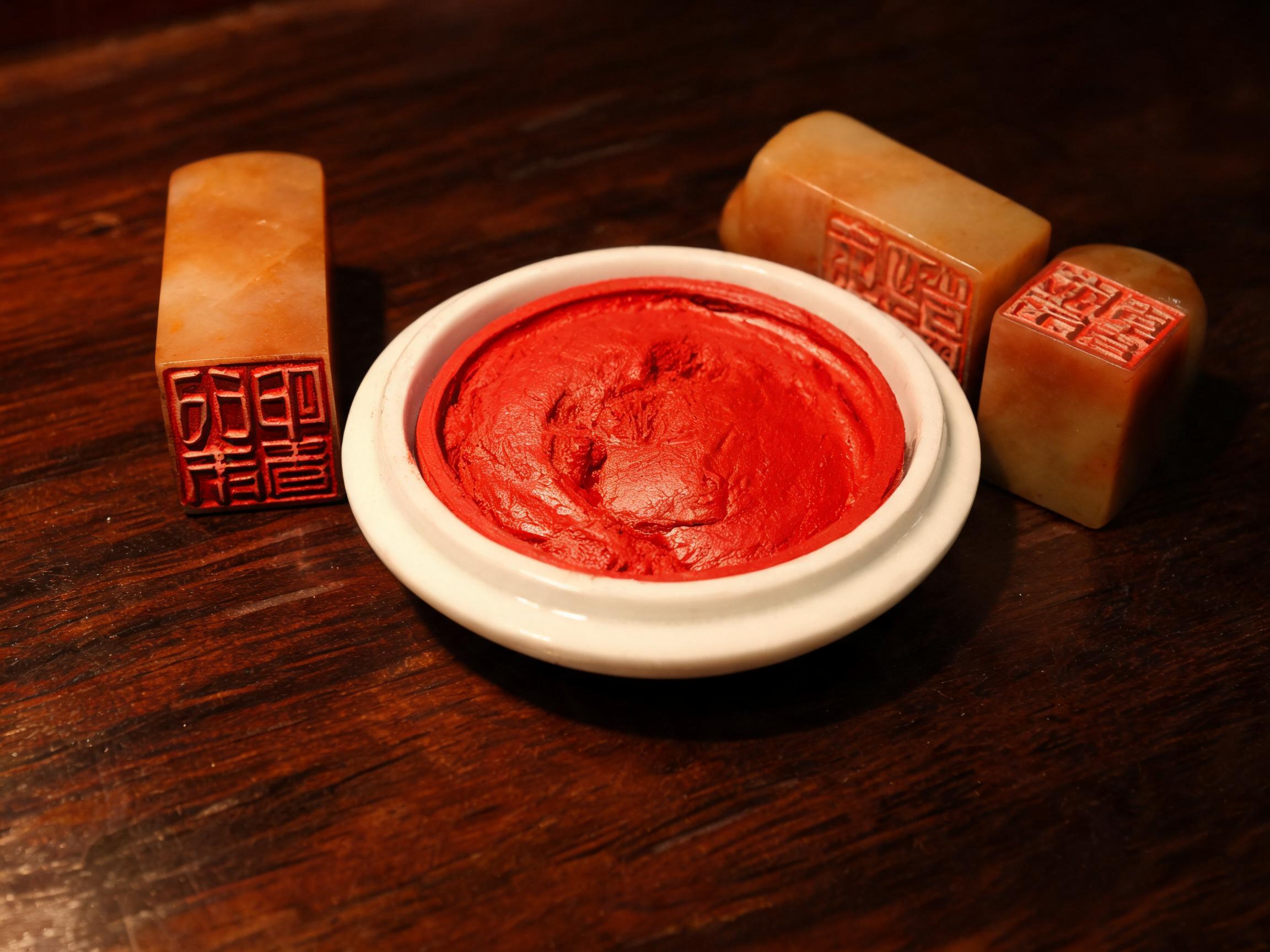
Custom engraving sourcing flow
A custom seal project moves through six stages. Each one has a decision that, if skipped, reappears as a rework cost later.
- Define the end use. Gift, personal identification, calligraphy practice, or temple use. This determines stone grade, face format, and packaging.
- Confirm the script and content. Provide the exact characters, reading order, and whether the face is raised or intaglio. For non-Chinese names, send a clear reference image rather than a transliteration alone.
- Select the stone. Shoushan and Qingtian stone are the two traditional carving stones. The supplier should test the stone before carving, since inclusions affect the face. Collectors and professional carvers typically want a premium blank such as the Premium Shoushan Seal Stone, while schools and beginners do better with a consistent practice blank like the Practice Seal Stone.
- Approve a carving sample. A carving sample is produced within 15 days. Review the stamped impression, not only the carving, because the face is what the buyer's customer sees.
- Run a seal-face stamping test. The supplier should stamp each face in vermilion ink paste and check alignment, depth, and edge cleanliness before packing.
- Confirm packaging. Gift channels usually need a box; practice channels often ship loose. A complete Seal Carving Gift Set bundles stone, vermilion ink paste, carving knife, and stand, which reduces assembly work at destination.
Guangdong Gu Mo Craft Technology Co., Ltd. has run an integrated design, production, QC, and export operation since 2011, with 50-200 staff, and supports OEM and bulk export. That structure matters for importers because script approval, stone testing, and stamping checks sit in one workflow rather than across three vendors.
MOQ and size guidance
The Custom Carved Name Seal is the main volume item for gift and collector channels. It supports multilingual engraving, uses Shoushan or Qingtian stone tested before carving, includes an optional gift box, and ships at MOQ 30 pieces. Available sizes run from 2x2x6cm to 4x4x10cm.
Size selection is usually driven by face complexity. A two-character face reads comfortably on a small block, while a four-character face or a dense Hangul layout benefits from a wider face. When an importer is unsure, the useful question is not "what is the smallest size" but "what is the smallest face that keeps the characters legible after stamping." Ask for the stamping test on the sample and judge the result at actual size.
Vermilion ink paste supports temple and religious seal use, so religious venues can order the paste together with the seals rather than sourcing it separately. That combination is common in markets where a temple stamps blessings, certificates, or donation records.
Supplier checklist before you commit
- Can the supplier engrave the target script, and will they show a stamping test rather than only a photo of the carving?
- Are Shoushan or Qingtian stones tested before carving, and are inclusions disclosed before the face is cut?
- What is the sample lead time? A carving sample within 15 days keeps a gift-season schedule workable.
- Is the MOQ compatible with your channel? MOQ 30 pieces suits trial orders and mixed-size assortments.
- Does the supplier offer gift boxing and ink paste, or do you need to source them separately?
- Can the supplier handle both functional name seals and decorative pieces in one purchase order?
FAQ
Can one supplier serve Japan, Korea, and Southeast Asia at the same time?
Yes, if multilingual engraving is available and the face format is confirmed per market. The physical product is similar, but the script, face layout, and packaging expectations differ enough that each order should specify them. This is why a carving sample matters more than a catalog photo.
What MOQ applies to a custom name seal order?
The Custom Carved Name Seal carries an MOQ of 30 pieces. That covers trial orders and lets importers test more than one size, such as 2x2x6cm and 4x4x10cm, in the same shipment.
How long does sampling take?
A carving sample is produced within 15 days. The sample should be judged by its stamped impression, since that is the result the end customer actually uses.
Are Chinese carved seals suitable for temple and religious use?
They can be. Vermilion ink paste supports temple and religious seal use, and religious venues often order paste together with seals. Confirm the required characters and any size constraints before sampling.
What should a collector-focused assortment include?
Collectors and professional carvers generally look for higher-grade stone blanks, so a premium Shoushan blank is the natural anchor item, supported by gift sets and ink paste for the gift channel. Practice blanks serve a different buyer and should be merchandised separately.
For importers planning a gift or religious-channel assortment, the practical next step is a sample order: send the required script, the intended use, and a target size, and confirm the stamped impression before committing to a production run. Guangdong Gu Mo Craft Technology Co., Ltd. supports OEM and bulk export from an integrated design, production, QC, and export operation established in 2011.