A practical guide for B2B buyers sourcing Chinese ink cakes (mo bing) wholesale. Covers types of molded ink, craftsmanship, MOQ, quality judgment, and channel-specific considerations for calligraphy, religious, and gift markets.
BUYER GUIDE
Chinese ink cake (mo bing) is not a single product. It is a family of molded ink sticks with different formulas, purposes, and price points. If you are sourcing ink cake wholesale for calligraphy, religious, or gift channels, you need to know what you are buying and how to verify quality before placing a container order.
This guide walks through the main types of molded ink, the craftsmanship that determines performance, typical MOQ expectations, and practical quality checks you can apply when evaluating suppliers.
- Ink cakes divide into two broad families: pine soot (songyan) and oil soot (youyan). Each suits different applications and price points.
- Quality is judged by grinding feel, ink color, layering, and scent—not just surface decoration.
- MOQ varies by type and decoration complexity; plain sticks start lower, gift-grade carved sticks require higher minimums.
- Always request a sample batch and test grinding before committing to bulk production.
What Is a Chinese Ink Cake?
A Chinese ink cake—also called a Chinese ink block or molded ink stick—is a solid ink formed from soot and binder, pressed into a decorative block. When ground with water on an ink stone, it produces liquid ink for calligraphy and painting. Unlike bottled ink, ink cakes are portable, long-lasting, and often collectible.
For B2B buyers, the term “mo bing” covers a wide range: from plain student-grade sticks to museum-quality collector pieces. Your sourcing strategy depends on the end channel you serve.
Main Types of Molded Ink Sticks
Understanding the two primary soot types is the first step in sourcing. They differ in raw materials, performance, and cost.
Pine Soot Ink (Songyan Mo)
Made from burned pine wood, pine soot ink produces a matte, cool-toned black. It dries quickly and is preferred for traditional calligraphy and ink wash painting where a dry-brush effect is desired. Pine soot cakes are generally more affordable, making them common for student and practice lines.
Oil Soot Ink (Youyan Mo)
Oil soot is produced by burning plant oils (e.g., tung oil, rapeseed oil) under controlled conditions. The resulting ink is richer, with a warm sheen and greater layering ability. Oil soot sticks are often used for fine art and collector pieces. They command higher prices and are more sensitive to formulation quality.
Mixed and Specialty Inks
Some manufacturers blend pine and oil soot to balance cost and performance. Others add ingredients like borneol (for scent) or gold powder (for decoration). These specialty inks are typically reserved for gift and ceremonial lines.
| Type | Raw Material | Ink Character | Typical Use | Relative Cost |
|---|---|---|---|---|
| Pine soot | Pine wood smoke | Matte, cool black, quick drying | Calligraphy, practice, student | Lower |
| Oil soot | Plant oil smoke | Rich, warm sheen, good layering | Fine art, collector, premium gift | Higher |
| Mixed | Pine + oil soot | Balanced | Mid-range calligraphy, general | Medium |
Craftsmanship: What Affects Quality and Price
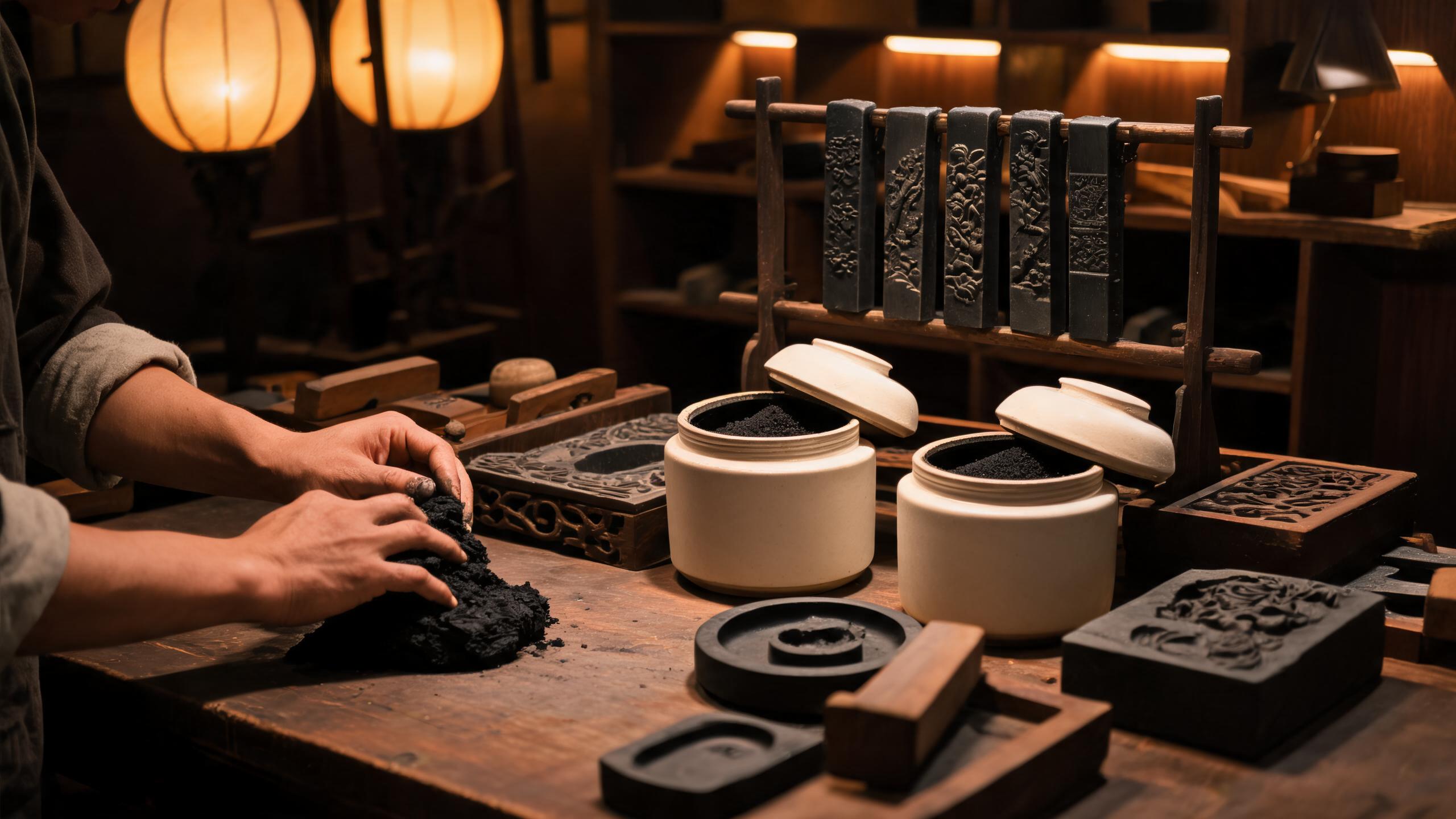
Molded ink production is a multi-stage process. The main steps are soot preparation, mixing with binder (usually animal glue), kneading, pressing into molds, drying, and finishing. Each step affects performance.
Soot Particle Size
Finer soot particles grind more smoothly and produce more consistent ink. Particle size is controlled by the burning process and subsequent sifting. High-quality sticks often use multiple sifting passes.
Binder Ratio and Aging
The glue-to-soot ratio determines how the ink grinds and how the ink adheres to paper. Too much glue makes the ink sticky and difficult to grind; too little makes the stick crumbly. Many premium manufacturers age the ink sticks for months or years after molding to stabilize the binder and deepen the scent.
Molding and Decoration
Ink cakes are pressed in carved molds. The depth and sharpness of the mold design affect the visual appeal, especially for gift and collector markets. Hand-finished edges and gilding add labor cost.
Drying Method
Slow, shaded drying prevents cracking and warping. Rapid drying (e.g., in ovens) can cause internal stress and surface defects. Ask suppliers about their drying time—longer is generally better.
Quality Judgment: What to Check Before Ordering
Surface decoration can be misleading. A beautiful stick may grind poorly. Use these practical checks when evaluating samples.
Visual Inspection
- Surface: Should be smooth, without cracks, bubbles, or uneven color.
- Edges: Sharp and clean, not chipped.
- Weight consistency: Sticks of the same model should be close in weight. Variation may indicate inconsistent formulation.
Grinding Test
Grind a small amount on a clean ink stone with a few drops of water. Observe:
- Grinding feel: Should be smooth, not gritty or slippery.
- Ink color: Pine soot gives a cool black; oil soot gives a warm, slightly brown-black. Both should be deep and even.
- Layering: When diluted, the ink should produce multiple gray tones without muddiness.
- Drying: Ink should dry without excessive smearing or flaking.
Scent
Traditional ink cakes often contain musk, borneol, or other aromatics. A pleasant, subtle scent indicates quality ingredients. A chemical or burnt smell may signal poor soot or additives.
Moisture Content
Ink sticks should be dry and hard. If they feel soft or bend slightly, they are not fully cured and may warp later. This is a common issue with rushed production.
Sourcing for Different Channels
Your target channel determines which type of ink cake to source and what quality level to specify.
Calligraphy and Art Supply Channel
Here, performance matters most. Buyers should focus on pine soot or oil soot sticks with reliable grinding and consistent color. Packaging can be simple. MOQ is often moderate (hundreds of pieces per model).
Religious and Ceremonial Channel
Ink cakes are used in certain religious ceremonies, such as writing scriptures or creating talismanic inscriptions. Buyers in this channel often prefer traditional designs, specific colors (e.g., red or gold accents), and moderate quality at a reasonable price. Packaging may need to include descriptive inserts or certificates.
Gift and Collector Channel
This channel demands high visual appeal. Carved designs, gilded edges, and premium boxes are essential. Quality must be high—collectors will test the ink. MOQ is typically higher due to complex packaging and decoration. Some suppliers offer custom mold carving for exclusive designs, but this requires a significant minimum order.
| Channel | Primary Concern | Typical Product | Packaging | MOQ Level |
|---|---|---|---|---|
| Calligraphy | Grinding, ink quality | Plain pine soot, oil soot | Simple box or sleeve | Medium |
| Religious | Tradition, color, price | Decorated, symbolic designs | Inserts, certificates | Medium |
| Gift/Collector | Visual appeal, quality | Carved, gilded, premium | Luxury box, silk lining | Higher |
MOQ and Order Considerations
MOQ varies widely among suppliers. Factors that influence MOQ:
- Type of ink: Pine soot is cheaper to produce, so MOQ may be lower. Oil soot with fine soot is more expensive, so suppliers may require higher minimums.
- Decoration complexity: Simple plain sticks have lower MOQ (e.g., 200–500 pieces). Carved and gilded sticks require more mold and labor investment, so MOQ may be 1,000+ pieces.
- Customization: Custom molds, logos, or packaging will raise MOQ significantly. Ask for a separate quote for custom mold carving.
- Packaging: Fancy boxes and inserts increase MOQ because they are ordered in bulk.
Always request a sample batch before bulk production. Samples allow you to test grinding and check consistency. Be aware that sample costs may not be refundable, but they are a necessary investment.
Working with a Supplier: Practical Tips
- Ask for production process details: Soot source, particle size, glue type, aging time.
- Request a specification sheet: Weight, dimensions, soot type, binder, decoration method.
- Check lead times: Drying and aging can take weeks. Confirm realistic delivery dates.
- Discuss packaging: For gift channels, ask if the supplier can handle custom boxes and inserts.
- Get a written quality agreement: Define acceptable surface defects, weight tolerance, and ink performance criteria.
Common Mistakes to Avoid
- Judging by appearance alone: A beautiful stick may grind poorly. Always test.
- Ignoring moisture content: Under-dried sticks can warp or crack during shipping.
- Assuming all pine soot is the same: Quality varies with soot source and processing.
- Not verifying MOQ for custom designs: Custom molds can be expensive and require large orders.
- Skipping sample testing: Even a small sample order can save you from a costly container of unusable ink.
FAQ
What is the difference between a Chinese ink cake and a Chinese ink block?
They are the same product. “Ink cake” (mo bing) and “ink block” are English terms for the solid molded ink. “Molded ink stick” is another common term.
How long does a Chinese ink cake last?
If kept dry and away from direct sunlight, a quality ink cake can last decades. Some antique sticks are still usable.
Can I request custom designs on ink cakes?
Yes, many suppliers offer custom mold carving. However, this requires a higher MOQ and additional tooling costs. Discuss your design with the supplier early.
What is the typical MOQ for ink cake wholesale?
It varies. Plain pine soot sticks might have a MOQ of 200–500 pieces. Oil soot or carved sticks may require 1,000+ pieces. Always confirm with the supplier.
How should I store ink cakes in my warehouse?
Keep them in a cool, dry place, away from humidity and temperature extremes. Avoid stacking heavy items on top of the boxes.
Ready to Source?
Sourcing Chinese ink cake wholesale requires attention to type, craftsmanship, and quality verification. By understanding the differences between pine soot and oil soot, checking grinding performance, and aligning product choice with your channel, you can build a reliable supply.
If you are evaluating suppliers, request samples and ask for detailed specifications. A reputable supplier will be transparent about their process and willing to provide technical details.
For more information or to discuss your specific requirements, contact us with your target quantity, channel, and quality expectations. We can help you find the right ink cake solution.