
A procurement guide for schools, language academies and training-program distributors: how to match calligraphy practice paper grade to budget, choose between loose sheets, pads, rolls and albums, build per-class packs, and run bulk orders without surprises.
Institutional Procurement Guide
Buying calligraphy practice paper for a school or training program is a different job from buying it for a hobbyist. You are matching a paper grade to a fixed per-student budget, choosing a pack format that works in a real classroom, and placing orders large enough that consistency between batches matters more than any single sheet. This guide covers the three decisions that dominate institutional purchases: grade tier, pack format, and bulk-order structure.
- Practice-grade paper should be judged on predictable ink absorption and clean tearing, not on premium fiber content.
- Loose sheets, bound pads, rolls and albums each fit a different classroom routine; most programs use two formats, not one.
- Per-class packing (a defined kit per student group) reduces distribution errors and simplifies reordering.
- Bulk-order success depends on approving a production sample, locking packaging for sea freight, and planning reorders before the first stock runs low.
On this page
Matching paper grade to budget tier
Institutional buyers usually work with three practical tiers rather than a long catalog of fiber types. The right question is not "which paper is best" but "which paper keeps stroke behavior predictable across a whole term, at a cost the program can sustain."
| Tier | What it is suited to | Procurement note |
|---|---|---|
| Economy practice grade | High-volume beginner drills, daily repetition, large classes | Check that absorption is consistent sheet to sheet; uneven sizing causes bleeding that wastes ink and frustrates beginners. |
| Standard practice grade | Mixed-level classes and training programs where students re-stroke characters | Slightly thicker sheets tolerate re-stroking and are easier to mount for display or assessment. |
| Presentation and album grade | Final pieces, certificate work, student portfolios, institutional gifts | Buy in smaller quantities than practice stock; reserve it for work that leaves the classroom. |
For the economy end, Student Practice Xuan Paper is positioned as an affordable practice grade with consistent ink absorption, intended for calligraphy schools and educational distributors that need bulk supply. That description matches what most programs actually need from a base paper: the same behavior from the first sheet of the term to the last, so instructors can teach technique rather than compensate for the material.
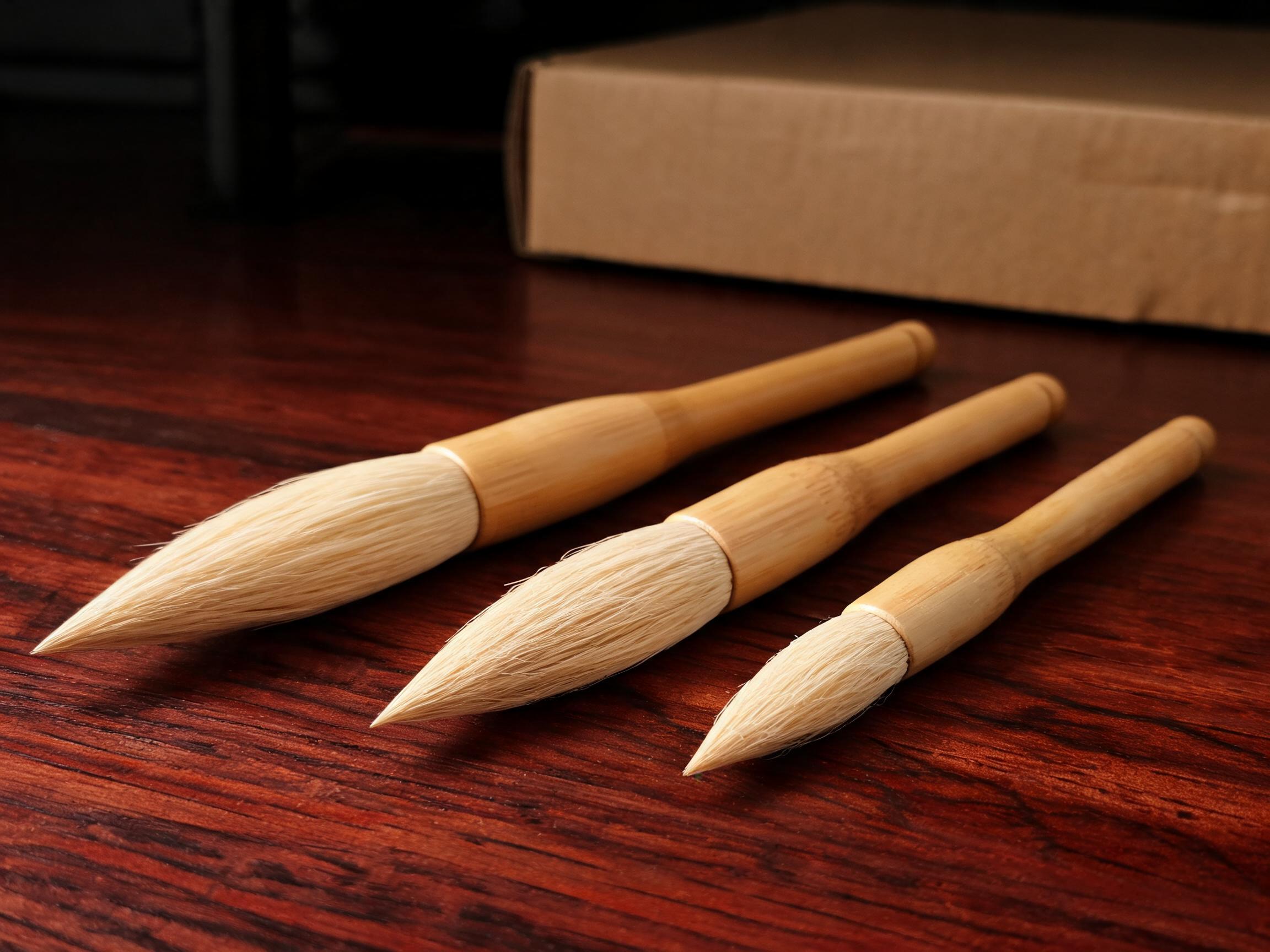
Grade choice also depends on what the paper sits next to. A school buying practice paper usually buys brushes and ink on the same purchase order, and mismatched components create their own problems — a brush that sheds or an ink that varies in density will be blamed on the paper. For beginning cohorts, the Student Practice Brush Set (a 3-brush set with synthetic-blend hair and sealed bamboo handles) and the Student Practice Hui Ink Stick (affordable pine soot, consistent quality) are made for the same institutional channel. Keeping the whole kit at one practice tier avoids the situation where a premium ink is used on economy paper and the instructor cannot tell whether a problem is technique or material.
Pack and binding formats: sheets, pads, rolls, albums
Format is a classroom logistics decision. Four formats cover most institutional needs, and each has a clear fit.
Loose sheets
The default for practice. Loose sheets let instructors hand out exactly the quantity a lesson needs, stack work for assessment, and discard spoiled sheets without waste. They are also the easiest format to pack per student or per class. The trade-off is handling: loose sheets need a folder or envelope, or they arrive at home crumpled.
Bound pads
Useful when students work away from a desk or when a program wants each learner to have a personal, dated record of progress. Bound pads are heavier per sheet than loose stock, so they suit smaller cohorts or supplementary use rather than the main practice volume.
Rolls
Rolls suit demonstration work — an instructor writing large characters for a group — and long-format exercises where a continuous sheet matters. For most schools, rolls are a teaching aid rather than student consumable, so buy them in modest quantity.
Albums
Albums are for finished work: end-of-term pieces, exhibitions, institutional gifts and archives. The Bound Xuan Paper Album uses traditional thread binding and supports custom cover design, which makes it a fit for cultural institutions and programs that present student work publicly. For procurement, treat albums as a separate budget line with a small, planned quantity and a longer lead time for cover approval.
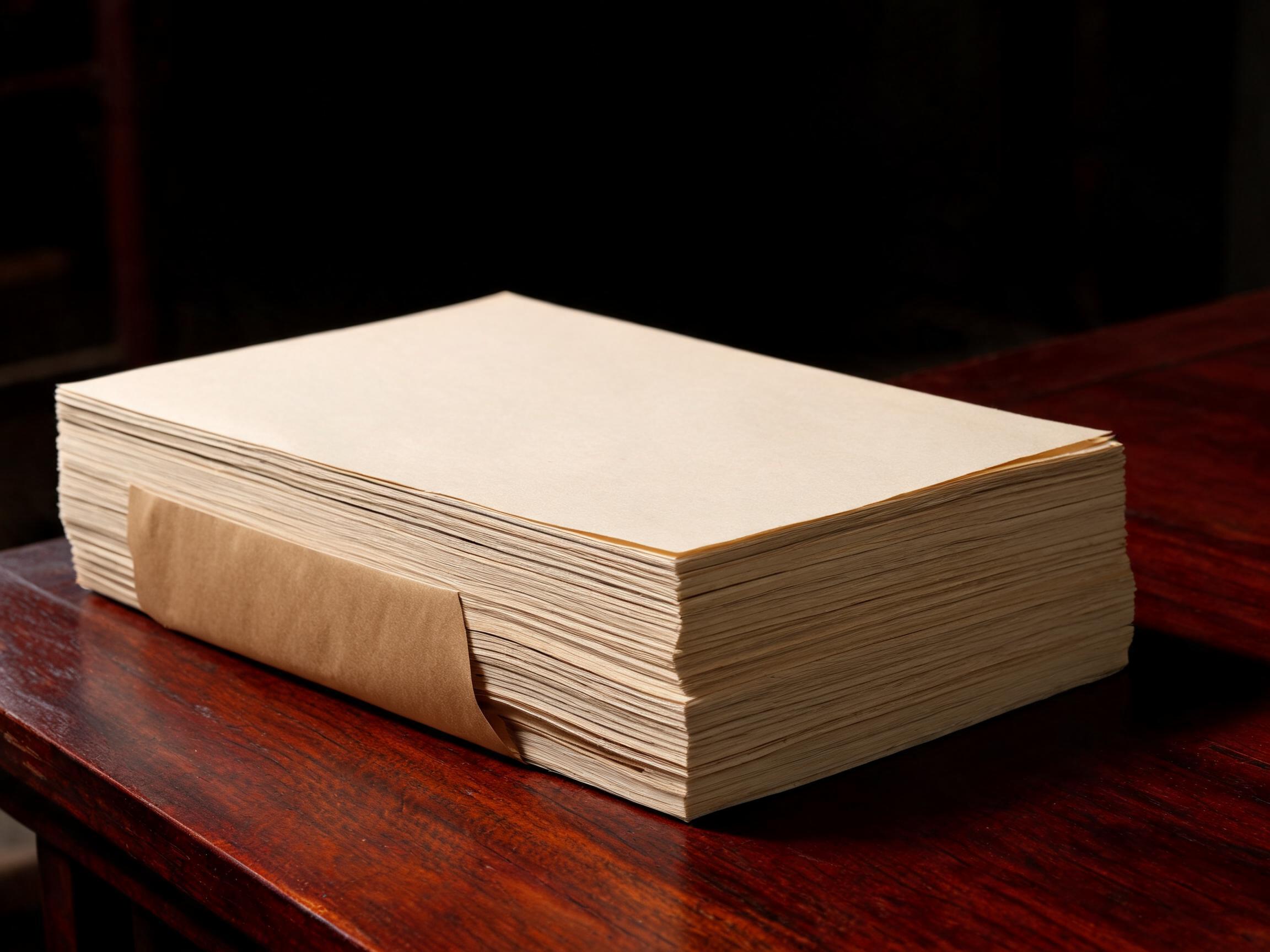
A practical mix for a multi-class program: loose sheets as the core consumable, one bound pad per student per term, rolls for the teaching room, and albums ordered once per year for final pieces. Confirm pack counts and MOQ with the supplier before you commit to this mix, because the ratios depend on your class size and term length.
Building per-class packs
The most common failure in school paper supply is not quality — it is distribution. A carton of loose sheets arrives at a central store, and each classroom then draws what it needs, which produces over-issuing in some rooms and shortages in others. Per-class packs solve this by defining a kit before the order is placed.
A workable per-class kit usually contains:
- One defined quantity of practice sheets per student, based on lessons per week and term length.
- A small reserve for spoilage and new enrolments.
- One bound pad per student if the program keeps a portfolio.
- Any shared items the class needs, such as a roll for demonstration.
Packing to this definition — whether the supplier does it or your own warehouse does — means a teacher opens one carton and has the term's material for one class. It also makes reordering arithmetic simple: number of classes multiplied by kit contents. If your program also supplies inkstones, the Practice Inkstone has a consistent grinding surface and is described as durable and cost-effective for schools, which fits a kit that is reused rather than consumed.
Ask the supplier whether they can pack to your kit definition or only to their standard pack size. Guangdong Gumo Crafts Technology Co., Ltd., founded in 2011, is a traditional crafts manufacturer with design, manufacturing, QC and export operations, and offers OEM customization and bulk export orders — but the specific packing arrangement, pack counts and MOQ still need to be confirmed with the supplier for your kit.
Bulk-ordering checklist for multi-classroom programs
For orders that cover several classrooms or several sites, four checks carry most of the risk.
1. Batch consistency
Ask how the supplier controls consistency across a bulk run, and how a reorder will compare with the first delivery. Paper that behaves differently in month four creates a teaching problem that no one attributes to the paper. If your program is sensitive to this, request that a reorder be drawn from a comparable production batch.
2. Sample approval before the bulk order
Approve a production sample, not just a catalog description. Test it the way your students will use it: stroke a character, let it dry, check for bleeding, try re-stroking the same area, and tear a sheet to see how cleanly it separates. Record what you approved and keep the sample; it becomes the reference if a later delivery is questioned.
3. Packaging for sea freight
Paper is vulnerable to moisture and compression. For sea freight, confirm how cartons are wrapped, whether there is a moisture barrier, how the cartons are stacked on the pallet, and what the pallet footprint is. If per-class kits are part of the plan, confirm that the kit packing survives transit — a kit that arrives mixed is worse than bulk stock. Confirm pack counts and MOQ with the supplier at the same time, since packaging choices often interact with order quantity.
4. Reorder planning
Work backwards from your term calendar. A program running three terms a year with sea freight has a narrow window between running low and running out. Place the reorder while the first stock is still at roughly a quarter, and keep the approved sample and the original order specification on file so the second order is placed against a defined reference rather than a description.
FAQ
Should schools buy the cheapest practice paper available?
Only if it absorbs ink consistently. Uneven absorption causes bleeding and wasted ink, which costs more in classroom time than the paper saves. Economy practice grade is appropriate for high-volume drills as long as consistency is confirmed on a sample.
How many formats does a typical program need?
Most programs run two as standard — loose sheets for daily practice and one bound format for portfolios — with rolls for teaching and albums for final work. Confirm pack counts and MOQ with the supplier before setting the mix.
Can practice paper be ordered with custom packaging?
Guangdong Gumo Crafts Technology Co., Ltd. offers OEM customization and bulk export orders, and the Bound Xuan Paper Album supports custom cover design. Specific custom requirements, packing formats and quantities should be confirmed with the supplier for each program.
What should be checked first on a bulk delivery?
Open one carton per batch and compare it against the approved sample: absorption, tearing, sheet condition after transit, and whether any per-class kits arrived correctly packed. Do this before the stock is distributed to classrooms.
For programs specifying a full practice kit, the student practice range — practice paper, brush set, ink stick and inkstone — is supplied through the same educational channel. Share your class sizes, term calendar and preferred pack format to start a bulk quotation.