
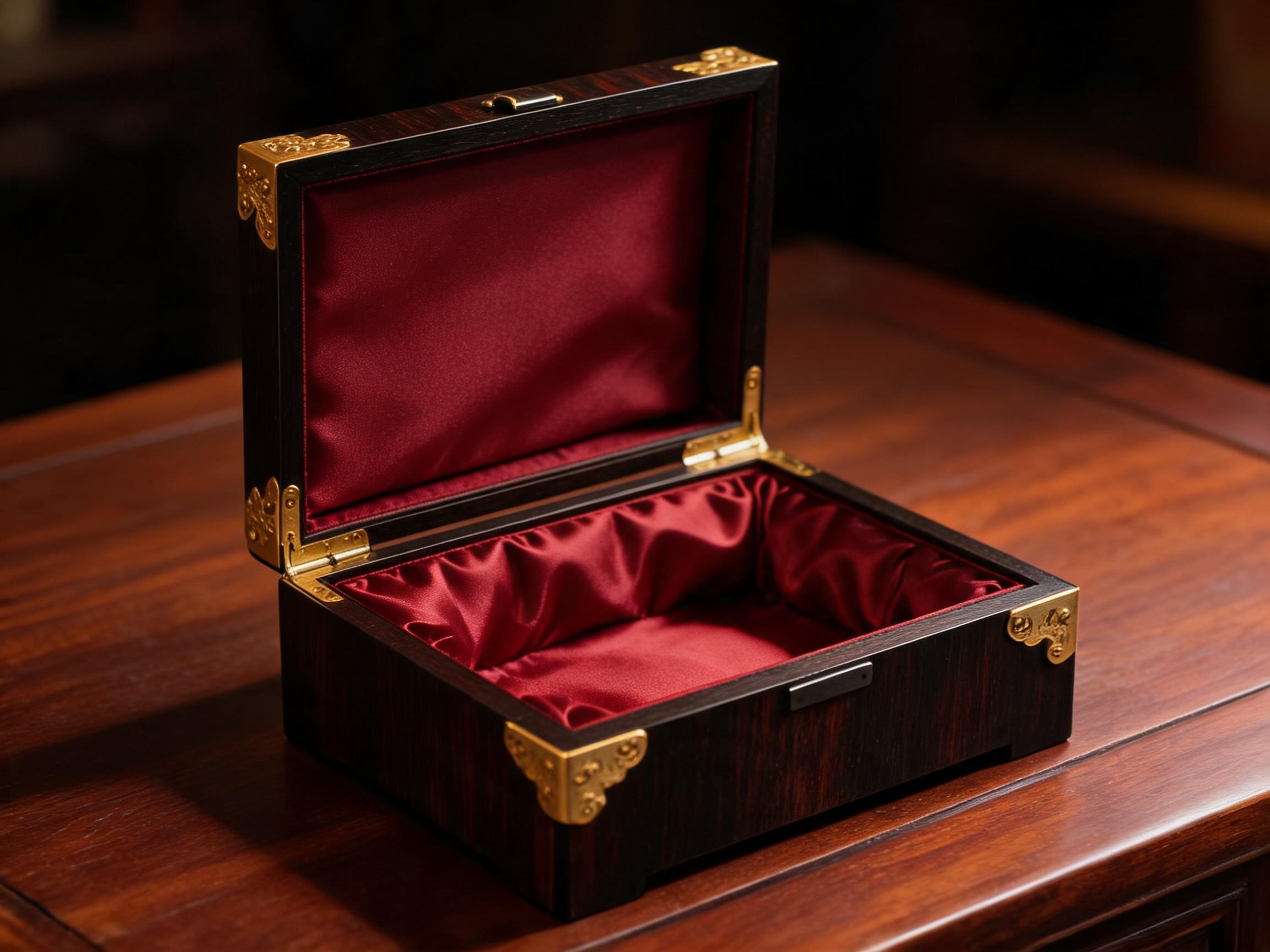
The gift box is its own sourcing decision. This article explains hardwood construction, magnetic closures, insert design for brushes and ink, private-label branding and export packing protection so gift program buyers and procurement teams can specify the box component with confidence.
Packaging Component Guide
A calligraphy gift box is not a wrapping decision made at the end of a set order. It is a separate SKU with its own material, construction, insert, closure and branding choices. This guide walks through those choices for gift program buyers, corporate procurement and stationery retailers who are sourcing the box itself.
Key takeaways
- The box can be specified independently of the set it holds, which gives you control over cost, branding and protection.
- Hardwood construction with a magnetic closure suits VIP corporate gifting and cultural programs where the box stays visible after the gift is opened.
- Insert layout should be planned around the brush, ink and paper components it will carry, not after the box is chosen.
- Private-label branding and export packing protection are separate variables from box construction.
On this page
Why the box is a merchandising decision
When a buyer searches for a calligraphy gift box or asks where to buy gift boxes wholesale, the intent is usually narrower than sourcing a complete set. The box becomes its own line item: it may be filled with a purchased set, filled with components the buyer sources locally, or sold empty as a presentation case.
Treating the box as its own SKU changes what you compare. Instead of asking which complete set tier fits a channel, the questions move to board or wood construction, insert geometry, closure type, lid decoration and the pack-out that protects finished boxes in transit. Those are the decisions in this article. A ready example of the component approach is the Premium Craft Gift Box, which is built as a standalone presentation box rather than as part of a fixed set.
This separation also helps when the box and the contents ship on different schedules. If the box is a standalone SKU with its own sample approval, you are not blocked waiting for an insert fit that belongs to a different product line.
Material and construction choices
Construction material drives both the perceived value and the protection the box offers. Two broad families cover most calligraphy gift box programs.
Rigid paperboard wrap is the common wholesale option. A greyboard core is wrapped in printed or specialty paper, and decorative elements are added to the lid. It is lighter and usually the lower-cost route, which matters when a buyer places a large run across several retail doors.
Hardwood construction signals a different tier. Hardwood boxes are chosen when the box is meant to survive the gift moment and be kept on a desk or shelf. The Premium Craft Gift Box uses hardwood construction, a magnetic closure and custom branding, and is designed for VIP corporate gifting and cultural programs. That combination of solid material and secure closure is the point: the box carries the brand long after the contents are used.
For buyers in markets where the box is expected to be resealed and reused, hardwood with a reliable closure is the more natural fit. For high-volume promotional giveaways, a rigid wrap box may be the practical choice. The decision is about where the box sits in the product line, not about which material is universally better.
Lining and inserts that protect brushes and ink
An insert is a fit problem before it is a design feature. Brushes are long and thin, ink is dense and can leak if a container is stressed, and paper or scrolls need to stay flat. The insert has to hold all of them without letting them move.
Start with the contents list, not the box size. If you already have a set such as the Complete Scholar Desk Set, which ships in a magnetic-closure presentation box with component matching, note how its internal layout is arranged and whether a similar insert logic can be carried into your own box SKU. That is a layout reference, not a shared specification, so confirm the insert details for your own component mix with the supplier.
Practical insert questions:
- Should brushes lie in individual channels, or share a long recess with end stops?
- Does the ink container need a separated compartment so it cannot press against paper?
- Is a removable tray useful so the lower layer can hold accessories?
- Which liner material suits the tier: fabric wrap, flocked surface or a printed card tray?
These choices affect sampling. A layout that looks correct on a drawing can fail once a real brush and ink bottle are placed inside, so a physical fit sample with your actual components is the reliable checkpoint.
Closure and unboxing experience
Closure type sets the tone of the unboxing and the durability of repeated use. The main options for a calligraphy gift box are magnetic, ribbon-tie, hinged lid and sleeve-and-tray.
| Closure type | Typical use | What to check |
|---|---|---|
| Magnetic | VIP gifting, reusable desk box | Magnet placement and lid alignment after repeated opening |
| Ribbon tie | Ceremonial and cultural programs | Ribbon anchoring and how it stores when closed |
| Hinged lid | Display and shelf presentation | Hinge strength and lid stay angle |
| Sleeve and tray | Retail and promotional runs | Sleeve fit tolerance and print alignment |
A magnetic closure is often the preferred choice for corporate programs because it opens cleanly and closes with a positive feel, and it lets the recipient reopen the box without managing a ribbon. For ceremonial gifting where the act of untying is part of the experience, a ribbon tie is the deliberate alternative.
Branding and private-label options
Branding on the box is a separate decision from branding on the contents. The box can carry the buyer's own identity through a debossed logo on a hardwood lid, a printed wrap, a foil accent or an interior card. Private-label branding is available on our presentation boxes, which means the box can be produced under the buyer's brand rather than a supplier mark.
Two branding questions come up in almost every program. First, does the brand mark need to appear on the exterior, the interior, or both? An interior mark is often used on VIP gifts because it is seen only by the recipient. Second, does the program require consistent branding across annual runs, which means keeping artwork and material references on file for repeat production.
Because branding is applied to the box as a separate SKU, a buyer can change lid decoration without reopening the insert or closure specification. Keeping those variables separate in your documentation makes reorders easier to quote.
Export packing and shipping protection
A box that survives the factory floor still has to survive export packing. The gift box is often the outer presentation layer, so carton design should protect it from corner damage, surface scuffing and moisture during long transit.
Points to settle with the supplier before shipping:
- Individual protective wrapping for each box, versus boxes stacked directly in the carton.
- Corner and edge protection for hardwood boxes, which are heavier than paperboard and can mark each other.
- Carton strength matched to stacking height, not just to unit count.
- Clear packing list marking so a mixed order can be checked on arrival.
These details are usually confirmed during the same sample stage as the box itself, so they can be agreed before the production run rather than after.
Questions to confirm with a supplier
Once the box is treated as its own SKU, the supplier conversation becomes specific. The checklist below covers the points that most often change a quotation or a sample round.
- Construction: hardwood, rigid wrap or another material, and whether the sample will match production material.
- Insert: whether the insert is built around a component list the buyer provides, and whether a physical fit sample is included.
- Closure: magnetic, ribbon, hinge or sleeve, and how the closure performs after repeated opening.
- Branding: decoration method, placement and whether artwork files need to be locked for repeat orders.
- Commercial terms: MOQ, sample approval, lead time and packing specification.
The buyer's side of this exchange matters too. Sending the component list, the target market, the branding files and the intended use tier lets a supplier quote the box accurately instead of quoting a generic option.
FAQ
What is the minimum order quantity for a calligraphy gift box?
MOQ depends on construction, insert and branding. For reference, the Complete Scholar Desk Set is quoted at MOQ 30 sets, and box-only programs are quoted according to the specification you submit. Share your construction and insert requirement to get the applicable MOQ.
How long does production take after sampling?
For the Complete Scholar Desk Set, lead time is 35-50 days after sample approval. A box-only order follows sample approval in the same way, and the confirmed schedule depends on the construction and branding method selected.
Can the box be produced under our own brand?
Yes. Private-label branding is available on our presentation boxes, so the box can carry the buyer's brand. Placement and decoration method are agreed during sampling.
Can we order the box without the contents?
Yes. The box can be sourced as a standalone SKU, which is useful when contents are purchased or assembled separately.
Next step
If you are specifying a calligraphy gift box as its own line item, send your component list, target market, construction preference and branding requirement. That gives the supplier enough to propose a construction and insert layout and to confirm the commercial terms that apply to your program.