
A two-tier grading frame and incoming-inspection checklist for bulk buyers sourcing antique-style and reproduction inkstones. Clarifies that these are Chinese Duan and She craftsmanship in traditional aesthetic designs, not genuine antiques, and explains how to batch-accept collector-grade versus practice-grade lines.
Buyers searching for an antique Japanese ink stone usually want the look and character of a traditional carved stone without paying antique prices or carrying the risk of genuine old stock. This guide sets out a two-tier grading frame and an incoming-inspection checklist for bulk orders, so gift distributors, cultural retailers and collector-channel resellers can batch-accept reproduction and antique-style inkstones with confidence. The line described here is Chinese inkstone craftsmanship — Duan and She traditions — offered in antique-style designs; it is not genuine antique inventory.
In this guide
- What “antique-style” means in new production
- Collector-grade versus practice-grade
- Incoming-inspection checkpoints
- Batch acceptance checklist
- Matching grade to sales channel
What “antique-style” means in new production
When a buyer asks for an antique Japanese ink stone, the intent is usually aesthetic: a carved stone with traditional motifs, a hand-finished surface and the weight and presence associated with collector pieces. Honest sourcing starts by separating that aesthetic from age. A reproduction or antique-style inkstone is newly made; what makes it “antique-style” is the design language and finishing, not a claimed date or dynasty. In new production, three elements carry the antique-style character:
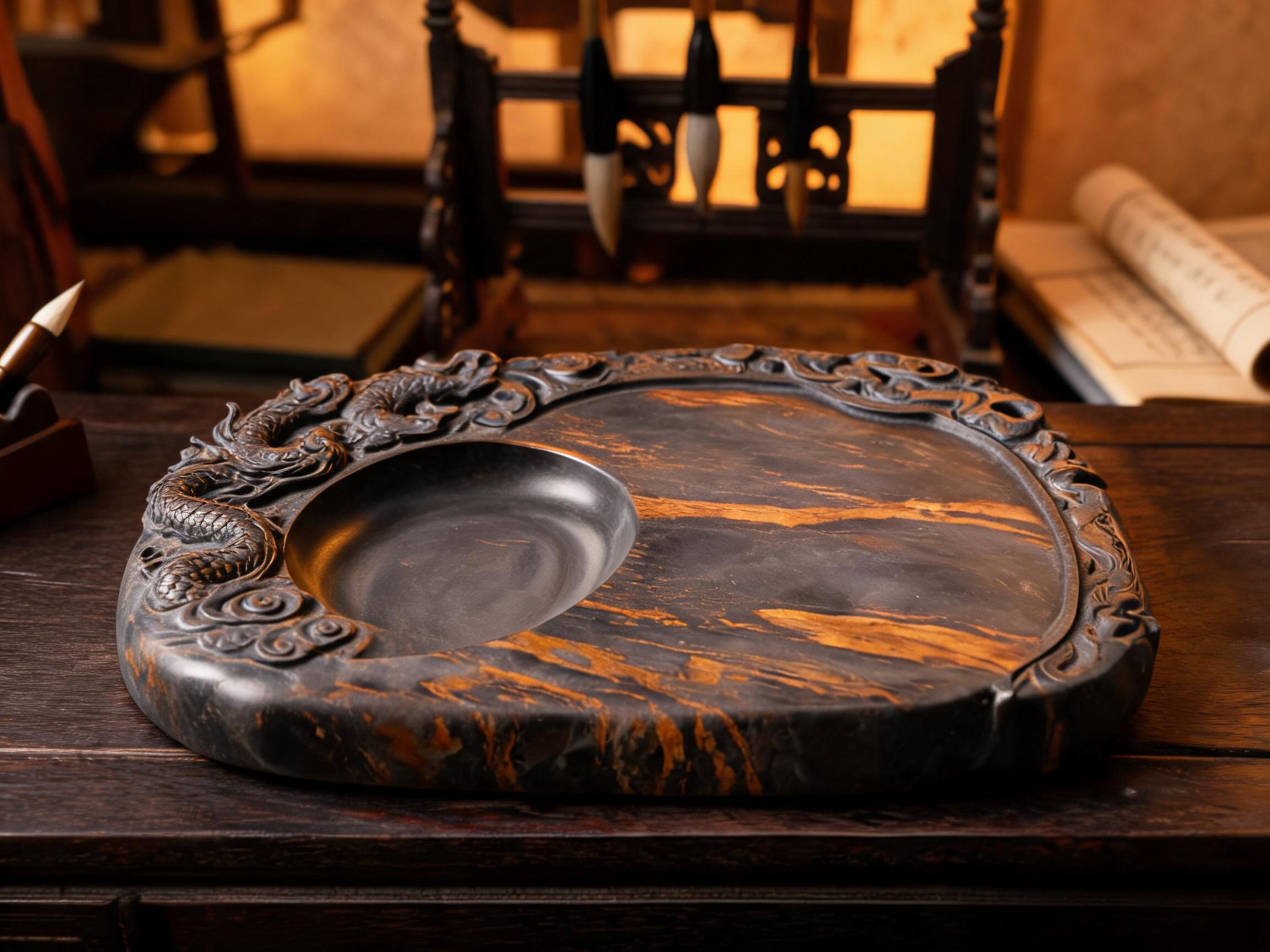
- Carved motifs. Decorative patterns are cut into the stone following traditional carving vocabulary, then finished by hand. Depth and consistency of carving separate a convincing piece from a shallow imitation.
- Stone character. The body is a real inkstone material, not a cast or composite shell. Grain is hand-selected, and the surface is hand-polished so the stone reads as natural rather than machined.
- Hand finishing. Edges, rims and the grinding surface are worked by hand so the piece feels like a crafted object rather than a stamped blank.
This is why the keyword searches for an antique Japanese ink stone can lead buyers to Chinese Duan and She craftsmanship: the aesthetic tradition overlaps, but the product is a new reproduction offered on its own merits. Clarifying that up front protects both the buyer and the end customer, who should never be told a new piece is a genuine antique.
Collector-grade versus practice-grade
Bulk orders usually mix two grades, and the grading frame should be built to keep them distinct from the first inquiry. The difference is not cosmetic; each grade answers a different sales channel.
Collector-grade. These are carved decorative inkstones, hand-carved with a certificate of authenticity for collectors and premium cultural gifts. The value sits in the carving, the hand-selected grain and the finishing; the certificate documents the piece as a new, hand-carved reproduction rather than asserting an old age.
Practice-grade. These are practice inkstones with a consistent grinding surface for schools and bulk education supply. The value sits in repeatable grinding performance across a batch, not in decoration.
| Attribute | Collector-grade | Practice-grade |
|---|---|---|
| Primary use | Collector channels, premium cultural gifts | Calligraphy schools, bulk education supply |
| Carving | Hand-carved decorative motifs | Plain or minimal; grinding surface is the priority |
| Stone body | Hand-selected grain, hand-polished | Consistent grinding surface across the batch |
| Documentation | Certificate of authenticity per piece | Batch grading certificate |
| Batch acceptance focus | Carving depth and finish consistency | Grinding-surface consistency |
The two grades can be ordered together; the grading frame keeps the paperwork and inspection standard attached to each line.
Incoming-inspection checkpoints
At goods-in, the buyer's job is to confirm that the delivered batch matches the grade ordered. Five checkpoints cover most of the risk.
Stone body integrity
Check for cracks, chips and repairs across the body. For the She line, structural integrity testing is part of the production process, so the inspection step is a confirmation rather than a first screening. For the Duan line, sized 15–25 cm, check the body and edges are sound.
Hand-selected grain
Confirm the stone reads as natural material with visible grain, and that the grain is consistent with the sample approved at order stage. A batch with obviously mismatched grain suggests a substitution or a mixed lot.
Carving depth and finish consistency
On collector-grade pieces, compare carving depth and edge finish against the approved sample. Inconsistent depth across a batch is the most common reason to reject a collector-grade lot; it is measurable against the sample rather than left to taste.
Flatness of the grinding surface
On practice-grade pieces, the grinding surface is the functional test. It should be flat and consistent piece to piece, since schools rely on repeatable grinding across many students. A warped or uneven surface fails the batch on function, regardless of appearance.
Documentation
Collector-grade pieces should carry a certificate of authenticity; practice-grade batches should carry a batch grading certificate. Match the certificates to the pieces delivered and to the PO line.
A note on stone character
The Duan line is sourced from verified Zhaoqing quarry sources with hand-selected grain and hand polishing; the She inkstone line comes from verified Wuyuan quarry sources with fine grain and structural integrity testing. These sourcing facts describe how the stone is selected and finished, not a claim about age.
Batch acceptance checklist
Work the checklist in order; each line should be signed off before the batch is released to stock.
- Grading certificates per batch. Confirm certificate of authenticity for collector-grade pieces and batch grading certificate for practice-grade lots. Before the order is confirmed, agree in writing what each certificate must state — at minimum the grade designation, a clear statement that the piece is a new hand-carved reproduction rather than a genuine antique, and the piece or batch identifiers it covers — then check the certificate set matches the delivered quantities and the PO lines.
- Visual structural check. Inspect the body across the batch and reject pieces with cracks, chips or repairs. The production-side structural integrity testing on the She line is a supplier process; this visual check is what your own team verifies at goods-in.
- Sample-to-batch match. Compare carving depth, finish and grinding-surface flatness against the approved sample.
- Foam-lined reinforced packaging. Confirm packaging is foam-lined and reinforced; inkstones are heavy and brittle, and a packaging failure shows up as transit damage, not as a product fault.
- Transit damage procedure. Photograph any packaging or stone damage at unboxing, before signing acceptance; agree the reporting window and the remedy with the supplier before the first shipment, and confirm the process the supplier actually offers rather than assuming replacement.
- Custom engraving. Where custom engraving is ordered, check the engraving against the approved artwork and text before accepting the batch.
- MOQ confirmation. The inkstone MOQ is 50 pieces; confirm the batch plan meets it and that grades are separated correctly on the PO.
Practical acceptance note
Keep the approved sample on file through the delivery window. Inspector disputes usually come down to an argument about “the same as the sample”, and a retained sample resolves that faster than a written description.
Matching grade to sales channel
The grading frame exists because channel and grade should line up before the inquiry becomes a PO.
Cultural gift programs and collector shops
These buyers need the antique-style look and documentation. Collector-grade carved decorative inkstones, with certificate of authenticity, fit cultural gift programs and collector shops where the piece is presented as a crafted reproduction. Buyers in Southeast Asia, Japan and Korea, the Middle East, Central and Eastern Europe north of 30°N, Africa and Chinese communities in the Americas can position these as premium cultural gifts; the honest framing — new hand-carved reproduction — is part of the value proposition, not a limitation to hide. Positioning details differ by market and channel, so validate the gift framing against each market's expectations rather than applying one template.
Calligraphy schools and bulk education supply
These buyers need volume and repeatable function. Practice-grade inkstones with a consistent grinding surface are the right line, and batch grading certificates give the school a record of what was received. Decorative carving adds cost without adding function for a classroom, so the plain practice line is usually the better match.
Mixed orders
Many distributors carry both lines. Where a single order mixes grades, state the split clearly on the PO and require separate certificates for each portion, so the reseller can present collector pieces and practice stock under the correct description.
For the Duan line, the classic Duan inkstone range should be specified by grade, size within the 15–25 cm range, and finish. For a first bulk order, the practical path is to request the grade breakdown, confirm the MOQ of 50 pieces, and inspect against a retained sample at goods-in.
Next step for bulk buyers
Before issuing a PO, ask the supplier to confirm three things in writing: the grade of each line ordered, the certificate or certificates that will accompany the batch, and whether custom engraving and foam-lined reinforced packaging are included. That written confirmation, matched against the incoming-inspection checklist above, is what lets a distributor batch-accept reproduction inkstones without treating them as antiques or guessing at quality.