
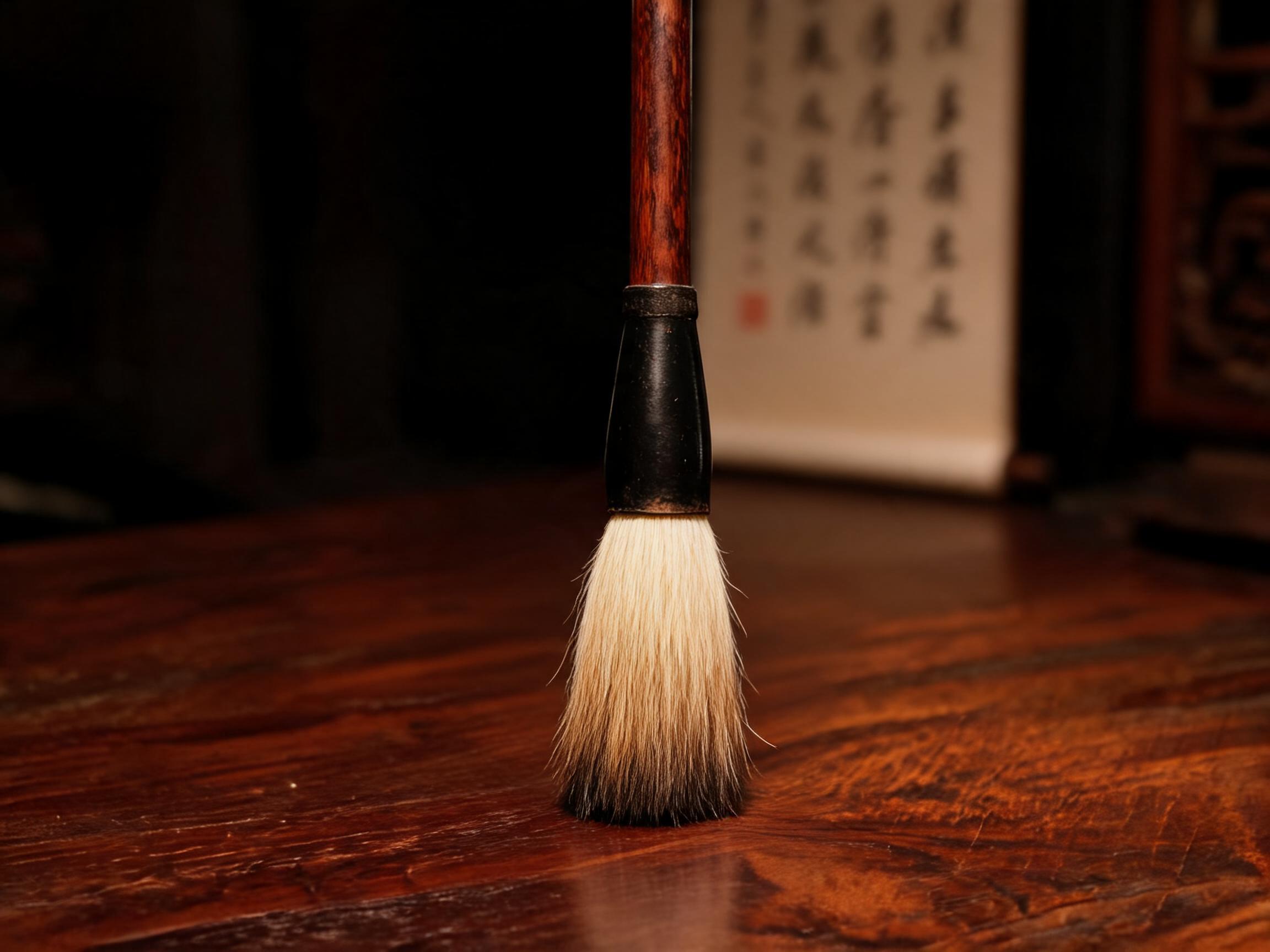
A sourcing guide for gift, cultural-retail and collector-adjacent buyers on new-production calligraphy brushes with vintage-inspired styling: what the look actually is, which channels stock it, how to build gift boxes around Duan inkstones and desk sets, how to label honestly, and what to verify before placing a bulk order.
Sourcing Guide · Gift & Collector Channels
Buyers searching for a vintage calligraphy brush usually want one of two things: a genuine antique with documentation, or a new brush that reads as traditional on a shelf or in a gift box. This guide is about the second category. It covers what antique-look brushes actually are, which channels buy them, how to pair them into gift assortments, and where honest labeling ends.
Our brushes are new-production pieces with vintage-inspired styling — traditional bamboo or wood handles, classic ferrule binding and a classic display presence. We do not artificially age or distress brushes, and we do not issue age or provenance certificates for them. If your customer base expects genuine antiques, that is a different product category with a different evidence chain, and new decorative stock cannot substitute for it.
In this guide
What “vintage-style” means for new-production stock
A vintage-style calligraphy brush is a current-manufacture brush whose design language borrows from older workshop practice. The cue is in the form, not in the age: the profile of the handle, the way the ferrule is bound, the proportions of tip to shaft, and the way the finished piece sits in a box or on a stand.
This distinction matters for procurement because it determines what you can promise downstream. A gift retailer can sell a new brush with traditional styling on its appearance and its writing properties. It cannot sell that same brush as a period piece. Buyers who blur the two end up in returns disputes they cannot win, and in markets with consumer-protection rules, misdescription is the fastest route to a listing takedown.
| Attribute | Vintage-style (new production) | Genuine antique |
|---|---|---|
| Age | Current manufacture | Datable to a period |
| Evidence | Product specification and inspection | Age and provenance documentation |
| Consistency across units | Repeatable batch to batch | Each piece unique |
| Best suited to | Gift programs, cultural retail, decor, corporate sets | Specialist collectors, auction and estate channels |
| Replacement supply | Reorderable | Generally not reorderable |
If a client asks for antiques, the honest answer is that this assortment is not that. What it offers instead is repeatability — the same handle profile, the same binding, the same box, order after order — which is usually what a gift program actually needs.
Which channels buy antique-look brush programs
Demand clusters around buyers who need cultural atmosphere and gifting credibility more than connoisseurship.
- Gift and cultural retail. Museum-adjacent shops, stationery boutiques and cultural concept stores buy small runs of display-worthy brushes, often boxed singly or in pairs. Seasonal peaks matter here; brush-led gift assortments tend to lift in the run-up to gifting seasons and graduations.
- Hotel and corporate gifting. Hospitality groups and companies building VIP or cultural-exchange gifts want a presentable object with a story, in packaging that survives shipping and looks correct on a table. Volume is moderate, presentation standards are high.
- Collector-adjacent decor. Interior and lifestyle buyers who want a scholar’s-desk vignette — a brush in a stand, an inkstone beside it — without making authenticity claims to their own customers.
- Cultural institutions and programs. Calligraphy workshops, cultural centers and Chinese-community organizations in the Americas and elsewhere buy brushes both for use and for presentation gifts.
- Educational and corporate cultural programs. Buyers assembling kits for workshops or client events need quantity, consistent quality and clear labeling.
Across all five, the purchase question is the same: does the brush look right in context, and can the buyer describe it accurately?
Styling elements that create the look without fake-aging claims
The antique impression comes from a handful of design decisions that are entirely legitimate on new stock:
- Handle material and profile. Traditional bamboo or wood handles with a straight or gently tapered shaft read as classical. Material choice drives both appearance and price point.
- Ferrule binding. Classic binding styles — the wrapped or banded collar between handle and hair — are the single most recognizable traditional cue. Consistency of binding across a batch is what makes a shelf display look considered rather than random.
- Proportion and tip shape. A well-proportioned tip-to-shaft ratio signals a serious brush. Very large pieces shift the product from writing tool toward display object; a large format calligraphy brush with dense hair packing, a reinforced handle and display-worthy scale suits exhibition calligraphy, sign painting and lobby display.
- Presentation accessories. Brush stands, cloth wraps, paper sleeves and fitted boxes do more for the vintage read than any surface treatment. They are also where you can differentiate without touching the brush itself.
Note on what we do not do: we do not distress, stain or artificially age handles, and we do not market brushes as aged. If a supplier offers you a “aged-look” treatment, ask exactly what it is and whether it is disclosed on the packaging — undisclosed treatment is a labeling risk you carry, not the supplier.
Building vintage-flavored gift boxes
Brushes sell better in company than alone. Three pairings cover most gift and collector-adjacent briefs.
1. Brush + inkstone pairing
An inkstone gives the box weight and a second focal point. A Classic Duan inkstone — sourced from verified Zhaoqing quarry sources with hand-selected grain — is a credible anchor for a studio-grade gift, and the pairing is the classic scholar’s-desk composition. Keep box dimensions generous enough that the stone’s grain is visible when the lid opens; a stone packed under foam loses the effect.
2. Full desk set for VIP and corporate programs
For senior-client gifting and cultural-exchange presentations, a complete set removes the assembly burden from the buyer. The Premium Scholar Desk Gift Set pairs a gold-edge ink stick with a selected Duan inkstone in a luxury gift box — a natural base to build a brush-inclusive presentation around, subject to confirming box fit with us before you commit a design.
3. Single-brush retail box
For shelf retail, a single brush in a slim fitted box with a short printed card usually outperforms a large set: lower unit cost, easier display, easier gifting decision at the counter. Use a consistent box format across the range so a retailer can merchandise several price points side by side.
| Box format | Typical channel | What to specify |
|---|---|---|
| Single brush, slim fitted box | Gift retail, cultural shops | Box internal length, insert material, printed card text |
| Brush + Duan inkstone | Studio gift, cultural retail | Stone size, foam layout, lid depth for grain visibility |
| Full desk set | VIP corporate, institutional | Set composition, outer gift box finish, shipping carton strength |
On packaging: choose an insert that holds the brush shaft without compressing the hair. Hair deformation in transit is the most common complaint in brush gifting, and it is a packaging problem, not a product problem.
Honest labeling: what you can and cannot say
This is the section to share with your own marketing and legal teams. The following phrasing is defensible for new-production vintage-style brushes:
- “Traditional bamboo handle, classic ferrule binding, vintage-inspired styling”
- “New production, styled after classical calligraphy brushes”
- “Decorative and functional calligraphy brush”
And the following should stay out of your copy unless you have your own independent evidence, which new decorative stock will not generate:
- Any age, era or dynasty attribution
- “Antique”, “period”, “original” or “estate” in a way that implies age
- “Certificate of authenticity” attached to a brush
- Claims of provenance or previous ownership
Genuine antiques carry age and provenance documentation that new decorative stock cannot offer. That documentation is the product in the collector market; without it, the object is decor. Being explicit about this protects your retail accounts and keeps the relationship with specialist collectors clean.
One clarification, because it comes up: the only item in our catalog that carries a certificate of authenticity is a carved decorative inkstone, and that certificate applies to that item alone. It does not extend to brushes, and it does not convert an inkstone into a datable antique.
Verification checks before a bulk order
Run these before committing volume, in this order.
- Sample, then handle it. Order one unit of each SKU in the intended box. Check shaft straightness, binding tightness, tip shape, and whether the brush sits correctly in the insert.
- Confirm hair composition in writing. Stiff, soft and blended hair suit different uses and different buyer expectations; get the composition stated on the spec sheet rather than inferred from photos.
- Check batch consistency. Ask for a photo of three units of the same SKU side by side. Handle color and binding vary naturally in bamboo and wood; the question is whether the variation is within a range your shelf can carry.
- Test the packaging. Ask how brushes are protected in the shipping carton, and get a transit test or a small trial shipment before a full order.
- Agree the label text. Send your intended product description and box card text to the supplier and confirm the specification matches. This is where misdescription gets caught cheaply.
- Confirm reorder terms. For gift programs, the ability to reorder the same handle profile and box next season is worth more than a one-off price advantage.
Questions on any of the above — box fit, hair composition, mixed-SKU assortments — are best answered against your specific channel and volume; send us the brief and we will confirm what applies.
FAQ
Are these brushes antiques?
No. They are new-production brushes with traditional, vintage-inspired styling. We do not supply age or provenance documentation for brushes, and we do not present them as aged.
Can you supply a certificate of authenticity with a brush order?
No. The only item in our catalog that carries a certificate of authenticity is a carved decorative inkstone. Brushes are supplied with a product specification, not an authenticity document.
Do you artificially age or distress the handles?
No. The vintage look comes from handle material and profile, ferrule binding style, proportions and presentation — not from surface treatment.
What is the smallest sensible assortment for a gift program?
It depends on your shelf and price ladder, but a practical structure is one entry-level single-brush box, one brush-plus-inkstone pair, and one full desk set for VIP tiers. Confirm box dimensions with us before finalizing artwork.
Can brushes be mixed with inkstones in one shipment?
Yes, subject to box layout. Inkstones are heavier and need separate foam protection from the brush head; specify both in the packaging brief.
When is demand strongest?
Brush-led gift assortments tend to lift ahead of gifting seasons and graduation periods. Plan sample approval well before your retail buyers place seasonal orders.