
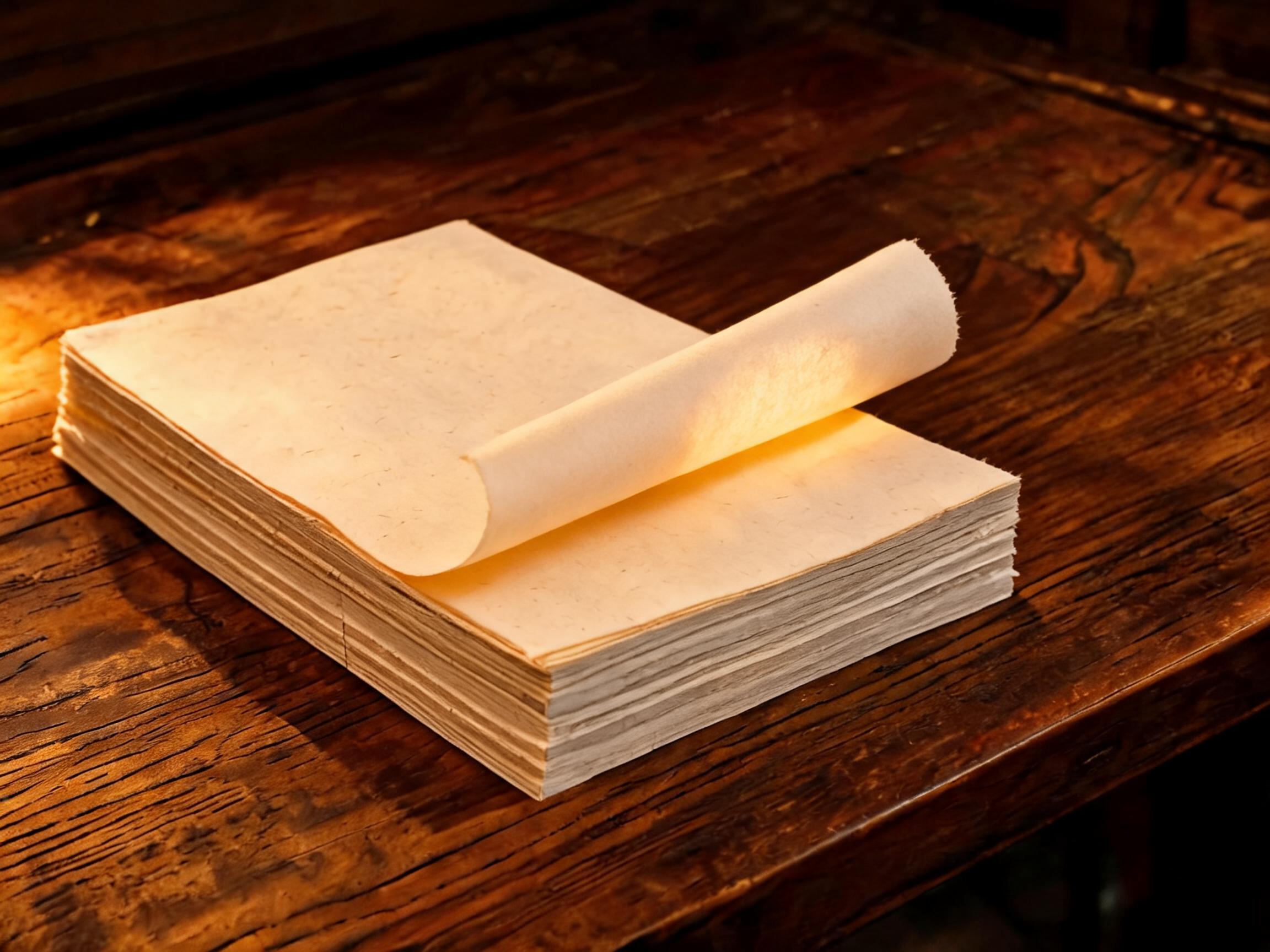
A spec-to-use selection framework for thin rice paper buyers: how weight class, laid lines (帘纹) and sizing map to practice, freehand calligraphy, gongbi, scroll work and albums, using Guangdong Gumo's five xuan SKUs as the reference point and flagging where buyers should request the current spec sheet before committing to bulk orders.
Procurement guide
Thin rice paper is not one product. Weight class, the laid-line pattern and the sizing treatment each decide what a sheet can do — and what it will fail at. This guide sets out a selection framework for importers, art-material wholesalers and school programs, using five xuan formats from Guangdong Gumo Crafts Technology Co., Ltd. as concrete reference points.
What "thin" actually means when you buy for resale
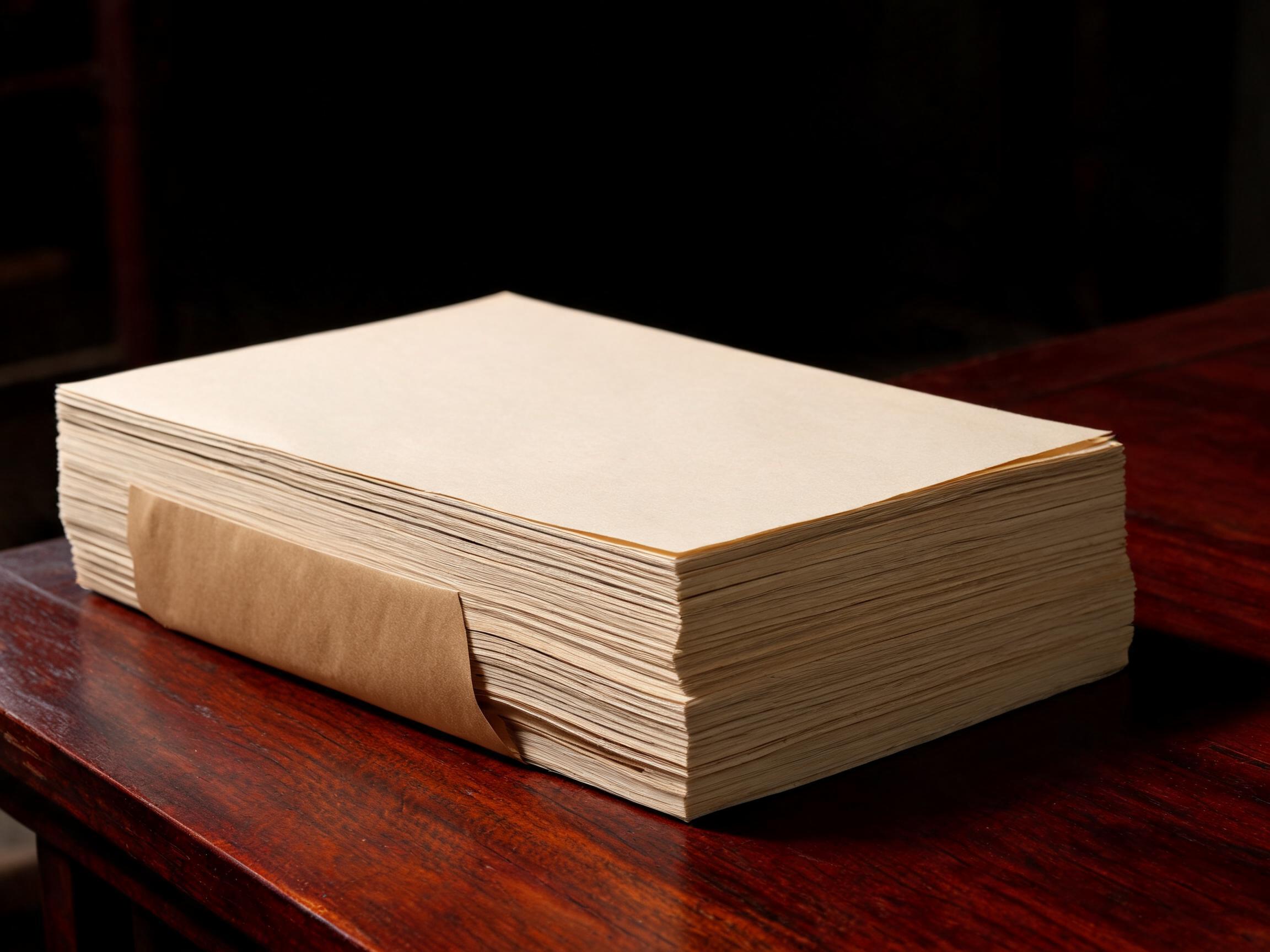
Buyers searching for thin rice paper usually mean one of three different things: a low-weight sheet that takes ink quickly, a translucent sheet used for tracing and mounting, or simply a lightweight grade that keeps freight cost down in bulk. Those are not the same purchasing decision, and a supplier cannot quote accurately until the intended use is clear.
Three characteristics matter when you assess a thin xuan paper sample:
- Weight class. Thinner sheets absorb ink faster and show brush texture more directly. That is an advantage for freehand work and rapid practice drills, and a disadvantage wherever a design needs to be built up over many passes without the paper giving way.
- Translucency. Hold a sheet against light. Evenness across the sheet tells you more than how pale it looks on a table.
- Handling. Thin sheets are more sensitive to creasing and to moisture pickup during packing and storage. How the paper behaves when you lift and reposition it is part of the product's suitability, not a packing afterthought.
The site's current product pages do not publish gram weights or thickness values for these sheets, and no buyer should accept a supplier's verbal weight description as a specification. Request the current spec sheet for the specific SKU you are evaluating; it is available on request and is the document to put next to your purchase order.
Laid lines: what to check in a sample
Laid lines (帘纹) are the faint parallel markings left by the bamboo screen during sheet formation — they are a traditional quality marker in handmade-style xuan paper, not a printed decoration. Alongside them you will see the fiber pattern of the sheet itself.
What matters for a buyer is evenness. An even, consistent line spacing and an even fiber distribution indicate controlled, repeatable manufacture. Irregular spacing, patchy fiber clumping or lines that fade in and out suggest the sheet was not formed consistently — and inconsistency in a sample usually becomes inconsistency in the carton.
In practice, check laid lines this way:
- View the sheet at a low angle under raking light; laid lines and fiber pattern show up more clearly than under direct overhead light.
- Compare two or three sheets from the same pack, not one. You are judging consistency, not the best sheet in the batch.
- Check the edges as well as the centre — line quality that only holds in the middle of the sheet is a warning sign.
- Write a short brush stroke across the lines and look at how the ink follows them; this tells you how the surface and the fiber pattern interact with your target ink.
Sizing and thin-sheet behaviour by end use
Sizing is the control variable most buyers underestimate. Raw (生) xuan is unsized or lightly sized: it bleeds, spreads and rewards speed and confidence. Treated or semi-sized (熟) xuan has controlled sizing that resists bleeding and holds fine lines. On a thin sheet, sizing matters more than on a heavy one, because there is less fiber mass to absorb a mistake.
Daily practice and school programs — Student Practice Xuan Paper (GMO-XP-003)
For calligraphy schools and programs running high volumes of drills, the requirement is consistent ink absorption sheet after sheet, so a class can work from the same behaviour. The Student Practice Xuan Paper is supplied in bulk for schools on that basis. When specifying for a program, confirm the current spec sheet per SKU and settle the packing format before you set your per-student cost.
Professional freehand calligraphy — Raw Xuan Paper Professional (GMO-XP-001)
Traditional bark fiber with ink bleed kept within the mill's stated range for raw-grade paper, aimed at professional calligraphers and studios. This is the absorbent raw grade where a thin sheet's sensitivity to brush speed and pressure becomes an asset. If your market is advanced practitioners rather than beginners, this is the class of paper their expectations are built around — and the exact bleed behaviour under your market's ink is one more item to check on the approved sample, not to assume from a catalogue line.
Fine-line gongbi — Treated Xuan Paper for Gongbi (GMO-XP-002)
Gongbi work needs even ink resistance and a smooth surface so that fine outlines stay crisp and colour layers do not creep. The Treated Xuan Paper for Gongbi applies sizing to achieve this under normal calligraphy-and-painting ink conditions. Buyers should test the treated surface with the pigments their own market actually uses — ink resistance that suits one line of goods may not suit another.
Scrolls and large-format work — Xuan Paper Roll (GMO-XP-004)
Roll format changes the purchasing questions. Instead of sheet count, you are buying width consistency and clean edge cutting — the two things that decide whether a scroll mounts squarely. The Xuan Paper Roll is supplied with controlled width consistency and clean edge cutting for large-format calligraphy and scroll painting. Confirm roll dimensions and packing on the current spec sheet before ordering.
Albums and collections — Bound Xuan Paper Album (GMO-XP-005)
Thread binding with custom cover design, for cultural institutions and collections. For this format the binding and the cover carry as much commercial weight as the paper itself, especially in gift and institutional channels. Cover customisation and approval of the finished album should be settled at sample stage.
Use-matching table
| End use | SKU | Selection logic | What to confirm before ordering |
|---|---|---|---|
| School and daily practice | GMO-XP-003 Student Practice Xuan Paper | Consistency across a high-volume run matters more than individual sheet character | Current spec sheet; bulk packing format |
| Professional freehand calligraphy | GMO-XP-001 Raw Xuan Paper Professional | Absorbent raw grade; controlled bleed suits confident, fast brushwork | Current spec sheet; ink behaviour on sample |
| Fine-line gongbi and layered colour | GMO-XP-002 Treated Xuan Paper for Gongbi | Controlled sizing and smooth surface hold fine outlines | Current spec sheet; pigment test on sample |
| Scrolls, large-format calligraphy | GMO-XP-004 Xuan Paper Roll | Width consistency and clean cut edges decide mounting quality | Current spec sheet; roll dimensions and packing |
| Albums, institutions, gifting | GMO-XP-005 Bound Xuan Paper Album | Binding and cover design carry the product as much as the paper | Cover artwork approval; current spec sheet |
Key difference to keep in mind when comparing the five formats: GMO-XP-001 and GMO-XP-003 differ mainly in grade level and consistency target (professional character vs. uniform classroom behaviour); GMO-XP-002 differs by sizing treatment; GMO-XP-004 differs by format (roll vs. sheet); GMO-XP-005 differs by binding and cover. Grade, sizing, format and binding — not adjectives — are what separate the SKUs.
What to confirm before bulk ordering
Spec sheets on request. Weight class, sheet or roll dimensions and packing quantities are not published on the product pages. Ask for the current spec sheet per SKU and treat it as the binding description in your purchase order — not a catalogue line or a verbal quote. When you request it, list the fields you expect it to state — weight, thickness, sheet or roll dimensions, quantity per pack or roll length, packing format, and the raw or treated sizing treatment — so that “thin” becomes a set of measurable conditions in your inquiry rather than a mood word.
Sample approval. Guangdong Gumo prepares sample photos, spec sheets and approval records before mass production. Use that approval step to test the paper the way your customers will: same brush, same ink, same pigments. A sample that writes well but was tested with the wrong ink tells you nothing about the bulk order.
Export packing and carton documentation. Thin sheets are vulnerable to humidity and compression in transit. Export packing and carton documentation are provided, but confirm the packing build suits your route and climate — particularly for destinations with long humid seasons — before the order is released.
Storage after arrival. Thin sheets should be stored away from humidity to protect them; a stockroom plan is part of your own margin protection on this product line.
The manufacturer has supplied calligraphy and painting rice paper among eight product categories since 2011, with OEM and bulk export services. For distributors building a range across multiple thin-sheet uses, that breadth is worth exploring alongside the five xuan formats above.
Buyer's checklist
- Define the end use first — practice, freehand, gongbi, scroll or album — before asking for weight.
- Request the current spec sheet for each SKU, stating the fields you need: weight, thickness, dimensions, quantity per pack or roll, packing format, sizing treatment.
- Inspect laid lines and fiber evenness across several sheets, not one.
- Test sizing with your own market's ink and pigments on approved samples.
- Confirm packing build, carton documentation and storage conditions for your route.
- Settle cover or binding approval for albums at sample stage.