
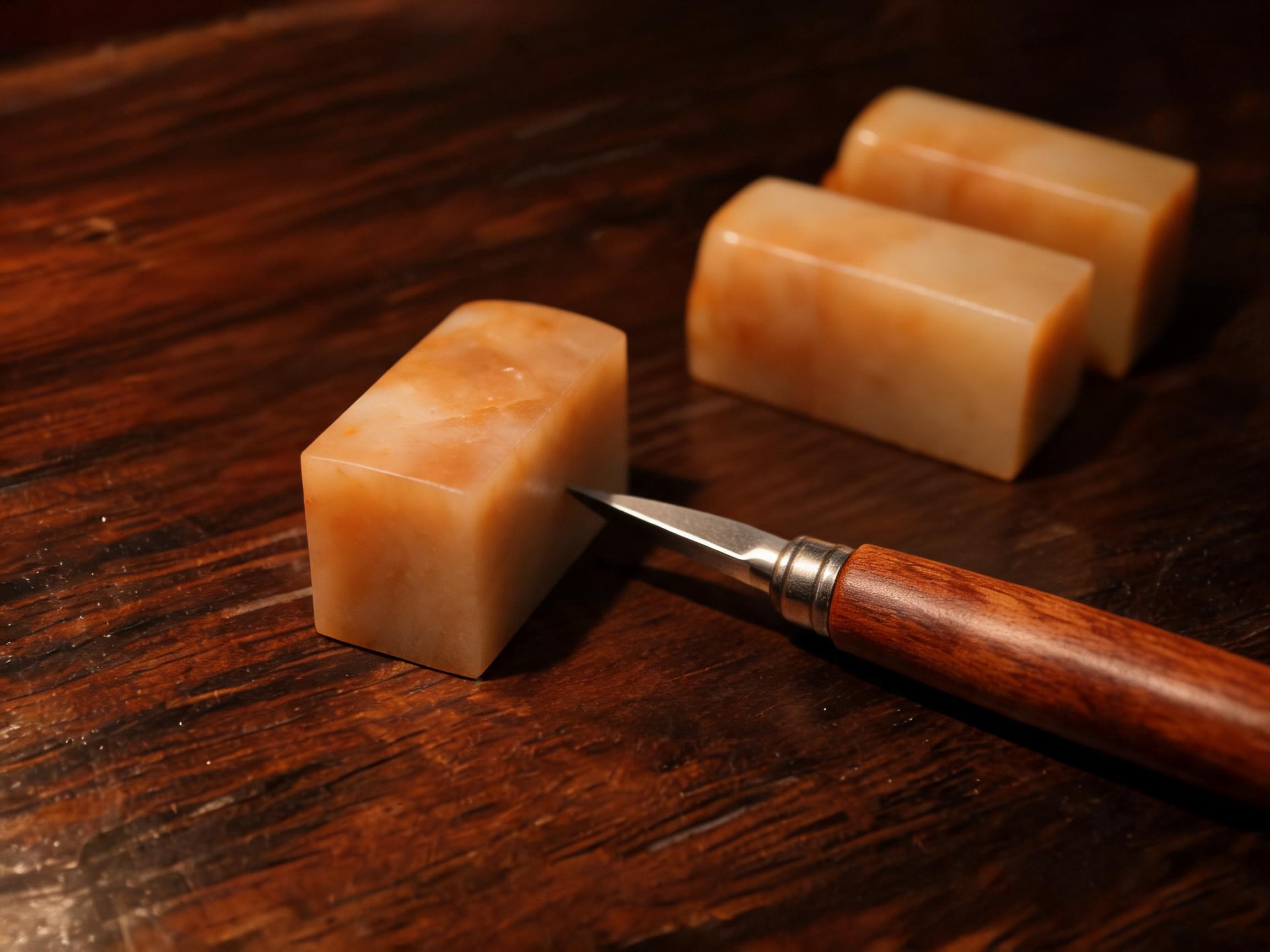
A program sourcing guide for calligraphy schools and gift importers: how to order seal carving tools together with hardness-graded practice stones, what a beginner program should include, bulk packaging and labeling considerations, and a pre-order verification checklist. Based on real product records for the Practice Seal Stone (GMO-SC-004) and the Seal Carving Gift Set (GMO-SC-005).
Program Sourcing Guide
Buying seal carving tools for a school program is not the same as buying a single knife for one hobbyist. A class of thirty beginners will all start on the same day, with the same lesson plan, and the instructor needs every student to get a workable result. That puts two sourcing questions at the center: are the practice stones consistent enough to grade fairly, and will the knife, ink pad, and guide hold up across a full term rather than a single afternoon?
This guide covers how to source carving tools together with graded practice stones as a program, what a starter order should contain, and how to verify a supplier before placing a bulk order.
What this guide covers
- Why hardness grading and knife consistency decide teaching outcomes
- What a school program order should include
- Two sourcing models: loose program components vs. ready gift sets
- Bulk packaging and labeling
- Pre-order verification checklist
Key takeaways
- Order the practice stone and the carving knife as a matched program, not as two unrelated line items.
- The Practice Seal Stone (SKU GMO-SC-004) ships in a standard 2 × 2 × 6 cm size with per-batch hardness grading and stone-by-stone structural checks.
- A full beginner program needs four things: stone, knife, ink pad, and an illustrated guide.
- MOQ is 200 pieces for the practice stone and 50 sets for the Seal Carving Gift Set (SKU GMO-SC-005).
- Hardness test reports ship with the stone order, which gives the instructor a documented basis for lesson grading.
Why hardness-graded stones and consistent knives matter for teaching
Beginners carve by feel before they carve by skill. If the stone in front of one student is noticeably softer than the stone in front of the next, the two students are effectively completing different exercises. The softer stone cuts too easily and encourages heavy hand pressure; the harder stone resists and produces shallow, uneven lines. Both results get attributed to the student rather than to the material.
Hardness grading solves this at the batch level. The Practice Seal Stone is a selected natural stone in practice grade, and each production batch is graded for consistent hardness for beginners. Because it is natural stone, individual pieces still vary, but grading keeps the working range inside a band the instructor can teach against. Every batch also carries a surface quality check and a stone-by-stone structural integrity check, so a cracked or chipped piece is caught before it reaches a student's bench.
The knife side of the equation is consistency of the tool, not hardness. A class cannot run smoothly if each carving knife bites differently or if the handle angle differs enough to change how a student holds it. When tools and stones are sourced from the same supplier as one program, the supplier has a reason to match the knife specification to the stone grade rather than shipping the nearest available knife.
What a school program order should include
A beginner seal carving kit for a classroom has four working components. Missing any one of them means the lesson stops.
| Component | Role in the lesson | Sourcing note |
|---|---|---|
| Practice stone | The material students carve | Standard 2 × 2 × 6 cm; hardness-graded per batch |
| Carving knife | The primary cutting tool | Should be specified against the stone grade |
| Ink pad | Loads the seal face for test impressions | Included in the gift set configuration |
| Illustrated carving guide | Lesson reference and self-study | Available in multiple languages by request |
The seal stone is the consumable, so it is the line item that repeats each term. Knives and ink pads are less frequently replaced, though beginner classes lose and damage tools at a predictable rate, so plan for replacements alongside the stone reorder.
Two sourcing models: loose program components vs. ready gift sets
Program buyers usually fall into one of two shapes, and they map onto two product configurations.
Model 1: Bulk practice stones plus separately specified tools
Schools and community education programs that already have a knife standard, or that teach advanced classes alongside beginner ones, tend to order the practice seal stone in bulk. MOQ is 200 pieces, with a 25–35 day lead time after sample approval. This model suits programs that run continuous intake and reorder every term. It also gives the program manager control over packaging, because the stone ships in bulk school distribution packaging and can carry custom school labeling.
Model 2: Ready gift sets for distribution and gifting
Gift distributors, cultural centers running one-off workshops, and corporate gifting buyers generally want a finished object rather than a parts list. The Seal Carving Gift Set brings the seal stone, vermilion ink paste, carving knife, and ink pad together in a custom magnetic-closure presentation box. MOQ is 50 sets, with a 35–50 day lead time. Set-level component matching is checked before packing, and private-label branding is available, so a distributor can put its own name on the box.
Bulk packaging and labeling considerations
Program packaging has two jobs: protect the stone in transit and survive handling by students and administrators.
- Bulk school distribution packaging for the practice stone keeps the unit count simple for a program manager counting out one stone per student.
- Custom school labeling lets the program or institution mark its own materials — useful where funding or grant reporting requires identification of supplies.
- Illustrated carving guides in multiple languages are available by request and can be packed alongside the stone order, so the instruction sheet matches the language of the classroom.
- Export documentation with a component list is provided for the gift set, which matters when a distributor needs to declare what is inside each box at customs.
Pre-order verification checklist
Before confirming a program order, collect the following from the supplier in writing.
- Hardness grading method and documentation. Ask how the batch is graded and request the hardness test report that ships with the stone order. Confirm the report is issued per batch, not per year.
- Sample approval step. Both the 25–35 day stone lead time and the 35–50 day set lead time are counted after sample approval. Build the sample round into your program calendar before committing to a delivery date.
- Inspection standard. Confirm that QC covers a hardness test, a surface check, and AQL. For the gift set, confirm that the inspection is at set level and covers component matching.
- Unit count and packaging format. State the number of stones or sets per carton, and confirm whether custom school labeling is included at the quoted price.
- Language of the illustrated guide. Request the languages you need and confirm which ones can be supplied.
- Branding for gift sets. Confirm the private-label scope — what appears on the box, the guide, and any insert.
- Component list for export. For gift sets, confirm the documentation lists each component, since the box contains ink paste as well as stone and tool.
FAQ
Can we order practice stones and carving knives together as one program?
Yes. The practice stone is ordered in bulk at an MOQ of 200 pieces, and the carving knife is supplied as part of the gift set configuration together with the stone, vermilion ink paste, and ink pad. Programs that need knives separately from gift sets should specify the knife requirement at inquiry so it can be matched to the stone grade.
How long should we allow for a first school order?
Plan for the sample round plus the production window. The practice stone lead time is 25–35 days after sample approval; the gift set is 35–50 days after sample approval. For a term start date, work backward from the classroom date, not from the purchase order date.
Do we get any documentation to show the stones were graded?
Hardness test reports are supplied with the stone shipment, and QC includes a hardness test, surface check, and AQL. If your institution needs the report before payment or before a funding submission, request it during the sample stage.
Next step
If you are preparing a program order, send the intended student or recipient count, the language for the illustrated guide, and whether you need bulk stones, finished gift sets, or both. Those three details determine the configuration, the MOQ tier, and the lead time you should plan around.
For specification details, see the Practice Seal Stone and the Seal Carving Gift Set product pages.