
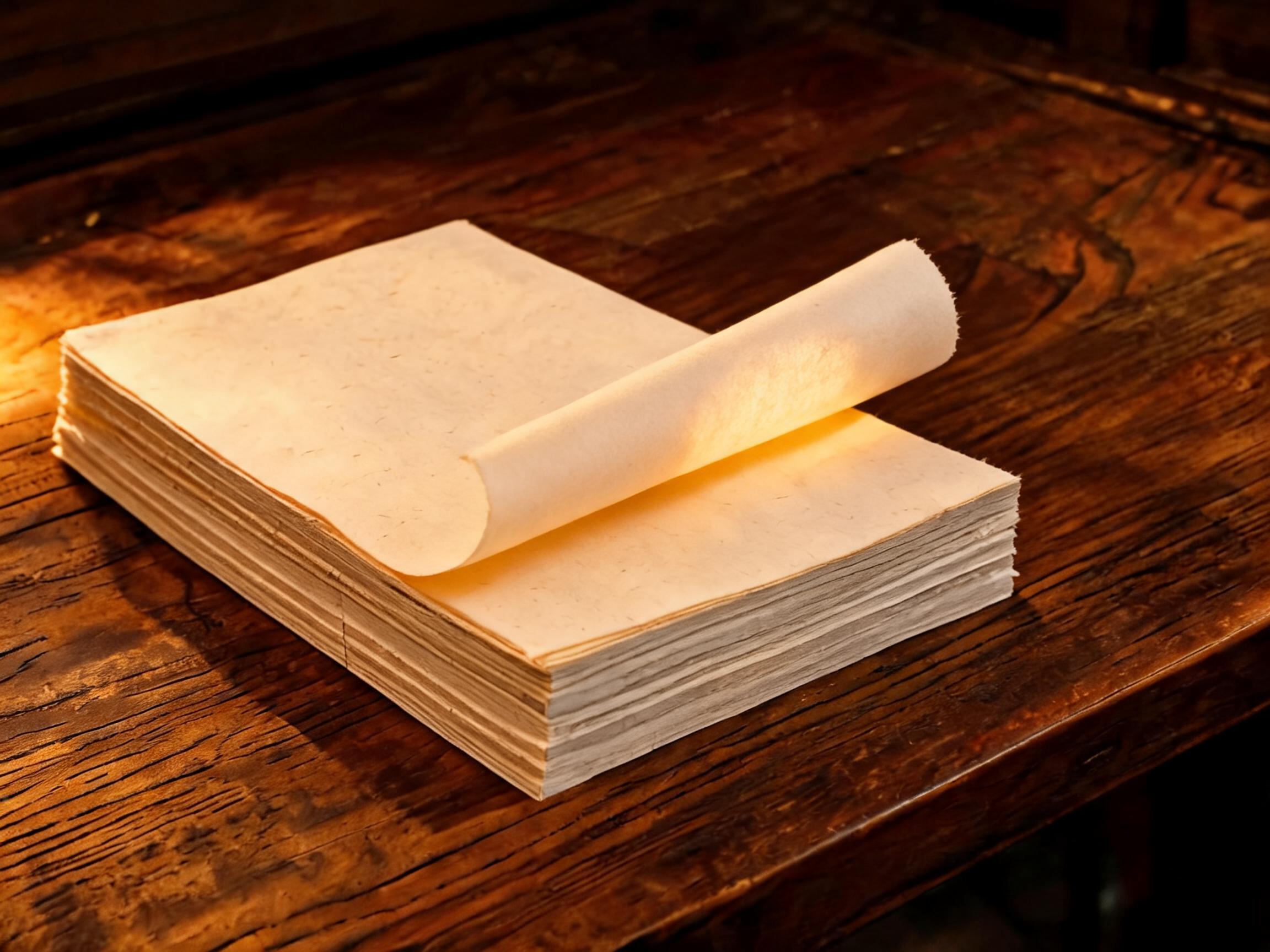
A buyer's selection guide for programs, not individual artists: how ink behavior separates raw xuan from sized xuan, which grade to stock for which course format, and how to verify bleed consistency against supplier batch documents before placing an order.
If you stock or specify paper for Chinese brush painting programs, the grade you order determines what students can actually paint. Raw and sized xuan behave differently under the brush, and that difference, not price or habit, is what should drive your buying decision.
Chinese brush painting uses a soft animal-hair brush loaded with ink or watercolor on absorbent paper; the painter controls tone by how long the brush rests on the sheet and how much water the load carries. Rice paper, more precisely xuan paper, is a bark-fiber sheet made for that wet, absorbent working method. Whether the sheet is left untreated or given a surface treatment decides how far ink travels once it touches down. For a distributor planning a term of classes, a studio, or a gift line, that single property sorts your whole catalog.
Why ink behavior is the buying criterion
An art supply buyer placing an order is not choosing a paper for one painting. They are choosing the sheet that a cohort of students will use across a semester, a workshop series, or a retail program where returns and complaints are expensive. Two failure modes matter most:
- Paper that holds lines too tightly makes expressive, wet brushwork impossible; students cannot produce the diffused tones the curriculum calls for.
- Paper that absorbs too freely destroys fine outlines; gongbi students cannot keep a steady contour.
Both failures come from the same variable: how the sheet interacts with a wet brush. Grade selection follows from that, and batch verification follows from grade selection.
Raw xuan and sized xuan: what the sheet does to ink
Raw (sheng) xuan
Raw xuan is untreated. Ink and water spread outward from the point of contact, and the spread is part of the artwork. This is the sheet for xieyi, the free, expressive branch of Chinese brush painting, where a single loaded stroke is meant to bloom into a soft-edged form. Programs that teach landscape washes, wet-on-wet technique, or tonal gradation need raw stock as their default.
For that use, we supply Raw Xuan Paper Professional (GMO-XP-001), a qingpi bark-fiber sheet in 69x138 cm with a bleed test performed per batch. Custom sizes are available from 50x100 cm to 97x180 cm, and aging is documented at 100+ years, which matters if a distributor holds stock across seasons or sells into archival-leaning channels.
Treated (sized) xuan
Sized xuan carries a treatment, often described by the fanji sizing level, that slows absorption. Ink sits closer to where the brush places it, so contours stay crisp and repeated strokes stay distinct. This is the gongbi sheet: the fine-brush branch built on precise outlines and layered color. Gongbi programs, botanical studies, and any curriculum that grades line control need sized stock.
The relevant product is Treated Xuan Paper for Gongbi (GMO-XP-002), offered in light, medium, and heavy fanji sizing, with a sizing uniformity test per sheet. Sizing level is your main control knob: heavier sizing holds a line longer, lighter sizing retains more of the raw feel.
Student practice stock
High-volume programs often need a third line that absorbs cost rather than maximizing either extreme. Student Practice Xuan Paper (GMO-XP-003) is a 33x69 cm sheet with an absorption test per batch and a 1,000-sheet minimum. It suits drills, warm-ups, and classroom volume where the sheet is consumed rather than kept.
Grade selection table for program types
| Program type | Dominant technique | Grade to stock | Why |
|---|---|---|---|
| Xieyi landscape and free brushwork courses | Wet, expressive strokes | Raw xuan (GMO-XP-001) | Untreated sheet diffuses ink; the spread is the teaching point |
| Gongbi fine-brush and outline courses | Controlled contour, layered color | Treated xuan (GMO-XP-002) | Sizing slows absorption so lines hold |
| Mixed-technique semester courses | Both | Raw plus light-sized treated | Covers wash and line work; light fanji keeps some raw feel |
| Classroom drills and warm-ups | Volume practice | Student practice (GMO-XP-003) | Higher MOQ, per-batch absorption test, lower unit cost profile |
| Gift and retail channels | Presentation and display | Raw professional in custom sizes | Large format, documented aging, size range up to 97x180 cm |
Batch testing: the documents to request before ordering
Ink behavior varies with fiber, beating, and treatment, so the useful verification evidence is per-batch, not per-catalog. Ask suppliers for the following before confirming a purchase order.
- Bleed radius record. For raw xuan, a measured spread value after a standardized ink drop. This is the number that predicts whether a semester's sheets behave alike.
- Sizing uniformity record. For treated xuan, confirmation that the treatment is even across the sheet. Patchy sizing produces a sheet that holds a line in one area and bleeds in another, which is worse than either extreme.
- Absorption test record. For student practice stock, a per-batch absorption check, since classroom volume cannot tolerate sheet-to-sheet swings.
- Aging documentation. Relevant where stock is held or where the paper is presented as long-life. The raw professional sheet carries aging documented at 100+ years.
- Thickness consistency. Thickness affects how a brush load releases; ask how it is monitored within a batch.
Testing a sample sheet on arrival remains worthwhile, but a supplier who can already show per-batch records shifts the conversation from hope to specification. Write the test method and acceptance range into the order, not just the grade name.
MOQ and trade-term checkpoints
Grade decisions are only half of a purchase order. The commercial terms determine whether a program can actually be supplied on schedule.
| Item | Raw professional (GMO-XP-001) | Treated gongbi (GMO-XP-002) | Student practice (GMO-XP-003) |
|---|---|---|---|
| Size | 69x138 cm; custom 50x100 to 97x180 cm | Per specification | 33x69 cm |
| MOQ | 200 sheets | 200 sheets | 1,000 sheets |
| Batch verification | Bleed test per batch; aging documented 100+ years | Sizing uniformity test per sheet | Absorption test per batch |
| Lead time | 30-45 days | Confirm with supplier | 25-35 days |
| Incoterms | FOB / CIF / DDP | Confirm with supplier | Confirm with supplier |
Two practical notes. First, MOQ is per grade, so a mixed-technique program that needs raw and treated stock will carry two minimums; build that into your landed cost. Second, DDP is worth pricing for gift and retail channels where landed cost certainty matters more than flexibility, while FOB and CIF suit distributors with their own freight arrangements.
Stocking logic across markets
Demand patterns differ by region and channel, and the stocking mix should follow the program, not a single global default.
- Chinese diaspora and heritage-school channels tend to run both xieyi and gongbi instruction, so a raw and treated split works better than a single grade.
- Studio and workshop channels often buy in the size the easel uses; confirm the working format before specifying custom dimensions.
- Gift and retail channels respond to large-format sheets and presentation quality; the raw professional line's 69x138 cm and custom range serve that demand.
- High-volume education channels prioritize the student practice grade, where the 1,000-sheet MOQ aligns with term consumption.
Across all of these, the consistency question is the same: can the supplier repeat the same ink behavior next season? That is a per-batch documentation question, and it should be asked before the first order, not after the first complaint.
Frequently asked
Can one grade serve both raw and fine-brush programs?
Light fanji sizing on treated xuan retains more of the raw feel and can bridge the two, but it is a compromise. Programs with a clear dominant technique are better served by the matching grade.
Is a heavier sizing always better for gongbi?
Heavier sizing holds a line longer, but it also reduces the absorbent character some gongbi painters expect. Light, medium, and heavy are available so the level can be matched to the technique being taught.
How many sheets should a trial order include?
Enough to test across several sessions rather than a single painting. Raw xuan is available from 200 sheets and student practice from 1,000, and lead times run 30-45 days and 25-35 days respectively.
Product links in this article point to the corresponding grade pages, where current specifications and terms are listed.