
A due-diligence guide for distributors, wholesalers and gift buyers outsourcing custom Chinese seal engraving. Covers six factory checks, proofing and impression QC, protecting your design files, and choosing between single seals and matched gift sets.
Outsourcing a custom Chinese seal carving program puts your brand, your client's language and your budget in the hands of a workshop you may never visit. The difference between a smooth order and a costly failure usually comes down to three things: whether the supplier carves in-house with dedicated staff, whether you approve a physical proof before production, and whether your design files are contractually protected. This guide gives you the checks to run before you commit a deposit.
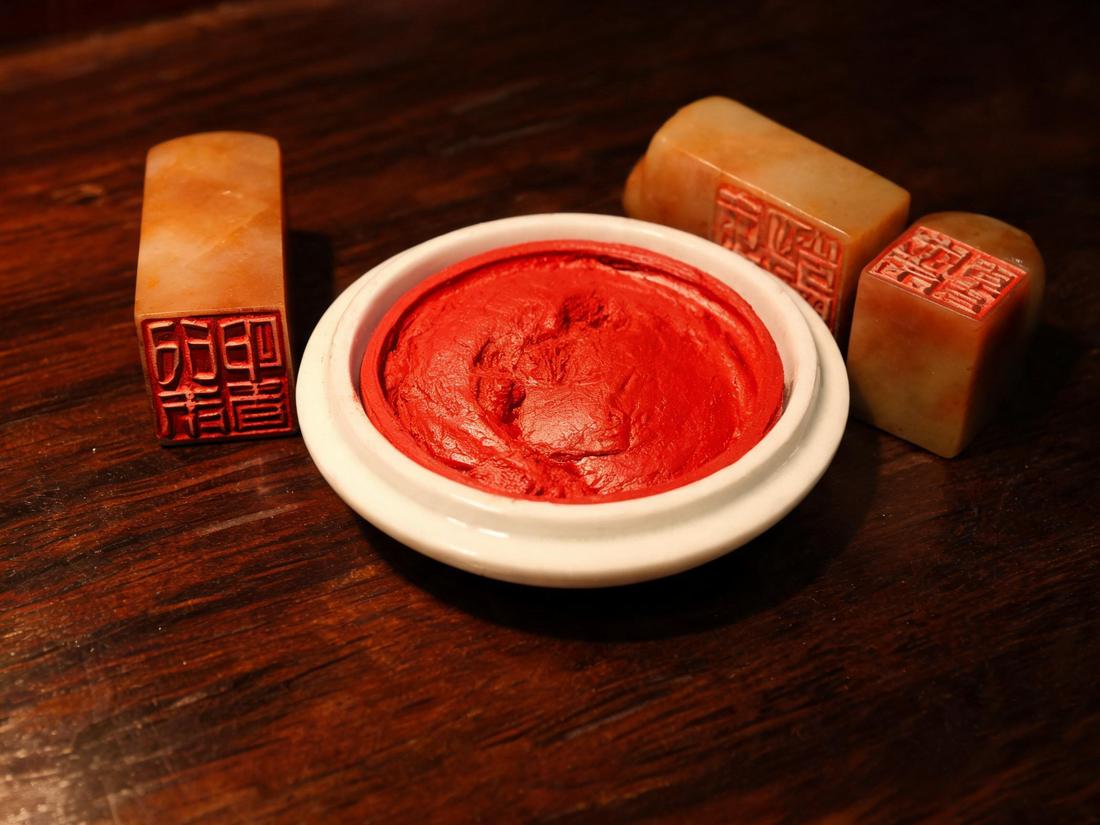
What a Seal Carving Service Actually Sells
A custom seal carving service is not a generic engraving job. It combines material selection, letterform work in scripts the buyer often cannot read, and batch-level quality control — all under one workshop's responsibility. When you compare suppliers, you are really comparing four capabilities:
- Carving capacity: who actually holds the knife, and is it a dedicated carving team or general assembly staff reassigned to the job?
- Script handling: can the workshop carve Chinese, English, Arabic, Japanese, Korean or custom scripts from your vector file, and how do they verify accuracy in languages you cannot check yourself?
- Stone supply: which seal stones are offered — for example, Shoushan for gift-grade appearance or Qingtian for hard, consistent texture — and is the material structurally tested before carving?
- QC and documentation: is every finished seal impression-tested, and do test records ship with the order?
Gu Mo Craft Technology has produced custom-carved seals since 2011 with a dedicated carving studio and a formal proof-sample system, serving corporate clients, cultural institutions and government programs across 30+ countries. Use any supplier's answers to the four points above as your first filter.
Six Factory Checks Before You Commit
Before requesting a quote, put these six questions to each candidate supplier in writing:
- Who performs the carving? Ask whether the work is done by dedicated carvers or outsourced or general staff. Dedicated teams are more accountable for letterform consistency across a batch. Ask which engraving methods are used — hand carving versus machine or laser assistance — and request close-up photos of previous work.
- What stones are offered, and are they tested? Ask which stone types are available, whether material is inspected before carving, and whether origin documentation can be provided. A supplier that structurally tests stone per batch, as Gu Mo Craft Technology does, reduces the risk of cracked seals discovered after engraving.
- How is script accuracy verified? Supply vector files for all non-Chinese scripts. Ask how the supplier checks languages you cannot read — native-speaker review and a stamped paper proof are the standard methods.
- What does the proofing process look like? Insist on a physical stamped proof on the actual stone before production. A screen mockup is not a proof.
- What are the commercial terms? Confirm MOQ, lead time from design approval, and trade terms. Gu Mo Craft Technology's Custom Carved Name Seal (GMO-SC-003) carries an MOQ of 30 pieces, a 35–50 day lead time after design approval, and FOB, CIF or DDP terms — but always confirm current terms with the supplier directly.
- What QC documentation ships with the order? Ask whether impression testing covers every seal and whether AQL sampling is applied. Records that travel with the batch protect you in disputes with your own customers.
Proofing, QC and Impression Tests
The proof is your real checkpoint. A proper service works like this: you send a design file, the supplier returns carved proof samples within a defined window — Gu Mo Craft Technology commits to within 15 days of receiving the design file — you approve in writing, and only then does mass production begin. Production should never start on your word of mouth; it should start on your written approval.
Evaluate a proof on the actual stone, stamped in paste. Check character edges for crispness, verify every letterform of foreign scripts against your vector file, and confirm the face size and depth stamp cleanly. One revision round is normal — in one documented order, a Middle East corporate client ordering 200 seals with Arabic and English engraving received proofs in 12 days, approved after one revision, and production was completed in 45 days with impression test reports shipped with the batch.
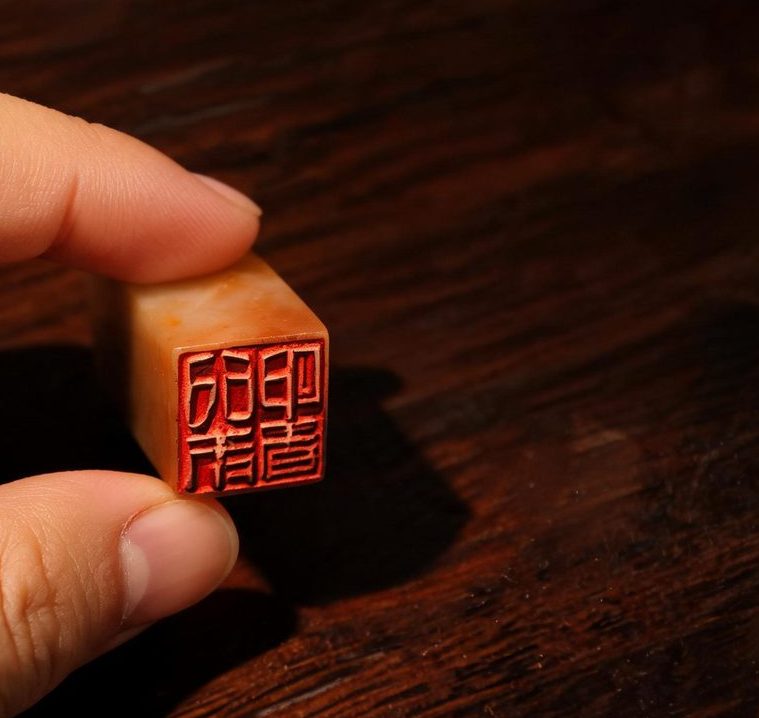
For batch QC, the minimum you should require is structural testing of stone before carving, carving inspection against the approved proof, an impression test on every seal with records shipped alongside the order, and AQL sampling as a statistical backstop. Ask each supplier to state, in writing, which of these they perform.
Protecting Your Design Files and Letterform IP
Your vector artwork is your intellectual property. When you send logos, fonts or custom scripts to a carving workshop, put three things in writing before the file changes hands:
- Usage rights: the supplier may use the artwork solely to produce your order, not to add it to catalogs, trade-show samples or other clients' work.
- Confidentiality: the file is not shared with third parties — this matters if the supplier outsources any production step.
- Approval gate: mass production begins only after your written proof approval, so no quantity of seals exists that you did not sign off on.
Also confirm what happens to the file after the order ships: whether it is deleted, archived, or retained for repeat orders — and on what terms. Suppliers accustomed to corporate and government work, such as programs across 30+ countries, will usually have a standard process for this; make them state it.
Program Formats: Single Seals vs Matched Gift Sets
Choose the format to match the recipient. Single custom seals suit corporate gifting, name seals for individuals and event giveaways. Matched gift sets suit retail shelves and cultural gift programs where presentation drives the sale. The comparison below maps Gu Mo Craft Technology's two formats:
| Criterion | Custom Carved Name Seal (GMO-SC-003) | Seal Carving Gift Set (GMO-SC-005) |
|---|---|---|
| Contents | Carved seal (Shoushan or Qingtian stone), size 2x2x6 to 4x4x10 cm | Four matched components: seal stone, vermilion ink paste, carving knife, ink pad |
| MOQ | 30 pieces | 50 sets |
| Lead time | 35–50 days after design approval | 35–50 days from sample approval |
| Branding | Custom presentation box with branding available | Magnetic-closure box; private-label branding on box and components |
| QC | Per-batch structural testing, proof inspection, impression test on every seal, AQL sampling | Set-level QC with component matching documentation; export papers include component list |
| Extras | Multi-language engraving from buyer's vector file | 2% spare components included free for orders of 100+ sets |
| Reference case | Middle East corporate client: 200 Arabic + English seals, proofs in 12 days, 45-day production | Singapore distributor: 300 branded sets, samples in 15 days, 42-day production, collection sold out within two months |
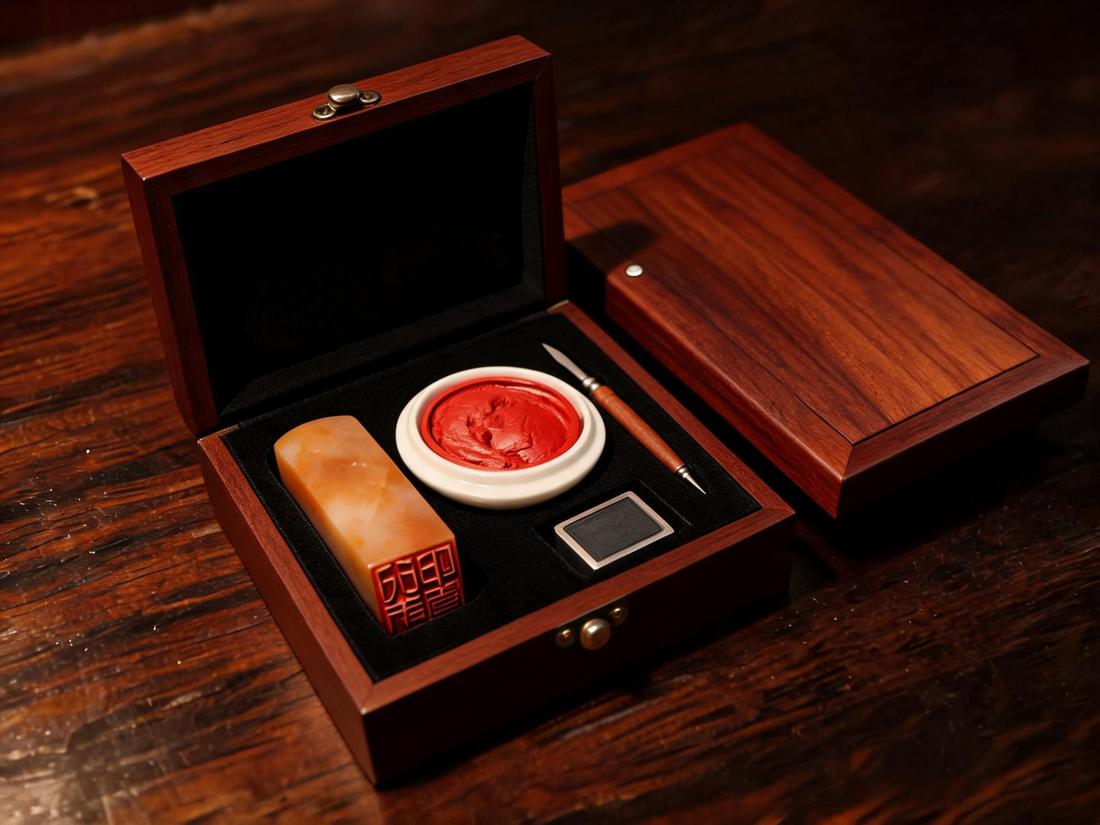
For gift programs, matched components matter: a set whose stone, paste and tools are sourced and matched in one workshop reads as premium, and recipients who keep the display box extend your brand's shelf life. Gu Mo Craft Technology produces all four components in-house for GMO-SC-005, which is also why the export papers can include a full component list.
FAQ
Can a seal be carved with scripts other than Chinese?
Gu Mo Craft Technology engraves Chinese, English, Arabic, Japanese, Korean and custom scripts supplied as vector files. For any script you cannot verify yourself, ask the supplier how they check accuracy — native-speaker review plus a stamped proof is the method to require.
Which stone should I choose for heavy daily stamping versus gifting?
Qingtian is hard and consistent and holds crisp character edges under frequent stamping, while Shoushan offers gift-grade appearance with fine, even texture and warm surface tones. Both are structurally tested per batch before carving.
What happens if a proof needs changes?
Submit revisions before giving written approval — production starts only after approval. Reference case experience shows one revision round is a normal part of the cycle and should be built into your timeline.
How do I verify quality when the order arrives?
Require that impression test records for every seal ship with the batch, then spot-check arrivals against the approved proof. AQL sampling documentation gives you a statistical basis for acceptance or claim.
Are trade terms flexible for different markets?
Gu Mo Craft Technology offers FOB, CIF and DDP. Confirm which terms apply to your destination and whether any current lead times differ from the standard 35–50 days.
Next Steps
Run the six factory checks with your shortlisted suppliers, then request proof samples before signing anything. Review the two program formats in detail:
- Custom Carved Name Seal (GMO-SC-003): gmgongyiping.com/product-custom-carved-name-seal
- Seal Carving Gift Set (GMO-SC-005): gmgongyiping.com/product-seal-carving-gift-set
Send your vector file, target quantity and destination market to receive a proof-sample schedule and quotation. The fastest path to a clean order is a stamped proof you approve in writing — ask for it first.