
A procurement guide for importers and distributors: how to vet a Chinese calligraphy brush factory, what to put in a sampling spec across hair types, which handle and ferrule checkpoints to verify, and the OEM and bulk-order terms to confirm in writing before mass production.
Two suppliers can quote the same calligraphy brush and deliver two different products. The difference is rarely the price list — it is how the factory grades hair, controls the ferrule, and documents what it agreed to make. This guide covers the vetting questions, the sampling spec, and the OEM terms that decide whether a bulk order arrives consistent.
Why the supplier decides brush consistency
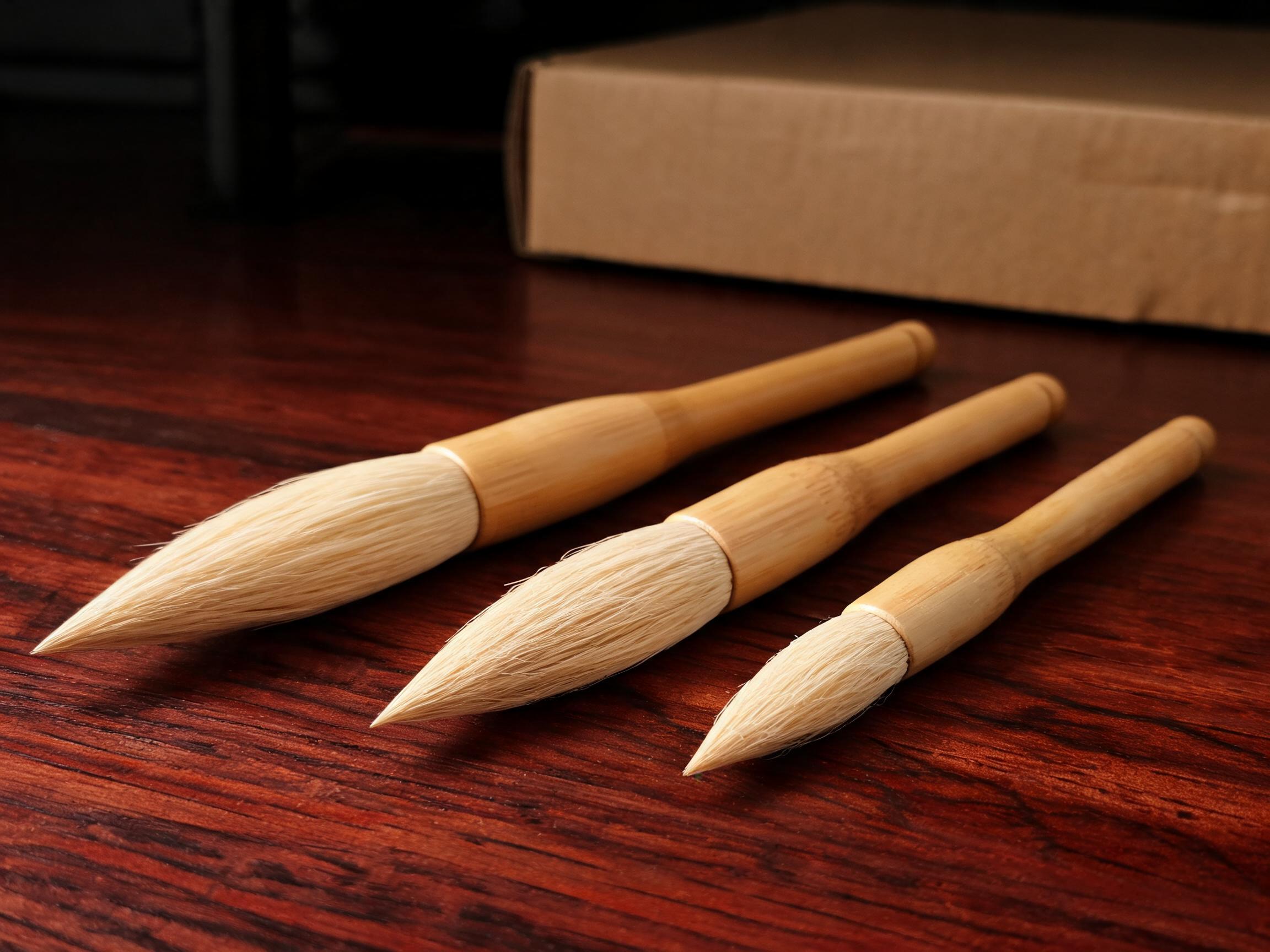
A brush is a small object with several independent failure points: hair grade, tip formation, ferrule fit, and handle sealing. Consistency depends on whether a factory controls all of them at each stage, not just at final packing. Ask a prospective supplier to describe their inline checks — material verification when hair is received, pattern and shape checks during binding, finish grading before packing. A supplier who can name those stages, and show the records that go with them, is easier to hold to a spec than one who answers only with a finished-sample photo.
For context on scale: Guangdong Gumo Crafts Technology Co., Ltd. has operated since 2011 and runs an integrated chain from raw material selection to finished product, with brush lines alongside ink, paper, inkstones and gift sets. That vertical range matters if you plan to buy brushes as part of a set rather than a standalone SKU.
Hair grading: what to ask for in a sample spec
Hair type changes what a brush is for, so your spec should tie each SKU to a script style and a resilience expectation rather than a vague “good quality.” Put the following in writing for every item in your sample request:
- Hair category and grading method. Ask whether hair is graded by resilience, by length, or both, and which applies to the SKU you are buying.
- Tip formation. Hand-formed points behave differently from machine-shaped ones; ask which method the supplier uses for your item.
- Shedding test. Request batch-level performance test reports, ask what shedding test was run on the brush head, and agree in the contract that each report carries the batch number, the test item — for example shedding or ink absorption — and the recorded result.
- Script suitability. Match the brush to the script your market sells to — regular, clerical, running, or cursive.
Three examples of how that mapping looks in practice:
| Brush type | Hair character | Typical script use |
|---|---|---|
| Wolf hair stiff tip | Length-graded hair, hand-formed points | Regular and clerical script |
| Goat hair soft tip | Length-graded hair, tested ink absorption | Running and cursive script |
| Mixed hair combination | Controlled 70/30 goat-to-wolf blend | Multiple script styles |
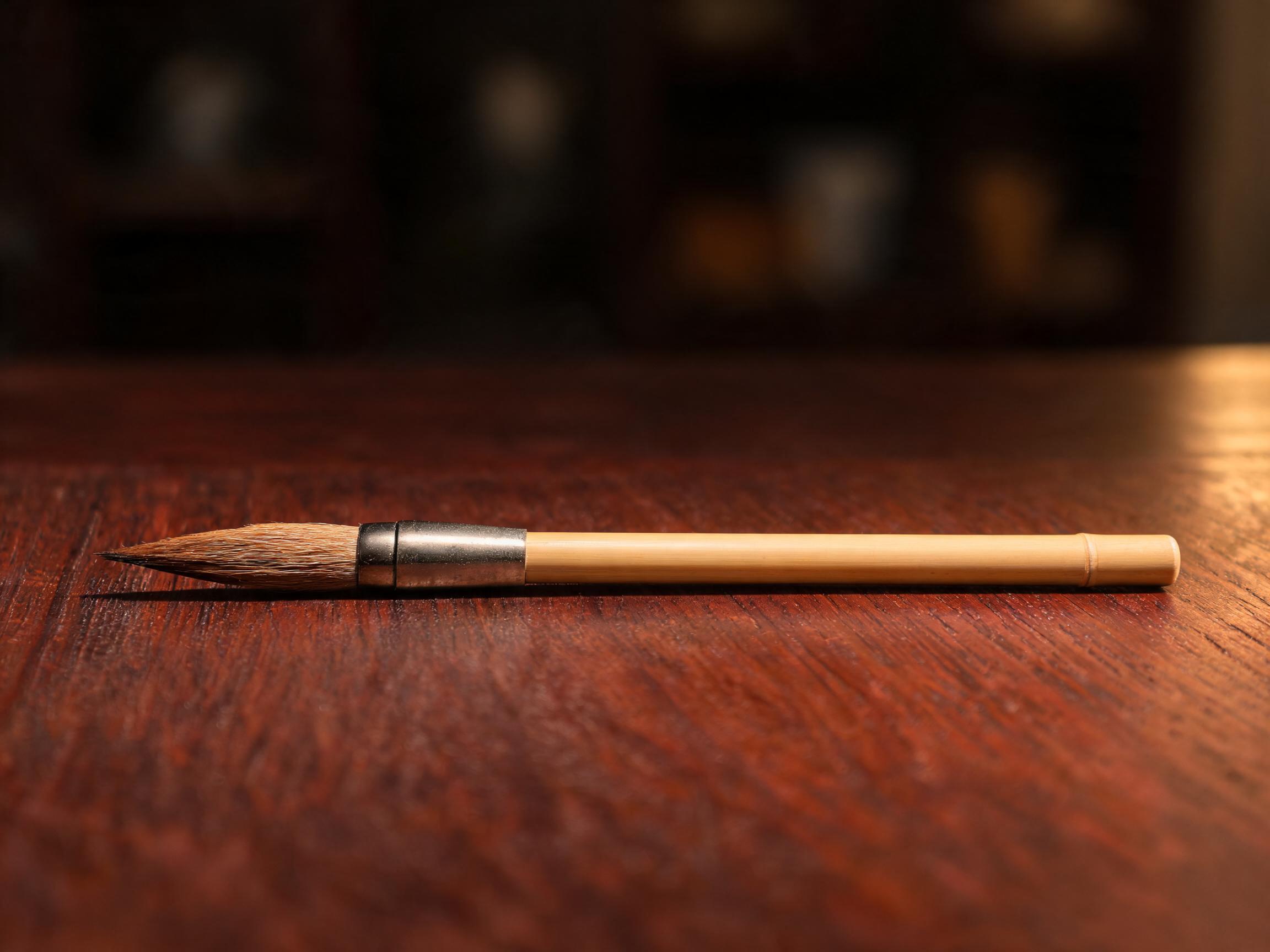
If your catalogue needs one professional reference SKU, the premium wolf hair calligraphy brush (GMO-CB-001) illustrates the level of detail to demand: resilience-graded wolf hair, a hand-bound head with batch shedding testing, and a medium-firm tip intended for regular script. Use one such SKU as the benchmark against which every other sample is judged.
Handle and ferrule checkpoints
Handles and ferrules are where cheap orders fail in the field — a loose ferrule or a cracked handle shows up after the container lands. Build these checkpoints into your sample approval:
Handle
Ask for bamboo type and finish, handle length, and whether the grip is carved or plain. The premium wolf brush, for example, uses a bamboo handle with a carved grip of about 25 cm. For school or institutional lines, ask whether handles are sealed — the student practice brush set uses sealed bamboo handles for that reason.
Ferrule
Confirm how the ferrule is attached and how the supplier checks it stays seated. Ask for close-up photos of the joint on the actual sample you receive, not on a catalogue image; the joint is one of the few places where photographic evidence is genuinely useful at the sampling stage.
Sampling and pre-production approval flow
Treat the sample as a contract, not a preview. A workable flow looks like this:
- Written spec per SKU. Hair category and grading, tip formation, handle dimensions and finish, ferrule method, packing format.
- Sample submission with documentation. Ask for sample photos, spec sheets and approval records before mass production — not after.
- Signed approval. Keep a dated sign-off for each SKU, cross-referenced to the sample you retained.
- Production-time inspection. Confirm the supplier runs inline checks at each stage and will report against the approved spec.
Hold your approved sample for the life of the order. It is the only reliable way to settle a dispute about what “the same brush” means.
Bulk and OEM terms to confirm in writing
Commercial terms vary by SKU and by supplier, so avoid assuming a house standard. On MOQ, for instance, one professional SKU may start at 100 pcs while other items differ — confirm the MOQ with the supplier for the specific SKU before you commit to a quantity plan.
Lead time needs the same written treatment. Confirm it per SKU, agree on when the clock starts — order confirmation or sample sign-off — and state whether the sample-approval period sits inside or outside the production schedule. Like MOQ, there is no house standard to assume.
For OEM and private-label work, put each of these in the purchase contract:
- Customization scope. Handle engraving, printed logo, and packaging design — specify position, size and colour method.
- Packaging. Individual wrapping, gift-set configuration where relevant, inner and outer carton dimensions.
- Export packing and marks. Carton marks, labelling and shipment documentation for your destination.
- Approval gate. State that no mass production begins until you sign the sample and spec sheet.
- Set composition. If you buy sets, confirm exact contents — the student practice brush set, for example, is a 3-brush set with synthetic-blend hair.
Guangdong Gumo’s stated scope covers OEM customization, gift set design and bulk export services, with export packing, carton marks and shipment documentation prepared for overseas buyers — good anchors for the conversation, but each term still needs to appear in your own order documents.
Key takeaways
- Vet the factory’s inline checks, not just its sample photos.
- Write a per-SKU spec that ties hair grading and tip formation to a script style.
- Approve handles and ferrule joints on the actual sample received.
- Confirm MOQ, lead time, engraving and packing per SKU — never assume a house standard.
Buyer checklist before you place the order
- Spec sheet exists for every SKU, signed and dated.
- Hair grading method stated for each brush type.
- Batch-level performance test reports requested for the SKUs you will stock, with batch number, test item and result recorded.
- Handle length, finish and sealing confirmed against the approved sample.
- Ferrule attachment checked on your retained sample.
- MOQ and lead time confirmed per SKU in writing, with the start point agreed.
- Engraving and packaging artwork approved before production.
- Carton marks and export documents agreed for your destination.
A supplier worth stocking is one that answers these questions with documents rather than reassurances. Start with a small trial across two or three brush types — a stiff wolf, a soft goat, and a blend — and let the approved samples set the standard for everything that follows.