
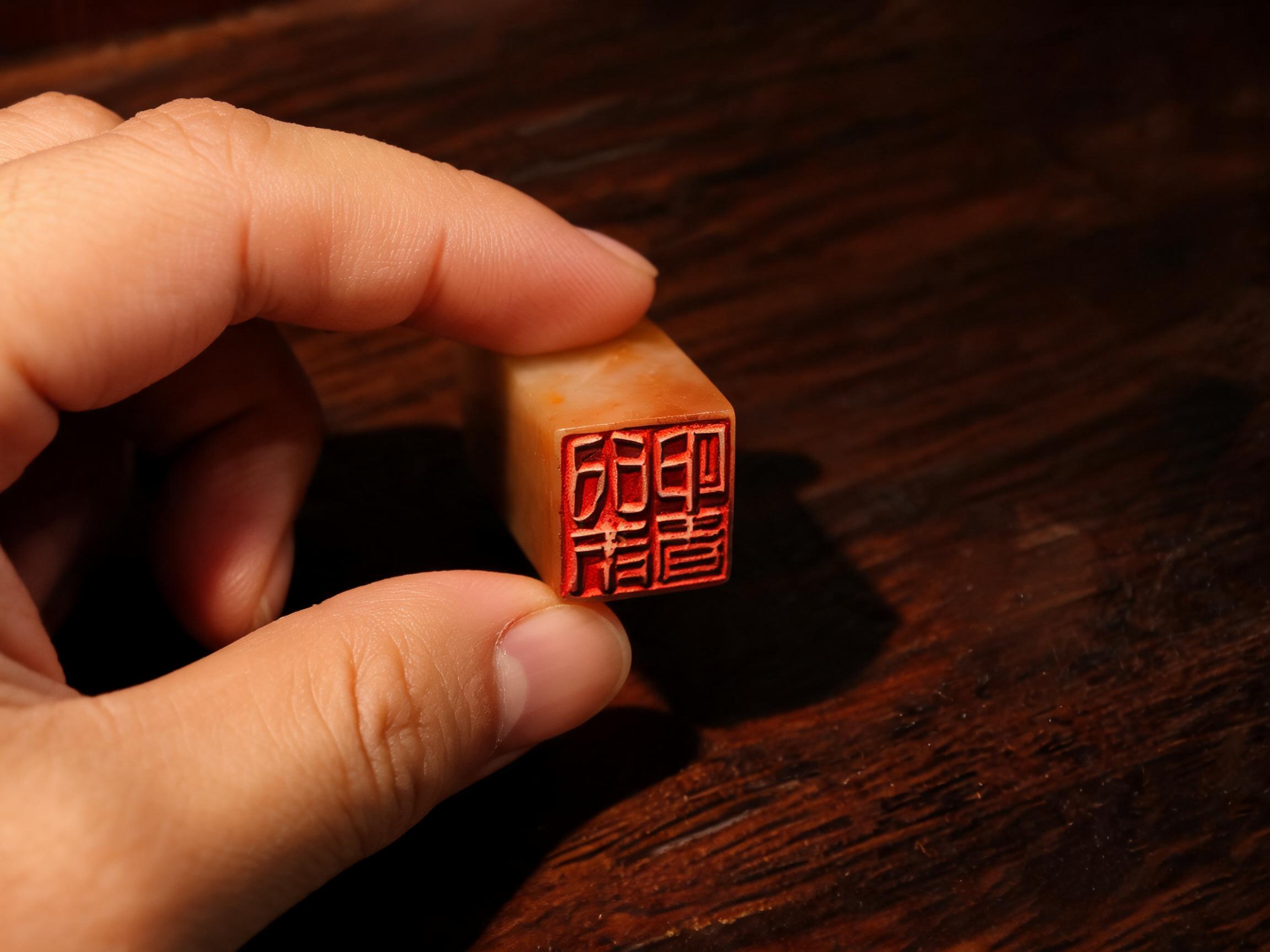
A procurement-oriented guide to hanko and inkan seal types for the Japanese market, separating personal seals from business seals, comparing stone materials and ink paste options, and setting out the custom-order workflow (design intake, proof sample, impression test, MOQ and lead times) for importers and gift-program buyers sourcing from a Chinese seal factory.
Sourcing Guide · Hanko & Inkan
Japan's seal culture runs on a simple object and a complicated vocabulary. Buyers new to the category often ask for a "hanko seal" toolkit and then discover their Japanese contact talks about inkan, mitomein and jitsuin as if they were different product lines. They are, in a practical sourcing sense: they differ by who uses the seal, what it is pressed onto, and how the finished item is presented.
This article separates those uses, then walks through how a custom order actually runs when the seals are carved at a Chinese seal factory for import — including design intake, the proof sample, the impression test, minimum order quantities and lead times. It is written for buyers building a catalog or a corporate gift program, not for a single retail purchase. For Chinese-character name chops sold to Chinese-language markets, a separate guide covers that category; here the terminology follows the Japanese market.
Key takeaways
- Hanko is the everyday word for a seal; inkan is the more formal term for the stamped mark and the object. Both describe the same procurement item.
- Personal seals and business seals differ in use case and stakes, not necessarily in carving method. The registration and legal process for a seal belongs to the buyer's end market — a factory supplies the physical seal, not the registration.
- Stone choice (Shoushan vs Qingtian), paste quality, and presentation packaging are the three levers that separate a commodity seal from a giftable one.
- Custom orders run on a proof sample first: a carving proof within 15 days, then production 35–50 days after approval for the standard carved seal line.
- MOQs are set per product line — 30 pcs for carved seals, 50 sets for gift sets, 50 pcs for premium stone, 100 containers for ink paste — so a mixed program can be costed line by line.
On this page
Hanko vs inkan: getting the terms right on a purchase order
In Japanese usage, hanko is the general, everyday word for a seal or stamp. Inkan carries a slightly more formal tone and is commonly used for the impression as well as the object — the mark left in red ink on paper. For an importer writing a spec sheet, the distinction is mostly about audience: a consumer-facing product listing aimed at Japanese shoppers will read naturally with hanko, while a B2B or corporate-gifting listing often reads better with inkan stamp.
The terms below the top level matter more for ordering. Japanese seal culture distinguishes seals by function, and a buyer who collapses those functions into one SKU will end up with a catalog that doesn't match what the end user expects to buy.
Seal types by use case: personal and business
The cleanest split is between personal seals and business seals. Within each, the use case determines the carving, the size, and the packaging tier.
| Category | Common term | Typical use | What it means for the order |
|---|---|---|---|
| Personal — everyday | Mitomein | Signing for deliveries, routine paperwork, informal documents | High-volume, lower price point; often sold in multi-packs or as a first seal |
| Personal — registered | Jitsuin / registered seal | Formal and legal documents where a registered seal is expected | Buyer must understand that registration happens in the end market; the physical seal is carved to the requested name and size |
| Business — company | Kaishain / company seal | Company documents, contracts, internal approvals | Consistent carving across repeat orders matters; buy in batches, not one-offs |
| Business — role/title | Position seals | Approval routing inside an organization | Multiple names or titles per set; clear layout in the design brief is essential |
| Gift / ceremonial | — | Corporate gifts, commemorative sets, retail gift programs | Packaging and presentation drive the spec; pair with a gift set build |
Two practical notes. First, a personal everyday seal and a registered seal can be carved from the same stone and by the same method — the difference is what the end user does with it after purchase. Suppliers should be explicit that they produce the physical seal; the registration process in Japan is a matter for the buyer's market and its rules. Don't quote regulation details you can't verify; keep the listing focused on the object.
Second, business seals reward consistency. A company that issues seals to staff, branches or partner firms wants the same carving depth and character layout across every batch. That is a reason to keep the design file on record and reorder against it rather than re-approving artwork each time.
Material options and what they change
Stone remains the reference material for a serious hanko product line, and two families dominate: Shoushan and Qingtian. The Custom Carved Name Seal (GMO-SC-003) is offered in selected Shoushan or Qingtian stone, with custom multi-language character engraving — Chinese, English, Arabic, Japanese, Korean, or a supplied vector file. Finished sizes run from 2×2×6 cm to 4×4×10 cm, which covers the personal-to-business range in one SKU family.
Where stone quality is the selling point, the Premium Shoushan Seal Stone (GMO-SC-001) uses natural Shoushan stone from verified quarry sources in sizes from 3×3×8 cm to 5×5×12 cm. Each stone is inspected for structural integrity, grain grading and color evaluation, and shipments carry an origin certificate. Fine grain is the relevant attribute for detail carving: it holds character edges better, which matters for both personal and business seals pressed repeatedly.
The honest trade-off is this: Qingtian and Shoushan give you the tactile, giftable product that Japanese buyers recognize, but they are natural stone — grading varies stone to stone. That is precisely why per-stone inspection and an origin certificate matter on premium orders, and why the buyer should specify which grade tier goes into which SKU.
Pairing paste, boxes and gift presentation
A seal sold without a usable impression is a half-finished product. Vermilion ink paste is the other half. The Vermilion Ink Paste (GMO-SC-002) uses refined cinnabar pigment with a plant-oil binder, batch-matched to a deep vermilion red, supplied in 30 g and 50 g porcelain containers. Pigment is verified to meet ASTM D4236 with safety documentation — a document set that retail and gift-program buyers should ask to review before listing, since the end market's labeling requirements are the buyer's responsibility to confirm.
Under proper storage the paste stays usable for 24+ months, which supports the common gift-packaging pattern of shipping a seal and a container of paste together. MOQ on the paste is 100 containers, with a 25–35 day lead time — typically shorter than the seal lines, so paste can be scheduled independently.
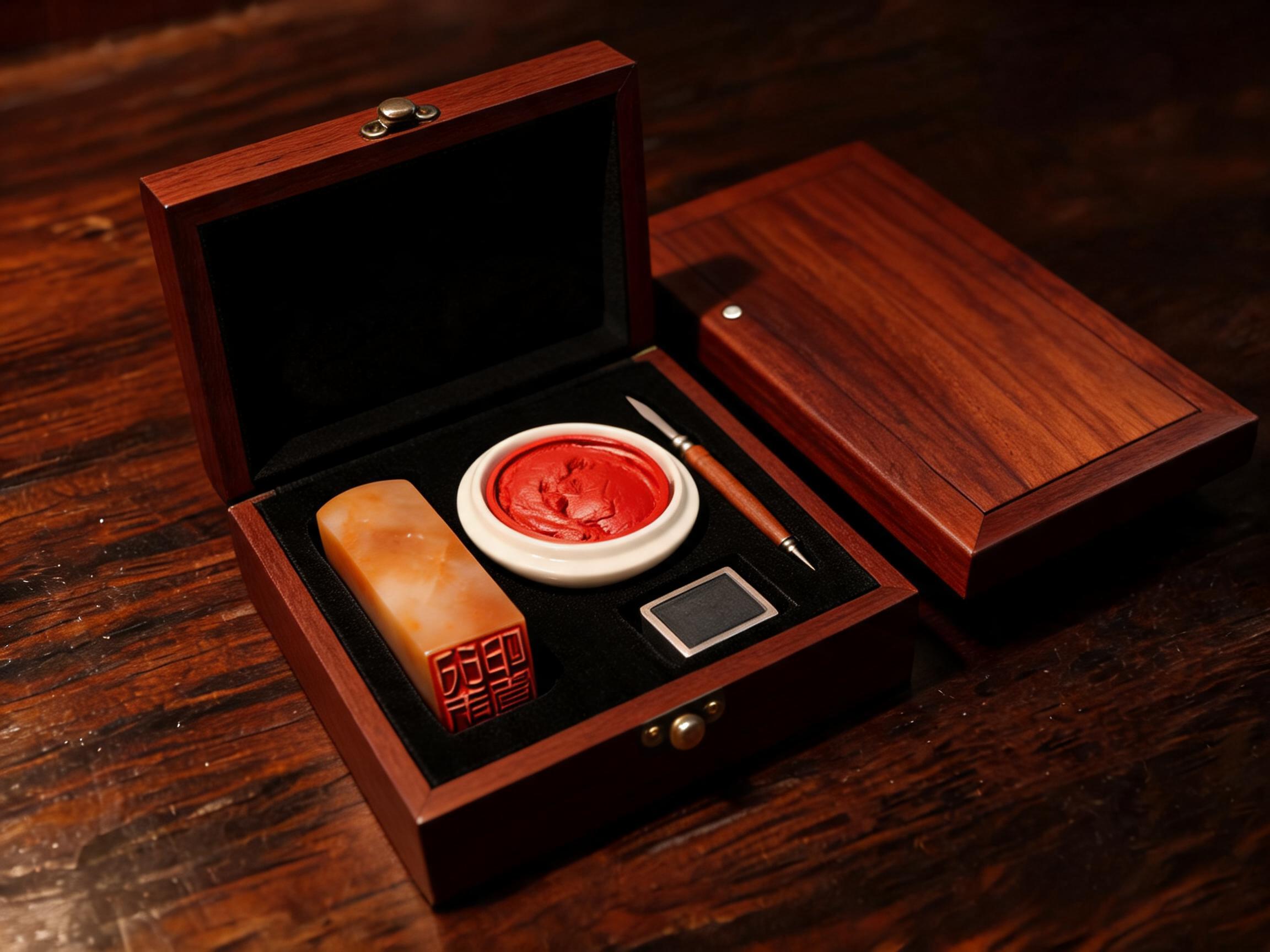
For gift programs, the Seal Carving Gift Set (GMO-SC-005) bundles the components that a recipient needs: seal stone, vermilion ink paste, carving knife and ink pad, in a magnetic-closure presentation box. It is built for set-level QC with component matching plus AQL, offers private-label branding, and adds 2% free spare components on orders of 100+ sets. MOQ is 50 sets, with 35–50 days after sample approval. For a corporate or retail gift line, the set is usually the simplest way to ship one SKU that contains a complete experience rather than three items to be assembled in-market.
| Product | Key spec | MOQ | Lead time |
|---|---|---|---|
| Custom Carved Name Seal | Shoushan or Qingtian stone; multi-language engraving; 2×2×6 to 4×4×10 cm; impression test on every seal; custom presentation box | 30 pcs | 35–50 days after design approval; carving proof within 15 days |
| Premium Shoushan Seal Stone | Natural Shoushan stone, verified quarry sources; 3×3×8 to 5×5×12 cm; per-stone inspection; origin certificate per shipment | 50 pcs | 30–45 days |
| Vermilion Ink Paste | Cinnabar pigment + plant oil binder; 30 g / 50 g porcelain; 24+ months usable; ASTM D4236 documentation | 100 containers | 25–35 days |
| Seal Carving Gift Set | Stone, paste, carving knife, ink pad; magnetic-closure box; private label; 2% free spares on 100+ sets | 50 sets | 35–50 days after sample approval |
Custom-order workflow from a Chinese seal factory
The order process for carved seals is design-driven, so the timeline starts before production. Guangdong Gumo Crafts Technology Co., Ltd. is a B2B seal carving manufacturer, and the sequence below reflects how its listed product lines are built.
1. Design intake
Provide the characters to be carved, the language, the intended seal size, the stone preference (Shoushan or Qingtian, and grade tier if premium stone is specified), and the packaging type. For multi-language engraving, a vector file is accepted alongside Chinese, English, Arabic, Japanese or Korean text input. A vector file removes ambiguity about stroke shape; text input is faster but leaves layout decisions to the factory. For business seal programs, keep the approved file on record for reorders.
2. Proof sample and carving proof
The standard carved seal line returns a carving proof sample within 15 days. This is the point to check character layout, carving depth, stone color against the grade you ordered, and box style. Approve in writing; production lead time of 35–50 days starts after that approval, not before.
3. Impression test
Every seal in the custom carved line is impression-tested before packing. Ask for the impression record to accompany the shipment if you need it for your own QC documentation — the test confirms the carved face produces a clean image, which is the defect most likely to generate returns in this category.
4. Component matching and packaging
On gift sets, QC is performed at set level with component matching and AQL sampling, so the box, stone, paste and tools are checked as a unit. Private-label branding is available on the set. Custom presentation boxes are available on the carved seal line.
5. Logistics and reorder
With MOQs distributed across lines — 30 pcs for carved seals, 50 pcs for premium stone, 50 sets for gift sets, 100 containers for paste — a mixed program can be planned in one production window without over-ordering any single item. Paste, at 25–35 days, is the shortest line and can be reordered on its own cycle.
FAQ
Is an inkan stamp the same product as a hanko seal?
In sourcing terms, yes — both refer to a carved seal used with vermilion paste. Use "hanko" for consumer-facing copy and "inkan stamp" where the listing needs a more formal register. Neither term changes the physical specification.
Can the same factory produce both personal and business seal lines?
Yes. On the custom carved line, personal and business seals share the carving method and size range (2×2×6 cm to 4×4×10 cm); they differ in quantity, layout requirements and packaging. Business programs benefit from holding one approved design file for repeat orders.
What should I check on the proof sample?
Character layout and stroke clarity, carving depth, stone color against the grade ordered, box and closure quality for gift sets, and that the impression test produces a clean, complete image. Approve in writing — the 35–50 day production clock starts at approval.
What documentation comes with the paste and the premium stone?
Pigment for the vermilion ink paste is verified to meet ASTM D4236 with safety documentation supplied. Premium Shoushan stone shipments include an origin certificate. Review both before listing, and confirm your end market's own labeling requirements separately.
Do you supply the registration or legal paperwork for Japanese seals?
No. The factory supplies the physical seal and its packaging. Registration and any legal formalities for a seal are handled in the buyer's end market under that market's own rules.