A practical B2B sourcing guide for overseas calligraphy supply dealers, art material wholesalers and gift program buyers. Learn which Chinese ink stick types to stock, how batch consistency is achieved in Hui Ink Stick production, what MOQs and specifications to expect, what quality control evidence to request, and how export packing and documentation should be handled.
BUYER GUIDE · CHINESE INK STICK WHOLESALE
Chinese Ink Stick Sourcing Guide for Wholesale Buyers: Types, Craftsmanship, MOQ and Quality Standards
If you are buying Chinese ink sticks in volume — for a calligraphy supply store, an art materials distribution channel, or a corporate gift program — the two questions that matter are: which types to stock, and how to verify the supplier can deliver consistent batches. This guide covers both, with the specifications, MOQs, and quality-control evidence you should ask for before placing a wholesale order.
- Stock three segments: pine soot (collectors, traditional calligraphers), oil soot (professional studios), and colored/student sets (education, gifts).
- Standard lines carry a 50-piece MOQ; commemorative gold-edge lines start at 30 pieces; student practice lines are structured for education channels.
- Batch consistency comes from controlled soot collection, kneading, pounding, molding, and shade drying — ask for inline QC and batch-level photo reports.
- Require buyer approval via sample photos and spec sheets before mass production, plus AQL inspection before shipment.
- Confirm export documentation (material certificates, compliance documents) and protective packing with carton marks in advance.
The Three Ink Stick Types to Stock — and Who Buys Them
Not all ink sticks serve the same customer. The buying decision usually splits into three segments, each with a different end-user profile.
1. Pine Soot Ink Sticks — Deep Matte Black for Collectors and Traditional Calligraphers
Pine soot ink is prized for its deep, matte black tone and its behavior on absorbent rice paper. It is the classic choice for traditional Chinese calligraphy and ink painting, and it is what serious collectors expect to see in a specialist range.
A representative product in this category is the Premium Pine Soot Hui Ink Stick, available in weights from 50g to 200g. The MOQ on this line is 50 pieces. If your channel serves traditional calligraphers, brush-painting instructors, or collectors in Chinese communities in Southeast Asia, Japan/Korea, the Americas, or Europe, this is the anchor product of your assortment.
2. Oil Soot Ink Sticks — Rich Glossy Black for Professional Studios
Oil soot (usually from vegetable or mineral oils) produces a richer, glossier black with a different grinding feel. Professional calligraphy and painting studios often prefer it for works where depth and sheen matter. It also tends to perform well on less absorbent surfaces.
The Oil Soot Hui Ink Stick Classic line runs from 30g to 150g, also with a 50-piece MOQ. If you are supplying professional art studios or advanced practitioners, this is the second line to carry.
3. Colored Sets and Student Practice Sticks — Decorative, Education, and Gift
The third segment is broader: colored Hui ink stick sets and student practice sticks. These are bought by:
- Education channels — schools and tuition centers that teach calligraphy as a skill.
- Gift programs — companies that want a culturally distinctive corporate gift, often in a wooden box.
- Tourist and souvenir retail — decorative sets with gold detailing.
The Colored Hui Ink Stick Set and the Student Practice Hui Ink Stick serve this demand. The student line is priced and structured for volume purchases through education distributors.
| Segment | Representative Model | Weight Range | MOQ | Primary Buyers |
|---|---|---|---|---|
| Pine soot | Premium Pine Soot Hui Ink Stick | 50–200g | 50 pcs | Collectors, traditional calligraphers |
| Oil soot | Oil Soot Hui Ink Stick Classic | 30–150g | 50 pcs | Professional studios, advanced practitioners |
| Colored sets | Colored Hui Ink Stick Set | Set-based | Varies | Gift programs, decorative retail |
| Student practice | Student Practice Hui Ink Stick | Practice size | Volume-based | Education channels, schools |
The Craftsmanship Behind Consistent Batches
If you are buying wholesale, you are not buying a single beautiful stick — you are buying repeatability across hundreds or thousands of pieces. The traditional Hui Ink Stick process has seven core stages, and each one affects batch consistency differently.
- Ancient-method soot collection — Soot is collected from controlled burning of pine or oil. The particle size and purity of the soot directly determine the blackness and grinding behavior. A supplier that controls this step tightly will produce more uniform sticks.
- Binder kneading — The soot is mixed with animal glue or other binders. The ratio must be consistent; too much binder changes gloss, too little affects cohesion.
- Repeated pounding — The ink dough is pounded repeatedly to remove air bubbles and distribute the binder evenly. This step is physical and labor-intensive, but it is what prevents weak spots and cracking.
- Mold pressing — The pounded dough is pressed into molds. Mold quality determines the sharpness of the embossed design and the dimensional consistency of each stick.
- Shade drying — Sticks are dried slowly in shade, not in direct sun. Drying speed affects cracking and internal stress. This is a common failure point in low-quality production.
- Gold-filled decoration — Decorative gold filling is applied by hand. For a commemorative line, this step adds visual value — and it is why the gold-edge line has a different MOQ structure.
Which steps protect batch consistency? The soot collection and binder kneading stages have the largest impact on the final appearance and behavior of the ink. The drying stage has the largest impact on physical defects like cracks. When you evaluate a supplier, ask specifically how they control these three steps.
Specifications and MOQs by Segment
MOQ structures differ by line, and you should plan your first order around them.
- Standard lines (Premium Pine Soot, Oil Soot Classic): MOQ is 50 pieces per model. This is a low enough threshold for a first trial order, and it lets you test two or three weights before committing to a full container.
- Commemorative gold-edge line: MOQ is 30 pieces. This line is positioned for gift programs and special editions, where volumes are naturally lower but unit value is higher.
- Student practice line: Structured for education channels. If you are a school supplier or education distributor, request the volume pricing and packing options for this line separately — the MOQ structure is designed for larger, repeat orders.
A practical first order for a calligraphy supply dealer: 50 pieces of Premium Pine Soot (100g) + 50 pieces of Oil Soot Classic (100g) + a small run of colored sets for retail display. That gives you three price points and three customer segments with one container slot.
Quality Control Evidence to Require
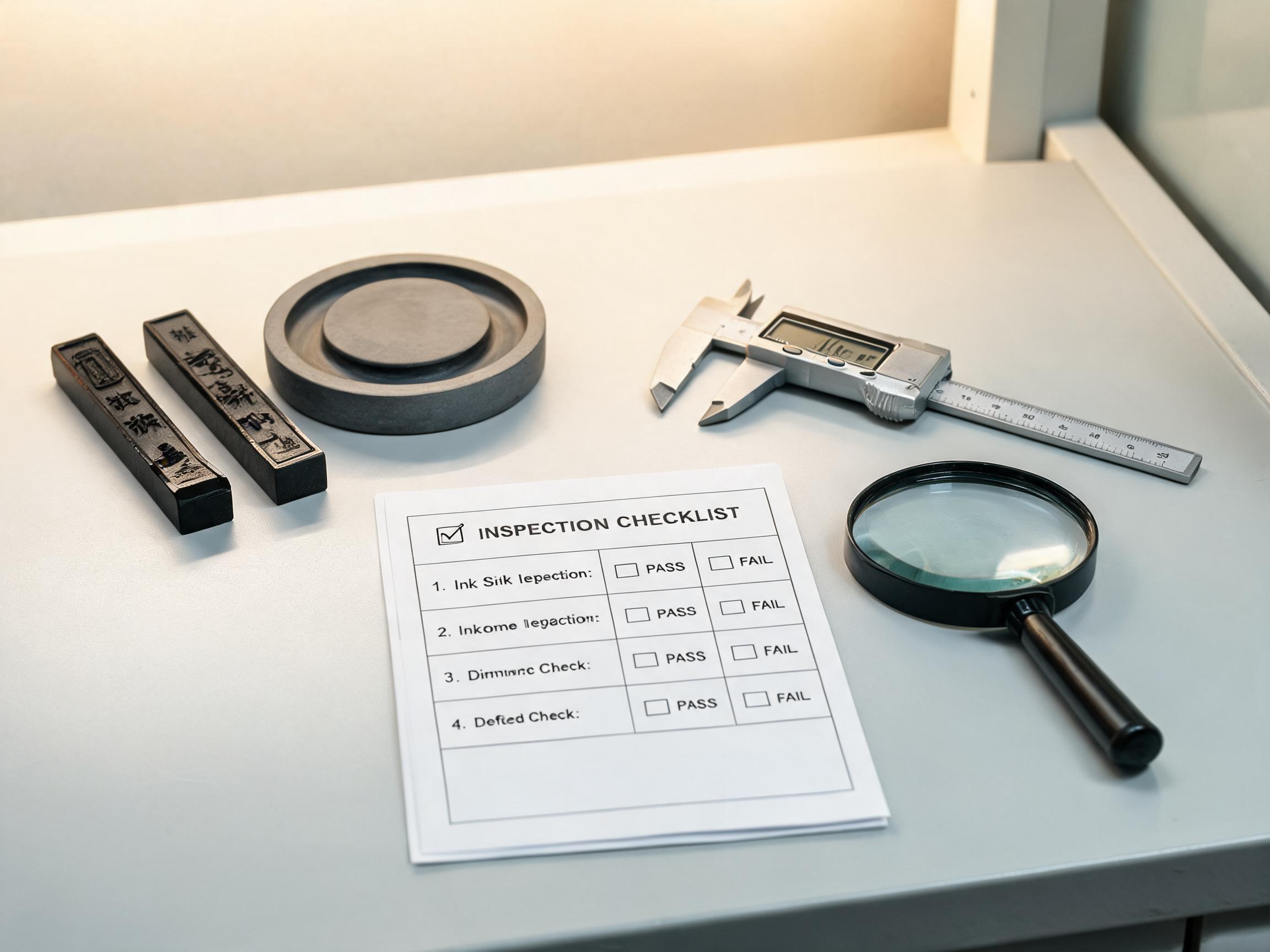
Do not rely on finished-product photos alone. A professional supplier should be able to provide evidence at four levels:
- Inline QC at each stage — Ask whether the supplier checks soot quality, binder ratio, molded dimensions, and dried-stick integrity during production, not just at the end.
- Batch-level QC photo reports — Request a photo report covering a sample from your batch at each production stage. This is the single most useful document for a remote buyer.
- Buyer approval before mass production — The correct workflow is: you approve sample photos and spec sheets, then the supplier starts mass production. If a supplier starts production without your approval, that is a red flag.
- AQL inspection — Before shipment, agree on an Acceptable Quality Limit (AQL) inspection. This is standard practice for B2B goods and protects both sides.
Export Documentation and Packing
For overseas wholesale buyers, the paperwork and packing are as important as the product itself.
Documentation to confirm before ordering:
- Material certificates — Confirm the supplier can provide material documentation for the soot, binder, and any decorative materials. This matters for EU and Middle East import compliance.
- Export compliance documents — Depending on your destination market (EU, Japan/Korea, Middle East, Africa, Americas), confirm which export documents the supplier provides as standard and which are available on request.
Packing specifications to agree on:
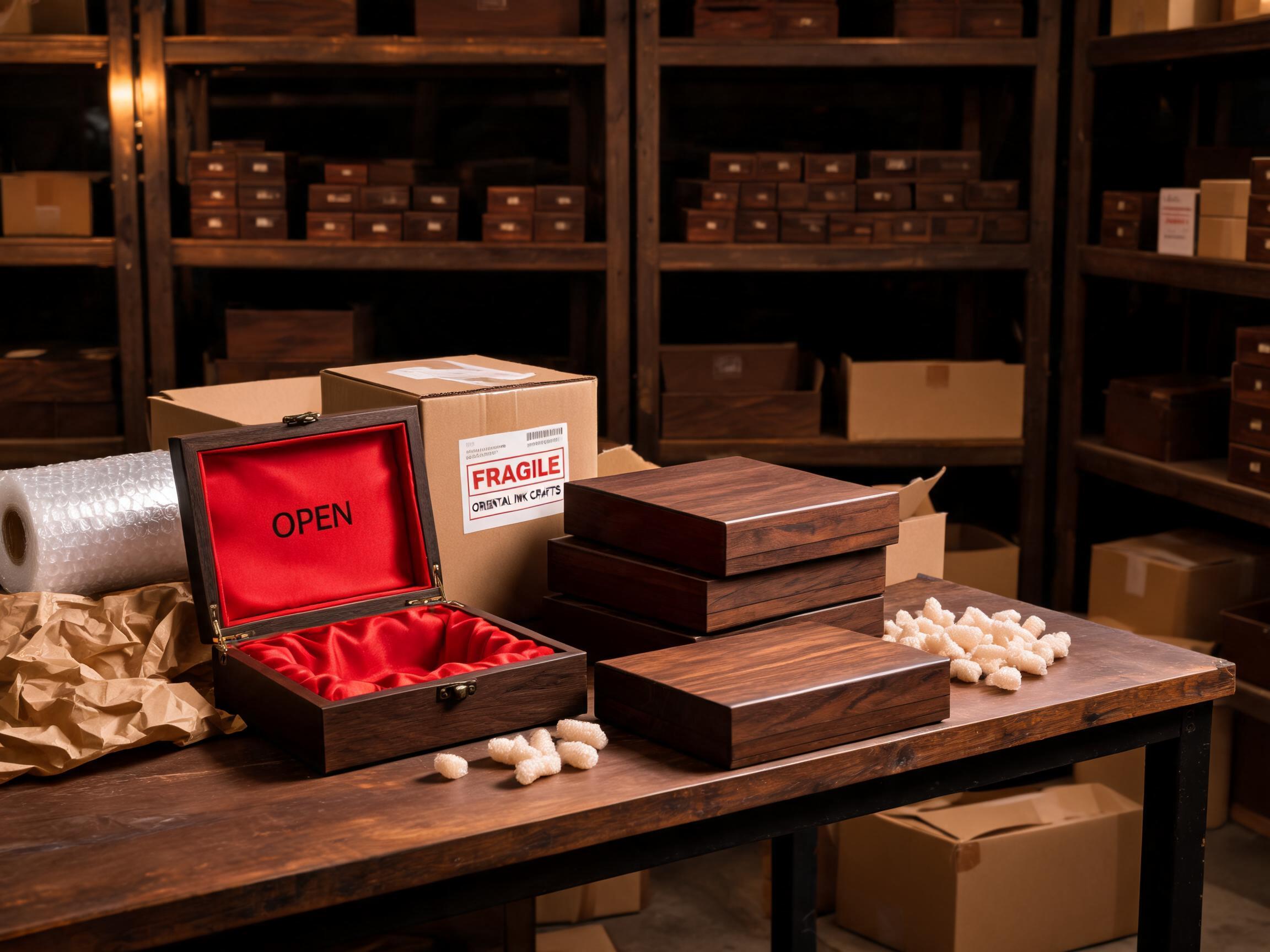
- Wooden gift boxes with satin lining — The standard presentation for mid-to-high-end ink sticks. This is what makes the product gift-ready for corporate programs and retail display.
- Protective packing — Ink sticks are brittle; they can crack under impact or rapid temperature change. Confirm that the outer packing includes sufficient cushioning for sea freight.
- Carton marks — Agree on carton markings (product code, quantity, destination port, handling marks) in advance. This is a small detail that prevents major confusion at customs and at your warehouse.
FAQ: Common Questions from Wholesale Buyers
Q: Can I order fewer than 50 pieces as a sample? A: Sample orders are typically handled separately from wholesale MOQs. Request samples of the specific models you are considering before committing to a 50-piece order.
Q: How do I choose between pine soot and oil soot for my market? A: If your customers are traditional calligraphers and collectors, lead with pine soot. If they are professional studios producing finished works, oil soot's glossy black is the stronger sell. Many dealers stock both and let the customer decide.
Q: What is the typical lead time for a 50-piece order? A: Lead time depends on the line and current production schedule. Confirm this at quotation stage, and ask for the stage-by-stage photo report timeline to align with your own delivery planning.
Q: Can I get custom packaging for a gift program? A: The wooden gift box with satin lining is the standard option. For custom branding or special box design, discuss this with the supplier at quotation stage — it will affect both cost and lead time.
Next Steps for Buyers
Before you send an inquiry, prepare the following:
- Your target segments — which of the three types (pine, oil, colored/student) you plan to stock.
- Your preferred weights — based on the ranges above (50–200g for pine, 30–150g for oil).
- Your MOQ expectation — confirm you can meet the 50-piece minimum per standard model.
- Your QC requirements — state that you expect stage photo reports, buyer approval before production, and AQL inspection.
- Your destination market — so the supplier can confirm export documentation and packing suitability.
With these five points in your inquiry, you will get a faster, more accurate quotation — and you will be able to compare suppliers on the terms that actually matter for a wholesale ink stick order.