
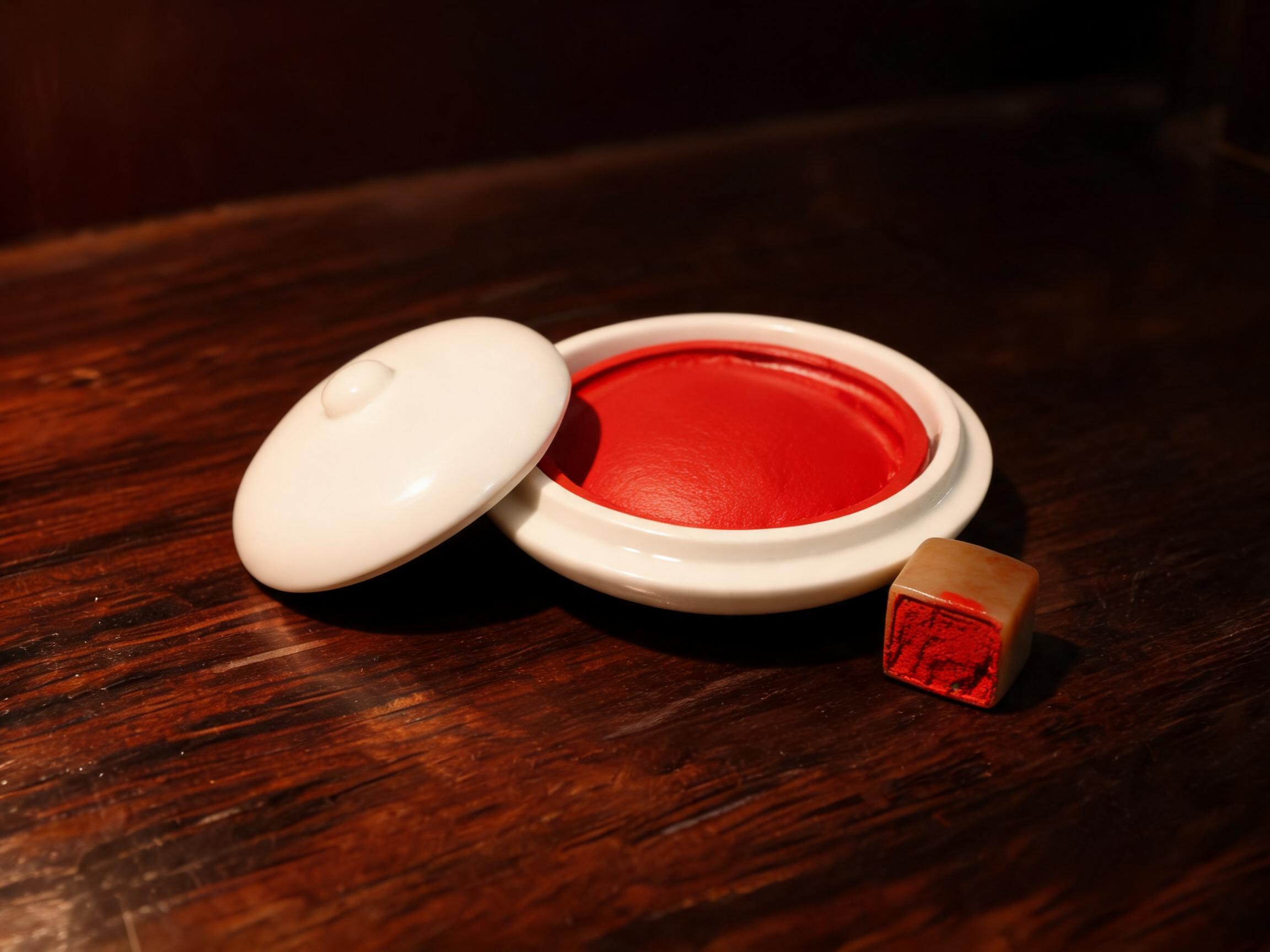
A practical procurement guide for international buyers sourcing vermilion ink paste (印泥) from China. Covers cinnabar grade selection, color depth, storage life, MOQ expectations, and how to evaluate suppliers for temples, ceremonial use, and chop seal stamping operations.
BUYER GUIDE · CHINA SOURCING
Why Vermilion Ink Paste Is a Specialized Procurement Item
Vermilion ink paste — yìnní (印泥) in Chinese — is not ordinary ink. It is a paste formulation used exclusively with chop seals (Chinese seal stamp, also called yìnzhāng) for stamping documents, artwork, contracts, and ceremonial certificates. For religious venues, temples, and institutions that handle rituals or official paperwork, the paste is a consumable with specific performance requirements: it must produce crisp, even impressions, resist smudging, and retain color over decades.
Unlike liquid calligraphy ink, vermilion ink paste is a semi-solid mixture of pigment, plant-based oils (typically castor or wood oil), and a fibrous binder such as mugwort floss (àiróng). The pigment grade determines color, permanence, and price. For B2B buyers, understanding these grades is the difference between paying for a premium product and overpaying for a commodity.
- Cinnabar grade drives price and color: mineral cinnabar (朱砂) is the premium raw material; synthetic substitutes are cheaper but less color-stable.
- Color depth ranges from bright vermilion to deep red-brown; choose based on application (official documents vs. artwork vs. ceremonial stamps).
- Storage life depends on oil quality and sealing; expect 3–10 years for sealed jars, less once opened.
- MOQ for wholesale typically starts at 50–100 units, but can be negotiated for bulk or custom branding.
- Supplier evaluation should focus on formulation consistency, packaging integrity, and export documentation.
Understanding Cinnabar Grade: Mineral vs. Synthetic
The term cinnabar ink paste refers to the pigment source. Genuine cinnabar (mercury sulfide, HgS) is mined and ground to a fine powder. It produces a warm, slightly orange-red hue that has been the standard for Chinese seals for centuries. However, due to cost and regulatory concerns around mercury content, many manufacturers now use synthetic iron oxide red or organic pigments.
For B2B buyers, the grade matters for two reasons: color permanence and regulatory compliance. Mineral cinnabar pastes are more expensive (often 2–3× the price of synthetic) and are preferred by museums, auction houses, and traditional calligraphers. Synthetic pastes are perfectly adequate for general office, temple, and ceremonial use — and they avoid any heavy-metal compliance questions in export markets.
| Grade | Pigment Source | Color Profile | Typical Use | Relative Price |
|---|---|---|---|---|
| Mineral Cinnabar (朱砂) | Natural HgS, ground | Warm vermilion, slight orange undertone | Artwork, archival documents, high-end ceremonial seals | High |
| Fine Synthetic (仿朱砂) | Iron oxide red | Bright, uniform vermilion | Temple stamps, certificates, general office | Medium |
| Standard Synthetic | Organic red pigment | Deep red, less color shift | High-volume stamping, promotional use | Low |
Compliance note
If you are importing to the EU or North America, verify that the paste does not contain mercury or lead-based pigments. Most Chinese manufacturers offer synthetic grades specifically for export. Always request a material safety data sheet (MSDS) and a heavy-metal test report before confirming a bulk order.
Color Depth: Matching the Paste to the Application
Vermilion ink paste is not a single color. The shade varies by pigment concentration, oil ratio, and the age of the paste. For procurement, define the color standard you need before sampling.
- Bright vermilion (朱红): The classic seal color. High pigment load, crisp edges. Best for official documents and contracts where legibility is critical.
- Deep cinnabar (暗朱): Darker, more brownish red. Preferred by traditional artists and for stamping on dark or textured paper.
- Light orange-red (橘红): Softer tone, often used for decorative or ceremonial stamps on invitations and certificates.
For religious venues and temples, the deep cinnabar grade is common because it reads well on both white paper and colored ceremonial documents. If you are sourcing for a specific ritual application, request a color swatch sheet from the supplier before committing to a full order.
Storage Life and Handling: What to Tell Your End Users
Vermilion ink paste has a finite shelf life, and improper storage ruins it faster than age. The oil component oxidizes and dries out, causing the paste to harden and lose its ability to transfer evenly.
| Storage Condition | Expected Life (Sealed) | Expected Life (Opened) |
|---|---|---|
| Cool, dark, dry (15–25°C) | 5–10 years | 1–2 years |
| Room temperature, indirect light | 3–5 years | 6–12 months |
| Hot or humid environment | 1–2 years | 3–6 months |
Key handling rules to pass on to your customers:
- Keep the jar sealed when not in use. Exposure to air accelerates drying.
- Stir the paste gently with a spatula before each use. The oil separates from the pigment over time.
- Do not add oil or water to revive dried paste — this ruins the formulation. Replace it instead.
- Store away from direct sunlight and heat sources. Temples and ceremonial halls often have incense or candles; keep the paste away from these.
MOQ and Wholesale Considerations
For vermilion ink paste wholesale, the minimum order quantity varies by supplier and packaging format. Common packaging sizes are 30g, 60g, 100g, and 500g jars. For institutional buyers (temples, government offices, art schools), the 100g jar is the most economical per-unit cost.
Typical MOQ expectations:
- Standard jars (30–60g): MOQ of 100–200 pieces.
- Bulk jars (100–500g): MOQ of 50–100 pieces.
- Custom branding (logo on jar/lid): MOQ of 500+ pieces, plus mold or printing setup fees.
If your volume is lower than the MOQ, ask the supplier about sample orders or mixed SKU containers — many Chinese manufacturers will accommodate a trial order of 20–30 pieces at a slightly higher unit price to establish a relationship.
How to Evaluate a Vermilion Ink Paste Supplier
Not all suppliers produce the paste themselves. Many are traders who source from small workshops. For consistent quality, you want a supplier who either manufactures in-house or has a long-term contract with a specific factory. Ask these questions:
- Do you manufacture or resell? If reselling, ask for the factory name and address.
- Can you provide a COA (Certificate of Analysis)? This should list pigment type, oil content, and heavy-metal levels.
- What is your batch-to-batch color consistency? Ask for two batches of the same SKU and compare them side by side.
- What is your export experience? Have you shipped to your target country before? Can you provide the HS code (typically 3215.90 for printing ink) and customs documentation?
- What is your lead time? Standard production is 7–15 days for stock items; custom orders take 20–30 days.
For religious and ceremonial venues, also confirm that the paste does not contain animal-derived ingredients if that is a concern for your market. Most formulations use plant-based mugwort floss and castor oil, but verify with the supplier.
Pricing Realities
Prices fluctuate with raw material costs, especially for mineral cinnabar. As a rough guide for budget planning (prices are indicative and vary by supplier and volume):
| Grade | Packaging | Indicative Unit Price (USD) |
|---|---|---|
| Synthetic standard | 60g jar | $1.50 – $3.00 |
| Fine synthetic | 60g jar | $3.00 – $5.00 |
| Mineral cinnabar | 60g jar | $8.00 – $15.00 |
Shipping costs for paste are low because it is dense and non-hazardous (for synthetic grades). However, ensure the supplier packs jars in protective foam or bubble wrap — glass jars break easily in transit, and a broken jar of red paste is a logistics nightmare.
Common Mistakes Buyers Make
- Buying mineral cinnabar when synthetic is sufficient. If your use is general stamping, the premium for mineral cinnabar is wasted.
- Ignoring storage conditions. A 500g jar of paste that dries out in a hot warehouse is a total loss.
- Not requesting a sample first. Color and consistency vary significantly between manufacturers. Always order 2–3 samples from different suppliers before committing to bulk.
- Assuming all pastes work on all papers. Some formulations are too oily for thin paper and will bleed. Test on the paper you actually use.
Final Recommendations
For religious venues and ceremonial use, prioritize color stability and ease of cleaning over absolute pigment purity. A fine synthetic paste with good oil balance will outperform a cheaper mineral paste that dries out quickly. For seal stamping on official documents, choose a bright vermilion with high pigment density for crisp edges.
When you contact suppliers, be specific about your application, volume, and target market. A professional supplier will ask you these questions — if they don't, consider it a red flag. Request samples, compare, and then negotiate MOQ and pricing with the data in hand.
If you are sourcing for a temple, monastery, or ceremonial institution that stamps frequently, consider buying in bulk (500g+ jars) and repackaging into smaller daily-use jars. This reduces per-unit cost and minimizes the risk of the main stock drying out.
Frequently Asked Questions
What is the difference between calligraphy ink and vermilion ink paste?
Calligraphy ink is a liquid used with brushes for writing. Vermilion ink paste is a semi-solid used with chop seals for stamping. They are not interchangeable.
Can I use vermilion ink paste on fabric or wood?
It is designed for paper. For fabric or wood, you need a specialized stamping ink or paint. Using paste on these surfaces will result in poor adhesion and smudging.
How long does a jar of vermilion ink paste last in daily use?
A 60g jar used for 20–30 stamps per day will last approximately 6–12 months before needing replacement, depending on how much paste is picked up per stamp.
Is vermilion ink paste hazardous to ship?
Synthetic grades are generally non-hazardous and ship as regular cargo. Mineral cinnabar may be subject to heavy-metal content restrictions in some countries — confirm with your freight forwarder before ordering.
Can I get custom packaging with my temple or organization's logo?
Yes, most Chinese suppliers offer custom printing on jar lids or labels. The MOQ for custom packaging is typically higher (500+ pieces), and setup fees apply.
Next Steps for Buyers
Before sending an inquiry, prepare the following information to get accurate quotes:
- Intended application (ceremonial, official documents, artwork)
- Preferred color (bright vermilion, deep cinnabar, light orange-red)
- Estimated annual volume in kilograms
- Target packaging size (30g, 60g, 100g, 500g)
- Destination country (for compliance and shipping quotes)
Request samples from at least two suppliers and compare them under your actual use conditions. The cheapest paste is rarely the best value — the cost of a failed batch of ceremonial stamps or rejected documents far exceeds the price difference per jar.
For a detailed quote or to discuss your specific requirements, contact our sales team with the information above. We can provide specifications, samples, and export documentation for your review.