
A procurement-focused look at calligraphy practice pads versus loose practice paper for classrooms, and how educational distributors can build a reorderable student program with paper as the consumable and tools as the anchor.
Procurement Guide
A calligraphy practice pad is a bound block of practice sheets sold as a single unit — the sheets are glued or taped at one edge and torn off as they are used. Importers and school-supply distributors searching for "calligraphy practice pad" are usually not buying one pad for one student. They are equipping a classroom, a workshop series, or a beginner program that will be reordered term after term, and they need to know which format survives that cycle.
That is the practical question this article answers: what a practice pad is, when a bound format beats loose practice paper in a school setting, and how to structure a student line so reorders happen on a predictable rhythm rather than as one-off purchases.
- A practice pad is a bound format; loose practice paper is a bulk format. Each fits a different classroom workflow.
- In schools, the paper is the consumable and the tools are the anchor — the two should be planned as one program.
- Reorder economics depend on matching the paper format to how the classroom actually distributes and stores supplies.
- Confirm sheet format, binding, and packing details with the supplier before committing to a program, since these vary by product line.
What a calligraphy practice pad is — and who actually buys it

Practice pads in this category generally fall into two families. The first is a bound stack of paper practice sheets, sometimes printed with grid or guide lines, held together along one edge so the student tears off one sheet at a time. The second is a reusable water-writing cloth: the student writes with water, the strokes darken, then fade as the surface dries, and the sheet can be used again. Both are sold as pads, and both are common in beginner instruction because they control how much material a student consumes per session.
The buyers behind this search term are typically:
- Educational-supply distributors assembling a beginner calligraphy line for schools or after-school programs.
- School procurement staff restocking consumables for an existing calligraphy class.
- Program coordinators running community or cultural-center courses, where students arrive without their own tools.
- Retail and stationery importers who need a student-priced entry product next to higher-grade art papers.
What these buyers share is a repeat-order pattern. A classroom does not buy one pad; it buys enough for a cohort, then buys again the following term. The format choice has to support that rhythm.
Bound pad or loose practice paper? The classroom trade-offs
The pad-versus-loose comparison is not about which paper is better. It is about which format matches the classroom's distribution and storage routine. The table below sets out the practical differences that matter to a program buyer.
| Factor | Bound pad | Loose practice paper |
|---|---|---|
| Distribution | One unit per student; easy to hand out | Requires counting and dividing sheets per student |
| Per-student waste | Lower — the student works through one bound block | Higher unless the teacher controls the stack |
| Storage | Compact, stackable, keeps sheets aligned | Needs a flat file or box to prevent curling and creasing |
| Reorder clarity | Simple unit count | Ordered by total sheets, then split by the program |
| Cost planning | Fixed cost per student | Flexible — buy to the size of the cohort |
| Best for | Uniform beginner classes, retail entry SKUs | Larger cohorts, mixed-level classes, budget-driven programs |
Where a pad wins is uniformity. Every student gets the same amount of material, the teacher does not spend lesson time dividing sheets, and the unit count maps directly onto the enrolment number — which makes the next order easy to forecast. Where loose paper wins is scale and flexibility. A distributor supplying a program of hundreds of students can buy bulk sheets, and the school splits them according to how many active students it has that term.
There is a third consideration that applies to both formats: what the sheets are made of. Student-grade paper needs consistent ink absorption so that a beginner's brush does not bleed through or feather mid-stroke. Student Practice Xuan Paper is supplied loose in bulk for schools and educational distributors, and consistent ink absorption is the property that matters most at this level — a paper that behaves differently sheet to sheet undermines a beginner's confidence faster than any other supply problem.
Building a reorderable student program
A practice program that reorders reliably has two layers: a consumable that depletes predictably, and durable tools that stay in the classroom and are replaced only when damaged or lost. Buyers who plan only the consumable end up re-quoting tool purchases every term; buyers who plan only the tools end up with a stock-out in the middle of a course.
Paper is the consumable
Practice paper is what actually leaves the room. Every student uses sheets and none of them come back, which makes paper the line item that drives the repeat order. For a loose-paper program, this means ordering to the projected number of students and lesson sessions, with a small buffer. For an equivalent bound-pad-style program, it means ordering one unit per student. Either way, the paper is the part of the program that has to be re-forecast each term.
Tools are the anchor
The tools stay with the school, so they are bought once and topped up. A coherent anchor set for a beginner program is small: a brush, an inkstone, and something that holds the kit together between lessons.
- Brush. The Student Practice Brush Set is a 3-brush set with synthetic-blend hair and sealed bamboo handles — the sealed handle is a practical detail for classrooms, where brushes are handled by many students and stored damp.
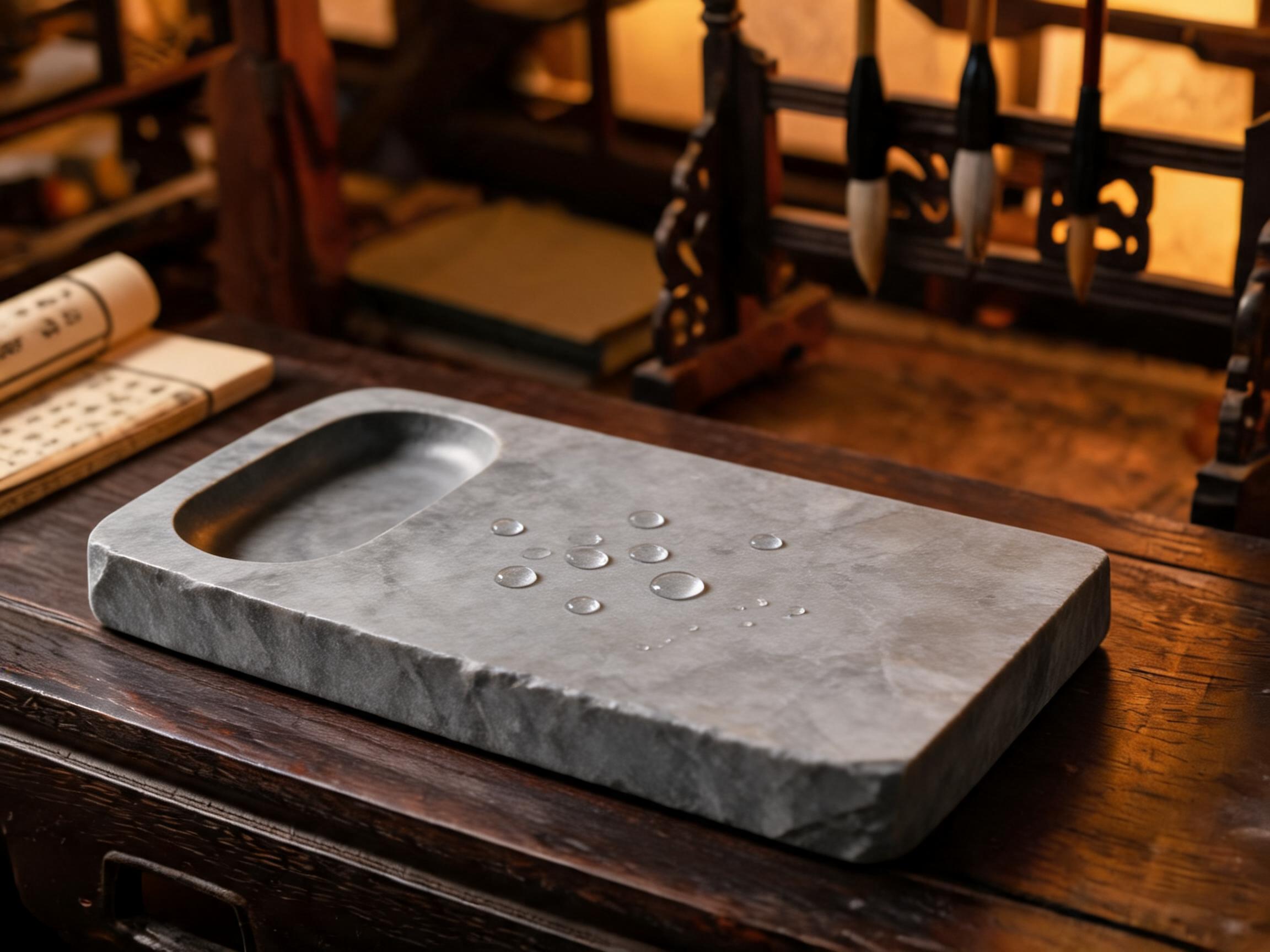
- Inkstone. The Practice Inkstone offers a consistent grinding surface at an affordable level, which matters when a school is buying for a whole class rather than for individual serious students.
- Storage and distribution. The School Calligraphy Desk Set uses a durable, stackable storage box — the format that lets a teacher keep a class set organized and see at a glance what needs replacing.
The logic of the split is this: tools set the ceiling on class size, paper sets the running cost. If a school owns fifteen tool sets, the paper order should be sized to fifteen active students, term by term. That is the number the reorder is built on.
Supplier checks before you commit to a program
Because practice pads are a format rather than a single standardized product, the details vary from supplier to supplier and from line to line. Before placing a first order for a school program, confirm these points in writing:
- Format. Is the paper supplied as loose sheets, or bound into a pad-style unit? If the buyer's program assumes a bound format, the supplier needs to confirm whether that exists in the line or whether the loose equivalent is the intended substitute.
- Binding and sheet handling. For a pad, ask how the sheets are held and how cleanly they tear. For loose paper, ask how the sheets are packed so they arrive flat.
- Consistency across reorders. Confirm that the paper's absorption behavior is consistent between production runs, since a school program depends on the second order behaving like the first.
- Tool durability. Ask how the handles and hair are finished, and whether replacement brushes can be ordered separately from full sets.
- Packing for the cohort size. Ask how units are packed so that what arrives matches how the school divides supplies — a bulk pack that has to be re-split adds labor at the school's end.
Not every point will have a fixed answer for every product line, and that is normal in this category. What matters is that the answers you receive match the workflow your customer described, because the reorder depends on it.
FAQ
Is a calligraphy practice pad the same as practice paper?
No. A pad is a bound format — sheets are held together along one edge and torn off as they are used. Practice paper is the loose material itself, which can be bound into pads or supplied in bulk. The paper quality can be identical; only the format differs.
Which format should a school program choose?
Uniform beginner classes and retail entry SKUs usually suit the bound format, because the unit count maps directly onto enrolment. Larger or mixed-level cohorts usually suit bulk loose paper, because the school can split sheets to the exact number of active students each term.
Can a loose-paper program include reusable water-writing cloth?
Reusable cloth pads are a common industry format and are sometimes used for the earliest practice sessions because they reduce paper consumption. Whether a given supplier carries them should be confirmed directly, as it is a separate product line from paper-based practice supplies.
How should a distributor plan reorder quantities?
Size the paper order to the number of active students per term, and treat the tools as a fixed classroom asset with a small replacement allowance. The paper is the line that depletes and therefore drives the repeat order.
What paper property matters most for beginners?
Consistent ink absorption. A beginner is learning to control ink load and stroke speed, so paper that behaves the same way every sheet removes a variable from the exercise.
This article describes common formats in the practice-supplies category for procurement planning. Product formats, sheet counts, packing and reorder terms vary by supplier and line — confirm the specifics directly with the supplier before building a program around them.