
Middle East and Africa buyers supplying temples, gift programs, and retail shelves face a real choice between sumi sticks and liquid ink. This decision guide compares both formats on storage, usage, perceived value, and logistics, with a channel-by-channel table and product specs to help you stock the right mix.
If you supply temples, ceremonial venues, gift distributors, or retail shelves across the Middle East and Africa, the question is not whether to carry ink for East Asian calligraphy and ritual use. It is which format to put on the shelf: sumi stick or liquid ink. The two are not interchangeable from a stocking perspective. One is a dry, grind-it-yourself block with strong craft appeal; the other is a sealed, ready-to-use bottle that moves faster in volume settings.
This guide compares the two formats on the criteria that actually affect your reorder rate and margin: storage, usage, perceived value, and logistics. It ends with a channel-by-channel decision table so you can allocate your buying budget to the mix that fits your market.
Key Takeaways

- Sticks win on perceived value: a 30g–150g hand-pressed Hui ink stick reads as a craft object in gift and collector programs; liquid ink reads as a consumable.
- Liquid ink wins on convenience and volume: 100ml, 250ml, and 500ml bottles are ready to use with no inkstone, making them the practical choice for temples, schools, and institutional programs.
- Storage is the hidden cost: sticks are dry and stable; liquid ink carries a stated 24-month unopened shelf life, so ordering cycles must respect that window.
- MOQ shapes your entry: sticks start at 50 pcs; liquid ink starts at 100 bottles.
- The strongest assortment is mixed: lead with liquid for volume channels and sticks for gift or collector tiers.
In This Article
What Each Format Actually Is
Both product lines start from the same raw materials: traditional soot (pine soot or oil soot) and natural binders. The difference is what happens after refining.
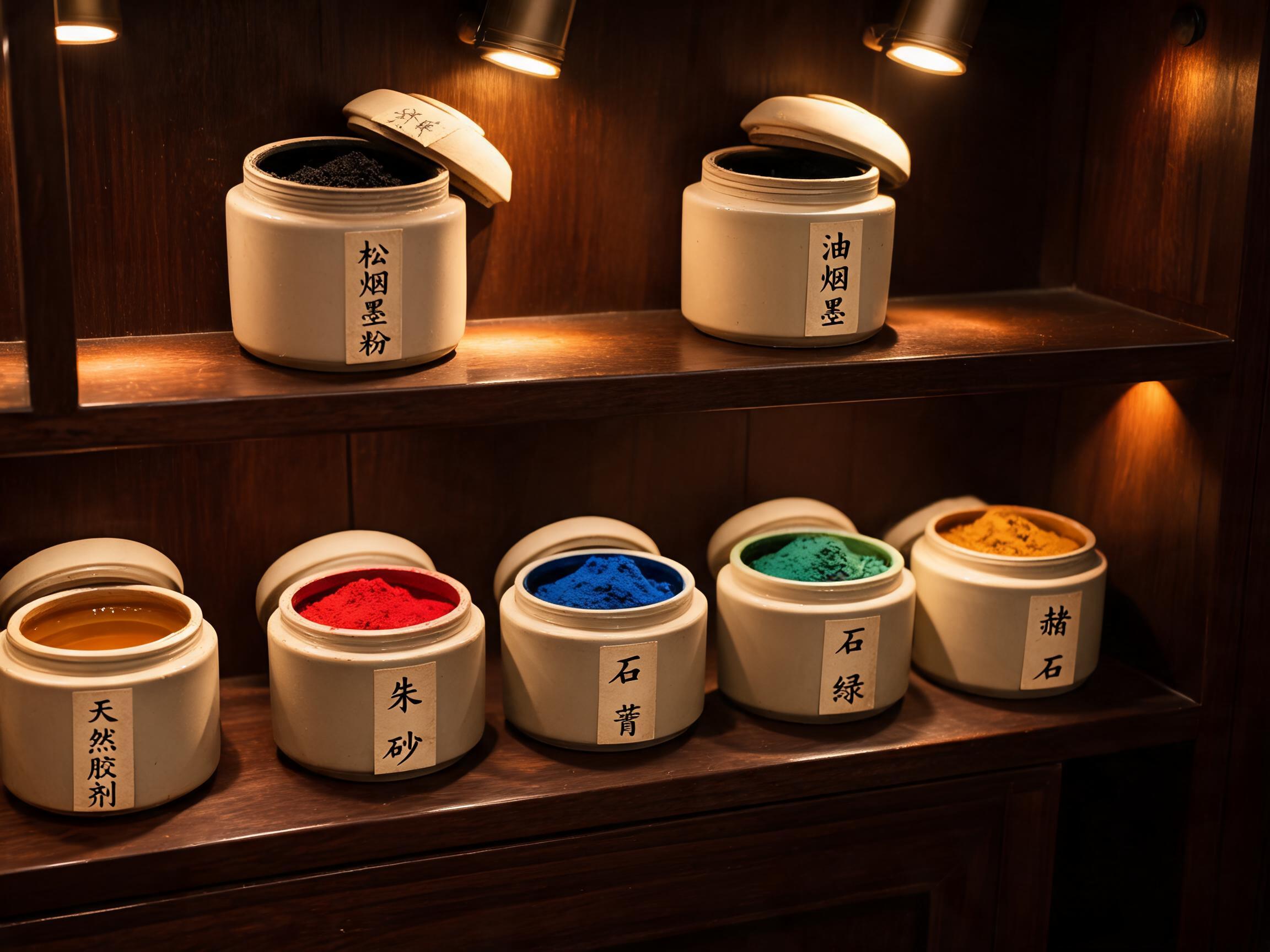
Sumi sticks are made by refining soot, mixing it with binder, hammering the mixture, pressing it into molds, and air-drying the result. The buyer receives a solid block that the end user grinds on an inkstone with water before writing. Available formats include:
- Oil Soot Hui Ink Stick Classic — oil soot with natural binder, 30g–150g per stick, MOQ 50 pcs, with batch QC photo reports. View product
- Student Practice Hui Ink Stick — pine soot, positioned for schools and practice use. View product
- Premium Pine Soot Hui Ink Stick — gold-filled patterns, aimed at collectors and cultural gift distributors.
- Colored Hui Ink Stick Set — vermillion, ochre, and azure.
Liquid ink is refined soot and natural binder suspended in a ready-to-use form, sealed in bottles. The range includes:
- Premium Bottled Calligraphy Liquid Ink — refined soot and natural binder, 100ml / 250ml / 500ml, 24 months shelf life unopened, MOQ 100 bottles, tamper-evident sealed bottles, custom label and volume options, export QC documentation. View product
- Student-Grade Liquid Ink — sediment-free, for schools. View product
- Bulk Calligraphy Liquid Ink — 1L / 5L formats for art schools and institutional programs. View product
- Concentrated Matte Black Liquid Ink — archival-quality positioning.
- Colored Liquid Ink Set — 8 colors, mineral-based pigments, tested lightfastness.
Storage and Shelf Life
Storage is where the two formats diverge most in operational terms.
Sumi sticks are dry goods. They do not carry a stated shelf life in the supplied specifications, and they do not leak, freeze, or evaporate in the way liquids can. For a distributor in a hot, dry climate — common across the Middle East — this is a quiet advantage: sticks can sit in warehouse stock without a date-code clock forcing a decision.
Liquid ink is a sealed liquid product. The Premium Bottled Calligraphy Liquid Ink carries a stated 24 months shelf life unopened. Once opened, the buyer should treat it as a working consumable. For your purchasing plan, that means:
- Order liquid ink in cycles you can realistically sell through within the stated unopened window.
- Keep bottles sealed until delivery to the end user where possible.
- Rotate stock by production date if you carry multiple batches.
Tamper-evident sealing on the Premium Bottled line supports retail presentation and gives the end buyer confidence that the bottle has not been opened in transit.
Usage: Ritual vs. Readiness
Usage context is the strongest signal for which format belongs in which channel.
Grinding matters in ceremonial settings. Grinding a sumi stick on an inkstone with water is part of the ritual for many temples and ceremonial users. The act is not just preparation; it is part of how the practice is experienced. If your temple or ceremonial supply customers ask for sticks, they are usually asking for that experience, not for a slower way to get ink.
Readiness matters in volume settings. Schools, workshops, and institutions need participants writing quickly with minimal setup. Liquid ink is ready to pour and use, with no inkstone, no grinding time, and no variation between users. Student-grade liquid ink is formulated sediment-free, which reduces the need to shake or stir before use — a practical detail for classrooms.
Between the extremes, both formats can coexist on the same shelf. A temple may keep bulk liquid ink for large gatherings and stock a small number of sticks for ceremonial use. A retail store may sell liquid ink to daily users and sticks to customers buying their first formal set.
Perceived Value and Gift Positioning
This is the criterion most likely to be underestimated by buyers who only compare unit economics.
A sumi stick is a physical object with visible craft: it has weight, surface texture, and often decoration. The Premium Pine Soot Hui Ink Stick uses gold-filled patterns, which positions it for collectors and cultural gift distributors rather than classroom supply. The Oil Soot Hui Ink Stick Classic at 30g–150g gives you a range of price points within the same product family, useful when building tiered gift sets.
Liquid ink, by contrast, is perceived as a consumable. That is not a weakness in every channel — in fact, consumables drive repeat purchase. But if your gift channel depends on visual unboxing appeal and a sense of craftsmanship, a sealed bottle has less to work with than a decorated stick.
A practical implication: gift and collector programs often justify a higher retail price for sticks, while liquid ink competes on convenience and repeat volume. Mixing the two in a single gift set — a small stick paired with a bottle for immediate use — lets you capture both purchase motives.
Logistics, MOQ, and QC
Before committing to a format, check these operational points against your warehouse and reorder pattern.
| Factor | Sumi Sticks | Liquid Ink |
|---|---|---|
| MOQ | 50 pcs | 100 bottles |
| Form | Dry solid block | Sealed liquid bottle |
| Size range | 30g–150g per stick | 100ml / 250ml / 500ml; bulk 1L / 5L |
| Stated shelf life | Not stated in provided specs | 24 months unopened |
| QC documentation | Batch QC photo reports | Export QC documentation; tamper-evident seals |
| Customization | Not stated in provided specs | Custom label and volume options |
Two logistics notes for MEA buyers. First, liquid ink occupies more volume per unit of ink delivered than a dry stick, so freight cost per usable writing session is higher — factor that into landed cost, not just FOB unit price. Second, liquid ink is a liquid for shipping purposes; confirm documentation requirements with your freight forwarder before booking, especially for multiple-destination MEA routings.
Batch QC photo reports on the stick line and export QC documentation on the liquid line are the two documents to request at order confirmation. They tell you what was actually produced for your order, which matters when you are distributing across several markets with different quality expectations.
Channel-by-Channel Decision Table
Use this table to allocate your buying budget. Most buyers will not stock one format exclusively; the goal is the right mix per channel.
| Channel | Primary need | Recommended lead format | Why |
|---|---|---|---|
| Temple / ceremonial supply | Volume and consistency; ritual authenticity | Bulk Calligraphy Liquid Ink (1L / 5L) for volume; Oil Soot Hui Ink Stick Classic for ceremonial use | Liquid covers large gatherings efficiently; sticks serve the grinding ritual where it matters. |
| Gift sets and cultural programs | Perceived craft value and unboxing appeal | Premium Pine Soot Hui Ink Stick; Colored Hui Ink Stick Set | Gold-filled patterns and colored sticks read as collectible; liquid can be added as a companion bottle. |
| Retail shelves (stationery / art) | Repeat purchase and broad usability | Premium Bottled Calligraphy Liquid Ink (100ml / 250ml); Student-Grade Liquid Ink | Ready-to-use format sells to beginners and daily users; 24-month unopened shelf life supports retail turnover. |
| Schools and workshops | Low setup time, sediment-free performance | Student-Grade Liquid Ink; Student Practice Hui Ink Stick for teaching ink-making | Classroom flow favors liquid; practice sticks introduce the grinding step where curriculum requires it. |
| Institutional art programs | Bulk volume with archival expectations | Bulk Calligraphy Liquid Ink (1L / 5L); Concentrated Matte Black Liquid Ink | Large-format bottles reduce per-session cost; archival positioning suits collections and exhibitions. |
| Colored work and decorative retail | Color range with lightfastness | Colored Liquid Ink Set (8 colors); Colored Hui Ink Stick Set | Liquid set offers 8 tested colors for retail; stick set serves buyers who prefer grinding colored ink. |
For a first order, a defensible mix is a mid-size run of Premium Bottled Calligraphy Liquid Ink in 100ml and 250ml for retail and temple channels, plus a smaller stick order split between the Oil Soot Classic and the Premium Pine Soot for gift and collector accounts. That combination covers the two buying motives — convenience and craft — without over-committing to either MOQ.
FAQ
Can I stock both formats under one supplier?
Yes. Sticks and liquid ink share the same upstream process — soot refining, binder mixing, and air drying — so a single supplier relationship can cover both lines. This simplifies quality documentation and consolidation.
Which format should I choose if my buyers are new to calligraphy?
Liquid ink. No inkstone and no grinding are required, and Student-Grade Liquid Ink is sediment-free, which reduces preparation steps. Introduce sticks once customers ask about traditional practice.
Does the 24-month shelf life apply to opened bottles?
The stated shelf life is 24 months unopened. Once opened, treat liquid ink as a working consumable and manage it accordingly.
Are sumi sticks suitable for gift packaging?
Yes. The Premium Pine Soot Hui Ink Stick with gold-filled patterns and the Colored Hui Ink Stick Set are positioned for gift and cultural distribution. Pair a stick with a liquid ink bottle where the gift should be usable immediately.
What documents should I request at order confirmation?
For sticks, request the batch QC photo reports. For liquid ink, request the export QC documentation. These confirm what was produced for your specific order.
Planning your first mixed order?
Review the full specification and MOQ details for the Oil Soot Hui Ink Stick Classic and the Premium Bottled Calligraphy Liquid Ink, or compare bulk liquid ink and student-grade liquid ink for volume channels. Confirm your target volumes and labeling requirements with the supplier to finalize a channel-specific assortment.