A practical guide for B2B buyers supplying Japanese shodo classrooms and religious/cultural gift channels. Learn how to evaluate kanji brush tip elasticity, match brushes with ink sticks and inkstones, and avoid costly bulk ordering mistakes.
BUYER GUIDE · SHODO & CULTURAL CHANNELS
When sourcing calligraphy brushes for the Japanese market, the terms kanji brush and fude are often used interchangeably. But for a buyer placing bulk orders for shodo classrooms or religious/cultural gift programs, the distinction matters less than two things: tip elasticity and ink pairing. Get these wrong, and you will receive brushes that feel right in the hand but fail on the paper — or worse, that your customers return.
This guide walks through the checks you should run before committing to a bulk order, with reference to real products and manufacturing capabilities you can verify with suppliers.
- Tip elasticity is the #1 factor determining brush performance for kanji — match it to the writing style and user level.
- Ink pairing is not optional: ink stick + inkstone + brush must work as a system, especially for religious venues with specific ink requirements.
- Ask suppliers for specific hair blends, handle materials, and MOQ terms — not vague promises.
- OEM customization of ink stick patterns and packaging is available; confirm specs before ordering.
Why “Kanji Brush” and “Fude” Are Not the Same Question
In the Japanese market, fude (筆) is the general word for brush. A kanji brush specifically refers to a brush designed for writing Chinese characters (kanji) — typically with a larger reservoir, a firmer tip, and a specific shape that holds a sharp point even under pressure. For shodo classrooms, students use kanji brushes for basic strokes; for advanced calligraphy, they may switch to smaller or softer brushes depending on the style.
When you order in bulk, you are not just buying “a brush.” You are buying a tool that must perform consistently across hundreds of students or dozens of ceremonial uses. That is why you need to check the tip elasticity — not just the hair type.
Tip Elasticity: The Core Check Before Bulk Ordering
Tip elasticity (弾力, danryoku) is the brush’s ability to return to its original shape after pressure is applied. It determines how crisply a stroke starts and ends, how well the brush holds a point, and how much control the writer has.
Three brush lines are commonly available from suppliers like Gu Mo Craft Technology, each with distinct elasticity profiles:
| Brush Line | Hair Type | Elasticity Profile | Best For |
|---|---|---|---|
| Goat Hair Soft Tip Brush | Goat hair | Soft, flexible, low rebound | Beginners, large expressive strokes, sumi-style washes |
| Wolf Hair Stiff Tip Brush | Wolf hair | Firm, high rebound, sharp point | Kanji with strong pressure, detailed strokes, experienced writers |
| Mixed Hair Combination Brush (70/30 blend) | 70% goat / 30% wolf (typical) | Balanced: moderate rebound with softness | Versatile use, classrooms, general calligraphy |
For a shodo classroom, a mixed hair brush is often the safest default because it offers a balance of control and forgiveness. For religious or ceremonial writing — where precision and a sharp, confident line matter — a stiffer wolf hair brush may be preferred.
What to ask your supplier:
- What is the exact hair blend ratio? (e.g., 70/30)
- What is the handle material and length? (e.g., bamboo handle, 24 cm)
- What is the MOQ per brush line? (e.g., 100 pcs)
- Can you provide samples for elasticity testing before bulk production?
Ink Pairing: The Missing Link in Most Bulk Orders
A brush is only half the system. The ink — whether liquid or from an ink stick — interacts with the brush’s elasticity to produce the final stroke quality. Many buyers focus solely on the brush and ignore ink pairing, leading to disappointing results for end users.
Ink Stick + Inkstone: The Traditional Pairing
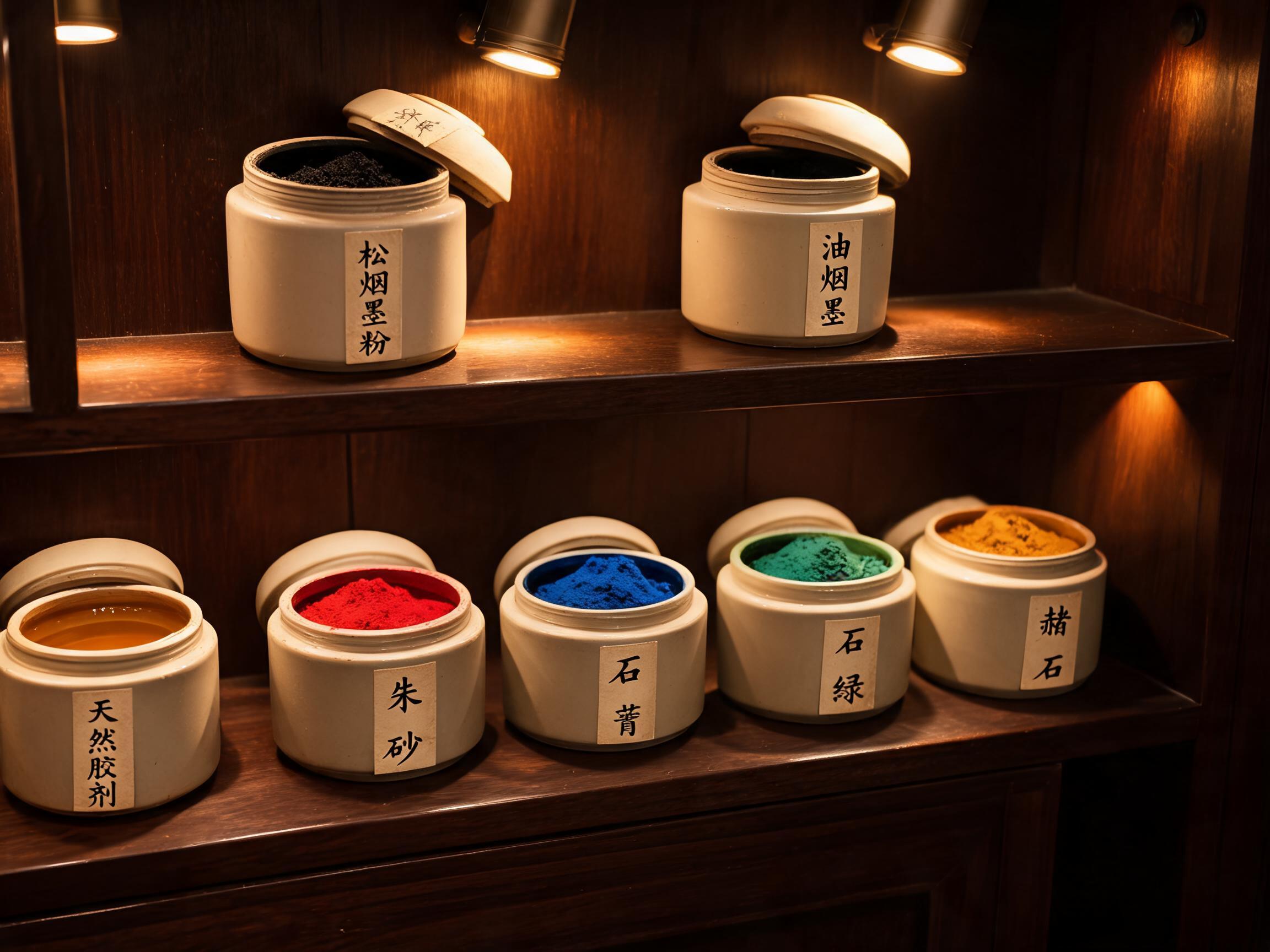
For high-end calligraphy and religious ceremonies, traditional ink sticks ground on an inkstone are still the standard. The ink’s viscosity, tone, and drying speed depend on the stick’s formula (pine soot vs. oil soot) and the stone’s surface.
Gu Mo Craft Technology, founded in 2011, specializes in traditional Huizhou ink craft. Their product range includes:
- Premium Pine Soot Hui Ink Stick — known for a deep, matte black with a cool undertone, ideal for formal kanji.
- Oil Soot Hui Ink Stick Classic — produces a warmer, glossier black, often preferred for certain ceremonial styles.
- Practice Inkstone — a functional, affordable stone for classroom use.
- Classic Duan Inkstone — a higher-end stone for serious practitioners and gift sets.
If you are supplying religious venues, ask about the ink’s behavior on specific papers and whether the venue requires a particular shade or finish. Some temples prefer a dense, matte black for sutra copying, while others may want a subtle sheen for decorative scrolls.
Liquid Ink: The Practical Choice for Classrooms
For daily classroom practice, bulk calligraphy liquid ink is convenient and consistent. It eliminates the time needed for grinding and is less messy for young students. However, liquid ink has different flow properties than fresh-ground ink, so the brush’s elasticity must be matched accordingly — a stiffer brush often handles liquid ink better because it provides more control over the wetter medium.
Checklist for ink pairing:
- Will the end user grind ink sticks or use liquid ink?
- What paper type will be used? (e.g., washi, newsprint, practice paper)
- Does the venue have any specific ink requirements (e.g., non-smudging, quick-dry)?
- Can the supplier provide a recommended brush + ink combination for your target use?
Religious and Cultural Gift Channels: Special Considerations
When supplying religious or cultural gift programs, the brush is often part of a set — paired with an inkstone, ink stick, and perhaps a ceremonial cloth. These sets are given as gifts for festivals, memorials, or temple events. Buyers must ensure the brush’s quality matches the ceremonial significance.
For such channels, the tip elasticity must be reliable: a brush that loses its point after a few uses will reflect poorly on the gift. Also, consider the packaging — many suppliers offer OEM customization of ink stick patterns, specs, and packaging, allowing you to create gift-ready sets with your branding or a special design.
Questions for religious/cultural buyers:
- Is the brush intended for actual writing, or is it a symbolic gift? (This affects the required quality level.)
- Do you need matching inkstone and ink stick sets?
- Are there any cultural sensitivities regarding brush hair types? (e.g., some venues may avoid certain animal hairs.)
- Can the supplier provide custom packaging with your logo or a traditional motif?
Quality Control and Export Packing: What to Verify
Bulk orders require consistent quality across every unit. A reputable supplier will have inline QC — meaning each brush is inspected during production, not just at the end. Ask about:
- How many inspection points are there? (e.g., hair alignment, glue application, handle finish)
- What is the defect rate threshold?
- Are brushes tested for elasticity before packing?
- What export packing is used? (e.g., individual sleeves, bulk cartons, moisture protection)
For brushes with bamboo handles, check that the bamboo is properly dried and sealed to prevent cracking during shipping to humid or dry climates. Also, confirm the handle length (e.g., 24 cm) matches your market expectations — Japanese brushes often have specific length standards for different writing styles.
Comparing Brush Lines: A Quick Reference Table
| Feature | Goat Hair Soft Tip | Wolf Hair Stiff Tip | Mixed Hair (70/30) |
|---|---|---|---|
| Elasticity | Low | High | Medium |
| Tip sharpness | Soft, rounded | Sharp, firm | Balanced |
| Recommended for | Large strokes, beginners | Precise kanji, experienced | General classroom use |
| Handle material | Bamboo (verify) | Bamboo (verify) | Bamboo (verify) |
| Typical MOQ | 100 pcs | 100 pcs | 100 pcs |
How to Test Before You Commit
Before placing a large order, request samples of each brush line and test them with the ink you plan to supply. Here is a simple testing protocol:
- Dip test: Dip the brush in water or ink and observe how the tip holds its shape.
- Stroke test: Write a series of kanji characters (e.g., 永, 一, 心) to assess control and rebound.
- Durability test: Write 100 strokes and check for hair loss or tip deformation.
- Ink compatibility: Test with both liquid ink and ground ink stick to see if the brush behaves differently.
If the supplier cannot provide samples, that is a red flag. Most professional manufacturers will offer samples for a fee, which is often credited toward the bulk order.
Why Work with a Specialized Craft Manufacturer?
Gu Mo Craft Technology, founded in 2011, has focused on traditional Huizhou ink craft — including pine soot and oil soot ink sticks made via ancient-method smoke firing, binding, and molding. This specialization means they understand the entire calligraphy ecosystem, not just brushes. Their ability to offer OEM customization of ink stick patterns, specs, and packaging makes them a strong partner for buyers who need tailored products for the Japanese market.
When you source from a manufacturer with deep craft knowledge, you get more than a product — you get guidance on pairing brushes with the right ink and inkstone, which is invaluable for building a loyal customer base in Japan.
FAQ: Common Buyer Questions
Q: What is the difference between a kanji brush and a regular fude?
A: A kanji brush is a type of fude designed specifically for writing Chinese characters, with a larger reservoir and firmer tip for controlled strokes. Regular fude may be softer and used for other styles like kana.
Q: Can I use the same brush for liquid ink and ink stick?
A: Yes, but the performance may vary. Liquid ink is wetter, so a stiffer brush (like wolf hair) may provide better control. If you plan to supply both, consider a mixed hair brush that works well with both.
Q: What is the MOQ for custom brushes?
A: The MOQ is typically 100 pcs per brush line, but confirm with your supplier. For custom designs, the MOQ may be higher.
Q: Do you offer OEM packaging for gift sets?
A: Yes, we offer OEM customization of ink stick patterns, specs, and packaging. You can work with us to create branded gift sets.
Q: How do I know if the brush quality is consistent in bulk?
A: Ask about inline QC processes. A supplier with inline QC will inspect brushes at multiple stages, reducing the risk of defects in your bulk order.
Next Steps for Your Bulk Order
Before you finalize your order, gather the following information to discuss with your supplier:
- Target user (classroom, professional, ceremonial)
- Preferred brush line(s) and hair blend
- Ink type (liquid or stick) and any specific requirements
- Packaging needs (individual, gift box, OEM branding)
- MOQ and delivery timeline
For more details on our brush lines, visit:
For ink pairing products, see:
If you have specific requirements, contact us to discuss samples and bulk pricing. We are happy to provide guidance based on your target market.