
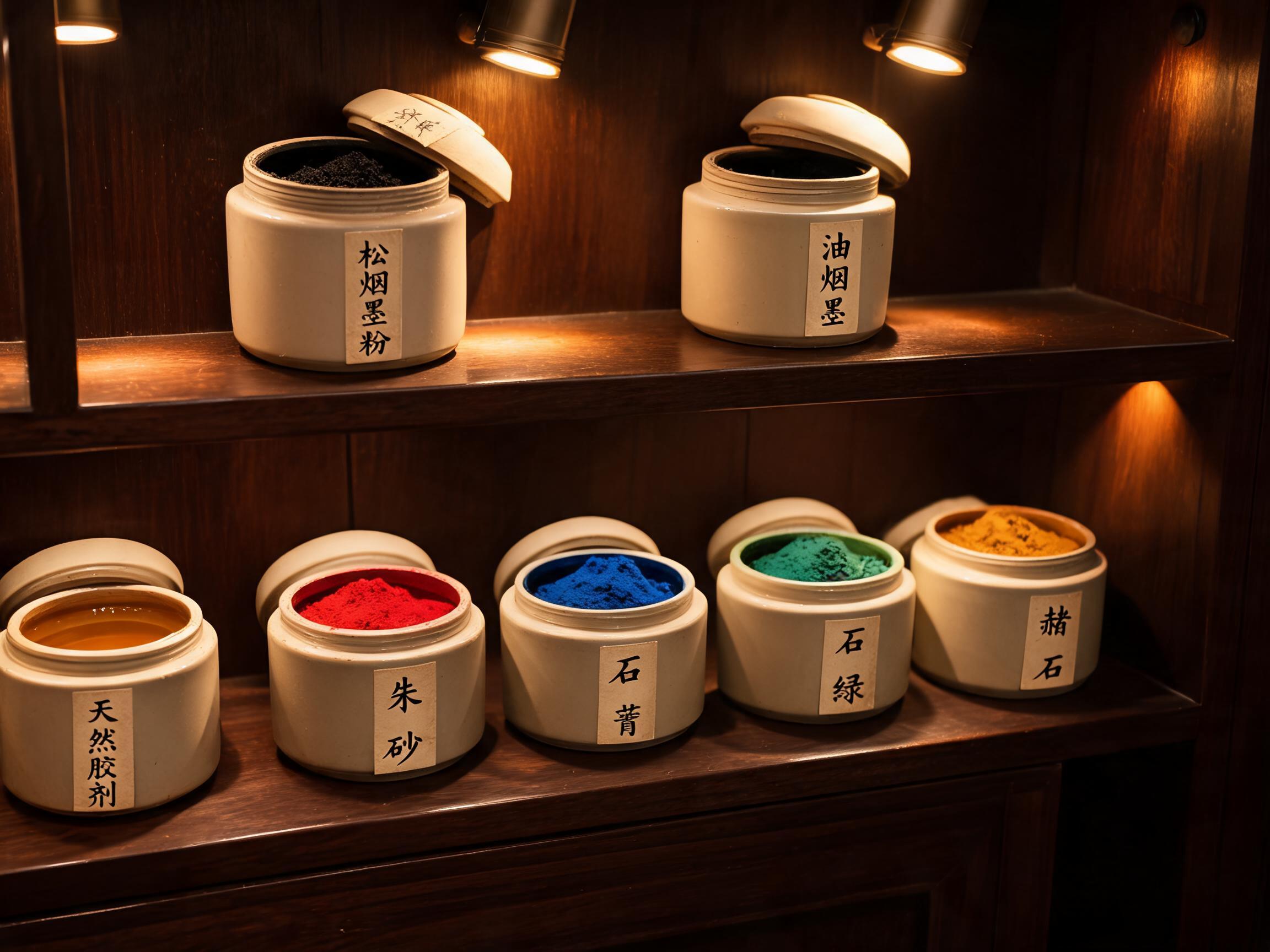
A buyer-focused breakdown of what Japanese-style sumi ink sticks are made of, how they differ from Chinese Hui ink sticks, and the practical checks importers use before placing a bulk order.
If you are sourcing Japanese-style ink sticks for stationery wholesalers, cultural gift programs or diaspora retail channels, the first question your customers will ask is a simple one: what is this stick actually made of? The answer determines the grade you buy, the retail price it can carry, and whether it behaves correctly when someone grinds it on a stone.
Key takeaways for buyers
- A sumi ink stick is a compressed solid of soot, binder and a small amount of additives, not a pigment paste.
- Soot type (pine vs. oil) drives most of the price and performance difference you will be asked to explain.
- Japanese-style and Chinese Hui ink sticks share a raw-material logic but differ in soot selection, fragrance, finish and packaging conventions.
- Grinding behavior, scent, surface finish and gift packaging are the four checks importers can run before committing to a bulk order.
What a Japanese ink stick is made of
A Japanese-style ink stick, often called a sumi ink stick in export markets, is a dry, molded block that a calligrapher or painter grinds against an inkstone with a little water. The abrasion releases fine soot particles that disperse in the water and form liquid ink. That is the entire functional idea, and it explains why composition matters more than appearance.
Three material groups make up the stick:
- Soot — the colorant and the main cost driver. Pine soot and oil soot are the two documented types used in traditional ink-craft production. Pine soot tends to give a warmer, slightly brown-leaning black associated with older calligraphic styles; oil soot generally reads as a deeper, cooler black with a glossier surface.
- Natural binder — traditionally an animal glue that holds the soot in a solid form and releases it evenly during grinding. Binder ratio affects hardness: too little and the stick crumbles, too much and it grinds slowly or glazes over.
- Additives — small quantities of aromatic and functional ingredients. These influence scent, mold resistance and how the stick ages in storage. Buyers should treat additive content as a supplier-specific formulation rather than a fixed industry recipe.
Because the recipe is a formulation rather than a published specification, the practical way to compare suppliers is to compare the soot declaration, the intended use grade and the physical behavior of a sample.
Soot types and what they mean at the counter
Pine soot sticks
Pine soot is the classic material for everyday calligraphy practice and for ink used in larger, freer brushwork. It is generally the more accessible grade, which makes it the workhorse SKU for stationery wholesalers and classroom supply programs. Retail buyers often describe the resulting ink as having more visible brush texture.
Oil soot sticks
Oil soot is selected when a deeper, glossier black is wanted, and it is the grade that tends to appear in presentation sets, gift boxes and higher-priced calligraphy assortments. The surface of the stick itself is usually smoother and more reflective, which is one reason it photographs well in gift packaging.
Blended and specialty sticks
Many commercial sticks combine soot sources or adjust binder and additive ratios to hit a target price point or a target ink behavior. This is normal in the trade, but it means the label alone will not tell you what you are buying. Ask the supplier to state the soot basis in writing on the specification sheet rather than relying on the decorative name printed on the box.
How Japanese-style sumi sticks differ from Chinese Hui ink sticks
Both traditions belong to the same East Asian ink-stick family: soot plus binder, pressed in a mold and dried slowly. The differences buyers notice are in selection, finishing and market positioning rather than in the basic chemistry.
| Dimension | Japanese-style sumi ink stick | Chinese Hui ink stick |
|---|---|---|
| Soot emphasis | Often oil soot for deep blacks; pine soot for practice grades | Broad use of pine soot, oil soot and blended soot across many grades |
| Scent profile | Restrained, sometimes lightly aromatic | Frequently more pronounced aromatic additive profile |
| Surface finish | Smooth, high-gloss on presentation grades | Varies widely by workshop and grade, from matte to glossy |
| Mold and relief work | Restrained relief, emphasis on clean edges | Elaborate relief, inscriptions and pictorial panels are common |
| Packaging convention | Paper wrap and wooden or lacquer-look presentation boxes | Paper wrap, brocade or cloth-covered boxes, often with certificate-style inserts |
| Typical channel | Calligraphy supply, design stationery, Japan/Korea gift retail | Calligraphy supply, cultural gift, collector and diaspora retail |
For an importer, the useful conclusion is that these are two product families you can carry side by side rather than substitutes. A Japanese-style stick answers a customer who wants a specific look and a specific gift aesthetic; a Hui ink stick answers a customer who wants relief work, inscription and a strong cultural-gift story.
Grade language you will see on supplier sheets
Grade names are not standardized across workshops, so treat them as internal labels and ask what each one means in terms of soot basis, intended use and finish. In practice, most export assortments fall into three commercial tiers:
- Practice tier — pine-soot or blended sticks intended for high-volume use, usually sold in simple wraps or multi-stick packs.
- Standard retail tier — better soot selection and a cleaner finish, sold singly or in small boxes for stationery retail.
- Presentation tier — oil-soot or premium blended sticks with refined relief, controlled finish and gift packaging, aimed at cultural gift and corporate gifting channels.
When a supplier quotes a grade, ask which tier it maps to and what the soot basis is. That single question will tell you more than any decorative product name.
What importers verify before placing a bulk order
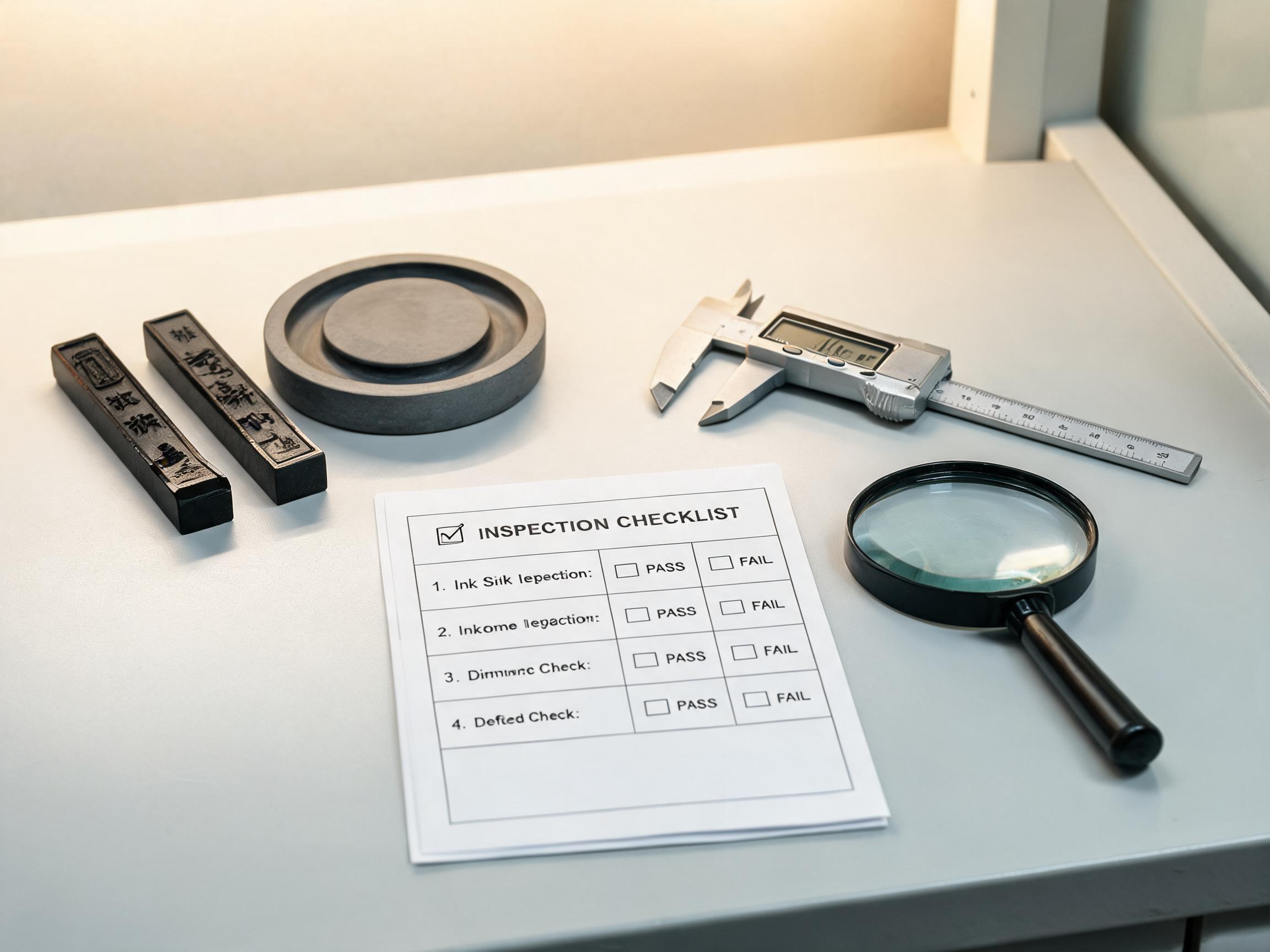
The following checks can be run on samples without laboratory equipment. They are evaluation steps, not pass/fail certifications, and results should be recorded per sample so you can compare suppliers on the same basis.
- Grinding test. Grind the stick on a stone with a measured amount of water for a fixed time. Note how quickly ink develops, whether the stick glazes or sticks to the stone, and whether the ink contains visible grit. Repeat on a second stick from the same batch to check consistency.
- Scent check. Smell the dry stick, then the freshly ground ink. A consistent, restrained scent is easier to sell into gift channels than a heavy or inconsistent one.
- Finish and mold inspection. Look at edges, relief depth and surface gloss under raking light. Check that the pattern is crisp and identical across sticks in the same box, since pattern drift is a common complaint in bulk shipments.
- Break and density check. A stick that snaps cleanly with a fine, even grain usually indicates controlled binder mixing and adequate drying. Crumbling or a soft core suggests the drying stage was rushed.
- Packaging and print. Confirm wrap tightness, box construction, insert fit and label accuracy. For gift channels, packaging is part of the product, not a shipping afterthought.
- Batch marking. Ask how sticks are marked or segregated by production batch so that a problem found in one carton can be traced.
Run these checks on the exact grade you intend to order, not on a top-tier sample. Suppliers can legitimately hold several grades with very different behavior, and a sample that does not represent your order quantity tells you nothing useful.
Sourcing considerations for importers
Ink sticks are a craft product with a long drying stage, so the questions that matter most are about process control and customization rather than about a single specification number.
- Ask about the production sequence. Traditional production involves soot refining, binder mixing and pounding, mold pressing and shade drying. A supplier that can describe each stage and where inspection happens is easier to work with than one that only quotes a price.
- Confirm inline inspection. Material verification, pattern checks and finish grading at each stage are the practical quality controls for this category. Ask which stage each check belongs to.
- Discuss OEM scope early. Ink stick patterns, specifications and packaging are the usual customization levers. Bring your target retail price band and channel, and let the supplier propose a grade and packaging combination rather than starting from a fixed model.
- Plan gift-set design together. If you sell four-treasures desk sets, brushes, inkstones or seal-carving supplies alongside ink sticks, ask whether the supplier can coordinate set design so the components match in finish and box layout.
- Confirm export packing and documentation. Carton marks, export packing and shipment documentation should be agreed before production, since these affect both landed cost and retail-ready presentation.
MOQ, lead time, pricing and any certification requirements are commercial terms that vary by grade, packaging and order size. Confirm them directly with the supplier for the specific configuration you intend to buy rather than assuming a standard figure.
FAQ
What is a Japanese ink stick?
It is a solid block of soot and natural binder, molded and slowly dried, that is ground with water on an inkstone to produce liquid ink for calligraphy and painting. In export catalogs it is often listed as a sumi ink stick.
What is Japanese ink made of?
In stick form, the ink is made of soot, a natural binder and a small amount of additives. Pine soot and oil soot are the two documented soot types. The liquid ink you see on paper is those same materials dispersed in water.
Are Japanese-style and Chinese ink sticks made of the same materials?
Both use soot, binder and additives, so the material families overlap. The differences lie in soot selection, fragrance level, relief work, finish and packaging conventions, which is why the two are usually merchandised as separate product families.
How can I tell a higher grade without a lab?
Compare grinding speed, grit in the ink, scent consistency, edge crispness and surface gloss across samples from the same batch. Record the results per sample so different suppliers are judged on the same criteria.
Can ink sticks be customized for my brand?
Patterns, specifications and packaging are the usual customization areas, and gift-set design can be coordinated with related items such as inkstones, brushes and desk sets. Discuss your target channel and price band with the supplier so the grade and packaging are proposed together.
Next step
If you are building a Japanese-style ink stick range for stationery, cultural gift or diaspora retail channels, start by requesting samples of two or three grades with their soot basis stated in writing, then run the grinding, scent, finish and packaging checks on the same batch. That gives you a comparable basis for negotiation and a clear brief for OEM pattern, specification and gift-box development.