
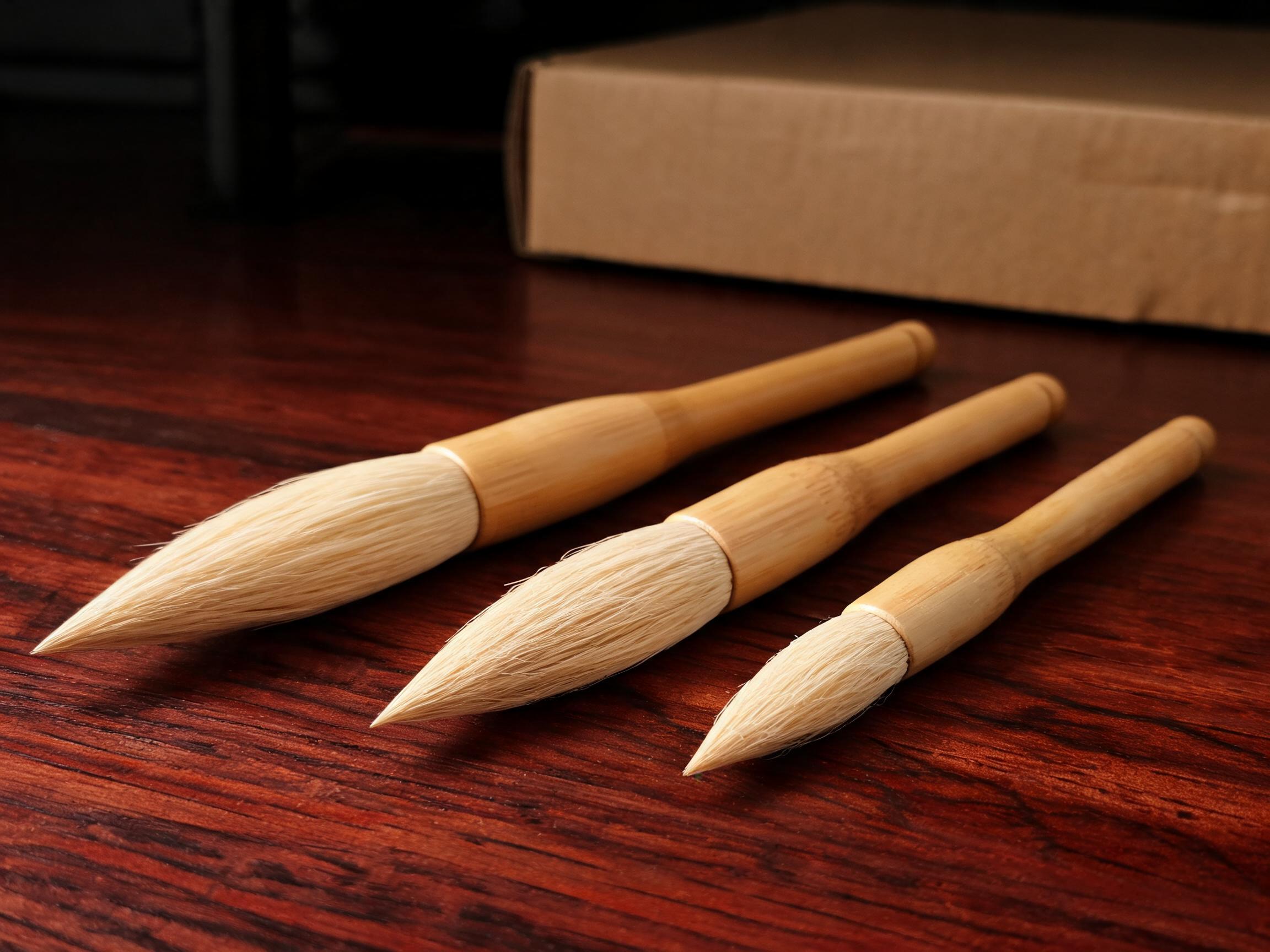
A practical comparison guide for shodo buyers sourcing Japanese calligraphy pens in bulk. Clarifies the difference between fude pens, fude brushes, and Chinese brushes, and outlines what to compare before ordering, including tip stiffness, hair type, handle balance, set composition, and packing. Also explains how a Chinese-made brush line can serve shodo-adjacent programs honestly.
When overseas buyers search for Japanese calligraphy pens, they often mean different things: a fude pen (a brush-tipped pen with an ink reservoir), a fude brush (a traditional brush for dipping in ink), or a Chinese brush used for similar scripts. For B2B sourcing in Japan, Korea, and shodo study channels, clarity on these categories is essential before placing bulk orders. This article explains the differences and provides a comparison checklist for buyers evaluating suppliers.
Note: The supplier's line consists of Chinese-made calligraphy brushes, not Japanese fude pens. These brushes can serve shodo-adjacent needs such as stiff-tip brushes for kaisho (regular script) practice, classroom programs, and institutional use, but they are not labeled or sold as Japanese fude pens. Always verify product origin and specifications with your supplier.
1. What Buyers Mean by 'Japanese Calligraphy Pens'
In the shodo supply chain, the term 'Japanese calligraphy pens' can refer to three distinct product types. Understanding the difference prevents misorders and mismatched expectations.
- Fude pens: Brush-tipped pens with a built-in ink reservoir (cartridge or piston). They offer convenience and portability, often used by students and hobbyists. Hair types vary, but they are not traditional brushes.
- Fude brushes: Traditional Japanese brushes made from animal hair (e.g., sheep, horse, weasel, raccoon) set in a bamboo or wooden handle. They require dipping in ink and are used for formal shodo, from kaisho to sosho. Stiffness and tip shape vary by script and school.
- Chinese brushes: Brushes made in China, often with goat, wolf, or synthetic hair. They have their own construction conventions and stiffness profiles. While they can be used for Japanese scripts, they are not Japanese fude brushes by origin or traditional specification.
For bulk procurement, clarify which category your program or customers require. A fude pen is a distinct product from a fude brush, and a Chinese brush is a third option with different characteristics.
2. Fude vs. Chinese Brushes: What Buyers Should Understand
Japanese fude brushes and Chinese brushes differ in tip construction, hair stiffness conventions, handle forms, and the script traditions they serve. These differences affect performance and suitability for specific shodo styles.
| Feature | Japanese Fude Brushes (General Characteristics) | Chinese Brushes (General Characteristics) |
|---|---|---|
| Tip construction | Often blended hairs for specific elasticity; tip shape tailored to script (e.g., sharp for kaisho, rounded for kana). | Varied; common types include wolf hair (stiff) and goat hair (soft). Construction focuses on resilience and ink retention. |
| Hair stiffness | Typically softer to medium, with some stiff types for formal scripts. | Wide range from soft (goat) to stiff (wolf). Stiff brushes are common for regular script (kaisho). |
| Handle forms | Often slender, lightweight bamboo or wood; balance designed for precision. | Varied; bamboo and wood handles, sometimes thicker for larger brushes. |
| Script traditions | Used across Japanese shodo: kaisho, gyosho, sosho, kana. | Primarily used for Chinese calligraphy styles (kaishu, xingshu, caoshu), but can be adapted for Japanese kaisho. |
These are general conventions, not universal rules. Individual brushes vary by maker. When sourcing, ask for specific hair composition and stiffness rating.
3. What to Compare Before Bulk Orders
Before committing to a bulk order, compare the following aspects to ensure the product matches your program's needs.
3.1 Tip Stiffness and Script Match
Stiffness determines how the brush responds to pressure and is critical for script style. For kaisho (regular script), a stiffer tip offers control for precise strokes. Softer tips suit flowing scripts like sosho. Request samples to test stiffness, or ask for a stiffness rating (e.g., soft, medium, stiff).
For stiff-tip brushes designed for regular and clerical script in studios and school programs, consider the Wolf Hair Stiff Tip Brush, which features length-graded hair and hand-formed resilient points.
3.2 Hair Type Disclosure
Hair type affects feel, durability, and ink absorption. Common hairs include goat (soft), wolf (stiff), and synthetic blends. Suppliers should disclose hair composition. Synthetic blends are often used in student brushes for consistency and cost control. Verify that the hair type matches your expectation for the script and user skill level.
3.3 Handle Length and Balance
Handle length and balance influence control and comfort. Longer handles suit large-format writing, while shorter handles offer precision for small characters. Balance point (where the brush feels balanced in hand) matters for extended writing sessions. For school programs, lightweight handles reduce fatigue. Compare handle materials and dimensions across suppliers.
3.4 Set Composition
If ordering sets, compare the number and types of brushes included. A set may contain brushes of different sizes and stiffness to cover multiple scripts. For example, a Student Practice Brush Set with 3 brushes (synthetic-blend hair, sealed bamboo handles) is designed for affordability and classroom use. Ensure the set composition aligns with your curriculum or customer needs.
3.5 Packing and Export Readiness
Bulk orders require appropriate packaging to protect brushes during transit. Compare packing methods: individual brush sleeves, set boxes, or bulk cartons. Also confirm export documentation, labeling, and compliance with destination country regulations. For institutional programs, consider ink supply: Bulk Calligraphy Liquid Ink is available in 1L and 5L containers, suitable for schools and institutions.
4. How a Chinese Brush Line Can and Cannot Serve Shodo-Adjacent Programs
A Chinese-made brush line can serve shodo-adjacent needs when the product characteristics match the application. It is not a substitute for Japanese fude pens or traditional fude brushes in contexts where origin and specific craftsmanship are required.
Can serve:
- Stiff-tip brushes for kaisho-style regular script practice in classrooms and workshops.
- Affordable brush sets for student practice and institutional programs where cost control is important.
- Bulk ink supply for schools and cultural centers.
Cannot serve:
- As Japanese fude pens or fude brushes in retail or gift contexts that require Japanese origin labeling.
- For advanced shodo practitioners who require specific traditional fude characteristics (e.g., particular hair blends, handle shapes) that are unique to Japanese makers.
Be transparent with your customers about product origin. Chinese brushes are not Japanese fude pens, and labeling them as such would be inaccurate.
5. Sampling and Verification
Always request samples before bulk orders. Test brushes with the intended script and ink to evaluate stiffness, ink flow, and tip resilience. Verify hair type, handle dimensions, and packing. For institutional buyers, consider a pilot order to assess durability and user feedback. Confirm that the supplier provides consistent specifications across batches.
When comparing suppliers, ask for:
- Hair composition and stiffness rating.
- Handle length, diameter, and material.
- Set contents and packaging details.
- Export packing and labeling options.
6. FAQ
Are Japanese calligraphy pens the same as fude brushes?
No. Fude pens have built-in ink reservoirs, while fude brushes are traditional dipped brushes. They serve different user needs.
Can Chinese brushes be used for shodo?
Yes, particularly stiff-tip brushes for kaisho and practice brushes for students. However, they are not Japanese fude brushes and differ in construction and origin.
What stiffness is best for kaisho?
Stiff to medium-stiff tips offer better control for kaisho. Test samples to determine suitability.
How do I ensure consistent quality across bulk orders?
Approve samples, specify hair type and dimensions, and request pre-shipment inspection if possible.
What packing options are available for bulk orders?
Options vary by supplier. Common choices include individual sleeves, set boxes, and bulk cartons. Confirm with your supplier.
Ready to evaluate brushes for your program?
Explore our Wolf Hair Stiff Tip Brush for stiff-tip needs, or contact us to discuss your bulk requirements. We manufacture Chinese calligraphy brushes and can provide samples for your comparison.