A B2B explainer for overseas dealers, wholesalers, and gift program buyers on why Huizhou ink (Hui Mo) is the quality benchmark when sourcing Chinese ink sticks. Covers the regional craft process, batch-to-batch stability requirements, retail-ready storytelling material, the factory's actual product line with MOQs, and the OEM customization flow.
BUYER GUIDE · CHINESE INK STICKS
Huizhou Ink (Hui Mo) Explained: The Regional Craft Behind Premium Chinese Ink Sticks
When overseas buyers source Chinese ink sticks, the name Huizhou ink — or Hui Mo — comes up as the quality benchmark. But what separates a genuine Hui Mo ink stick from a generic one is not a label. It is a specific regional craft: inherited recipes built on pine soot and oil soot with natural binders, processed through an ancient-method workflow, and now stabilized under modern quality control.
This guide explains what to demand from any supplier claiming Hui Mo standards, what product line to stock, and how to customize your own ink stick program.
- Hui Mo quality rests on two things: the soot base (pine or oil) and the pounding discipline during binder kneading.
- Batch-to-batch stability is verifiable — demand consistent ink density, raw material batch records, inline QC checkpoints, and batch-level photo reports.
- The factory offers a ready product line from student-grade to commemorative gold-edge sticks, with MOQs from 30 to 50 pieces.
- OEM customization covers patterns, weights, packaging, and private label, with sample approval before mass production.
1. What Makes Hui Mo a Regional Benchmark
Hui Mo is not a single recipe. It is a regional standard built on two raw material families and a disciplined process.
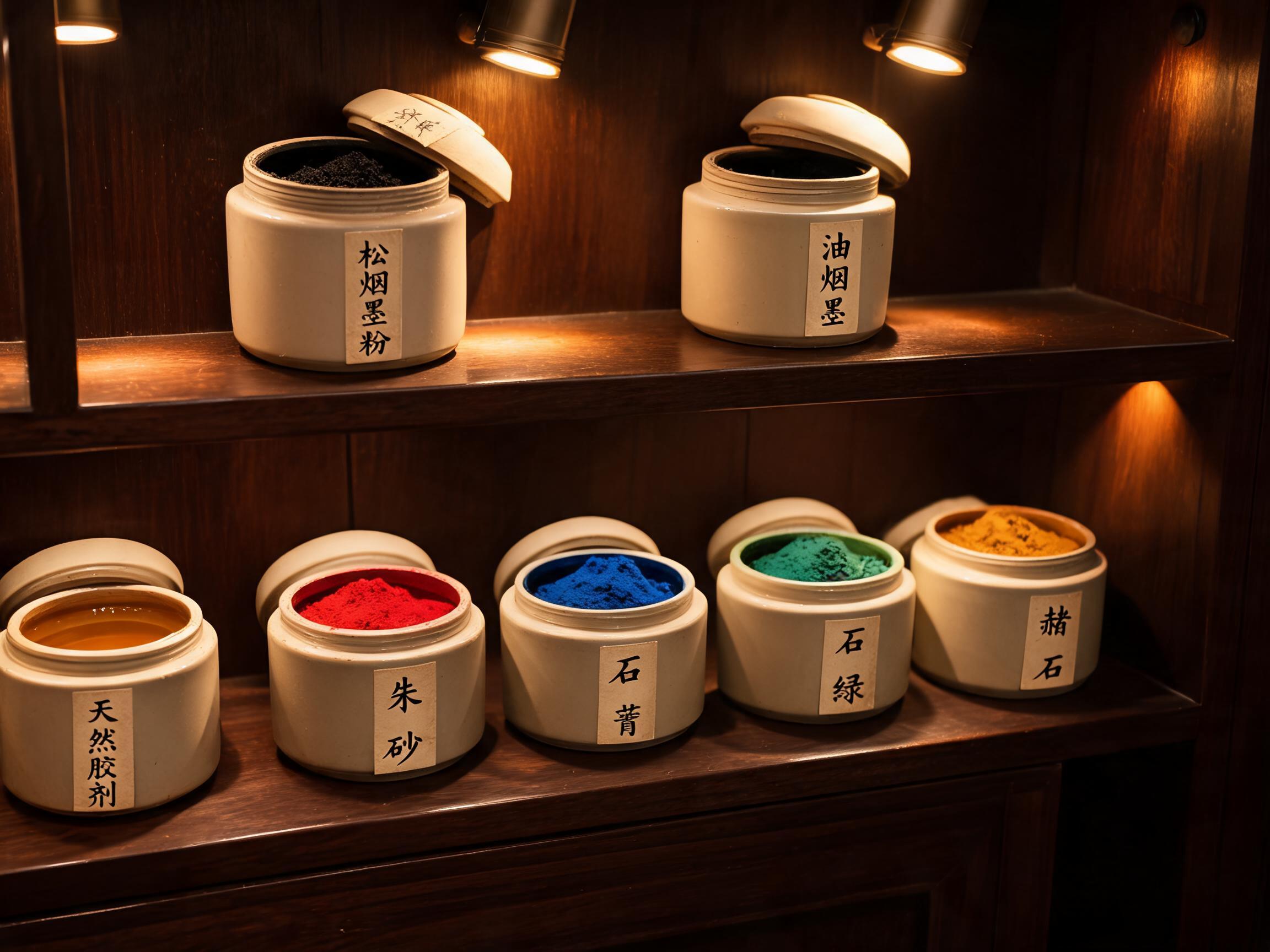
The soot base. Premium Huizhou ink sticks are made from either pine soot or oil soot. Pine soot gives a deep, matte black with a cool tone — preferred for calligraphy and traditional painting where layered washes matter. Oil soot, produced from burning oils, yields a richer, warmer black with higher gloss, favored for fine-line work and detailed brush control.
The natural binders. The soot is bound with natural animal glue and other traditional additives. No synthetic shortcuts. The binder-to-soot ratio determines how the ink grinds, how it flows on paper, and how it holds after drying.
The ancient-method process. The production workflow follows the traditional sequence:
- Soot collection — controlled burning of pine or oil to capture fine soot particles.
- Binder kneading — mixing soot with the natural binder by hand.
- Repeated pounding — the critical step. The mixture is pounded hundreds of times to drive out air and achieve uniform density.
- Mold pressing — the kneaded mass is pressed into carved molds to form the stick.
- Shade drying — slow, controlled drying to prevent cracking.
- Gold-filled decoration — hand-applied gold patterns on the finished stick.
What makes this a benchmark is not any single step but the discipline applied to all of them — now under modern quality control. The same ancient method, run with consistent raw material batches and inline QC at each stage, is what produces an ink stick that behaves predictably every time.
2. Recipe and Pounding Discipline: What Batch-to-Batch Stability Means
For overseas dealers, the real question is not "is this good ink?" but "will the next batch match the last one?" That is where recipe discipline and pounding consistency matter most.
When a supplier claims Hui Mo standards, demand these four verifiable points:
| What to demand | Why it matters | How to verify |
|---|---|---|
| Consistent ink density | Ink density determines grind rate, blackness, and wash behavior. Variation ruins the end-user experience. | Ask for density readings per batch. Compare across batches. |
| Verified raw material batches | Pine soot and oil soot differ by source and burn quality. Unverified sources create color drift. | Request material batch records and soot type declarations. |
| Inline QC at each production stage | Pounding, molding, and drying each affect the final stick. QC at one point only is not enough. | Confirm the QC checkpoints: after kneading, after pressing, after drying. |
| Batch-level photo reports | Visual evidence of the actual batch, not a generic product photo. | Request photos of the finished batch before shipment. |
A supplier that cannot provide these four items may be selling ink that looks like Hui Mo but does not perform like it. Batch-level documentation is not a luxury — it is the minimum standard for B2B sourcing.
3. Ready-Made Story-Selling Material for Your End Customers
Your retail customers do not want a history lecture. They want a story that makes the ink stick feel worth the price. Here are three narratives you can use directly in product listings, gift cards, or in-store displays.
The origin story. "Made in the Huizhou region of China, where ink craftsmen have refined their methods for generations. This ink stick begins with pine soot and oil soot, collected from controlled burning, then bound with natural animal glue. No synthetic fillers. Just the traditional recipe, executed with modern consistency."
The hand-carved gold-filled pattern. "Each stick carries a hand-carved pattern, finished with gold fill. This is not a printed label — it is part of the mold, pressed into the stick during production, then hand-decorated. The gold detail makes each stick a small object of craft, not just a consumable."
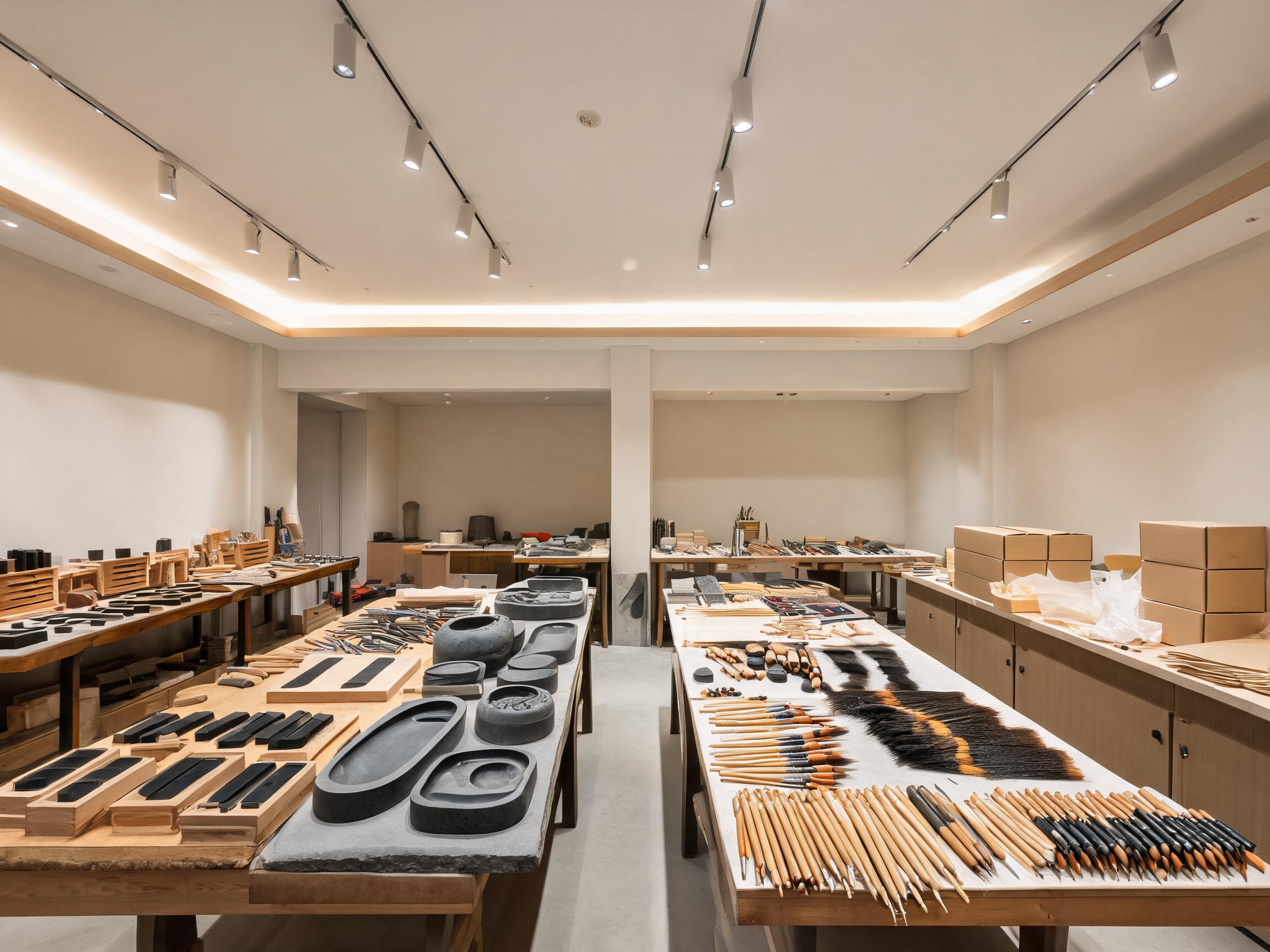
The museum-style craft room. "Our production line is organized as an integrated chain — from raw soot collection to export packing — in a workshop designed to preserve the traditional process while applying modern QC. Visitors see the full journey: soot, binder, pounding, pressing, drying, decoration. What you receive is the end of that chain, with batch-level photo reports available on request."
These narratives work because they are factual, specific, and tied to the visible qualities of the product — the gold pattern, the weight, the grind behavior. Use them as-is or adapt them to your market.
4. The Factory's Real Hui Ink Product Line to Stock
Here is the actual product range available for stocking, with specifications and MOQs.
| Product | Weight range | MOQ | Best for |
|---|---|---|---|
| Premium Pine Soot Hui Ink Stick | 50–200 g | 50 pcs | Calligraphy, traditional painting, premium gift sets |
| Oil Soot Hui Ink Stick Classic | 30–150 g | 50 pcs | Fine-line work, detailed brush control, collectors |
| Colored Hui Ink Stick Set | Set (multiple sticks) | 50 pcs | Art supply retail, gift programs, education |
| Commemorative Gold-Edge Hui Ink Stick | 100–300 g | 30 pcs | Corporate gifts, cultural exchange, special editions |
| Student Practice Hui Ink Stick | Standard practice size | 50 pcs | Schools, beginner calligraphy classes, volume programs |
The range covers the full market: entry-level practice sticks for students, classic pine and oil soot sticks for serious artists, colored sets for retail, and large commemorative sticks for corporate gifting. The MOQs are low enough for a first trial order — 30 to 50 pieces per product — so you can test the market without committing to container volumes.
5. OEM Customization Flow for Hui Ink
If you want your own brand on the stick, the customization process is straightforward. Here is the flow:
Step 1 — Custom patterns. Provide your artwork or select from existing mold patterns. The pattern is carved into the mold, which then presses the design into the ink stick during production.
Step 2 — Weights and specifications. Adjust the weight within the ranges listed above. Heavier sticks (100–300 g) suit commemorative programs; lighter sticks (30–50 g) suit retail and student markets.
Step 3 — Packaging. Choose your packaging format — individual boxes, gift sets, or bulk cartons. Private-label support is available: your brand name, logo, and product information printed on the packaging.
Step 4 — Sample approval. Before mass production, you receive a physical sample along with photos and a spec sheet. This is your approval gate — confirm the pattern, weight, color, and packaging before we proceed.
Step 5 — Export documentation. Standard export paperwork is provided with each shipment. Specific documentation requirements can be discussed per destination market.
FAQ: Common Questions from Overseas Buyers
Q: What is the difference between pine soot and oil soot Hui Mo? A: Pine soot produces a deep, matte black with a cool tone — ideal for calligraphy and layered washes. Oil soot gives a richer, warmer black with higher gloss — better for fine-line work and detailed brush control.
Q: What is the minimum order for a first trial? A: MOQs are 50 pieces for most products and 30 pieces for the commemorative gold-edge stick. This allows a low-risk first order to test quality and market response.
Q: Can I get a sample before ordering? A: Yes. The OEM flow includes a sample approval step with photos and spec sheets before mass production.
Q: Do you support private label? A: Yes. Custom patterns, packaging, and private-label support are all available under the OEM customization flow.
Q: How do I verify batch quality? A: Demand batch-level photo reports and raw material batch records. Confirm inline QC checkpoints at kneading, pressing, and drying stages.
Next Steps for Sourcing Hui Mo
When you source Huizhou ink sticks, you are buying a regional craft standard — not just a product. The benchmark is defined by pine soot and oil soot bases, natural binders, the ancient-method process (soot collection, binder kneading, repeated pounding, mold pressing, shade drying, gold-filled decoration), and modern QC applied to each stage.
For dealers and wholesalers, the practical checklist is short: verify the soot base, confirm the pounding discipline, demand batch-level documentation, and start with a low-MOQ trial order across the product range. The factory's line — from student practice sticks to commemorative gold-edge sticks — covers the full market spectrum.
To discuss your market, request samples, or start an OEM program, contact us with your target product, weight range, and packaging requirements. We will respond with the relevant specifications and a sample plan.