
A practical guide for B2B distributors on calligraphy ink shelf life, covering liquid ink vs. ink sticks, storage principles, and seasonal stock rotation for markets in SE Asia, the Middle East, and beyond.
Distributor Guide
If you stock calligraphy ink for resale, the question “how long does calligraphy ink last” is not theoretical. It determines your write-off risk, your packing strategy, and whether your customers get a consistent product across seasons. The answer depends on the form of ink you carry, how it is stored, and how quickly your stock rotates. This guide covers the practical shelf life and storage principles for liquid ink and ink sticks, with an eye on the conditions distributors face in Southeast Asia, the Middle East, Africa, and East Asian markets.
In this guide
Liquid Ink: Shelf Life and Storage
Liquid ink is a suspension of soot particles in water, bound with glue. It is the most convenient format for daily practice and bulk use, but it is also the most sensitive to storage conditions. The primary enemies of liquid ink are evaporation, contamination, and temperature extremes.
For distributors, the practical question is not just how long the ink lasts in sealed containers, but how long it remains reliable after opening. Unopened, properly sealed bottles of quality liquid ink hold their properties well. Once opened, the ink begins to slowly change as water evaporates and airborne dust or bacteria can enter. The shelf life of an opened bottle is considerably shorter than a sealed one.
Gu Mo Craft Technology produces liquid ink under strict control, using traditional soot-making methods (古法炼烟) and a glue-mixing process (和胶捶打). The result is a stable product designed for consistent tone. For example, the Concentrated Matte Black Liquid Ink is available in 250ml and 500ml bottles, with a minimum order quantity of 100 bottles. This format is acid-free, lightfast (grade 5), and tone-matched per batch. These characteristics matter because they mean the ink is less prone to fading and color shift, but they do not make it immune to poor storage.
Key takeaway: Unopened liquid ink in sealed containers has the longest shelf life. Once opened, expect a shorter window of optimal quality. Always store bottles upright, sealed, and away from direct sunlight.
Signs Your Liquid Ink Has Aged
- Thickening: The ink becomes syrupy and does not flow evenly from the brush. This is a sign of evaporation.
- Odor change: A sour or putrid smell indicates bacterial growth. Quality ink has a distinct, sooty smell, not a foul one.
- Sedimentation: While some settling is normal, excessive hard sediment that does not disperse with gentle shaking is a problem.
- Loss of gloss: The ink dries with a dull, uneven finish rather than a rich, matte or glossy tone, depending on the product.
Ink Sticks: A Different Shelf-Life Profile
Ink sticks (墨锭) are made by grinding soot, mixing it with glue, and then pressing and air-drying the mixture (压模阴干). Because they are dry, they have a fundamentally different shelf life than liquid ink. A well-made ink stick, stored correctly, can last for years, even decades. The challenge for distributors is not the ink going bad, but the stick becoming brittle, cracking, or absorbing moisture.
For markets with strong calligraphy traditions—Japan, Korea, and the Chinese diaspora—ink sticks are often preferred for their subtle tonal gradations. The Premium Pine Soot Hui Ink Stick and the Oil Soot Hui Ink Stick (Classic) are examples of traditional formats. Gu Mo also offers a Student Practice Hui Ink Stick in weights from 20g to 50g per stick, with a minimum order of 200 pieces, which is a practical entry point for educational and practice markets.
Ink sticks should never be stored in a way that allows them to get damp. Humidity causes the glue to soften, leading to warping, mold, or the stick sticking to its packaging. Conversely, extremely dry conditions can cause the stick to crack. For a distributor, the goal is a stable, moderate environment.
Core Storage Principles for Distributors
Instead of relying on a single shelf-life number, distributors should focus on a set of storage principles that protect the ink’s quality. These principles apply across all markets, but the level of attention varies with climate.
| Principle | Why It Matters | Application |
|---|---|---|
| Sealed containers | Prevents evaporation and contamination of liquid ink; protects ink sticks from moisture. | Keep liquid ink bottles tightly capped. Store ink sticks in their original wrapping or a sealed box. |
| Avoid direct sun | UV light degrades pigments and can cause glue to break down. | Store in a dark warehouse or in opaque secondary packaging. Do not display stock in direct sunlight. |
| Stable temperature | Extreme heat accelerates evaporation and chemical breakdown. Freezing can cause separation. | Aim for a cool, consistent room temperature. Avoid storing near heat sources or in uninsulated shipping containers. |
| Keep ink sticks dry | Moisture is the primary cause of ink stick damage. | Store off the floor, away from walls, and use desiccants in high-humidity climates. |
| Rotate stock | Ensures older stock is sold first, minimizing the chance of aged product reaching the customer. | Implement a first-in, first-out (FIFO) inventory system. Check batch dates on arrival. |
Stock Rotation Across Seasons and Markets
Your storage strategy should adapt to your market’s climate and your sales cycle.
Southeast Asia and Africa: High Humidity
These markets require the most vigilance. High humidity is the biggest threat to ink sticks, and warm temperatures can accelerate evaporation in liquid ink. For liquid ink, ensure caps are sealed after every use. For ink sticks, consider ordering products in smaller, more frequent batches to reduce the time they spend in your warehouse. If you repackage for local distribution, use sealed plastic or foil pouches with a desiccant pack.
Middle East: Heat and Dry Air
The primary risk here is heat and extreme dryness. Liquid ink can thicken faster as water evaporates. Store in the coolest part of your warehouse, away from exterior walls that heat up during the day. For ink sticks, the dry air is less of a problem, but rapid temperature swings can cause cracking. Allow stock to acclimate slowly if it arrives hot from shipping.
Japan, Korea, and the Chinese Diaspora: Established Markets
Buyers in these markets are often the most discerning. They expect consistent quality and precise tonal characteristics. For these customers, batch consistency is critical. The Bulk Calligraphy Liquid Ink option is designed for high-volume users who need a dependable, uniform product. When serving these markets, pay extra attention to batch numbers and provide clear documentation to your buyers. They will notice and appreciate the care.
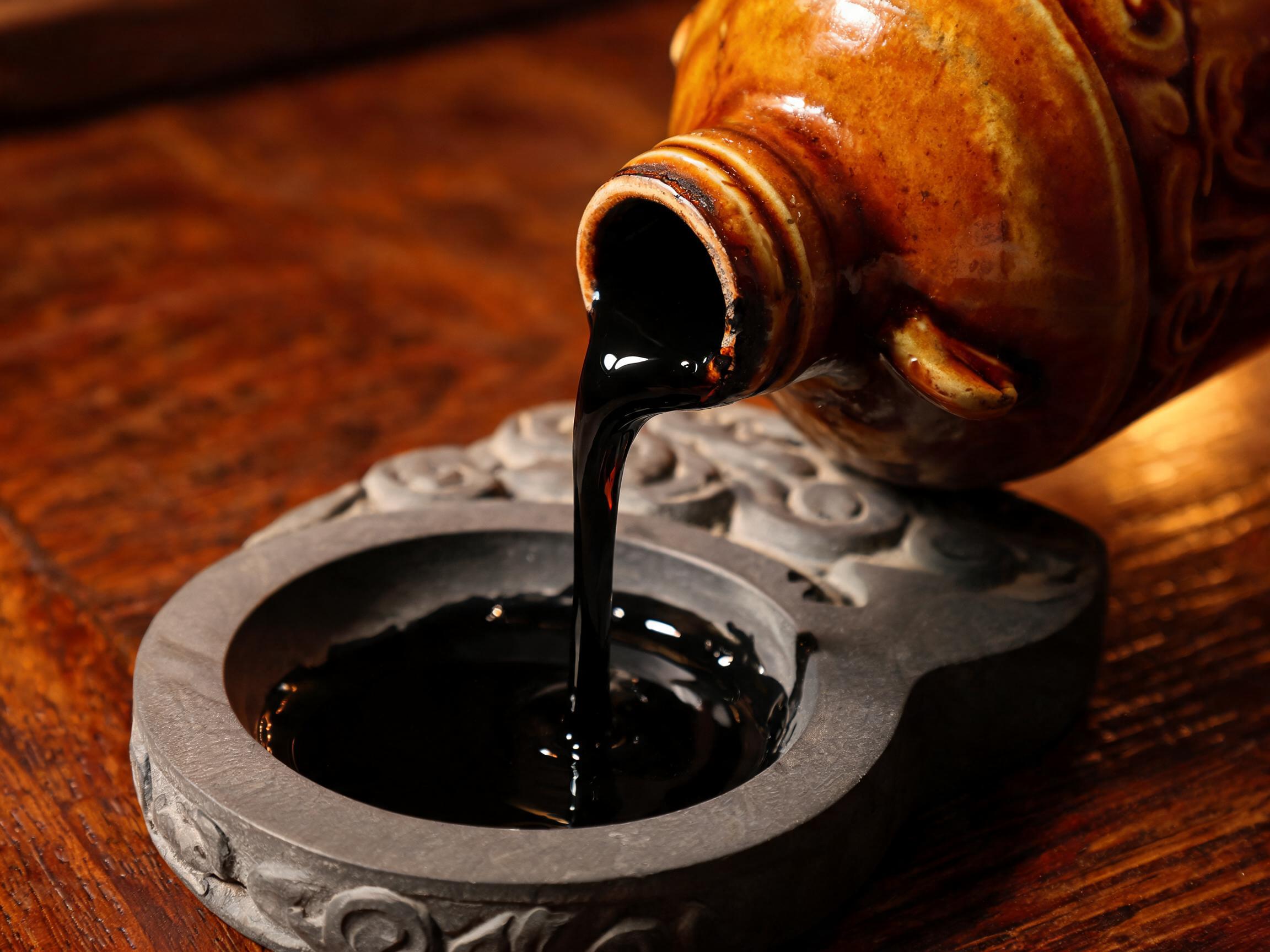
Liquid ink flows evenly when properly stored and handled.
FAQ
How long does calligraphy ink last in a sealed bottle?
Unopened liquid ink stored in a sealed container, away from direct sunlight and at a stable temperature, will maintain its quality for a long period. The exact duration depends on the specific formula and storage conditions. To be safe, check the batch date and follow the storage principles above. Always inspect a sample before shipping large orders.
Can I revive thickened liquid ink?
In some cases, adding a small amount of distilled water can restore the consistency of ink that has thickened due to evaporation. However, this is a temporary fix and may alter the ink’s performance. It is better to prevent thickening through proper sealing. If the ink has a foul odor, it should be discarded, as it is contaminated.
Do ink sticks expire?
Ink sticks do not expire in the way liquid ink does. They are a dry product and can last for many years if kept dry and away from extreme temperature swings. The main risks are cracking from dryness and mold from humidity. A well-maintained ink stick can be a long-term inventory item.
What is the best way to store ink sticks for wholesale?
Keep them in their original packaging, in a dry, cool, and dark environment. Avoid stacking heavy items on top of them. In humid climates, consider adding desiccant packs to your storage bins. Use a FIFO system to ensure older sticks are sold first.
How should I handle stock that has been in transit for weeks?
On arrival, inspect all stock immediately. Check for leaks in liquid ink bottles and for any signs of moisture damage on ink stick packaging. Allow the stock to acclimate to your warehouse temperature before opening the outer cartons. This prevents condensation from forming on the product inside.
For your next order: When you are ready to replenish, consider the Premium Bottled Calligraphy Liquid Ink for retail-ready presentation, or the concentrated format for customers who prefer to dilute their own ink. Our team can discuss batch details and packaging options for your market.