
A channel-by-channel decision framework for overseas buyers comparing pen-format Chinese writing tools with traditional hair brushes, plus verification points before bulk orders.
When a school district in Kuala Lumpur, a cultural gift buyer in Dubai, or a retailer in Toronto searches for a "chinese writing brush pen," they are usually not looking for a calligraphy master's tool. They are trying to solve a practical problem: how to put a Chinese writing experience into the hands of beginners, students, or gift recipients without the mess, cost, and skill barrier of traditional ink and hair brushes.
Pen-format brushes — felt-tip or bristle-tip tools that mimic brush strokes — solve part of that problem. But they are not a replacement for traditional hair brushes in every channel. This article gives you a decision framework by channel, so you can match the format to your program and verify quality before placing a bulk order.
Why buyers search for a "chinese writing brush pen"
The term appears when a buyer needs a writing tool that feels like a brush but behaves more like a pen:
- School programs introducing Chinese characters, where ink pots and loose hair brushes create classroom management problems.
- Gift programs — corporate, cultural, or tourism — that want a Chinese writing element without requiring the recipient to prepare ink.
- Retail shelves, where a pen-format brush can sit alongside stationery and sell without staff explanation.
- Lettering and journaling buyers who want brush-like strokes for decorative writing.
Each scenario weighs mess, durability, cultural authenticity, and unit cost differently. The key is to match the format to the program, not to force one format across all channels.
What a pen format does well
Pen-format brushes generally fall into two types: felt-tip style (a synthetic tip that flexes to create stroke variation) and bristle-tip style (a small bundle of hair or synthetic filament in a pen body). Without specific specs — those vary by manufacturer — here is what these formats do well:
- Beginner practice: no ink stone, no water bowl, no loose hair to manage. A student can uncap and write, which cuts setup and cleanup time.
- Low-mess classroom use: cartridge or internal ink systems make spills less likely than with liquid ink and traditional brushes.
- Lettering crossover: the controlled tip suits modern brush-lettering styles that are not strictly Chinese calligraphy.
- Retail-friendly packaging: pen formats can be blister-packed or boxed like stationery, with instructions printed on the pack.
For school programs and casual gift sets, a pen format can be the difference between a writing activity that happens and one that gets skipped because the setup is too involved.
What a traditional hair brush does better
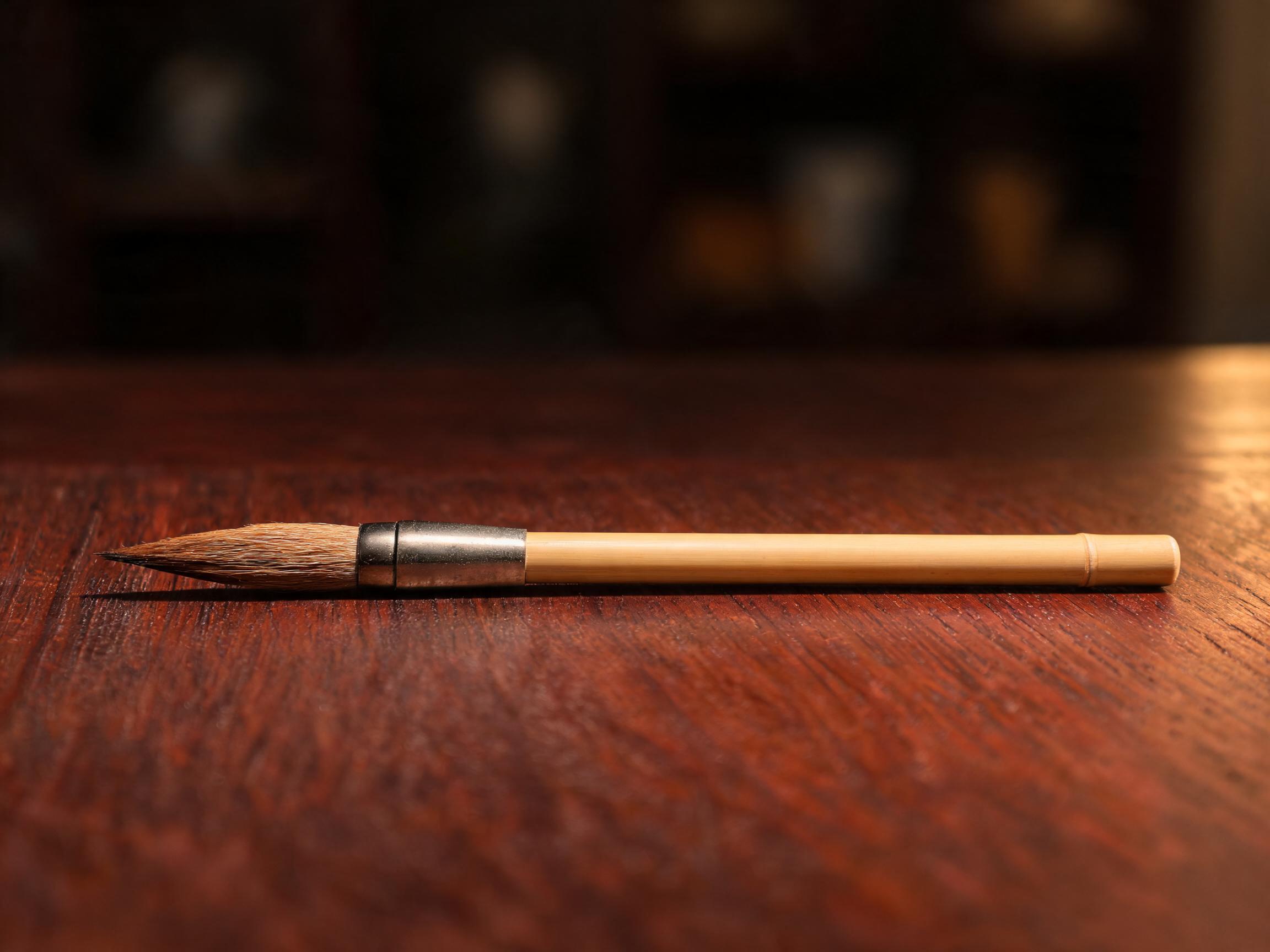
A traditional Chinese writing brush — animal hair (wolf, goat, or blended) bound into a handle — offers stroke expression that pen formats cannot fully replicate. The hair bundle responds to pressure, speed, and ink load in ways a felt tip cannot. For buyers whose program involves actual calligraphy instruction, cultural demonstration, or collector-grade gifts, the traditional brush is the appropriate tool.
Key advantages:
- Stroke expression: the hair tip splits and reforms, allowing tapered endings, dry-brush texture, and pressure-sensitive line width — core to Chinese calligraphy technique.
- Ink-tone control: with liquid ink or a stick ground on a stone, the writer controls density and moisture; pen formats deliver a fixed flow.
- Cultural authenticity: recipients tend to judge it by concrete elements — hair type, handle material and finish, gift-box construction, and instruction materials — where a traditional brush carries the weight of the craft.
- Durability for studio use: a well-bound brush can be re-shaped after each session, suiting ongoing classes.
For professional use, a resilient brush such as the Premium Wolf Hair Calligraphy Brush — with resilience-graded hair and a hand-bound head — supports the control serious practice requires. Beginners who need a softer touch can use the Goat Hair Soft Tip Brush, and schools introducing traditional brushes at a manageable cost per student can start with the Student Practice Brush Set.
Decision table by channel
Use this table to match format to channel. If your supplier offers only one format, it still shows what to request.
| Channel | Primary need | Recommended format | Why |
|---|---|---|---|
| School programs (K-12, beginner) | Low mess, easy setup, durability | Pen format or student practice brush set | Pen formats reduce classroom management; brush sets work where traditional technique is taught. |
| Cultural gift programs | Presentation, authenticity, perceived value | Traditional hair brush in a gift box | The brush itself is the cultural object; pen formats can feel utilitarian. |
| Retail stationery shelves | Sell-through, packaging, price point | Pen format with clear instructions | Fits existing fixtures and requires less staff knowledge. |
| Calligraphy studios and advanced classes | Stroke control, ink-tone work | Traditional hair brush (wolf, goat, or blend) | Required for ink-tone variation and dry-brush texture; basic stroke practice works with either format. |
| Temple and cultural center programs | Authentic experience | Traditional brush and ink set | Participants expect the real tools; pen formats may be seen as a shortcut. |
| Diaspora community events | Hands-on family activity | Pen for children, traditional for adults | A mixed assortment serves both age groups. |
What to verify before bulk orders
Quality checks are similar for both formats; what you inspect differs. For traditional brushes, focus on hair and binding. For pen formats, focus on tip consistency and ink delivery — ask your supplier for their verification method.
For traditional hair brushes
- Tip resilience: ask how hair resilience is graded and confirm the standard used; a professional brush should hold its shape after wetting and flexing.
- Hair binding: the bundle should be tightly bound with no shedding at first use; ask whether heads are hand-tied or machine-pressed.
- Handle finish: smooth, balanced, no splinters — appearance matters as much as function in gift sets.
- Sample approval: request samples from the production batch, test with ink and water, let them dry, and check for shedding and tip deformation.
For pen formats
- Tip consistency: the tip should flex evenly and return to shape; inconsistent tips cause uneven strokes across a classroom set.
- Ink delivery: confirm consistent flow from first to last use, and ask about shelf life and storage conditions.
- Cap and body fit: the cap must seal firmly to prevent drying; test units from the sample batch.
- Instructions and packaging: clear instructions in the target language reduce returns and support sell-through.
When requesting pen-format quotes, ask suppliers to state the tip material, the ink system (cartridge or internal), whether tips are replaceable, the expected writing life per unit, and packing details such as units per carton. These fields let you compare quotes on the same basis.
For both formats, confirm your supplier can provide a pre-production sample matching the bulk order specification. A display sample pulled from a different batch is not a reliable approval basis.
How to build a two-format assortment
Many buyers find that a single format does not serve all their channels. A two-format assortment — pen formats for entry-level and retail, traditional brushes for gift and studio — covers more ground without doubling your supplier management.
- Define the program first. Teaching technique, cultural gifting, or a stationery item — the answer determines the primary format.
- Use pen formats as the entry point for schools and retail, where no ink setup lowers the barrier for beginners.
- Add traditional brushes for depth in gift sets, advanced classes, and cultural programs; even one brush in a gift box changes the perceived value.
- Source from one manufacturer where possible. Guangdong Gumo Crafts Technology Co., Ltd., founded in 2011, integrates design, manufacturing, QC, and export, with a range covering Huizhou ink sticks, liquid inks, brushes, Xuan paper, inkstones, seal carving, and scholar desk sets. OEM customization and bulk export services are available.
- Test with a pilot order. Run one classroom, one gift program, or one retail shelf before scaling, and collect feedback on setup time, mess, and recipient response.
Next step: request samples and OEM options
If you are deciding between pen formats and traditional brushes, the fastest way to a decision is to handle both. Guangdong Gumo Crafts Technology Co., Ltd. manufactures traditional Chinese brushes and ink products and offers OEM customization for bulk export. Request samples of the Premium Wolf Hair Calligraphy Brush, the Goat Hair Soft Tip Brush, and the Student Practice Brush Set, and ask about OEM options for your packaging and program requirements.
Frequently asked questions
Can a pen-format brush be used for Chinese calligraphy practice?
Yes, for basic stroke practice and character introduction. Ink-tone control and dry-brush texture require a traditional hair brush.
Are traditional brushes suitable for school programs?
Yes, especially with a student practice set. Many schools use pen formats for daily practice and traditional brushes for special lessons or demonstrations.
What should I check in a sample before ordering?
For traditional brushes, check hair binding, shedding, and tip resilience after wetting. For pen formats, check tip consistency and ink flow. Always sample from the production batch.
Can I order a mixed assortment of pen formats and traditional brushes?
Yes. Guangdong Gumo Crafts Technology Co., Ltd. offers both categories and can coordinate packaging and shipment; confirm the MOQ for each format and whether mixed containers are possible.