
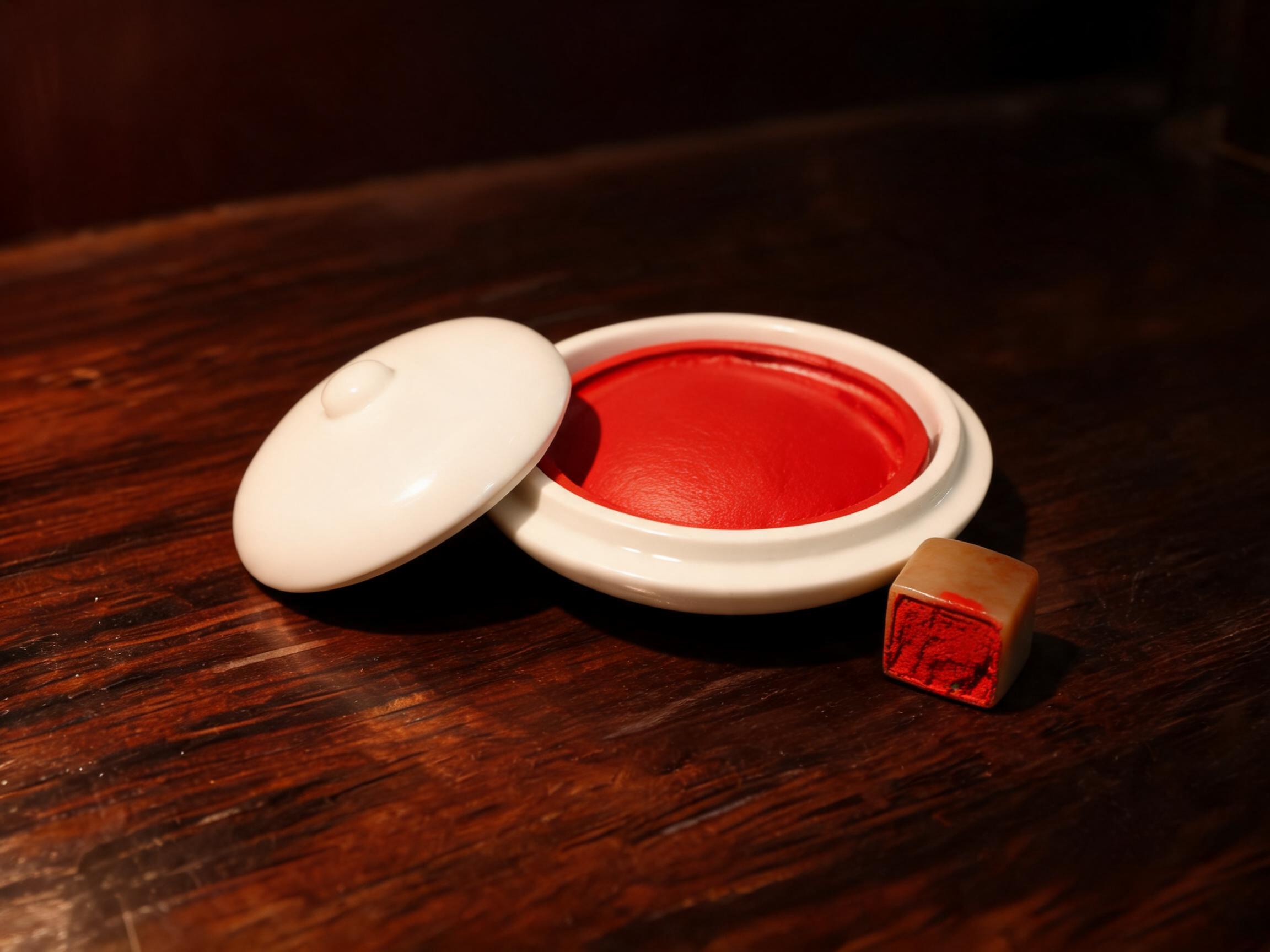
A practical assortment-building guide for gift-program buyers, corporate gifting coordinators, temple and ceremonial supply buyers, and seal retailers. It covers what a seal ink paste SKU line should contain, how paste pairs inside seal gift sets, how custom-carved seal programs combine paste with engraved stones, and how packaging choices differ across Southeast Asian, Japan/Korea, Middle East and Chinese-diaspora channels.
A seal ink paste line is rarely sold as a stand-alone item for long. Buyers in gift programs and ceremonial channels usually want paste as one component of a set — beside a stone, a knife, a custom engraving, or a presentation box. This guide sets out how to structure the paste assortment itself, then how to pair it into gift sets and custom-carved seal programs across the gift channels you are most likely to serve.
Key takeaways
- A viable paste line usually starts with one premium vermilion SKU and grows by pairing, not by adding look-alike variants.
- Inside a gift set, paste is the component that determines whether the seal can be used straight out of the box — treat it as a functional part, not a filler.
- Custom-carved seal programs work best when paste supply is planned alongside engraving and proof approval, so the set ships complete.
- Packaging and presentation requirements differ by channel; the paste container and the outer box should be chosen together.
In this article
What a paste SKU line covers
Resist the urge to build a wide paste range before you know how each SKU will be used. In most gift and ceremonial catalogs, the paste line resolves into three roles: the stand-alone refill or replacement item, the component inside a set, and the upgrade item offered to customers who want a better paste than the one their seal arrived with.
That structure keeps the catalog short. A single well-chosen vermilion paste can occupy all three roles at different price points and in different packages, which is easier to forecast and easier to reorder than a spread of near-identical colors.
The anchor SKU
The anchor should be a paste you can describe in concrete terms. Our Vermilion Ink Paste (GMO-SC-002) is a premium vermilion ink paste made with refined cinnabar pigment and a plant oil binder, designed for consistent color and long-lasting stability. That design intent is exactly what a gift buyer needs to be able to explain to a corporate client or a temple procurement officer: how the paste is formulated to hold its color over time under normal storage. Treat it as a design attribute to verify, not a guarantee to quote — ask the supplier for storage guidance and any shelf-life information for the specific SKU before you make time-based claims in your own sales copy.
Roles a paste SKU can play
| Role in the line | Who buys it | How it is presented |
|---|---|---|
| Replacement / refill | Seal retailers, repeat customers, temple supply buyers restocking | Sold on its own or in a small multi-unit pack |
| Set component | Gift-program buyers, corporate gifting coordinators | Included inside a boxed seal set |
| Upgrade item | Buyers who already have a seal and want a better paste | Offered as an add-on beside a standard set |
What to decide before you add a second SKU
- Container format. The paste container inside a set has to survive shipping and stay sealed until use. Decide the container before you design the box cavity, not after.
- Language on the label. If the same paste ships into several channels, the label language is a sourcing decision, not a design afterthought.
- Whether the paste is sold openly or bundled only. A paste sold only inside sets cannot be reordered by a customer who has used theirs up — decide early whether you want that refill revenue.
Container dimensions, fill weights, shelf life and MOQ should be confirmed with the supplier for the specific SKU you stock. They are not interchangeable between paste products.
Paste pairing inside seal gift sets
Inside a gift set, the paste is what turns a decorative stone into a usable seal. A buyer who opens a box and finds a carved stone but no paste has a display object, not a gift. That is the argument for treating paste as a functional component in the bill of materials rather than as a filler item added at packing.
Pairing rules that hold across channels
- One paste per seal, at minimum. A set with a seal and no paste reads as incomplete to almost any recipient.
- Paste and ink pad are different components. A pad gives a quick, even impression; paste is the traditional medium applied to the seal face. If your set includes both, say so on the box and in the product copy, because buyers will ask.
- Match the paste grade to the set tier. A premium cinnabar-based paste belongs in the tier you present as the premium gift; a standard set can use the standard paste. Mixing them blurs your price ladder.
- Keep the paste accessible. The recipient should be able to lift the paste out without unpacking the whole box.
A ready-made pairing structure
Our Seal Carving Gift Set (GMO-SC-005) already follows this logic: the set contains a stone, ink paste, knife and ink pad in a custom presentation box, positioned for cultural gifting and corporate programs. It is a useful reference point when you are building your own combination, because it shows how the four components divide labor — the stone is the object, the knife is the craft gesture, the paste is the traditional medium, and the pad is the convenience layer.
If you are assembling your own set rather than buying one complete, use the same four-part structure and decide which parts you include at each price tier. A two-part set (stone plus paste) is workable for high-volume corporate gifting; a four-part set suits ceremonial and premium retail channels.
Custom-carved seal programs that combine paste with engraved stones
Custom-carved seal programs are where paste planning gets tested, because the seal does not exist until the engraving is approved. If paste arrives on a different schedule from the stones, sets ship incomplete or sit in the warehouse waiting.
Our Custom Carved Name Seal (GMO-SC-003) supports multi-language engraving with proof sample approval, which is the framework corporate and institutional gifting buyers need. The paste side of the program should be planned against the same approval timeline.
Sequence for a combined program
- Define the set composition first. Decide whether paste is included in every unit, in premium units only, or offered as an add-on. This determines your paste quantity before any engraving starts.
- Confirm engraving language and layout. Multi-language engraving needs proof approval before production; the proof is also the point at which you confirm the seal's intended use, which in turn tells you whether the recipient will need paste at all.
- Align paste supply with stone production. Because paste is the component most likely to be sourced separately, set its delivery date against the engraving completion date, not against the order date.
- Approve the packed sample. Review the complete set — stone, paste, knife, pad, box — as a single unit, because that is what the recipient receives.
For institutional buyers, the proof sample is also the moment to confirm that the engraving is legible and that the paste produces a clean impression on the materials the seal will be used with. A seal that carves well but stamps weakly on the recipient's paper stock is a support problem later.
Packaging and presentation choices by channel
Presentation expectations vary enough between channels that a single box design usually underperforms. The paste container and the outer box should be specified together, because the container dictates the cavity, and the cavity dictates the box size.
| Channel | Presentation emphasis | What to check on the paste component |
|---|---|---|
| Southeast Asia — corporate and cultural gift programs | Compact, well-finished boxes that travel well and can carry a company mark | Container seal integrity through humid transit; label language |
| Japan / Korea | Restrained, precise presentation; neat internal layout matters more than ornament | Clean container finish and tidy cavity fit; consistent paste color across units |
| Middle East — ceremonial and institutional gifting | Formal, generous presentation suitable for official presentation | Paste packed so it cannot shift or leak in transit; clear labeling on the container |
| Chinese-diaspora markets | Traditional visual language; recipients recognize the components and expect them to be complete | Correct traditional pairing of paste with stone; pad and paste clearly distinguished |
Channel expectations above describe presentation emphasis only. Specific packaging construction, print and test requirements should be confirmed against the buyer's own brief.
Practical packaging decisions
- Make the paste visible but protected. A recipient should see that paste is included when the box opens, without the container being loose in the cavity.
- Print the component list on the box. Naming the paste, stone, knife and pad removes the most common recipient question.
- Keep one box design per tier, not per channel. If you serve several channels, a neutral outer box with channel-specific inserts and labels is usually easier to manage than separate tooling for each market.
- Plan the refill path. If you want repeat business, the paste should be orderable on its own by whoever received the set.
Buyer questions
- Should the paste be sold separately or only inside sets?
- Both roles can work, but they serve different buyers. Sets serve gift programs; a separately orderable paste serves recipients who have used theirs up and retailers who want to stock a replacement item. Decide before you set your packaging.
- Can one paste SKU serve every tier of a gift program?
- It can, but then your tiers are distinguished only by the stone and the box. If you want a visible quality difference between tiers, a premium paste in the top tier is one of the clearest signals.
- What is the difference between the paste and the ink pad in a gift set?
- They are separate components. Paste is applied to the seal face; the pad provides a prepared surface for a quick impression. Sets can include both, and buyers should state which one they intend the recipient to use first.
- How do I coordinate paste supply with custom engraving?
- Set the paste delivery date against engraving completion, and approve a fully packed sample before bulk packing. Proof sample approval for the engraving and physical approval of the packed set are two separate checkpoints.
- What paste information should I confirm with the supplier?
- Container format and dimensions, label language, packing configuration and the delivery schedule for the specific SKU. These details differ between paste products and should not be assumed from one to another.
Building a paste program for your channel
If you are assembling a seal ink paste line for gift or ceremonial programs, the fastest way to start is with a clear set of three inputs: the channel or channels you serve, the set composition you have in mind, and the tier structure you want to present. With those, the paste SKU, the pairing logic and the packaging brief follow in sequence.
Share your program requirements and we can work through the vermilion paste, the complete gift set and the custom-carved seal options against your brief.