
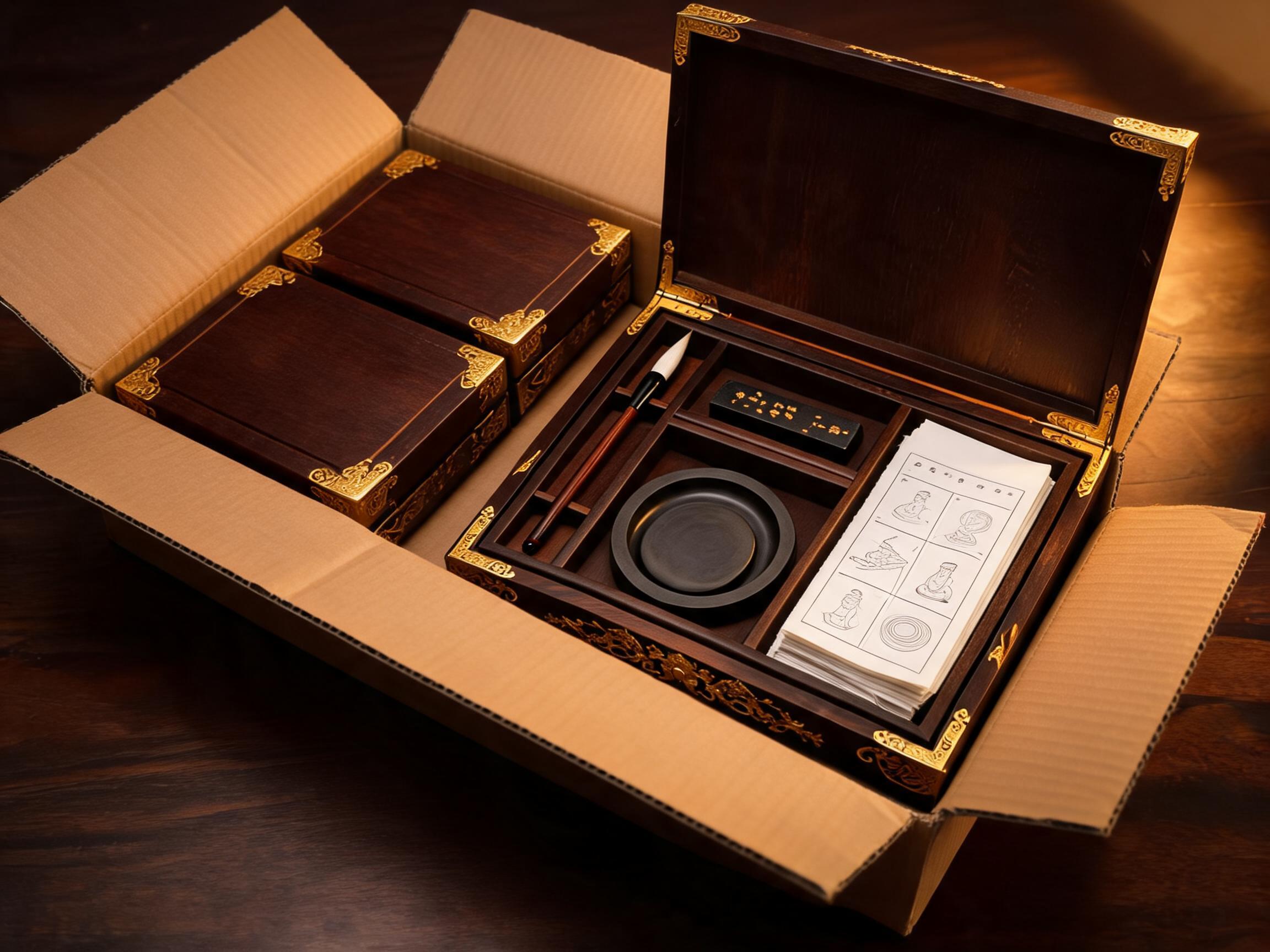
A pairing matrix for importers building Chinese ink and brush starter kits: which ink format matches which brush tip behavior, how many brushes and ink units belong in one set, and how to verify a pairing on samples before bulk orders.
Starter Kit Planning
Build the kit around brush behavior first, then choose the ink that supports it. A stiff wolf hair tip needs an ink that holds density without pooling; a soft goat hair tip needs one that feeds evenly through a long belly; a 70/30 mixed hair brush sits between the two. When a supplier ships a set whose ink and brush were never tested together, buyers see skipping, feathering or clogged tips within the first week. This guide covers which format to pair with which tip, how many units belong in one kit, and how to check a pairing on samples.
Which ink format suits which brush tip
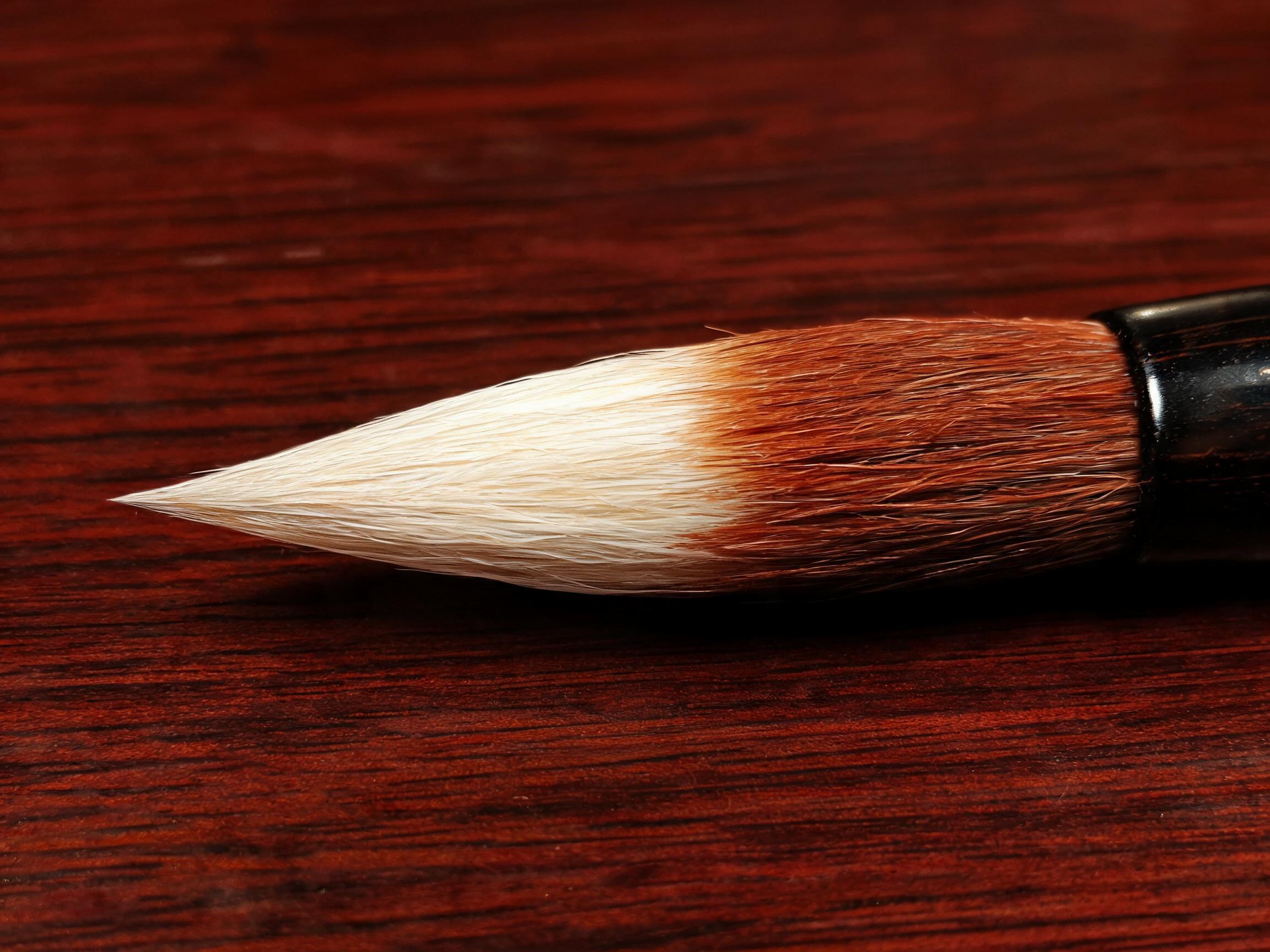
Four behaviors decide the pairing: how fast the tip takes ink, whether a stroke stays consistent before re-dipping, whether the tip keeps its point, and what happens if the student pauses mid-stroke.
| Ink format | Tip behavior it suits | Kit placement | Watch for |
|---|---|---|---|
| Oil soot Hui ink stick (GMO-HIS-002) | Stiff wolf hair and premium wolf hair, both holding a firm point | Gift and collector kits where grinding is part of the experience | A stone must ship with it |
| Pine soot Hui ink stick | 70/30 mixed hair and stiff wolf hair for regular script | Mid-tier school kits that teach grinding | Stick-to-stick consistency needs a sample check |
| Bottled liquid ink (GMO-LIQ-001) | Soft goat hair and mixed hair, steady flow through a long belly | Classroom kits and high-turnover gift programs | Bottle volume against class consumption |
| Concentrated black liquid ink | 70/30 mixed hair and wolf hair, diluted to a chosen density | Adult hobbyist and temple supply | Dilution instructions must be printed |
Hard tips push ink; soft tips carry it. An oil soot stick ground to a dense liquid gives a stiff wolf hair brush something to push against, which is why studios pair them. A soft goat hair soft tip brush with tested ink absorption draws from a reservoir, so free-flowing bottled ink keeps the stroke continuous. Thick ground ink on a soft tip overloads the belly; thin liquid on a stiff tip breaks the line. The 70/30 mixed hair combination brush absorbs enough for liquid ink and stiffens enough for a denser grind, which makes it the safest single brush in a kit that travels to buyers with different habits.
How many brushes and ink units belong in one kit
A starter kit is a short sequence of lessons, not a collection. Three brushes cover the normal teaching path: large characters, small characters, and the move between them.
- Student and school kits: three brushes — a soft tip for introductory strokes, a 70/30 mixed hair workhorse, and a stiff wolf hair tip for regular and clerical script — with one bottle of liquid ink per student.
- Gift kits: two brushes and one ink format. One oil soot stick with a stiff wolf hair brush plus one mixed hair brush reads as complete without inflating component cost.
- Temple and ceremonial supply: one or two brushes with bottled ink or a stick, depending on whether the setting allows grinding.
Layer the box so the pairing logic is visible. The calligraphy starter kit set (GMO-SDS-002) is graded by component and ships with an illustrated usage guide, which answers the question every importer eventually gets from a retailer: which brush goes with which ink? Put the guide on top, brushes in the middle, ink at the base.
- Does the channel permit grinding? If not, no stick goes in the box.
- Is the brush a single tip or a mixed hair? That decides which ink you can pair without a written instruction card.
Sample pairing checklist before bulk orders
Ask for a sample of the exact ink-and-brush combination, not separate samples of each part, then run this sequence.
Checklist
- Load and time it. Dip for the interval your guide will print; if the tip is not saturated, either the guide or the ink viscosity is wrong for this brush.
- Draw a full stroke without re-dipping. Note where the line thins. Fading before the printed length will disappoint a classroom.
- Pause mid-stroke. The line should resume, not leave a dark blot; blotting points to ink too dense for the tip.
- Check the point after use. Rinse and reshape. A tip that stays splayed is a pairing or quality problem you need to see now.
- Test the stick if included. Grind for the stated time and check the liquid reaches usable density; ask for the batch consistency records kept through in-line material, pattern and grade checks.
- Compare against the spec sheet and signed sample. Confirm export packaging and shipping marks keep ink from moving onto brush handles in transit.
Request the sample in its retail packaging. A pairing that works on a desk can still fail when a bottle leaks onto handles in transit, and that is far better found at sample stage.
Matching the kit to gift, school and temple channels
Gift buyers judge the box first; school buyers judge per-student cost and how fast a class consumes ink; temple and ceremonial buyers judge whether the set can be used on demand. The pairing does not change, but the components and instructions do. For gifts, the oil soot Hui ink stick classic and its deep gloss pair with a 70/30 mixed hair brush, and a short grinding note prevents returns from buyers who did not expect to need a stone. For schools, bottled liquid ink with consistent density removes both the stone and the preparation step. Where a market prefers a stiff tip, keep the ink dense rather than switching brushes, and ask for tip length grade sheets so you can set a reorder baseline.
Frequently asked questions
Can one brush work with both a stick and a bottle?
A 70/30 mixed hair brush is the realistic single answer. A pure soft goat tip struggles with thick ground ink; a pure stiff wolf tip gives a thin line with very fluid ink. If a kit pairs one brush with two formats, say so on the card.
Should the stick and the brush be sampled together?
Together. Separate samples prove each component works, not that they work as a pair.
How many brushes does a school tender need?
Three covers the usual teaching sequence; a fourth usually raises cost without adding a lesson the syllabus needs.
Search volume for the term sits near 390 a month and tracked interest is steady, but the buyers behind those searches compare complete kits, not separate parts. If your kit cannot answer which ink goes with which brush on one page of instructions, the pairing is not finished.