
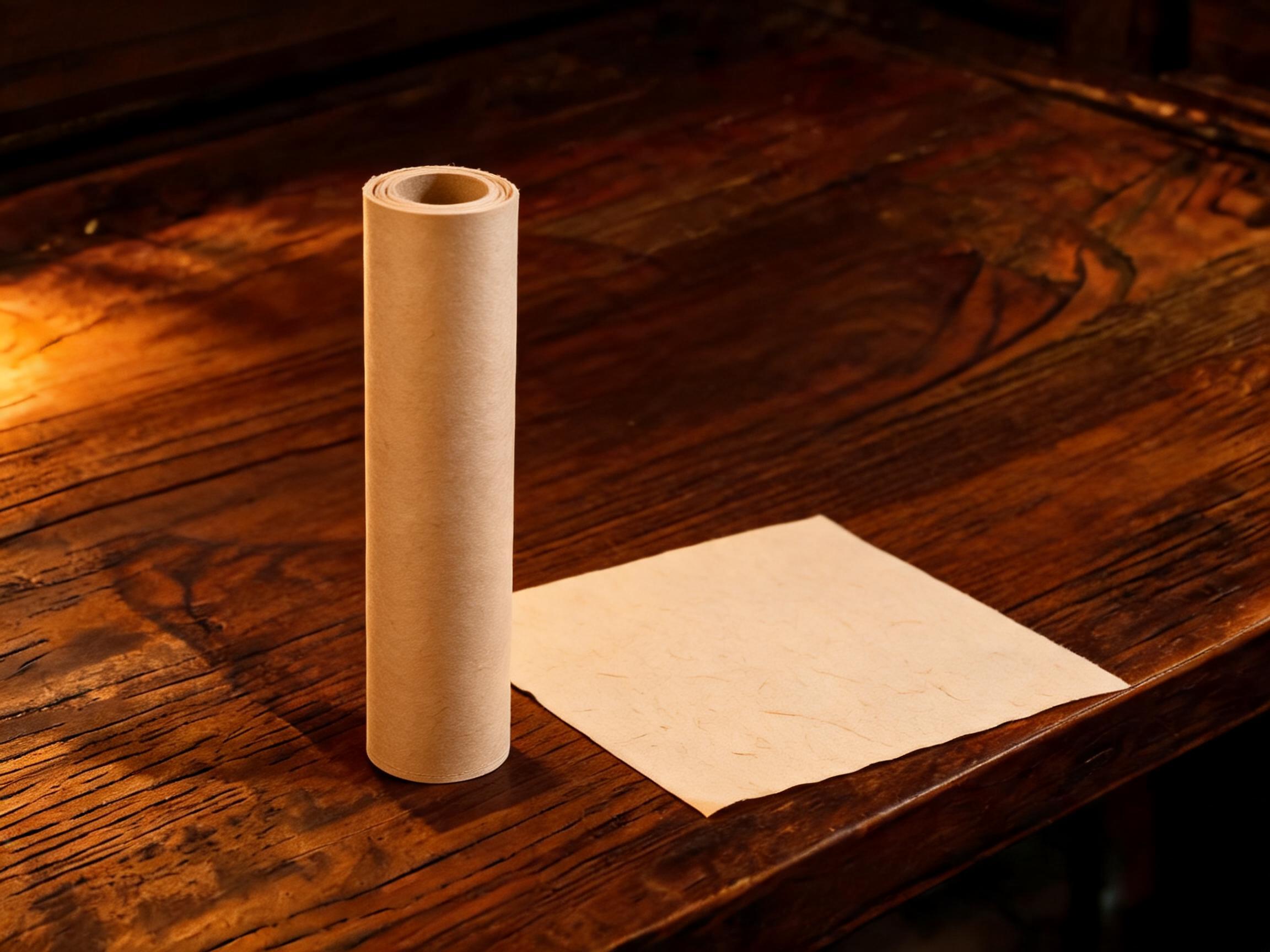
A procurement guide for B2B gift, decor and cultural-channel importers buying scroll-format Chinese calligraphy paper at wholesale. It explains where unmounted rolls and finished mounted scrolls belong in a product plan, how the standard and custom widths map to gift and retail formats, how to build a regional assortment, and the order checks that matter before you commit. Note: the current catalog supplies unmounted roll paper only; finished mounting is handled by a separate mounting workshop and is not part of the listed range.
Wholesale buying guide
Scroll-format paper is the part of a calligraphy gift program that is easiest to get wrong, because the physical format you ship decides your packaging, your price tier and who can actually sell the finished piece. This guide separates the buying decisions you can settle now from the ones that belong to a mounting workshop.
On this page
- Why scroll format, and where the mounting decision sits
- Mounting styles: handscroll, hanging scroll, and the workshop handoff
- Choosing roll sizes against real specs
- Gift-market assortment by region
- Order checks: MOQ, lead time, packaging, QC
- FAQ
Why scroll format, and where the mounting decision sits
Buyers arrive at scroll-format paper from two directions. Gift and stationery importers want a calligraphy object that reads as cultural rather than decorative — something that can be boxed, gifted at a corporate event, or sold as a premium line item alongside brushes and ink. Decor and cultural-channel importers want large-format pieces for wall display in hotels, tea rooms, cultural centres and upmarket retail. Both end up asking the same question: do I import the paper, or the finished scroll?
The honest answer depends on who in your chain does the mounting. If you have a local framer, mounting atelier or a calligrapher who already finishes work for you, then importing the raw roll is the more flexible purchase: you control the mount, the silk or paper border, the rod and the packaging, and you can match local framing taste. If your channel buys finished objects and resells them as-is — a museum shop, a corporate gift catalogue, a hotel supplier — then a finished mounted scroll is the format the buyer expects, and that step has to be sourced from a mounting workshop rather than from the roll catalog.
Because finished mounting sits outside the current product range, plan your first purchase order around the paper itself. Treat the mounted product as a second negotiation with a different supplier, a different lead time and a different quality risk. Mixing the two into one internal timeline is where importers get caught.
Mounting styles: handscroll, hanging scroll, and the workshop handoff
Two formats dominate the gift and decor market, and they consume paper very differently.
Hanging scroll
A vertical format, usually taller than it is wide, with the artwork at the centre and a mount extending above and below, finished with a rod at top and bottom. It is the format most gift buyers picture when they say “chinese calligraphy scroll”, and it is the one that most often needs a wide paper: a single vertical column of large characters, or a short poem set in a few columns, benefits from a width that lets the calligrapher work without crowding the margin.
Handscroll
A horizontal format, unrolled section by section on a table rather than hung. It suits longer texts, sequences of characters, and gift presentation where the act of unrolling is part of the experience. Handscroll work consumes length rather than width, which is where the 10 m, 20 m and 50 m roll lengths become relevant: a workshop cutting several handscroll panels from one continuous roll wants continuity across the run.
In both cases the roll supplier's job ends at flat, consistent, correctly cut paper. Beyond that, the mounting workshop handles backing, borders, rods, and the finishing that turns paper into an object. When you brief a workshop, bring the paper's actual width and the panel size you intend, because a mount is designed around a fixed paper dimension, not the other way round. Confirm with the workshop what margin their mount requires, and size your roll order to leave that margin — not to the finished scroll's outer dimensions.
Choosing roll sizes against real specs
The roll catalog gives you a defined set of options, which is useful: you can plan an assortment without waiting on custom quotations for every line.
| Parameter | Listed value | Where it fits in a gift program |
|---|---|---|
| Paper type | Continuous bark-fibre based Xuan-style paper | Suitable for calligraphy and ink work; cut to panel size by you or your workshop |
| Standard widths | 50 cm / 70 cm / 97 cm | 50 cm for small gift and study formats; 70 cm for mid-size hanging panels; 97 cm for large display pieces |
| Custom widths | 30–150 cm, subject to production line capacity | Match a specific mount or frame dimension your workshop has already specified |
| Roll lengths | 10 m / 20 m / 50 m | 10 m for sampling and small batches; 20 m and 50 m for volume cutting runs |
| MOQ | 50 rolls; mixed standard widths may be combined toward the MOQ | Build a multi-width assortment without separate minimums per width |
| Lead time | 30–45 days after sample confirmation | Plan gift-season orders backward from sample approval, not from PO date |
| Monthly capacity | 5,000+ rolls | Relevant if you are consolidating several regional SKUs into one production run |
The width decision deserves more thought than it usually gets. A 97 cm width gives a workshop room to trim a generous margin and still produce a large vertical panel, but the same roll produces fewer panels per metre than a 70 cm roll — so the cost per finished piece shifts with the format you intend, not just with the paper price. A 50 cm width is a practical default for smaller gifting: tabletop pieces, study sets, boxed gift lines and corporate items where the outer packaging size is fixed.
Custom widths between 30 cm and 150 cm exist but are subject to production line capacity. If your workshop has designed a mount around a non-standard paper dimension — say a 60 cm or 80 cm panel — raise that early in the enquiry rather than planning around it. Widths outside the three standard options add a production dependency to your timeline.
If your programme leans toward bound, archival presentation rather than loose or mounted pieces, the bound Xuan paper album is a different format worth comparing. And if you are still weighing roll against cut sheet for a non-scroll line, the professional raw Xuan paper sheet format shows what a fixed-sheet purchase looks like against the roll's flexibility.
Gift-market assortment by region
Regional differences in the gift market are mostly about presentation size, packaging habit and who does the finishing — not about the paper itself. Build width and length ratios around those, and keep the mounting decision explicit per region.
Southeast Asia
Corporate gifting and cultural retail here tend to favour compact, boxed items that travel well and fit shelf or display space. A ratio weighted toward 50 cm and 70 cm widths, in 10 m and 20 m roll lengths, keeps your cutting yield flexible across a mixed catalogue. Where local framers are available, unmounted paper plus local framing is often the cleaner route than importing a finished object.
Japan and Korea
Buyers in these markets are attentive to paper surface and consistency, and many already have established finishing and mounting partners. The roll is a good fit here: consistency across a run is what matters when a workshop cuts many panels from one continuous length. Prioritise 70 cm and 97 cm widths for hanging formats, and request edge-cut inspection records with the shipment as part of your incoming inspection paperwork.
Middle East and Chinese-community channels in the Americas
Large-format display work — hotel lobbies, cultural centres, restaurants, festive gifting — pulls toward 97 cm widths and 20 m or 50 m rolls, because the same paper often serves both oversized panels and a run of smaller gifts. Chinese-community retail in the Americas frequently has access to calligraphers and mounting workshops locally, which makes the unmounted roll the natural purchase and the mounting a local decision. Where a finished, ready-to-hang object is required, confirm the mounting workshop separately and test their sample before you commit your season's stock.
Central & Eastern Europe and Africa
These are often newer cultural-gift markets where the buyer is building a category rather than replenishing one. Start with a narrower assortment — one or two widths, shorter rolls — to test sell-through before committing to 50 m lengths. Mixed standard widths counting toward a single 50-roll MOQ supports exactly this kind of trial assortment: you can carry 50 cm, 70 cm and 97 cm in one order and learn which format your accounts actually reorder.
Order checks: MOQ, lead time, packaging, QC
Four items decide whether a roll order lands cleanly.
- MOQ mixing. The 50-roll minimum can be met by combining standard widths. Confirm the split with your supplier in writing before the proforma, since a heavy skew toward one width changes the production plan even when the total roll count is unchanged.
- Lead time. Plan 30–45 days after sample confirmation. Sample approval is the clock start, so internal approval delays are your risk, not the factory's — build them into the calendar for gift seasons.
- Packaging. Each roll ships in a reinforced tube-shaped carton. Check the carton against your own onward handling: if you are cutting and repacking locally, tube cartons store and stack differently from flat packs. Edge damage in transit is the most common avoidable loss on roll paper.
- QC documents. Shipments include roll QC documentation and edge-cut inspection records. The inspection covers continuity, thickness consistency, width, edge-cut and winding, with AQL sampling. Read the edge-cut records against the panel sizes you plan to cut — a clean edge at the roll end doesn't guarantee every metre, which is what the continuity check is for.
Rolls are wound under controlled tension, which matters at the point where your workshop unrolls and cuts: a loosely wound roll can shift and crease during handling. Ask for the winding inspection record alongside the rest of the QC pack and keep it with your incoming goods file.
FAQ
Can I order finished, ready-to-hang calligraphy scrolls from this catalog?
No. The listed range is unmounted Xuan-style roll paper. Finished mounting — backing, borders, rods — must be confirmed with a separate mounting workshop. Plan finished-scroll lines as a separate sourcing track with its own sample and lead time.
Can I mix widths to reach the 50-roll minimum?
Yes. Mixed standard widths (50 cm, 70 cm, 97 cm) may be combined toward the MOQ. Specify the exact split in your order documents.
What if my workshop needs a width that isn't standard?
Custom widths from 30 cm to 150 cm are possible subject to production line capacity. Raise the requirement at enquiry stage so the feasibility and timing can be confirmed before you design a mount around it.
What documentation comes with a shipment?
Roll QC documentation and edge-cut inspection records, covering continuity, thickness consistency, width, edge-cut and winding inspection under AQL sampling.
The practical split for most importers is this: buy the paper as roll, decide the mount locally or with a dedicated workshop, and keep those two timelines separate. Start from the Xuan-style paper roll specifications, choose a width ratio that matches your region's gift formats, and confirm the width split and sample before the season's order clock starts.