
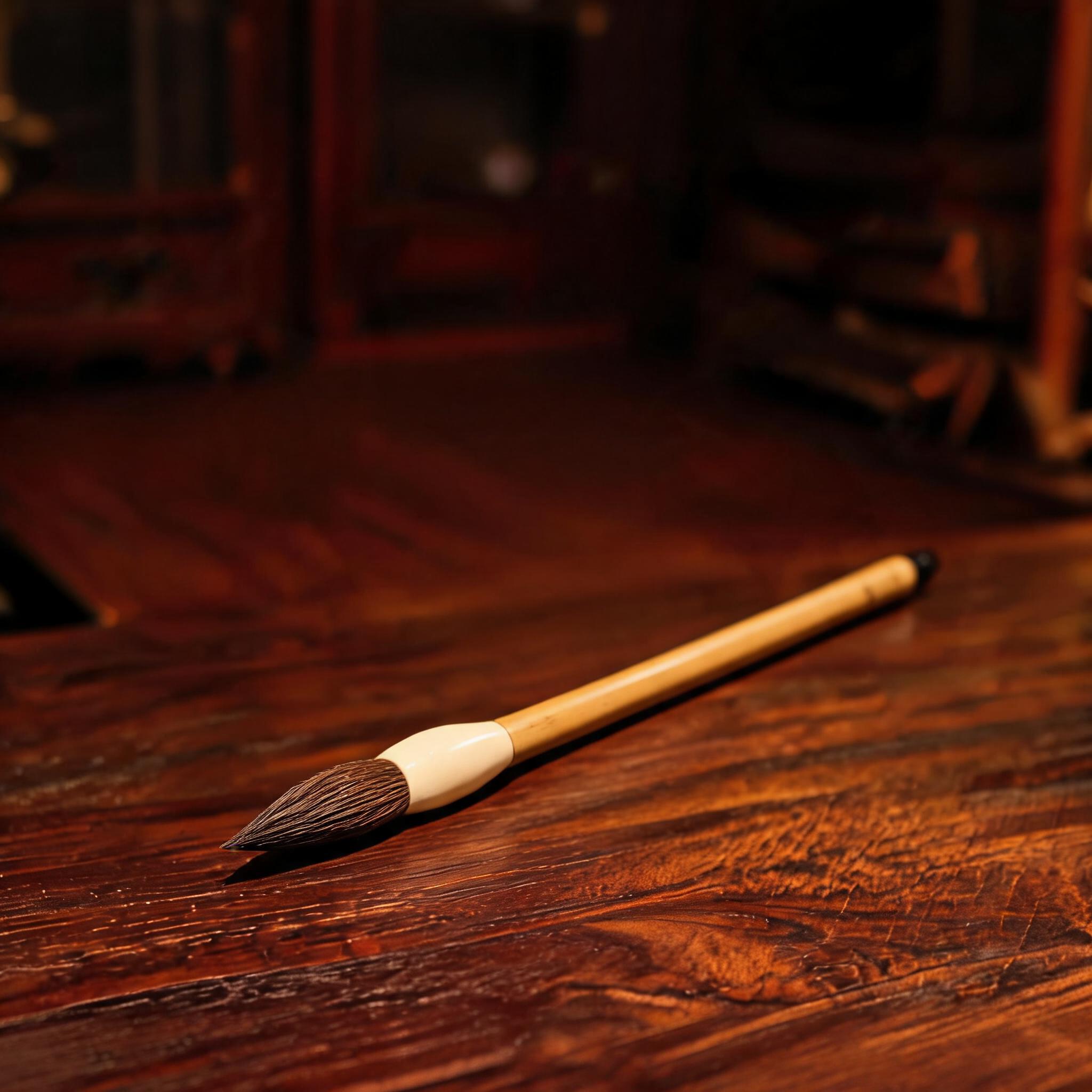
A retail-channel guide for buyers planning a modern lettering assortment. It explains what brush pen lettering demand actually looks like on the shelf, which retail channels buy lettering-adjacent brush lines, how to choose hair stiffness and brush size, how to pair traditional brushes with bottled liquid ink, and what to check before a bulk order — including a plain statement that soft-tip felt and nylon 'brush pens' are a different product class this supplier does not manufacture.
Retail Assortment Guide
Brush pen lettering sits at the meeting point of two product categories: a fine-tipped tool the buyer imagines, and the traditional hair brush that actually exists on many stationery and gift shelves. For gift-season planning, the distinction matters more than it sounds, because it decides what you can confidently stock, reorder, and explain to a customer standing in the aisle.
This guide walks through the buying decision from a retailer's side — which retail channels carry lettering-adjacent brush lines, how to match hair stiffness and brush size to the lettering work customers actually do, how brushes pair with liquid ink for a shelf-ready program, and what to verify before a bulk order. It also states plainly which part of the brush pen category this supplier does not manufacture, so you can plan the assortment around what is genuinely available.
What this guide covers
- Why "brush pen lettering" buyer searches often lead to the wrong product class — and how to redirect the assortment honestly.
- Which retail channels realistically buy lettering-adjacent brush lines: craft retailers, gift shops, and sign-painting or specialty stationery accounts.
- Choosing hair stiffness and brush size for lettering-adjacent work.
- Pairing brushes with bottled and bulk liquid ink for a shelf-ready program.
- Sampling and verification checks before committing to volume.
What brush pen lettering means for a buyer
In retail language, "brush pen lettering" is a demand signal, not a single SKU. Customers searching the term are usually looking for one of three things:
- A soft-tip felt or nylon pen with a flexible point, used for modern calligraphy, bullet-journal lettering, and greeting cards.
- A pointed hair brush used with liquid ink for brush lettering, often in a workshop or class setting.
- Flat or large brushes for sign painting, poster work, and larger brush lettering on card and board.
Plain statement on product scope: true felt-tip and nylon soft-tip "brush pens" are a different product class. This supplier does not manufacture them. What we do make are traditional hair brushes — pointed and stiff-tipped, length-graded, and large-format — that serve lettering-adjacent lines: sign painting, large brush lettering, greeting-card brush work, and studio or classroom practice. If your assortment plan includes soft-tip pens, source that line separately and keep this range positioned honestly next to it.
That honesty is commercially useful. A gift retailer who sells a pointed hair brush as if it were a soft-tip lettering pen creates returns and bad reviews. A retailer who labels it as a traditional brush for ink lettering and sign work sets the right expectation and builds a repeat customer — the workshop attendee, the sign painter, the card maker who already owns ink.
Which retail channels buy lettering-adjacent brush lines
Not every shop that displays lettering supplies sells the same brush. The purchase profile shifts by channel:
| Retail channel | Typical lettering-adjacent need | Brush characteristics that fit |
|---|---|---|
| Craft and hobby retailers | Workshop kits, practice sets, ink-and-brush starter displays | Smaller pointed brushes with resilient tips; multipacks suited to class groups |
| Gift and stationery shops | Greeting-card brush work, gift-box brush sets, seasonal table displays | Consistent tip shape across the run; presentation-friendly packing |
| Sign-painting and specialty stationery accounts | Poster lettering, shop signage, large-format brush work | Dense hair packing, reinforced handles, larger sizes |
| Art schools and institutional buyers | Classroom practice, regular and clerical script drills | Length-graded stiff-tip brushes in wholesale sizes and export packing |
Craft retailers tend to buy in broader but shallower ranges — several sizes, moderate depth per size. Sign-painting accounts buy fewer sizes but deeper, and they care about how the brush behaves under a loaded tip. Gift shops are driven by presentation and seasonality, so packing and shelf appeal carry more weight than a technical spec sheet.
Choosing hair stiffness and brush size for lettering work
Two variables do most of the work: how stiff the hair is, and how large the head is. For lettering-adjacent lines, the practical split is between pointed, resilient brushes for controlled strokes and stiff-tip brushes for script work where the tip must hold a line.
Our Wolf Hair Stiff Tip Brush uses length-graded hair and hand-formed resilient points, and is specified for regular and clerical script in studios and school programs. For a retailer, that translates into a brush suited to structured lettering practice and classroom use, with wholesale sizes and export packing available.
At the other end of the size range, the Large Format Calligraphy Brush carries dense hair packing and a reinforced handle, and is specified for exhibition calligraphy and sign painting. That is the brush type a sign-painting account reaches for when the lettering is large and the stroke has to stay consistent across the length of a poster or board.
How to set the range:
- Match stiffness to the stroke. Stiff-tip brushes suit controlled, structured lettering and script drills. Softer, more pointed brushes suit freer brush lettering where the stroke tapers.
- Match size to the surface. Greeting cards and small practice sheets call for small heads; posters, signage, and exhibition pieces call for large-format brushes.
- Keep one consistent point profile across a size run. A customer who buys a small and a large brush from the same line expects the tip to behave the same way, just bigger.
- Stock for the class, not just the individual. Schools and workshops buy in groups, so wholesale sizes and export packing matter as much as the brush itself.
Pairing brushes with liquid ink for a shelf-ready program
A brush alone is an incomplete gift. Liquid ink turns a brush into a usable set, and it is the component most often forgotten in lettering-adjacent assortment planning.
Bulk Calligraphy Liquid Ink is supplied in 1L and 5L containers, intended for art schools and institutional procurement programs that require consistent quality. For retail, that container format points to two program models:
- Institutional and classroom supply. Schools and workshop providers buy ink in bulk alongside brush sets, so the 1L and 5L formats fit procurement-style purchasing rather than single-unit retail.
- Retailer-decanted shelf sets. A gift or craft retailer can pair a brush with a smaller ink presentation at store level, keeping the bulk container as the replenishment source. Confirm decanting, labeling, and local packaging requirements with your own compliance and packaging partners before committing to that model.
Keeping brush and ink in the same assortment also simplifies the staff conversation. A customer asking for brush pen lettering supplies can be shown a complete, coherent set — brush, ink, and a clear note on what kind of lettering each is for — rather than being handed a single tool with no explanation.
Sampling and verification before a bulk order
Lettering brushes are judged by hand, so a bulk decision should follow a physical sample, not a catalog page. A workable check sequence:
- Order a sample in each size you plan to stock. Check that the point is formed cleanly and that the tip returns to shape after a loaded stroke.
- Test with the ink you intend to sell alongside it. A brush that behaves well with one ink may load differently with another.
- Check consistency across the sample run. If ten brushes from the same size arrive with visibly different tips, the bulk run will likely show the same variation.
- Confirm packing and labeling for your market. Export packing and wholesale sizing are available on the stiff-tip line; confirm the exact packing configuration you need against your own shelf and shipping requirements.
- Agree the reorder specification in writing. Size, hair type, packing, and container format should be recorded so a repeat order matches the sample you approved.
Two things are worth confirming directly with the supplier rather than assuming: the exact sizes and packing options available for your order, and how the bulk ink containers are labeled for your destination market. Those are project-specific and should be settled before the purchase order, not after.
FAQ
Do you supply soft-tip felt or nylon brush pens for modern calligraphy?
No. Felt-tip and nylon soft-tip brush pens are a different product class and are not manufactured here. Our range is traditional hair brushes — pointed, stiff-tipped, and large-format — which serve lettering-adjacent work such as sign painting, large brush lettering, greeting-card brush work, and studio or classroom practice.
Can a traditional hair brush replace a brush pen for a customer who wants modern lettering?
It is a different tool with a different learning curve. A pointed hair brush loaded with liquid ink handles brush lettering and card work, but it is not a drop-in substitute for a soft-tip pen, and it should not be sold as one. Retailers who stock both lines serve the customer better than retailers who blur the two.
What is the difference between the stiff-tip and large-format brushes for a retail assortment?
The stiff-tip brush is built around length-graded hair and hand-formed resilient points, aimed at regular and clerical script in studios and school programs. The large-format brush uses dense hair packing and a reinforced handle for exhibition calligraphy and sign painting. They serve different shelf positions: practice and classroom versus signage and poster work.
What ink container sizes are available?
Bulk Calligraphy Liquid Ink is supplied in 1L and 5L containers, intended for art schools and institutional procurement programs that require consistent quality.
Is brush pen lettering a good gift-season category for a stationery shop?
It is a workable category if the assortment is labeled accurately. Brush-and-ink sets suit gift presentation well, and workshop-driven demand supports repeat purchases. The risk is mislabeling a traditional brush as a soft-tip pen; keep the product description honest and the category holds up.
Planning the assortment
The practical takeaway for gift-season planning is to separate the two halves of the brush pen lettering category. Source soft-tip pens as a distinct line if your customers expect them. Build the traditional brush and ink range around the work it actually does — script practice, card making, sign painting, and large-format lettering — and describe it that way on the shelf. Retailers who get that distinction right end up with a smaller, more coherent range and fewer returns.