
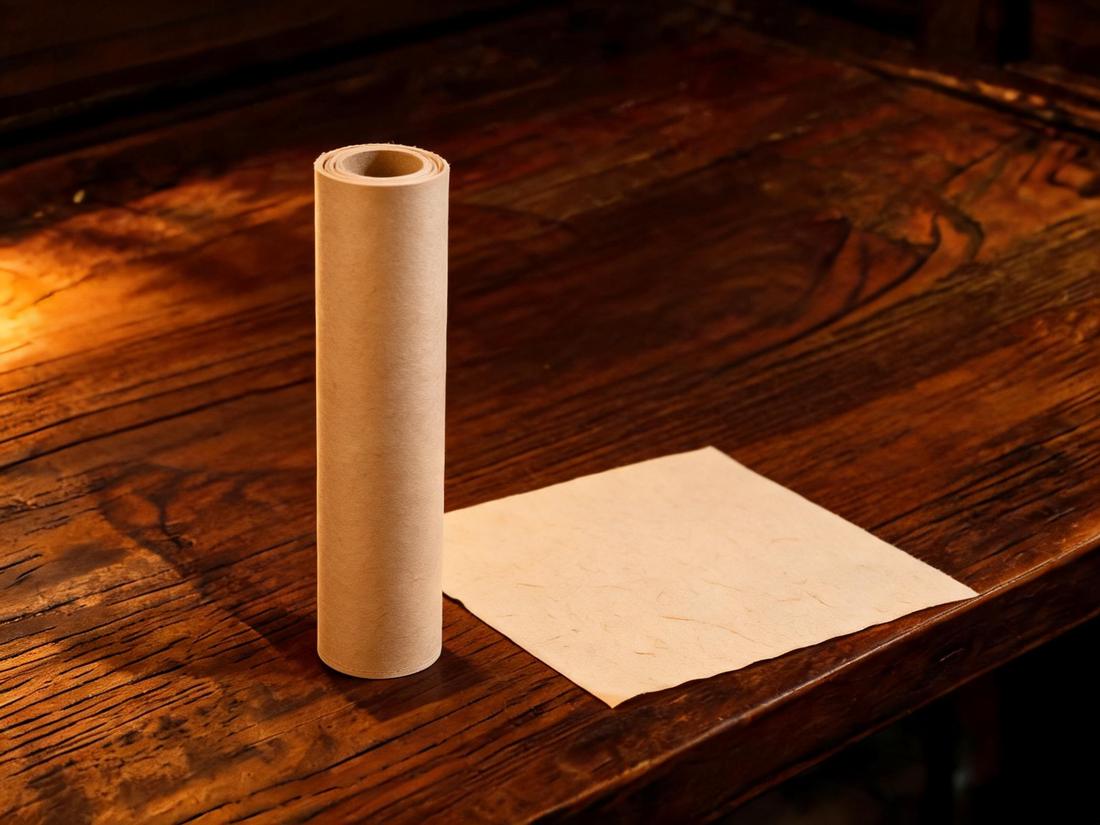
Roll-format Xuan paper looks like the simpler purchase: one continuous length instead of a stack of cut sheets. In practice it is the format that most often produces margin surprises, because the roll has to be converted into sellable units before it earns anything, and every conversion step loses material.
Why buyers choose a roll at all
A roll answers two needs that flat sheets serve badly. The first is length. Calligraphers working on long horizontal pieces and painters producing scroll-format work need an unbroken surface, and a roll is the only economical way to supply it.
The second is flexibility. A distributor holding rolls can cut to whatever dimension the local market asks for, instead of committing to a sheet size decided by someone else. That flexibility is the commercial reason to buy roll stock, and it is also the reason the format carries more risk than a cut sheet.
Gumo Craftworks supplies Xuan Paper Roll alongside cut formats such as the Raw Xuan Paper Professional and the Bound Xuan Paper Album.
The conversion maths a buyer should run before ordering
A roll is not a product until it is cut. The number that matters is not the roll price but the yield: how many sellable units the roll produces after trim loss and reject edges.
| Input | What it decides | Where margin is lost |
|---|---|---|
| Roll width | Which cut sizes are viable without waste | A width that does not divide evenly into your target size |
| Roll length | Total yield per roll | Uneven tension causing a short or slack end section |
| Edge quality | How much must be trimmed before cutting | Damaged or ragged ends discarded at the start |
| Cut tolerance | Whether cut units can be sold as dimensioned stock | Units that fall outside the size your customers expect |
The practical step is to model yield before ordering, using the roll width against the cut size you plan to sell. A roll width that suits your target size cleanly will beat a cheaper roll that leaves a strip unusable on every cut.

Freight behaviour of rolls versus sheets
Rolls and sheets fail differently in transit, and that affects how you should specify packing.
- Crushing. A roll is vulnerable at the circumference. If it is laid on its side in a carton without support, the weight above it can flatten the edge and mark several layers.
- Creasing. A roll that is loosely wound can shift and crease internally during handling, producing damaged sections in the middle rather than at the end.
- Moisture. A roll presents a large surface to humid air at the exposed end. If the wrapping does not seal effectively, the end layers take on moisture first.
- Handling weight. A full roll is heavier and more awkward per unit than a carton of sheets, which changes what your warehouse can move safely.
Buyers should confirm how rolls are wound, how the ends are protected and how the roll sits inside the outer pack, because these are the details that decide whether the top metre of every roll is usable.
Cutting and storage at your end
If you intend to cut, the equipment becomes part of the sourcing decision. A clean cut needs a sharp blade and a stable surface; a paper cut with a dull blade leaves a ragged edge that customers notice immediately on a sheet they are about to paint on.
Storage matters as much as cutting. Paper stored in a roll keeps a curve, and a sheet cut from a roll and shipped flat may arrive with a tendency to curl. Buyers who sell flat sheets cut from roll stock should plan how long cut units are pressed or stored before packing, and confirm the behaviour with their supplier rather than discovering it after the first shipment.
Rolls also need support along their length. A roll stored flat on a shelf, unsupported in the middle, will sag over time, and a sagged roll can be difficult to cut evenly.
Checks before confirming a roll order
- Exact roll width and length, with the tolerance applied.
- Yield per roll modelled against your target cut size.
- Edge condition on arrival and how much trim is expected.
- Winding method and end protection in the pack.
- Outer carton or pallet configuration and handling weight.
- Whether cut stock from this roll is expected to lie flat after cutting.
Frequently asked questions
Is roll stock cheaper than cut sheets?
Usually the material cost per square metre is lower, but the comparison only holds after trim loss and cutting labour are counted. Model the yield first, then compare cost per sellable unit.
Can any paper be cut from a roll to sheet size?
The paper can be cut, but the result depends on the grade and on how it is handled afterwards. If you plan to sell flat sheets, confirm with your supplier what behaviour to expect from roll-sourced stock.
How should rolls be stored before cutting?
Support them along the full length so they cannot sag, keep them in their protective wrap, and ask your supplier what humidity conditions the grade tolerates.
What roll width should a distributor order?
The one that divides cleanly into the cut sizes your market buys. Width is a yield decision rather than a preference, so it should be chosen after the cut-size plan is set.
Next step for buyers
Buyers adding roll stock should decide the cut sizes first and the roll width second. Review the Xuan Paper Roll and compare it with the raw Xuan paper cut format, then send the size you intend to sell and the volume you expect so the roll specification can be matched to your yield.