
Most ink stone guidance is written for calligraphy, and most of it transfers to painting badly. A painting session is not a longer calligraphy session. It moves between light washes and dense passages, which means the stone is asked for small quantities of ink, repeatedly, in a range of dilutions.
Painting and calligraphy ask different things of a stone
Calligraphy tends to consume ink in relatively steady batches: the character work is planned, the ink is used at a consistent strength, and the session is a sequence of brush loads. Painting involves mixing. The artist blends ink with water on paper or in a dish, adjusts tone, and returns to the stone between passages.
That routine changes the priority list. A stone that performs perfectly for steady calligraphy can be frustrating for wash work, not because it is poor but because it was specified for a different habit.
Wash work depends on area, not only on grit
Two properties matter more in the painting channel than buyers usually record.
- Flat working area. Mixing lighter tones needs somewhere to work that is not already carrying a full load of dark ink. A stone with a generous flat section supports that; a stone dominated by a deep well does not.
- Willingness to release ink in small amounts. Painters often want a little ink at a time. A face that raises ink quickly in quantity is not automatically better; what matters is that the artist can control how much arrives.
Buyers should also expect the stone to be used alongside commercial ink. Many painters keep a bottle for large dark areas and grind for tone control, so the stone and liquid ink are complements in the same kit rather than substitutes.
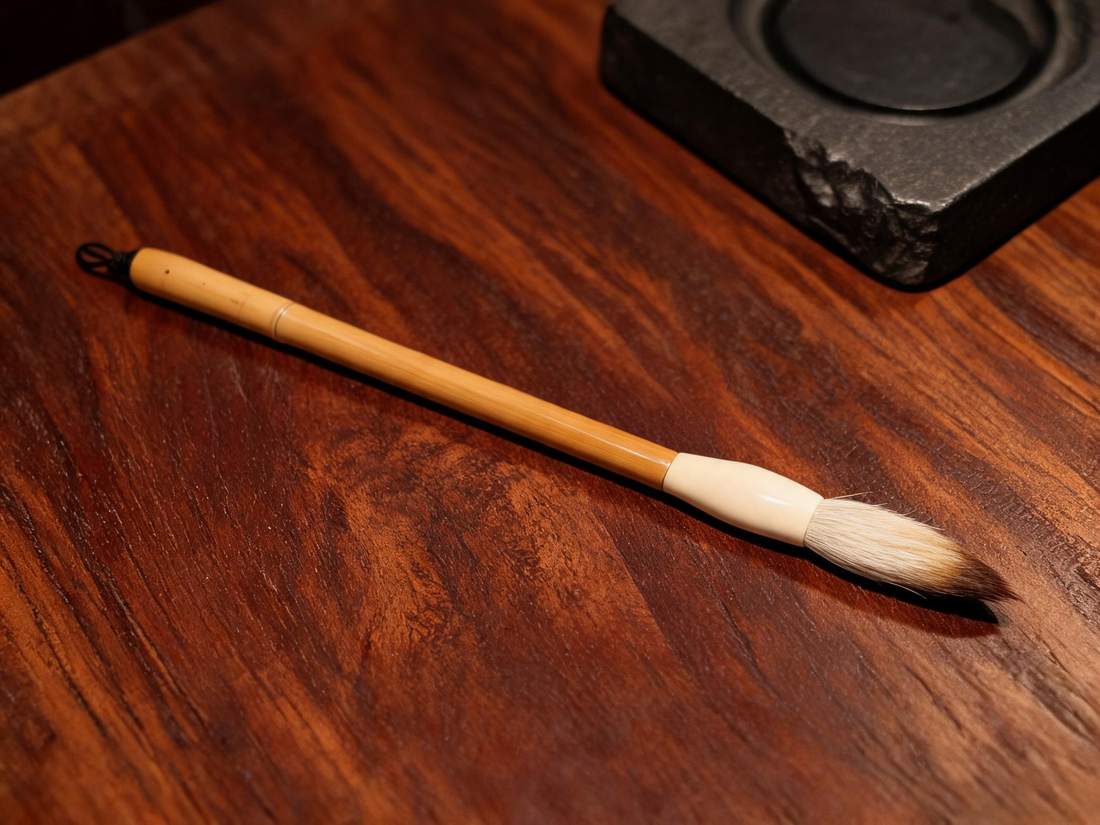
How the two routines differ in what they demand
| What the routine needs | Calligraphy use | Painting use |
|---|---|---|
| Ink quantity per session | Steady batches at one strength | Small amounts, repeatedly, at varied strengths |
| Priority on the stone | Consistent raise across a long session | Room to mix and control tone |
| Paper formats | Single sheets and scroll formats | Larger sheets and albums for washes |
| Main risk if mismatched | Slow sessions | Loss of tonal control |
Grinding a little ink, often
For painters the grinding routine is short and frequent rather than long and occasional. That has a practical consequence for the buyer: the stone's face matters more than its capacity for volume, and the user's tolerance for a slow face is lower, because the session is interrupted more often.
When specifying, it is worth asking how a stone behaves when worked briefly — that is closer to the painting routine than a demonstration of a long, heavy grinding session.
Size, weight and the working desk
Painting setups often hold more items than calligraphy setups: brushes of several sizes, paper in progress, a dish or two, sometimes a bottle of ink. A very large stone competes for that space and adds weight to every shipment.
For distributors, the sensible question is not which stone is largest but which size the customer's desk can absorb. Two tiers — a working size for a fixed desk and a compact size for travel or classroom use — usually cover more of the market than a ladder of similar sizes.
Commercial ink in the painting channel
Buyers frequently assume that a customer who grinds will not buy liquid ink. In practice the two coexist, because the painter wants control over tone in some passages and convenience in others. That makes the pairing of stone and bottled ink a legitimate kit decision, and it is worth confirming whether the two are supplied together or separately so the set can be priced correctly.
Checks before confirming a painting-channel stone
- Intended use stated as painting rather than calligraphy.
- How the face behaves when worked briefly, not only over a long session.
- Usable flat area available for mixing tones.
- Measured dimensions and weight for each size tier.
- Whether the kit includes bottled ink, and whether it can be reordered alone.
- Paper and brush formats the stone will be used with, so the set is coherent.
Frequently asked questions
Can a calligraphy stone be used for painting?
It can be used, but it was specified for a different routine. If mixing and tonal control matter to the customer, the flat working area and the behaviour when worked briefly are the properties to confirm.
Do painters need a larger stone than calligraphers?
Not necessarily larger, but differently shaped. A generous flat area is more useful than extra depth, and desk space is usually the binding constraint.
Should the kit include bottled ink as well as a stick?
Many painting kits do, because the two serve different passages. Whether they ship together is a commercial choice the buyer can settle before the box is designed.
How should a buyer test a stone for painting?
By reproducing the painting routine: short grinding, dilution, and a repeated return to the stone. A test that only reproduces a long calligraphy session will not reveal how the stone behaves for wash work.
Next step for buyers
Buyers serving painting channels can start from the She Inkstone Premium and the Carved Decorative Inkstone, paired with painting paper such as Treated Xuan Paper for Gongbi and brushes including the Goat Hair Soft Tip Brush. Send your channel, the paper formats you stock and the size tiers you plan, and we will match the stone to them.