
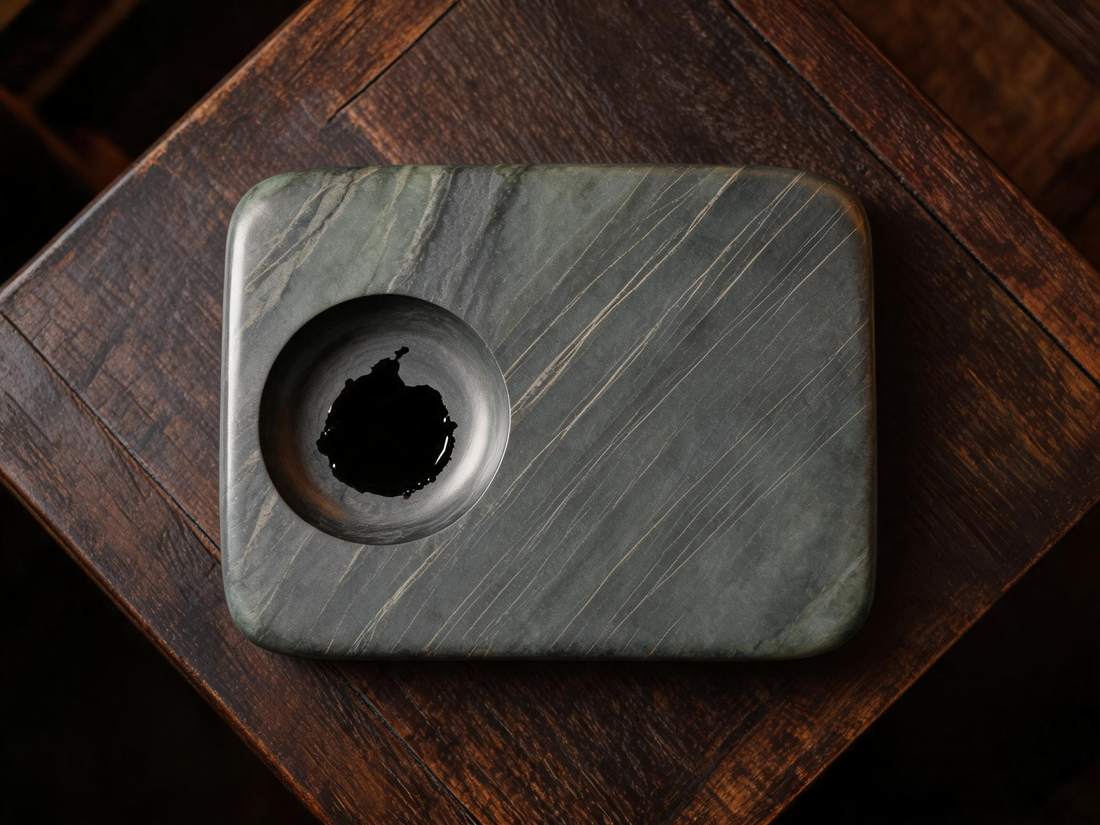
A wholesale buyer's guide to identifying a real inkstone: quarry origin certificates, grain and surface checks, piece-by-piece structural testing and the order terms that keep evidence attached to every batch.
Wholesale inkstone orders concentrate risk. One carton of resin copies, or one pallet of stone with hidden cracks, can erase a season of margin for a stationery retailer or a calligraphy-supply distributor. Many buyers can judge a single sample in hand, yet struggle when the decision has to happen across email threads, photos and a packing list. This guide sets out how to identify a real inkstone at wholesale level: which documents to require, which surface and structure checks are worth requesting, and which order terms keep evidence attached to every batch that ships.
Why Authenticity Questions Decide Bulk Inkstone Orders
Molded resin imitations reproduce the silhouette of a carved stone inkstone at a fraction of the cost. What they cannot reproduce is paperwork, piece-to-piece grain variation, or the structural test records that a serious workshop keeps for natural stone. When end customers question a purchase, the reseller's defense is documentation: proof of where the stone came from, how the batch was graded, and what was tested before shipment. A supplier who can name the quarry area, the grading method and the test step for a specific batch is materially easier to verify than one who only offers polished studio photos. That distinction is the core of identifying a real inkstone before money moves.
Quarry Origin Certificates: the First Document to Require
Start with origin. Duan inkstones are carved from stone quarried in the Zhaoqing area, and the Classic Duan Inkstone on this site ships with two documents for every batch: a particle-size grading certificate and a quarry origin certificate. She inkstones are carved from she stone sourced in the Wuyuan area; the She Inkstone Premium line supplies an origin certificate together with grading records for each order.
When comparing suppliers, ask one direct question in writing: which documents travel with the goods, and are they issued per batch or per order? A vague answer is itself a finding. Suppliers tied to real quarry supply chains answer it quickly, because the certificates already exist in their routine shipment files.
| Item | Classic Duan Inkstone | She Inkstone Premium |
|---|---|---|
| Stone source | Zhaoqing duan stone | Wuyuan-area she stone |
| Carved sizes | 15–25 cm | 12–22 cm; custom sizes 35–50 days |
| MOQ | 50 pieces | 50 pieces |
| Standard lead time | 30–45 days | Confirmed at order |
| Batch documents | Particle-size grading certificate + quarry origin certificate | Origin certificate + grading records |
| Testing | Grading certificate per batch | Piece-by-piece structural integrity test with report |
Grain and Surface: What Photos Can and Cannot Show
Natural stone grain varies from piece to piece, even within one quarry seam. Molded resin does the opposite: it repeats. If a supplier's carton photos show surfaces with identical, repeating patterns, treat that as a warning sign and ask for close-up images of the actual stock in the workshop, taken the day of shooting. When identifying a real inkstone from photographs, look at edges and corners as well as the face: hand-worked stone shows small, irregular transitions where tool met stone, while cast pieces tend toward uniform rounded edges.
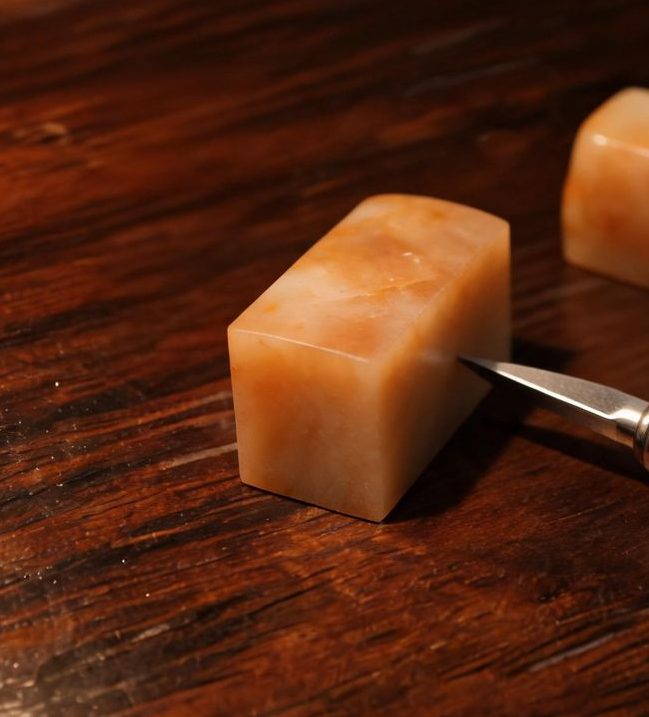
A sample piece remains the cheapest verification step. Ask that the sample come from the same quarry batch as the bulk goods, not from a separate showcase stone, and compare grain character, weight in hand and surface finish when it arrives.
Structure Testing: the Step Photos Always Miss
Hairline cracks in natural stone rarely appear in marketing photos, and they surface only after grinding in use or a change in climate. This is why structure testing matters more for wholesale orders than for single purchases. The She Inkstone Premium line is tested piece by piece for structural integrity, and a test report is supplied with the goods. For duan lines, the batch grading certificate plays the equivalent documentary role.
When evaluating any supplier, ask specifically: is the structural check performed per piece or per sample, and does the report identify the pieces covered? A per-piece report on a 50-piece MOQ order is a meaningful commitment; a one-line statement that goods were inspected is not. Buyers who identify a real inkstone supplier reliably tend to be the ones who put this question before the deposit, not after arrival.
Size, MOQ and Lead Time: Terms That Match Real Production
Production terms are indirect evidence. Hand carving, grading and testing take time, so quotes that promise a 50-piece order of carved stone in a few days deserve skepticism. The duan line above runs 30–45 days at a 50-piece MOQ; custom she inkstone sizes run 35–50 days because each blank must be selected and carved to specification. Realistic lead times, batch documents and stable size ranges together describe a workshop that actually handles natural stone.
Packing: the Last Link in the Evidence Chain
Documents prove origin; packing protects the goods that the documents describe. The duan line ships with reinforced foam packing, sized to the carved piece. For compact formats, a fitted case doubles as buyer-facing packaging: the travel-style inkstone shown below sits in a zippered case that holds the stone against foam during transport.
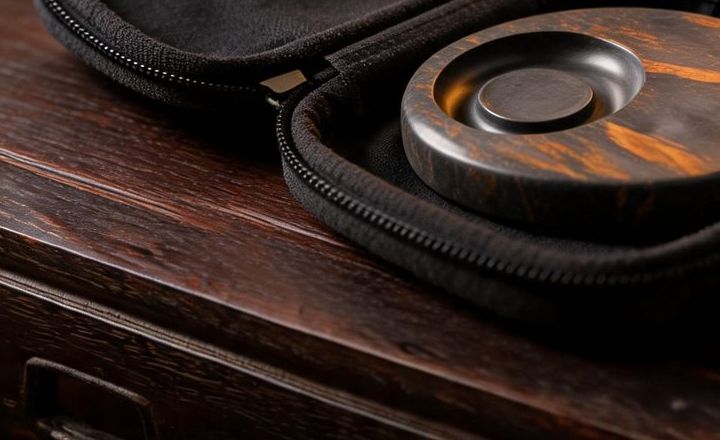
Put the packing specification in writing: material, thickness, and whether each piece is individually wrapped. On arrival, packed condition is the first thing to photograph before unpacking, because it anchors any subsequent damage or substitution claim.
Pre-Order Checklist for Identifying a Real Inkstone
- Origin certificate naming the quarry area, issued per batch (duan: Zhaoqing; she: Wuyuan area).
- Grading documentation: particle-size grading certificate, plus grading records where offered.
- Structural test terms: per-piece or per-sample, with a report that identifies the pieces covered.
- Close-up photos of actual stock, including edges and corners, taken on the day of shooting.
- A sample drawn from the same quarry batch as the bulk goods.
- Written packing specification and realistic lead time matching hand-production pace.
Working through this list converts identifying a real inkstone from a matter of instinct into a matter of files: certificates, reports and photographs that travel with the order. Buyers who build the habit early can scale orders without scaling risk.
Request Documents with Your Quote
Planning a bulk inkstone order for retail shelves, calligraphy schools or gift programs? Request the batch documents described above together with your quote: origin certificates, grading records, structural test terms and packing specifications for the Classic Duan Inkstone and She Inkstone Premium lines. Send target sizes and quantities, and the response will include the paperwork trail before the deposit, not after it.