
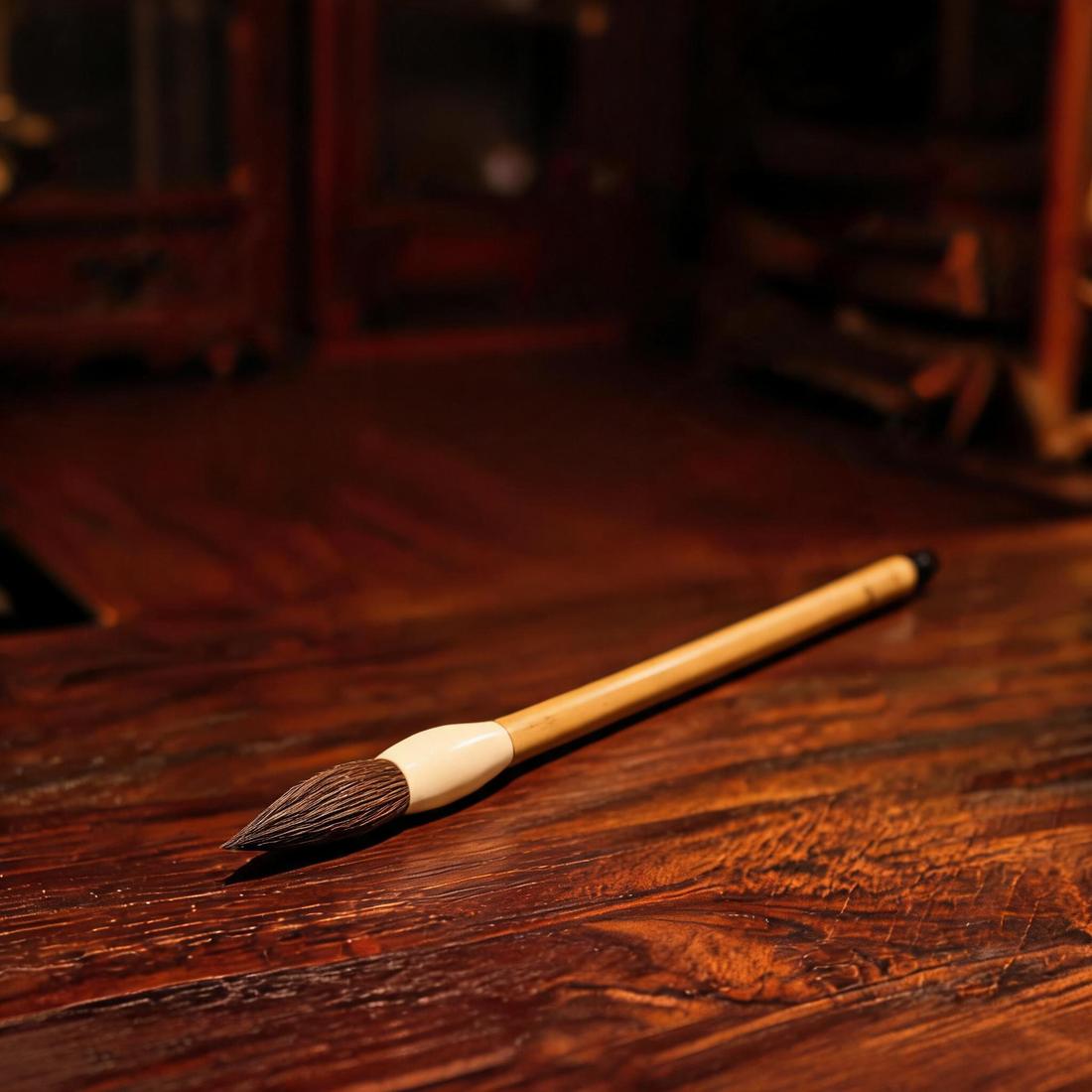
A stage-by-stage walkthrough of wolf hair brush production — length grading, tip forming, ferrule binding, batch sampling and packing — mapped to the checkpoints wholesale buyers can verify.
Why Map the Production Line Before You Audit It
Most wholesale brush complaints trace back to a specific stage of making, not to the brush as a whole: hair that splays mid-stroke comes from unsorted hair, a loose ferrule comes from shortcut binding, and a crushed point comes from transit packing. Knowing what happens at each stage tells you what to ask a supplier for — and what you can verify on samples and in documents.
This article walks through the five production stages behind our wolf hair stiff-tip brush — available in small, medium and large sizes with tip lengths of roughly 2.5 cm, 3.5 cm and 4.5 cm — and maps each stage to the checkpoint a wholesale buyer can actually use. The line runs from raw material selection through finished packaging with inline QC checkpoints at each stage.
Stage 1: Raw Hair Selection and Length Grading
The first step that separates a dependable wolf hair brush from a disappointing one happens before assembly: hair is sorted by length. Length grading is what gives each brush a consistent taper and a fine, resilient point suited to regular (kaishu) and clerical (lishu) script — and it is what keeps the tip from splaying mid-stroke, the most common complaint with unsorted wolf hair.
Buyer checkpoint: when you receive samples, compare taper consistency across several brushes from the same batch. Uniform taper across pieces is the visible evidence that length grading actually happened.
Stage 2: Hand-Forming the Tip
Each tip is shaped by hand and checked for centered alignment. Hand forming is the step where a consistent taper is either achieved or lost, which is why it receives individual attention rather than batch-only sampling — the point must stay centered through controlled strokes and clean stroke endings.
Buyer checkpoint: wet a sample brush, form a stroke, and look at where the point re-gathers. A centered tip recovers to a sharp point; a skewed tip drifts to one side.
Stage 3: Two-Step Ferrule Binding
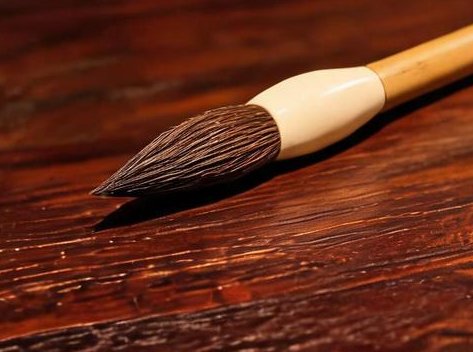
The ferrule is glued first, then bound. The two-step process addresses the failure mode studio buyers report most: ferrules loosening after repeated washing and daily use. Studio and school brushes are washed constantly, so binding quality decides whether a reorder feels like the same brush.
Buyer checkpoint: wash a sample brush several times through the ferrule line and check for movement or hair shedding at the binding. Repeat washing is the condition the two-step process is built for, so test it in kind.
Stage 4: Batch Sampling for Tip Recovery and Ink Holding
Before packaging, brushes are sampled per batch for tip recovery and ink holding. This is the batch-level layer of quality control; the piece-level layer is the individual alignment check in stage 2. Batch-level quality documentation is available on request for wholesale orders, and it is most useful when you are comparing an incoming shipment against a previous one — the records give both shipments a common reference.
Buyer checkpoint: ask for the batch documentation together with your quotation, so it is prepared with the order confirmation and ships alongside the order rather than after a dispute.
Stage 5: Protective Capping and Export Packing
Each brush ships with an individual protective cap, and brushes are packed in export cartons. The cap keeps the formed point from being crushed in transit — which matters most for the fine-point work this brush is sold for. Carton quantity and labeling requirements are confirmed at the inquiry stage, which keeps the packing plan aligned with your distribution format.
Buyer checkpoint: confirm carton quantity, labeling and any retail-ready packing needs before production starts, not after the cartons are sealed.
Stage-to-Checkpoint Mapping at a Glance
| Stage | What happens | What you can verify |
|---|---|---|
| 1. Hair selection | Hair sorted by length before assembly | Taper consistency across sample pieces |
| 2. Tip forming | Hand-formed, checked for centered alignment | Point re-gathers centered after strokes |
| 3. Ferrule binding | Glued first, then bound | Ferrule holds after repeated washing |
| 4. Batch sampling | Tip recovery and ink holding sampled per batch | Batch documentation on request |
| 5. Capping and packing | Individual protective caps, export cartons | Carton quantity and labeling plan confirmed pre-production |
Frequently Asked Questions
Q: Which size does this line cover?
A: Small, medium and large, with tip lengths of approximately 2.5 cm, 3.5 cm and 4.5 cm. Small suits detail practice, medium is the general-purpose size for standard practice sheets, and large carries more ink for bigger characters and demonstration work.
Q: Can I mix sizes in one wholesale order?
A: Yes — small, medium and large can be combined within one order. Confirm the size split in your inquiry so the quotation reflects the actual assortment; a medium-weighted split with smaller quantities of small and large is a common starting structure.
Q: Is batch documentation really worth requesting?
A: For repeat wholesale programs, yes — it records the per-batch tip recovery and ink holding sampling, which is the reference you need when comparing shipments across seasons.
Q: What about MOQ and lead time?
A: MOQ, pricing and lead time for this line are confirmed per inquiry — send your target sizes, quantity and packaging requirements for current terms.
Q: Does custom handle branding exist on this line?
A: Custom branding on the handle is confirmed per inquiry. Describe the branding scope and expected volume so feasibility and terms can be confirmed before sampling.
Audit the Line, Not Just the Sample
Tell us your target sizes, order quantity, packing requirements and whether you need batch documentation or custom handle branding, and our team will respond with current pricing and lead time for this wolf hair brush line.