
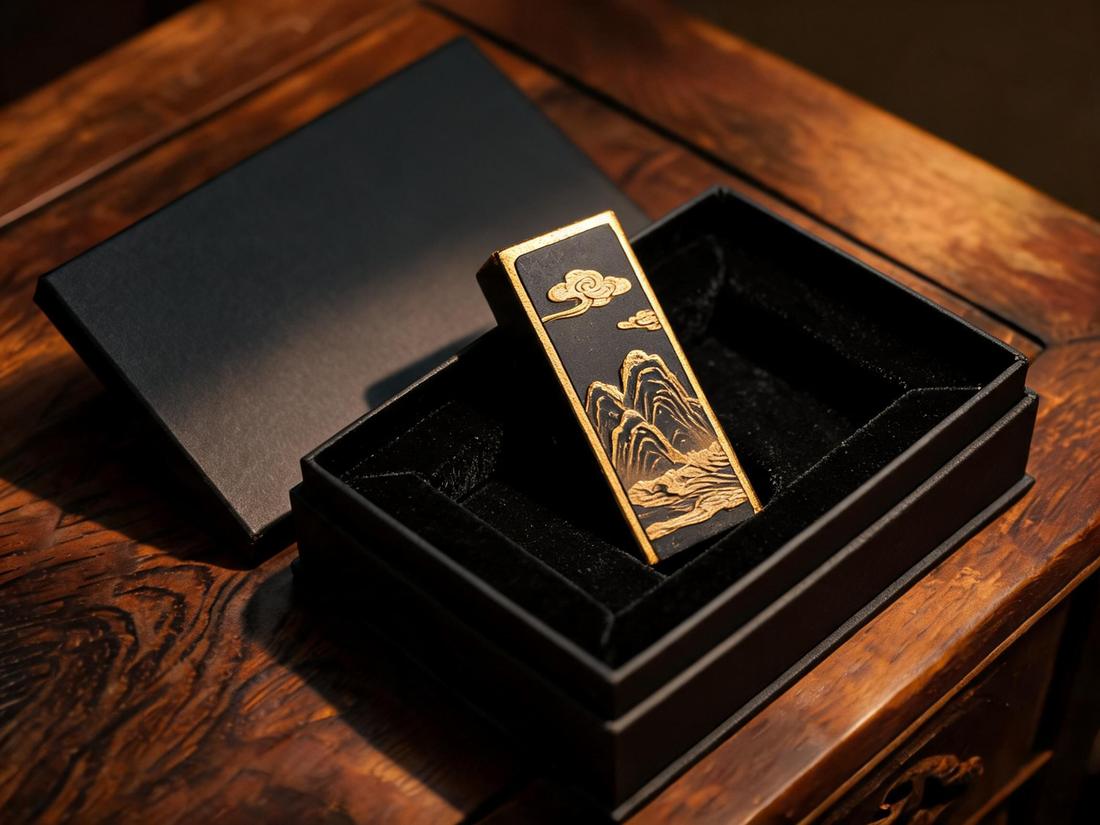
Gold calligraphy ink is bought for one visible reason: it reads as a premium material the moment a customer opens the box. That makes it unusually sensitive to how it is specified. Two inks that both look gold in a photograph can behave very differently after a few months on a shelf, and the difference is rarely visible at the sample stage.
What buyers mean when they ask for gold ink
The first step is to separate the requests that get grouped under the same name. Buyers use "gold ink" for at least three different products: a metallic-effect ink that carries a warm gold tone, an ink formulated with genuine gold content for premium and ceremonial work, and a gold-coloured ink that is bought to match a gold-edge finished product in a gift set.
Each has a different cost structure and a different shelf story. Establishing which one you actually need before requesting a quotation avoids the common situation where a sample arrives, looks correct, and turns out to be the wrong tier for the retail price you had planned.
Lightfastness is the check that decides a shelf life
Lightfastness describes how well a pigment resists fading under light. It is the single most useful specification for a gold ink sold through gift and retail channels, because those products spend time on display before they are used.
When you ask about lightfastness, ask for the basis of the statement. A supplier who can describe how the ink was assessed — the pigment family, the exposure method, the scale used — is giving you something you can carry into your own product literature. A supplier who says only that the ink is lightfast is not.
Two practical cautions follow. First, lightfastness for a metallic-effect ink is not the same as for a true gold-content ink, so compare like with like. Second, the assessment applies to the ink as formulated; thinned or mixed on the palette, the result may differ.

Pigment quality shows up in the second year, not the first month
Gold inks are usually judged on first impression — how bright, how warm, how even. The problems that generate complaints appear later: uneven settling in the container, a shift in tone between batches, or a metallic effect that dulls once the binder cures.
The questions that surface these issues are about consistency rather than appearance.
- Batch-to-batch tone. Ask how tone is referenced between production runs, and whether a retained sample is kept for comparison.
- Settlement behaviour. Metallic pigments are dense. Ask how the ink behaves after standing and what redispersion the user should expect.
- Binder and finish. Ask whether the formulation is intended for brush work, for pen work, or for both, because the two place different demands on the binder.
- Compatibility with the pack. If the ink sits in a gift box with other components, confirm that its container and closure suit that arrangement.
Matching gold ink to a gift programme
In gift and cultural programmes, gold ink rarely travels alone. It appears inside a set: alongside a gold-edge ink stick, or as the accent component in a writing assortment. That pairing creates a specification problem worth solving early, because the two gold finishes are produced by different processes and rarely match by accident.
| Pairing question | Why it matters |
|---|---|
| Does the ink tone sit alongside the finished component without clashing? | Gift buyers notice mismatched golds immediately |
| Does the set have a stated edition or commemorative purpose? | Numbered editions change pack and documentation requirements |
| Is the ink supplied in the box or packed separately? | Affects box depth, insert design and carton weight |
| Which component drives the retail price? | Determines where cost can be taken out without hurting the offer |
Gumo Craftworks supplies gold-finished components for gift channels, including the Commemorative Gold-Edge Hui Ink Stick and the Premium Scholar Desk Gift Set. If your programme pairs a gold ink with a gold-finished stick, ask for both in the same sample shipment.
Checks to run before approving a gold ink line
- Which tier of gold product you are buying, stated in writing.
- The basis of any lightfastness statement, not just the claim.
- How tone is held steady between batches, and whether a retained sample exists.
- Expected behaviour after standing, and the redispersion the end user should perform.
- Container size, closure type and whether the ink is supplied inside a set or separately.
- Whether a certificate of authenticity is provided where the set is sold as commemorative.
Frequently asked questions
Is gold calligraphy ink suitable for archival work?
That depends on the formulation and the pigment used, so it has to be answered for the specific ink rather than for the category. Ask your supplier what basis they can give for permanence on the product you are ordering.
Can gold ink be used in a fountain or dip pen?
Pigment load and binder determine whether an ink suits pen work, and metallic inks are often formulated for brush use. Confirm the intended application with the supplier before stocking a pen-compatible claim.
Why does gold ink appear to settle in the bottle?
Metallic pigments are dense and settle faster than dye-based inks. The practical question is whether the ink redisperses evenly, and over what interval, which is a formulation property you should confirm.
Should a gift programme order gold ink on its own?
Usually not. Gold ink turns over slowly as a standalone retail item, so it works better as a component of a set where the gold finish is part of the product story.
Next step for buyers
Buyers building a gold line should decide the tier first, then ask for the supporting detail that makes the claim usable in their own marketing. Review the gold-edge ink stick and the colored liquid ink set as reference points, and send the channel, quantity and intended application so the recommendation matches the offer you plan to build.