
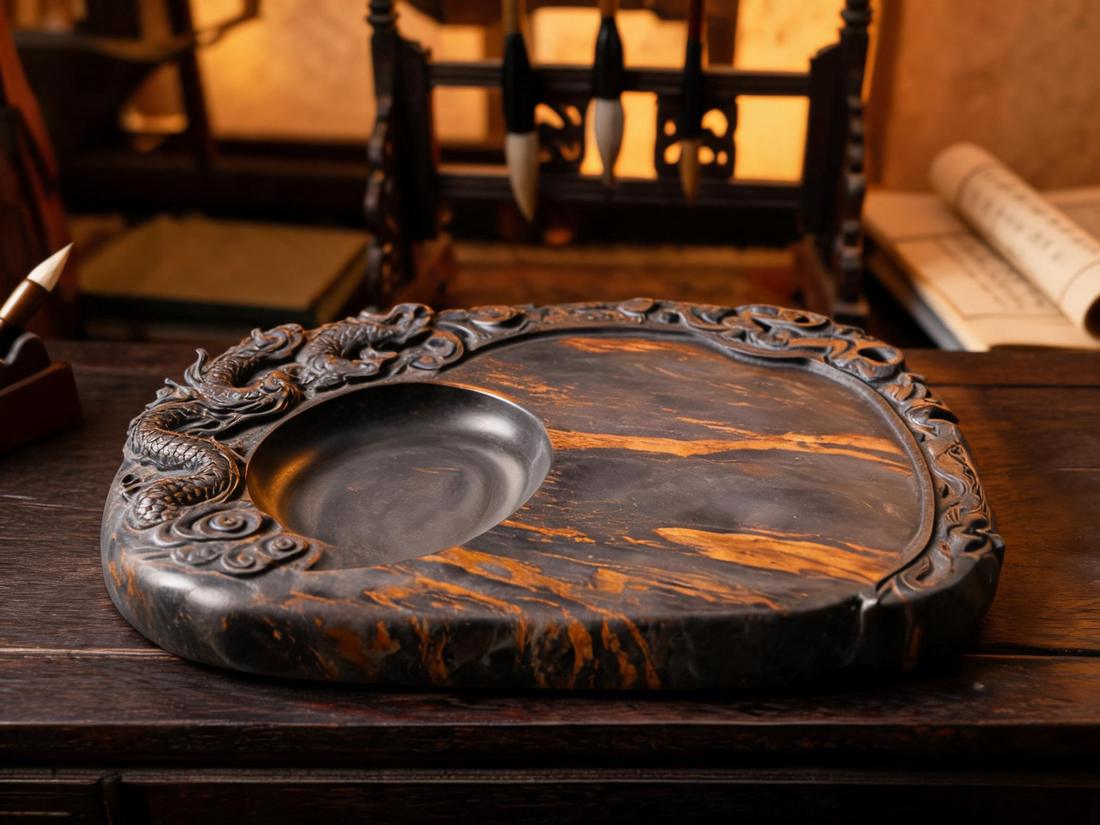
A Duan inkstone can be faultless at the quarry and still arrive as a problem order. The reason is rarely the stone itself — it is the size, the box, the carton and the freight plan around it. For importers building a repeatable stone line, those decisions carry as much weight as the choice of stone.
Why Duan inkstone orders fail on packing, not on stone
Stone is dense, heavy for its volume, and brittle along its edges. An inkstone that travels well inside a domestic parcel can still arrive chipped after an ocean leg, because the forces are different: sustained low-level vibration, repeated terminal handling, and humidity swings inside the container that soften or distort inner packaging.
Buyers who treat packing as an afterthought tend to pay for it twice. A cracked inkstone cannot be turned back into a sellable unit, and replacement stock for a dated gift programme often lands after the sales window has closed. The practical answer is to settle stone dimensions, box type and carton plan together, before the order is confirmed rather than after the sample is approved.
What to read off a Duan inkstone size
A stone is not specified by length alone. Ask for the full set of measurements, because each one drives a different downstream decision.
- Overall length and width — sets the required box interior and determines whether two units can be packed side by side in one carton.
- Overall thickness — the strongest single predictor of edge chipping in transit, and the main input for cavity depth in protective packing.
- Usable grinding area and ink pool depth — the part a calligrapher actually works on. A display-scale stone can carry a surprisingly small working surface.
- Unit weight — drives carton weight ceilings, pallet planning and freight cost per sellable unit.
- Base flatness — a stone that rocks on a desk will not stay put under grinding pressure, and instability is a frequent after-sale complaint on larger decorative pieces.
The Classic Duan Inkstone line is a workable reference: hand-selected grain from documented Zhaoqing quarry sources, finished so the stone can be both displayed and used for daily grinding. When you compare it with another quotation, compare these five numbers rather than the photograph.

Matching the stone format to the sales channel
The channel should drive the format, not the other way round. A stone sized for a gift box is often a poor fit for a shop shelf, and a classroom stone that is too heavy becomes a handling risk.
| Channel | Format that usually fits | What to verify before ordering |
|---|---|---|
| Corporate and cultural gifting | Carved or decorative stone in a fitted presentation box | Box interior clearance, insert material, whether a certificate fits inside without pressing on the stone |
| Retail shelf | Mid-size stone with a plain or lightly carved top | Shelf depth, barcode area on the outer box, whether the stone is visible without opening the pack |
| Studio and professional supply | Larger stone with a broad working surface | Grinding area relative to overall size, base flatness, unit weight against bench expectations |
| School and classroom programmes | Compact, robust stone | Pack durability under repeated handling, unit weight for student use, replacement availability |
Box fit is where gift orders and retail orders diverge
A gift programme buys presentation; a retail programme buys shelf survival. The same stone can serve both, but not in the same pack.
For a fitted gift box, the questions are interior clearance and insert behaviour. If the cavity is cut to the stone's exact footprint, a small dimensional variation between units will either jam the stone or leave it loose enough to move in transit. Ask how the insert accommodates unit-to-unit variation, and whether the box closes without pressure on the lid.
For retail, the questions shift to the outer carton and the shelf. A retail pack needs a printable barcode panel and a product name that a shop assistant can read without opening the box. If the stone travels inside a sleeve rather than a fitted cavity, confirm how the sleeve resists crushing when cartons are stacked.
For a compact travel format, the pack itself becomes part of the product. The Compact Travel Inkstone ships with a protective case, which is worth studying if you serve studios, schools or calligraphers who move between venues: the case is what allows the stone to leave the studio at all.

Freight protection for stone products
Three questions separate suppliers who understand stone from suppliers who understand paper.
- Is each stone individually wrapped? Stones that rub against each other inside a carton abrade carved surfaces long before anything breaks.
- Is there a fitted cavity or foam layer? Loose fill settles during an ocean leg, and a settled carton loses most of its protection.
- How is the carton rated for the actual route? The relevant figure is not the journey to the port; it is the full leg including transshipment and inland delivery.
It is also worth agreeing in advance how transit damage will be documented. Photographs of the outer carton, the inner packing and the damaged stone, taken before the carton is discarded, are what turn a claim into a decision instead of an argument. Ask your supplier what they will provide at the packing stage so that evidence exists if you need it.
Checks to run before you confirm a Duan inkstone order
- Full dimensions and unit weight for the exact model being quoted, not a representative size.
- Whether the same model is offered in more than one size, and which sizes share a box.
- Box type, insert material and how the insert handles unit-to-unit variation.
- Inner wrapping, cavity depth and carton specification for the planned route.
- How a damaged shipment is documented and raised after delivery.
- Whether the stone is a single-piece or part of a set, since set packing constrains box size.
Frequently asked questions
Can one fitted gift box be used for retail shelf stock?
It can, but you will usually need a printed outer sleeve or carton that carries the barcode and product name, because a premium fitted box often cannot be labelled without damaging its surface. Ask for the outer pack specification separately from the gift box specification.
Why does the same stone model come in different weights?
Natural stone varies. Two units cut to the same nominal dimensions can differ in weight, and that variation affects both carton weight planning and the retail packing. Ask for the weight range rather than a single figure.
Should the certificate travel inside the box or in the carton?
Either can work. The deciding factor is whether the certificate can sit inside the presentation box without pressing on a carved surface during transit. If in doubt, put it in the carton and confirm the arrangement with your supplier.
Is a larger stone always the better retail product?
No. Larger stones raise freight cost per unit and increase chipping risk, and a large footprint does not automatically mean a large grinding area. Match the size to the channel and verify the usable working surface.
Next step for importers
Buyers comparing stone lines should shortlist the formats that fit their channel before talking about price: the Classic Duan Inkstone for studio and collector work, the She Inkstone Premium as a second stone type, the Compact Travel Inkstone for programmes that move between venues, and the Carved Decorative Inkstone for gift and display channels.
Send the sizes, the channel and the route you ship on, and ask for the packing plan that matches them. A supplier who answers with dimensions, box types and cavity depths is telling you something useful before the first order is placed.