
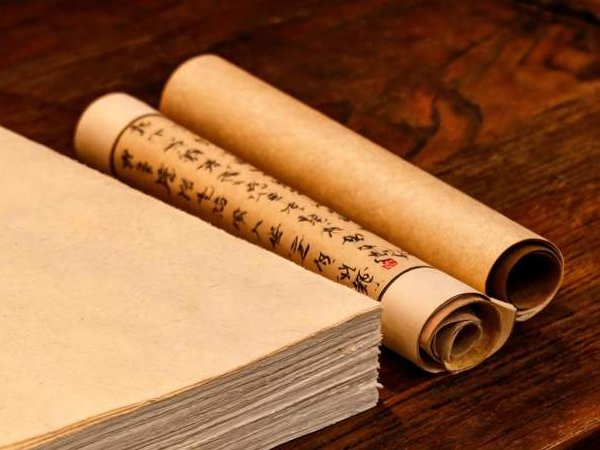
Calligraphers and painters buy paper from the same shelf, but Chinese painting on rice paper and brush calligraphy are not the same purchase. Calligraphy puts a loaded brush on a surface and wants a controlled line. Chinese painting on rice paper puts diluted ink and mineral colour on the same surface and wants the surface to decide how far a wash travels. Paper that suits one does not automatically suit the other, and the difference only shows up after the first wash.
Why the surface decides more than the fibre
Buyers often compare papers by fibre content and weight because those are the numbers printed on a sample card. For Chinese painting on rice paper, the more useful variable is what the sheet does when liquid lands on it: how fast a wash spreads, whether an edge stays soft or turns hard, and whether the same sheet gives a repeatable result across a batch.
Wash behaviour comes from the surface treatment as much as from the pulp. Two sheets of similar thickness can sit at opposite ends of the scale, which is why a buyer who specifies only weight usually ends up with a paper that is technically correct and practically wrong for the channel.
Sized or unsized: what changes on the sheet
| Surface condition | What the painter sees | Where it fits |
|---|---|---|
| Absorbent, little or no sizing | Washes bloom and bleed quickly; edges stay soft | Free ink-and-wash work, atmospheric painting |
| Treated surface | Wash and colour stay closer to where the brush put them; edges hold | Detailed work, layered colour, defined outlines |
Gumo Craftworks supplies both directions, with the treated surface offered as Treated Xuan Paper for Gongbi and the more absorbent direction through the Raw Xuan Paper Professional. Buyers should treat these two xuan papers as products with two audiences rather than as a better and a worse version of one sheet.

Format follows mounting, not the other way round
A work of Chinese painting on rice paper is normally mounted after it is finished, and mounting involves moisture and tension. That single fact decides more about what a buyer should stock than any aesthetic preference.
- Loose sheets suit studio work and teaching, where the painter expects to handle the sheet and decide later.
- Albums suit collectors and gift channels, where the finished work is kept flat inside a bound cover and the paper is part of the presentation.
- Rolls suit large-format work and scroll presentations, where a long continuous piece matters more than a tidy stack.
Buyers producing for the gift and collector end of the market should check the format the finished painting will arrive in, because an album or scroll presentation changes packing, weight and unit cost. The Bound Xuan Paper Album and the Xuan Paper Roll cover the two flat and long directions.
Test with the medium the customer will use
The most common mistake in buyer-side sampling is approving paper with black ink only, because ink is what happened to be available, then cutting the same sheet for colour work and seeing a different result.
A Chinese painting on rice paper sample should be run with the medium of the intended channel — ink wash, watercolour-style colour, or both — because mineral and dye-based colour behave differently on the same surface. Buyers evaluating several candidates should run the same test on every candidate and keep the results side by side rather than approving the first sheet that looks acceptable.
Checks before confirming a painting paper order
- Intended technique, stated per SKU, so a mixed order does not ship one surface for two uses.
- Surface condition described in writing, not inferred from fibre content alone.
- Sample tested with the medium the end customer will use.
- Format matched to the way the finished painting will be mounted.
- Whether the channel needs loose sheets, albums, rolls or a mix.
- Shelf life and storage conditions, for stock that will wait before it sells.
Storing paper that will wait months
Xuan paper stock that sits before it sells has to survive the wait. Moisture is the main enemy: a stack that absorbs damp during a humid season can show wavy edges or uneven take-up later, and the problem appears in a customer's hands rather than in your warehouse.
Keep stock wrapped, off the floor and away from exterior walls, and keep a retained sample from the approved order so a later shipment can be compared against a physical reference instead of against memory.
Frequently asked questions
Can one paper be sold for both calligraphy and Chinese painting on rice paper?
Some papers serve both, but they are a compromise: the surface that controls a saturated brush line is not automatically the surface a colour wash wants. If you sell to both audiences, say which uses the SKU is intended for.
Is thicker paper better for painting?
Not by itself. Thickness affects handling and mounting, while the surface treatment decides how ink and colour behave. Both matter, and they are separate decisions.
Should I approve a paper using black ink only?
No, unless the channel only paints in ink. Colour responds differently, so a painting paper should be tested with the medium the end user will actually load.
What is the safest way to compare two suppliers?
Run the identical test on both samples, keep the sheets, and compare batch to batch against a retained reference. A comparison based on the first acceptable sheet usually hides variation.
Next step for buyers
Buyers sourcing for Chinese painting on rice paper should settle the technique and the mounting format first, because both narrow the specification immediately. Review the Treated Xuan Paper for Gongbi and Raw Xuan Paper Professional, then send your channel, the formats you plan to stock and your annual volume for a matched quotation.