
What belongs in a calligraphy ink set depends on the channel: stick or liquid, black or colour, and which components add cost without value. A buyer's guide to contents lists, replaceability and packing checks before ordering.
An ink set is one of the easiest products to buy badly, because the phrase covers everything from a single stick in a paper sleeve to a colour range in a fitted box. Two suppliers can quote the same unit price and be selling different products.
Decide the channel before the contents
What belongs in a set depends on who opens it. The same factory can produce a classroom set and a gift set, but they are not interchangeable, and asking for both at one price is how projects stall.
| Channel | What the set has to do | What drives cost |
|---|---|---|
| Classroom or studio | Put usable ink in many hands, cheaply | Ink volume and packing efficiency |
| Retail shelf | Explain itself without a salesperson | Packaging and labelling |
| Gift and corporate | Present well and survive shipping as a gift | Presentation box and insert |
| Collector and cultural | Be recognisable and repeatable in small runs | Decoration and consistency |

Stick or liquid — and how many
Most sets are built around one of two ink formats, and the choice decides the rest of the components.
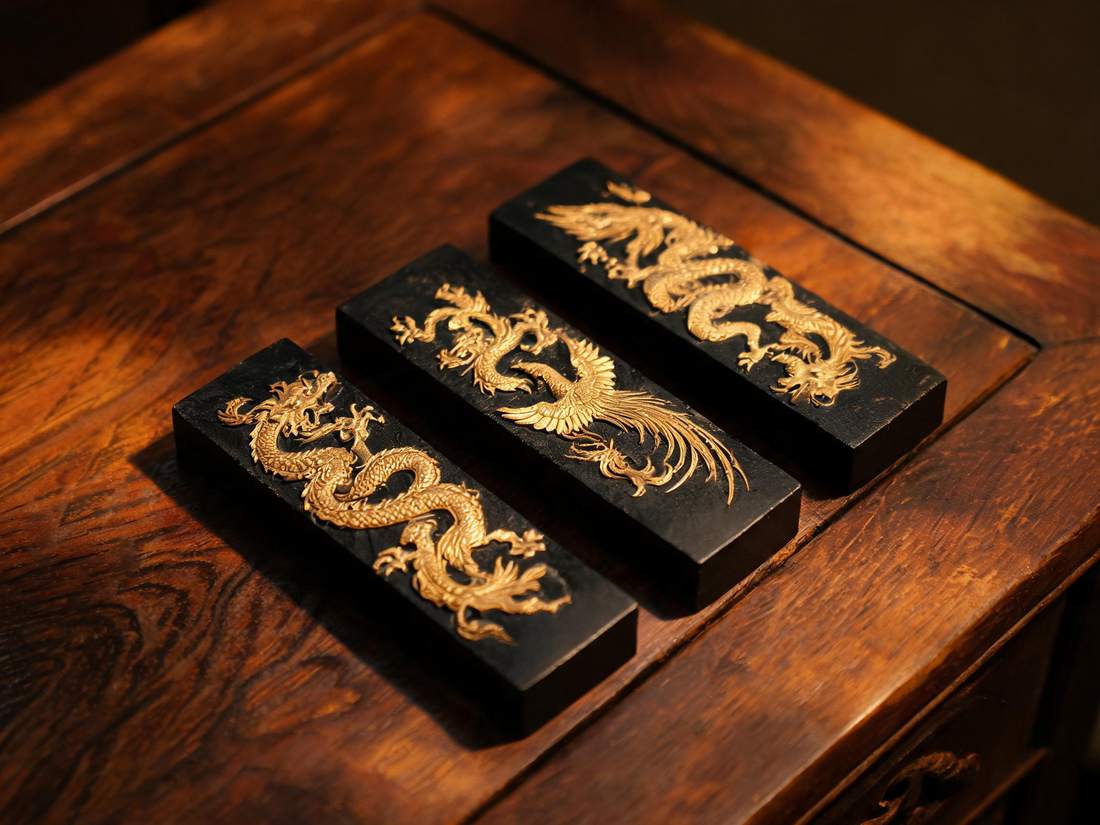
- Ink stick. Carries the traditional and ceremonial side of the range and the higher presentation value. The count matters commercially: a two-stick set and a four-stick set are different products at different price points, even when the sticks are identical.
- Liquid ink. Suits volume use, classroom programmes and anything shipped to people who do not want to grind. Bottle size becomes the specification, and the set lives or dies on sealing and leakage control.
Gumo Craftworks covers both directions, with Colored Hui Ink Stick Set for presentation ranges and Colored Liquid Ink Set for volume programmes, alongside single-format options such as Premium Bottled Calligraphy Liquid Ink.
Black-only or colour
A colour set is not simply a set with more items in it. Colour introduces a specification question that black does not: how many colours, whether they are matched in volume across the set, and whether they can be topped up later.
Buyers selling to schools usually want a small, replaceable colour range. Buyers selling gifts usually want a shorter list with better presentation. Buyers selling to studios want to know what happens when one colour runs out — a set that cannot be refilled is a one-time purchase.
Components, and the trap of the "complete" set
Beyond ink, sets often add a brush, an inkstone, paper or a seal. Each addition raises price and raises the number of things that can go wrong in transit or in use.
Two practical questions avoid most of the trouble:
- Is the inkstone functional or decorative? A stone that is too small to grind on is a presentation component, and it should not be described as a working one.
- Is the brush replaceable? For schools, a set whose brush cannot be reordered individually generates complaints after the first term.
Where a buyer needs a complete desk proposition, purpose-built options such as the Calligraphy Starter Kit Set or the Complete Scholar Desk Set are built around a defined contents list, which is easier to quote and easier to repeat than assembling components ad hoc.
Verifying what is actually in the box
Sets are where specification drift shows up most often, because a change to one component is easy to miss. Before volume production, buyers should confirm the contents list item by item, agree which items are fixed and which may be substituted, and require the packing list to match the agreed list.
For anything shipped by sea, add a transit check: a set is only as good as its insert, and a loose bottle or stone inside a presentation box does damage that no product improvement can undo.
Checks before confirming an ink set order
- Channel named, and the contents list agreed in writing.
- Ink format, count and, for colour, the exact colour list.
- Bottle size and sealing method where liquid ink is included.
- Which components are replaceable and whether they can be reordered alone.
- Packaging and insert specified for the shipment mode.
- Labelling requirements for the destination market agreed before production.
Frequently asked questions
What should a beginner ink set contain?
Enough ink to practise, in a format the user will actually use, plus a way to get it onto paper. For most beginners that means either a stick with a workable stone or a sealed bottle — not both in a small box.
Are colour sets harder to ship than black sets?
They add packaging complexity rather than weight, so the risk is mostly in the insert and in whether the individual colours are sealed separately.
Can one set serve both retail and gift channels?
Sometimes, if the retail version already has a presentable box. Otherwise the gift channel needs its own pack, and that should be quoted as a separate item rather than assumed.
How do I keep a set consistent across reorders?
Freeze the contents list, keep an approved sample of the whole set, and compare each delivery against it rather than against the description.
Next step for buyers
Buyers should fix the channel and the contents list first, then compare prices on that same basis. Review the Colored Hui Ink Stick Set and the Colored Liquid Ink Set, then send your channel, target contents and annual volume for a matched quotation.