
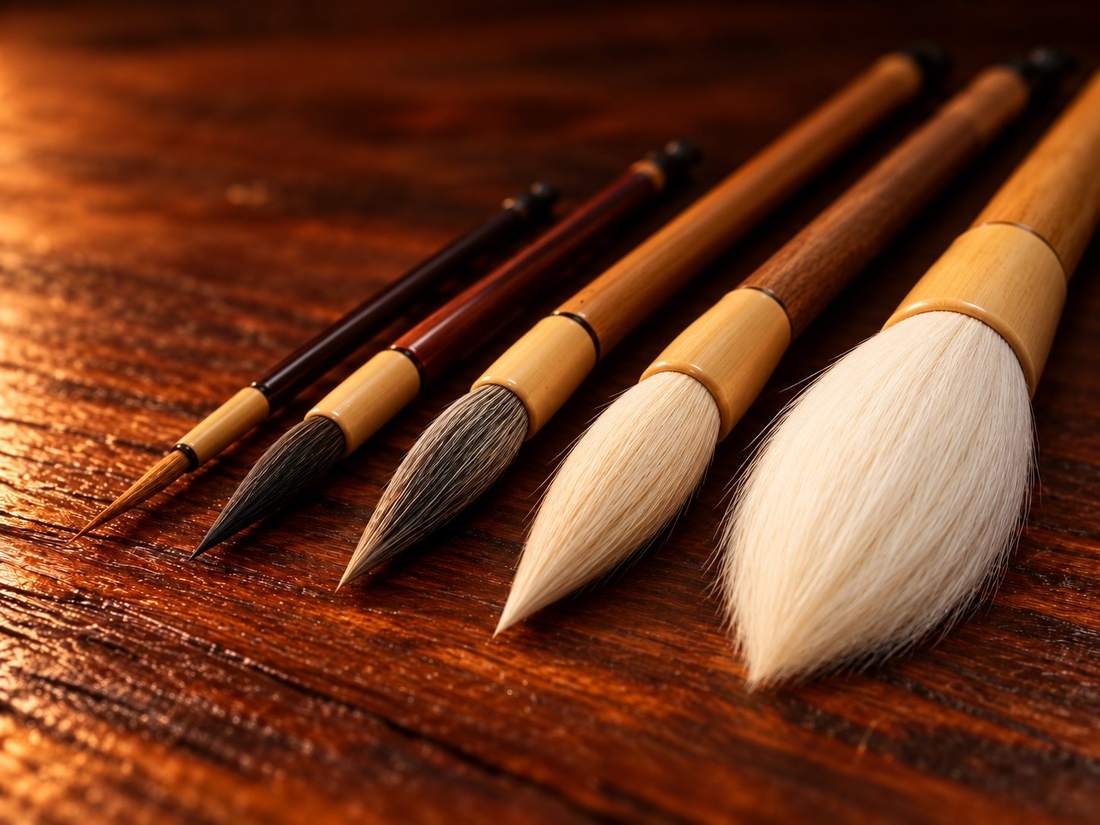
How retailers present calligraphy brushes on the shelf — hair-type rows, size ladders, tip protection with caps, storage discipline and care cards that reduce returns.
Why Brush Display Decides Sell-Through
Calligraphy brushes are one of the few stationery categories where customers judge the product with their eyes before touching it. A brush wall that hangs sticks in a jumble, or worse, rests tips against a hard shelf edge, loses sales in two directions: shoppers cannot tell the hair types apart, and the finest points get crushed before the first sale. A planned calligraphy brush display does the opposite — it sorts the range by hair type and script, presents tips where they can be read at a glance, and protects the point the brush is sold for. This guide sets out a shelf structure wholesale buyers and retailers can copy, using the three hair-type lines and the size ladder already carried in the product range.
Sort the Wall by Hair Type, Not by Price
The three hair lines divide the work differently, and the display should make the division visible. Wolf hair is stiff and resilient and holds a sharp point — the working choice for regular and clerical script. Goat hair is soft and releases ink generously, serving running and cursive script. Mixed hair balances the two and lowers the control barrier for beginners. A calligraphy brush display grouped this way lets a shopper self-select by script instead of asking a staff member: one row for stiff-point regular-script work, one for soft flowing-script brushes, one labeled for learners. The Wolf Hair Stiff Tip Brush, Goat Hair Soft Tip Brush and Mixed Hair Combination Brush map directly onto the three rows.
Present the Tip First
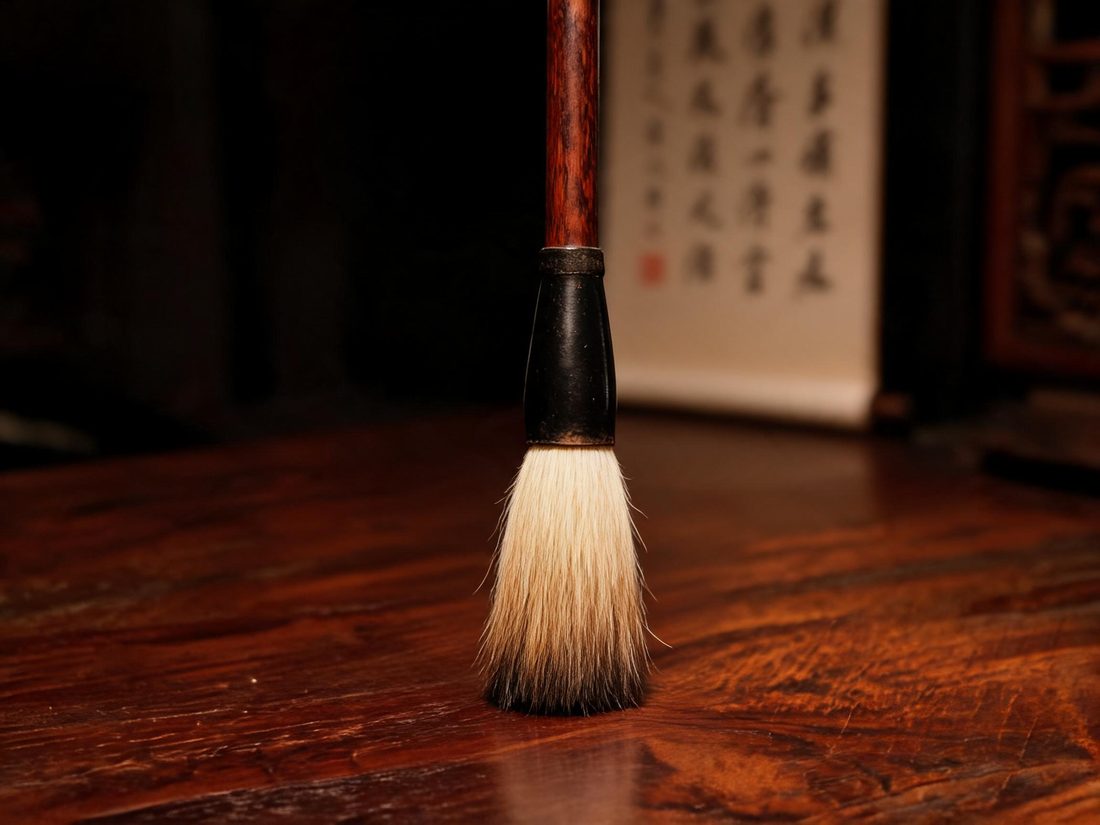
On any brush, the tip is the product. A calligraphy brush display should therefore present brushes tip-forward and at eye level, where the point can be seen against a plain background. Do not let tips rest against shelf edges or glass — a pressed point reads as a damaged point, and customers assume the whole batch looks the same. Brushes that ship with individual protective caps keep the point intact through transit and storage; the caps stay on until the brush reaches the display, and go back on for any brush held in the stockroom. Handling rule for staff: hold by the handle, never pinch the tip, and never test a display brush on paper — ink residue ruins the point for the next customer.
Build a Size Ladder Shoppers Can Read at a Glance
Within each hair-type row of the calligraphy brush display, order brushes by size so the ladder reads left to right. The wolf hair line runs small, medium and large with tip lengths of roughly 2.5, 3.5 and 4.5 centimetres; most wholesale buyers stock all three, weighting the middle size because it moves fastest for standard practice sheets. For education and beginner channels, a three-brush set covering large, medium and small characters does the sorting for the customer — the Student Practice Brush Set packs exactly that configuration, so a school or gift buyer takes one SKU instead of three loose brushes. Mark each row with the script the size serves: a shelf tag that says "small — fine detail and small characters" sells more brushes than a price tag alone.
Protecting Tips Between Deliveries and the Shelf
Tip protection is a storage discipline, not just a packing feature. Keep capped brushes in their export cartons until restocking, and fit caps only over fully dry brushes — a cap pressed tight over a damp brush traps moisture against the hair. In humid climates, store stock away from walls and off the floor, and rotate stock so older brushes reach the display first. Handles matter for shelf life too: sealed bamboo handles resist the splintering that unfinished wood develops in dry or changing conditions, and lacquered shafts wipe clean after customer handling. A display row that alternates handle finishes — natural bamboo beside lacquered shafts — also gives the wall visual depth without adding a single new SKU.
Care Cards That Reduce Returns
Most brush complaints trace back to care, not manufacturing: ink left to dry in the bristles, brushes standing in water, tips dried point-up. The three habits that decide brush lifespan are simple enough for a shelf card — rinse in clean water immediately after use until the water runs clear, reshape the tip gently, and hang it to dry with the bristles pointing down. Resellers may reproduce these care instructions on their own packaging or inserts, and wording can be confirmed with the supplier for co-branded cards. A calligraphy brush display with a care card beside it positions the retailer as a source of guidance, and guidance sells the second brush.
Questions Retailers Ask About Brush Displays
- How many brushes should a starter display carry?
- A practical starting wall is the three hair-type rows with the wolf hair sizes split small, medium and large — five to seven facings per row keeps the shelf readable and the stock manageable.
- Do brushes arrive ready for the shelf?
- Each brush ships with an individual protective cap, packed in export cartons sized for wholesale distribution; custom handle branding and packaging options are confirmed per inquiry.
- Can mixed orders combine hair types?
- Yes. The wolf hair and goat hair lines can be combined in one wholesale order with a combined MOQ of 100 pieces, so a display can be stocked without tripling minimums.
- What should staff tell customers about a first brush?
- Point beginners to mixed hair for easier control, regular-script writers to the wolf hair medium size, and flowing-script work to goat hair — the same division the display rows follow.
Stock the Display From One Supplier
Brushes sit within a wider stationery catalogue that also covers ink, paper, inkstones and complete desk sets, so a display program can consolidate supply, QC standards and shipping with one supplier. Send the team your channel mix, expected sizes and any branding requirements, and the quotation will come back with a display-ready assortment plan and packing configuration matched to the shelf.