
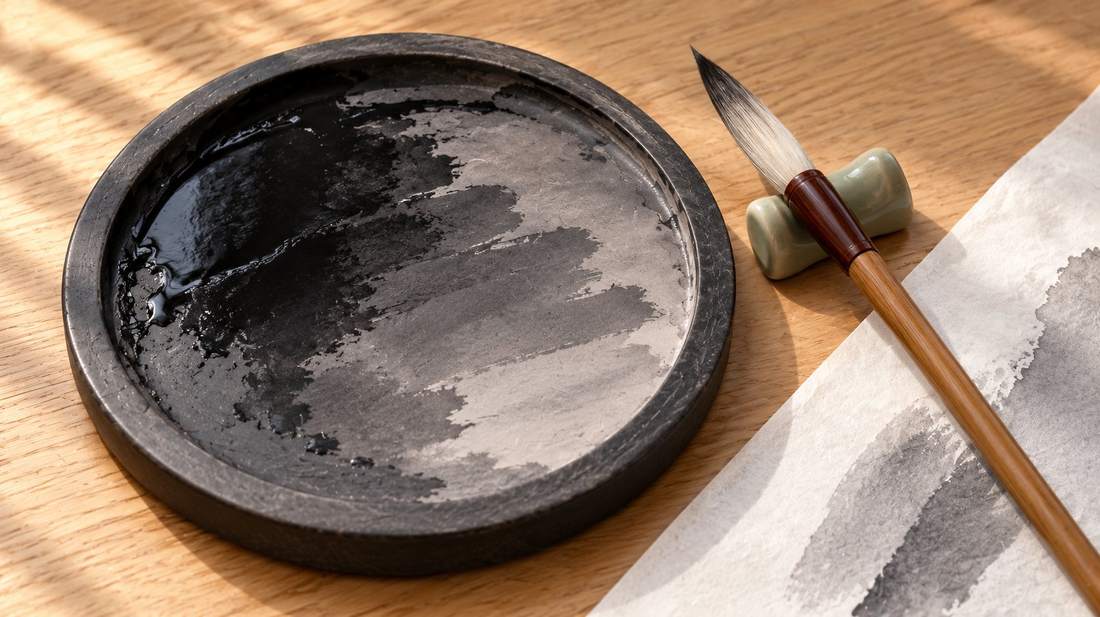
A B2B sourcing guide to building an in-store calligraphy demo station: inkstone selection, ink stick and liquid ink pairing, plus a pre-order checklist for bulk demo inventory.
Why a Demo Station Converts Calligraphy Shoppers
Chinese calligraphy products rarely sell well from packaging alone. Wholesale buyers supplying gift shops, museum stores, art retailers and cultural venues consistently observe one pattern: customers who grind a real ink stick on a real inkstone rarely leave empty-handed.
A well-planned demo station turns passive shelf browsers into active testers, and active testers into buyers. For B2B purchasers, the demo station also works as a low-cost training tool, because staff learn product differences faster by demonstrating grinding, ink flow and paper behavior than by reading spec sheets.
Core Components of a Working Demo Station
An effective demo station keeps five elements within arm's reach: a durable inkstone, one or two ink sticks for grinding, a bottle of ready-to-use liquid ink for quick tests, a mid-size calligraphy brush, and a stack of practice xuan paper.
Keeping all five on the counter lets staff switch between a traditional grinding demonstration and a fast liquid ink test without leaving the customer mid-conversation. Retailers in Japan, Korea and Southeast Asia often place the demo station near the checkout, where queue time becomes trial time.
Inkstones Built for Daily Demo Use
Grinding wears demo inkstones faster than private use, so rotation and spare stock matter. The Practice Inkstone serves as a dependable workhorse for daily demonstrations, while the Classic Duan Inkstone suits premium counters where the demonstration doubles as a display piece. For narrow counters and pop-up events, the Compact Travel Inkstone keeps the demo station mobile without sacrificing a real grinding surface.
Ink Sticks for the Grinding Story
The Student Practice Hui Ink Stick handles high-volume demo grinding at controlled cost, while upgraded pine soot options such as the Premium Pine Soot Hui Ink Stick let staff show scent, tone and finish differences on the same counter. Demonstrating both grades side by side gives customers a visible reason to trade up and gives wholesale buyers a natural two-SKU story for gift channels and student channels.
Bottled Liquid Ink for Quick Counter Tests
Many customers skip the grinding step entirely, especially in classroom and event settings. Bottled liquid ink fills the gap: staff pour, dip and write in seconds. The Bulk Calligraphy Liquid Ink covers high-frequency demo days, while the Concentrated Matte Black Liquid Ink supports tone comparisons against freshly ground ink. Stocking both formats keeps the demo station honest, because customers see the full ink range rather than one convenient option.

A Sourcing Checklist Before Building a Demo Station
Wholesale buyers ordering demo inventory should confirm three points with the supplier before payment: grinding surface durability under repeated use, packaging able to survive counter handling, and refill availability for consumables such as ink sticks and liquid ink. Demo units see heavier wear than shelf stock, so adding spare grinding surfaces and extra bottles to the same shipment avoids mid-season stockouts.
To anchor the demo station with a complete liquid ink range, browse the liquid ink category and compare formats before placing a bulk order. Buyers ready to assemble a full demo counter can request quotations for matched inkstone, ink stick and liquid ink bundles. Include expected monthly demo volume, target retail channels and packaging preferences in the inquiry to receive an accurate wholesale proposal from the Gumo Craftworks team.